
🔧 The Exhaust Upgrade Dilemma
You're ready to unlock more power. You've done your research. You know exhaust upgrades are essential. But here's where it gets confusing:
Do you need downpipes or headers?
They're both exhaust upgrades. They both increase power. They both change sound. But they're completely different parts for completely different setups.
Get it wrong, and you're wasting money. Get it right, and you're unlocking serious gains.
Let's break down the real differences between downpipes and headers — and help you choose the right upgrade for your build.
🚗 What Are Downpipes?
The Basics
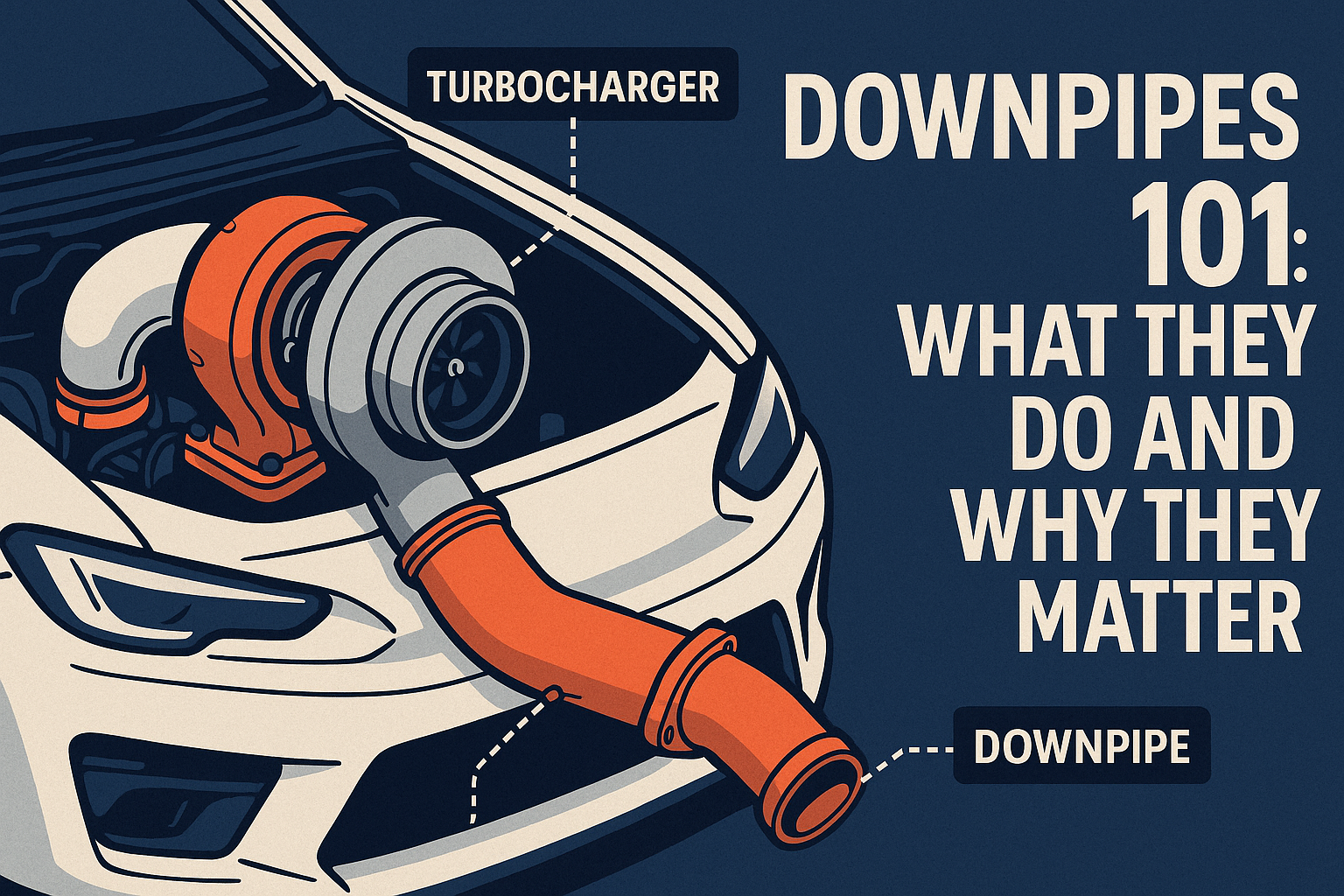
Downpipes are exhaust components that connect your turbocharger to the rest of your exhaust system.
Think of it like this:
- Turbo → Downpipe → Catalytic Converter → Rest of Exhaust
Downpipes are exclusively for turbocharged engines. If you don't have a turbo, you don't need downpipes.
The Function
Downpipes serve two main purposes:
- Direct exhaust gases from the turbo outlet to the exhaust system
- House the catalytic converter (or replace it with a high-flow cat or test pipe)
The Design
Downpipes are typically:
- Short and direct — Usually 2-3 feet long
- Wide diameter — 3-4 inches for performance applications
- Mandrel bent — Smooth curves for maximum flow
- Heat-resistant — Handle extreme turbo temperatures
🏁 What Are Headers?
The Basics
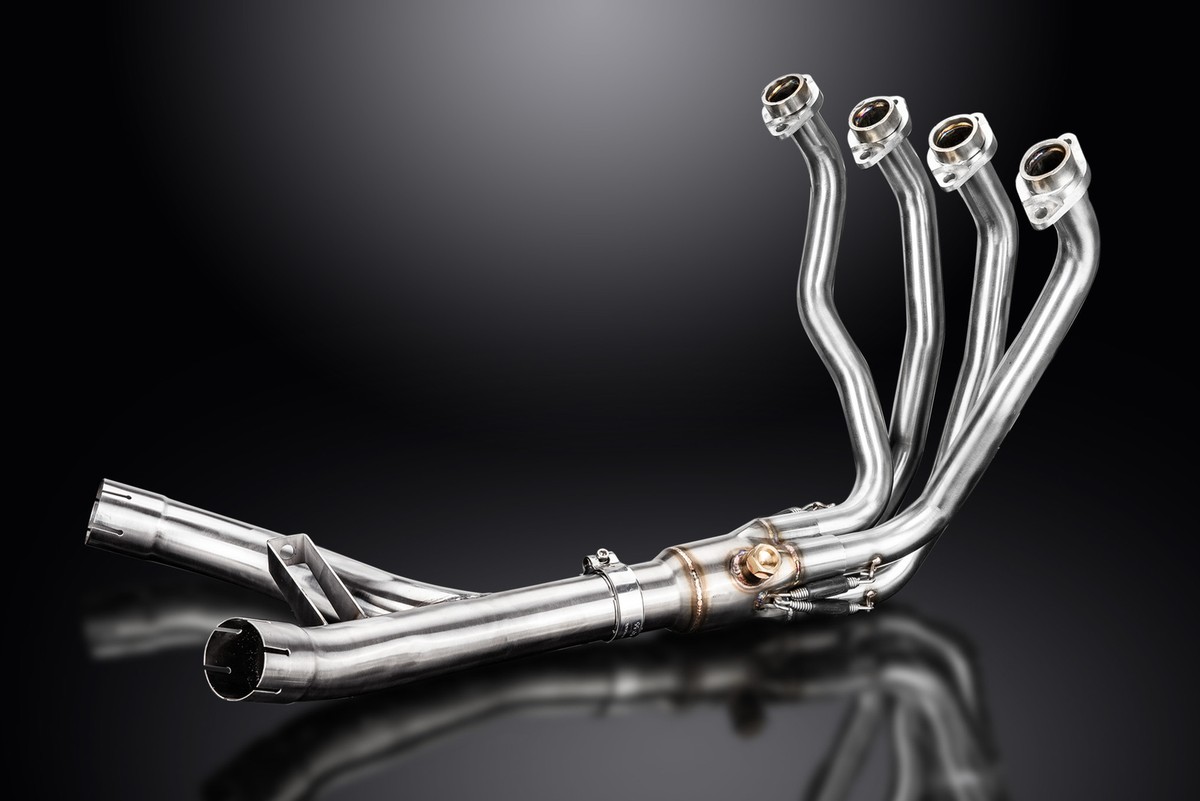
Headers (also called "exhaust manifolds" or "extractors") replace your stock exhaust manifolds on naturally aspirated or supercharged engines.
Think of it like this:
- Engine Cylinders → Headers → Rest of Exhaust
Headers are for non-turbo engines (naturally aspirated, supercharged, or some hybrid setups).
The Function
Headers serve multiple purposes:
- Collect exhaust from each cylinder into primary tubes
- Merge primaries into a collector
- Optimize exhaust flow through tuned lengths
- Improve scavenging (pulling exhaust out of cylinders)
The Design
Headers come in different configurations:
- 4-1 headers — Four primaries merge into one (high RPM power)
- 4-2-1 headers — Four primaries merge into two, then one (mid-range power)
- Equal-length headers — All primaries same length (balanced power)
- Short-tube headers — Shorter primaries (low-end torque)
- Long-tube headers — Longer primaries (high-end power)
⚡ The Key Difference: Turbo vs Naturally Aspirated
Downpipes = Turbo Engines
Downpipes are for turbocharged engines:
- Turbo engines have exhaust manifolds that feed the turbo
- The turbo compresses air, then exhaust exits through the downpipe
- Downpipes replace the restrictive stock pipe after the turbo
- They're part of the post-turbo exhaust system
Examples:
- BMW 335i, M3/M4 (turbo)
- Subaru WRX, STI
- Nissan GT-R
- Audi S4, RS4 (turbo)
- Mercedes AMG (turbo)
- Ford Focus ST, RS
- VW GTI, Golf R
Headers = Naturally Aspirated Engines
Headers are for non-turbo engines:
- NA engines have exhaust manifolds that connect directly to exhaust
- Headers replace these stock manifolds
- They're part of the pre-exhaust system (before any turbo)
- They optimize how exhaust leaves the cylinders
Examples:
- Mustang GT (5.0L V8)
- Camaro SS (6.2L V8)
- Corvette (naturally aspirated models)
- Honda Civic Si (NA)
- Miata (NA)
- Most V8 muscle cars
- Most classic cars
The Confusion
Some engines can have both:
- Supercharged engines might use headers (if headers feed the supercharger)
- Some hybrid turbo setups have headers feeding turbos, then downpipes after
- But generally: Turbo = Downpipes, NA = Headers
📊 Performance Comparison
Downpipe Performance Gains
Typical gains with downpipes:
- 20-50 HP on turbo engines (depending on tune)
- 30-80 lb-ft torque increase
- Faster turbo spool (less backpressure)
- Better top-end power (improved flow)
Why downpipes work:
- Stock downpipes are restrictive (small diameter, tight bends)
- Stock cats are restrictive (high-flow cats or test pipes help)
- Less backpressure = faster turbo spool
- More flow = more power potential
Best results with:
- Turbo engines
- Aftermarket turbo upgrades
- Tuned engines (ECU remap)
- High-flow cats or test pipes
Header Performance Gains
Typical gains with headers:
- 15-40 HP on NA engines (depending on setup)
- 10-30 lb-ft torque increase
- Better power curve (tuned lengths optimize RPM range)
- Improved throttle response
Why headers work:
- Stock manifolds are restrictive (cast iron, short runners)
- Headers optimize exhaust scavenging (pulling exhaust out)
- Tuned lengths create pressure waves that help exhaust flow
- Better flow = more power
Best results with:
- Naturally aspirated engines
- High-compression engines
- Cammed engines
- Full exhaust systems (headers + cat-back)
💰 Cost Comparison
Downpipe Costs
Downpipe pricing:
- Stock replacement: $200-400
- High-flow catted: $400-800
- Catless (test pipe): $300-600
- Titanium/ceramic coated: $800-1,500+
- Installation: $200-400 (2-4 hours labor)
Total investment: $500-1,900
Header Costs
Header pricing:
- Short-tube headers: $400-800
- Long-tube headers: $600-1,200
- Equal-length headers: $800-1,500
- Ceramic coated: +$200-400
- Installation: $400-800 (4-8 hours labor)
Total investment: $800-2,300
The Reality
Headers are typically more expensive because:
- More complex fabrication (multiple tubes)
- More material (longer tubes)
- More installation time (harder to access)
- More tuning required (often need ECU adjustments)
Downpipes are typically cheaper because:
- Simpler design (single pipe)
- Less material
- Easier installation (usually accessible)
- Less tuning required (though tuning helps)
🔧 Installation Difficulty
Downpipe Installation
Difficulty: Medium
What's involved:
- Remove heat shields
- Unbolt turbo outlet
- Remove old downpipe (often requires cutting)
- Install new downpipe
- Reconnect to exhaust system
- Check for leaks
Challenges:
- Rusty bolts (especially on older cars)
- Tight spaces (turbo area is cramped)
- Heat damage (bolts can be seized)
- O2 sensor access (may need extensions)
Time: 2-4 hours for experienced mechanics
DIY-friendly? Yes, with proper tools and patience
Header Installation
Difficulty: Hard
What's involved:
- Remove entire exhaust system (often)
- Remove stock manifolds (tight spaces)
- Remove engine accessories (sometimes)
- Install new headers (precise fitment)
- Reinstall exhaust system
- Reconnect everything
- Tune ECU (often required)
Challenges:
- Very tight spaces (engine bay is cramped)
- Multiple connections (each cylinder)
- O2 sensor relocation (often needed)
- ECU tuning required (check engine lights)
- Fitment issues (aftermarket headers don't always fit perfectly)
Time: 4-8 hours for experienced mechanics
DIY-friendly? Difficult — requires experience and tools
🔊 Sound Changes
Downpipe Sound Impact
Downpipes make turbo cars:
- Louder — Less restriction = more sound
- More aggressive — Turbo spool is more audible
- Deeper tone — Especially with catless setups
- More pops/bangs — On deceleration (with tune)
Catless downpipes:
- Much louder — No catalytic converter muffling
- More raspy — Raw exhaust sound
- More smell — Unburned fuel (legal issues)
High-flow catted downpipes:
- Moderately louder — Some muffling from cat
- Cleaner sound — Less rasp
- Less smell — Better emissions
Header Sound Impact
Headers make NA cars:
- Deeper tone — Especially long-tube headers
- More aggressive — Less restriction
- Better note — Optimized exhaust flow
- More volume — Especially with full exhaust
Long-tube headers:
- Deeper, richer sound — Longer primaries
- More low-end rumble — Better scavenging
- Less rasp — Smoother flow
Short-tube headers:
- Higher-pitched sound — Shorter primaries
- More aggressive — Quicker flow
- More rasp — Especially with cat-back
🎯 When to Choose Downpipes
You Need Downpipes If:
✅ You have a turbocharged engine
- This is non-negotiable — downpipes are for turbos
✅ You want maximum turbo performance
- Downpipes are essential for big turbo builds
- They're the bottleneck after the turbo
✅ You're planning a tune
- Downpipes + tune = serious gains
- Without a tune, you won't get full benefits
✅ You want faster spool
- Less backpressure = faster turbo response
- Critical for track/autocross builds
✅ You're on a budget
- Downpipes are typically cheaper than headers
- Good bang for your buck
Downpipe Best Practices
For maximum gains:
- Pair with tune — ECU remap unlocks potential
- High-flow cat or catless — Less restriction
- Full exhaust system — Downpipe + cat-back
- Upgrade turbo — Bigger turbo needs bigger downpipe
For street use:
- High-flow catted — Better emissions, less smell
- Keep stock cat-back — Can upgrade later
- Get a tune — Prevents check engine lights
🏁 When to Choose Headers
You Need Headers If:
✅ You have a naturally aspirated engine
- Headers are for NA engines (or some supercharged)
✅ You want optimized power curve
- Headers can tune power for specific RPM ranges
- Long-tube = low-end, short-tube = high-end
✅ You're building a full exhaust system
- Headers + cat-back = complete system
- Best results come from full upgrades
✅ You have a high-compression engine
- Headers help high-compression engines breathe
- Critical for NA power builds
✅ You're doing engine work
- Headers pair well with cams, intake, tune
- Part of a complete NA build
Header Best Practices
For maximum gains:
- Full exhaust system — Headers + cat-back
- ECU tune — Often required (O2 sensor issues)
- Cold air intake — Complete breathing upgrade
- Cams — Headers help cammed engines
For street use:
- Long-tube headers — Better low-end power
- Ceramic coating — Reduces under-hood heat
- High-flow cats — Better emissions
- Get a tune — Prevents check engine lights
⚠️ Common Mistakes
Mistake #1: Buying Headers for a Turbo Car
The problem:
- Headers don't work on turbo engines
- Turbo engines have exhaust manifolds that feed the turbo
- You need downpipes, not headers
The solution:
- Research your engine type
- Turbo = downpipes
- NA = headers
Mistake #2: Installing Without a Tune
The problem:
- Both downpipes and headers can trigger check engine lights
- O2 sensors may need relocation
- ECU needs adjustment for optimal performance
The solution:
- Plan for a tune when installing
- Budget for ECU remap
- Consider O2 sensor extensions/spacers
Mistake #3: Going Catless Without Research
The problem:
- Catless downpipes are illegal in most places
- They cause check engine lights
- They smell bad (unburned fuel)
- They're bad for the environment
The solution:
- Use high-flow catted options
- Research local emissions laws
- Consider track-only catless setups
Mistake #4: Cheap Parts
The problem:
- Cheap downpipes/headers often have poor fitment
- Thin materials crack under heat
- Poor welds leak
- Not worth the savings
The solution:
- Buy from reputable brands
- Read reviews
- Check fitment guarantees
- Invest in quality
🔬 Technical Deep Dive
Downpipe Design Factors
Diameter:
- 3 inches — Good for stock/small turbos
- 3.5 inches — Better for upgraded turbos
- 4 inches — For big turbo builds
- Too big — Can hurt low-end spool
Material:
- Stainless steel — Standard, durable
- Titanium — Lightweight, expensive
- Ceramic coating — Reduces heat, protects
Catalytic converter:
- Stock cat — Most restrictive
- High-flow cat — Good balance
- Catless — Maximum flow, illegal
Header Design Factors
Primary tube length:
- Short primaries — Low-end torque
- Long primaries — High-end power
- Equal length — Balanced power
Primary tube diameter:
- Smaller — Better low-end
- Larger — Better high-end
- Tuned — Optimized for specific RPM
Collector design:
- 4-1 — High RPM power
- 4-2-1 — Mid-range power
- Merge collector — Smooth flow
📈 Real-World Results
Downpipe Case Study: BMW 335i
Stock setup:
- 300 HP, 300 lb-ft torque
- 0-60: 5.4 seconds
With downpipes + tune:
- 380 HP, 420 lb-ft torque
- 0-60: 4.6 seconds
- Gain: +80 HP, +120 lb-ft
Cost: $1,200 (downpipes + tune)
Header Case Study: Mustang GT
Stock setup:
- 450 HP, 410 lb-ft torque
- 0-60: 4.3 seconds
With long-tube headers + tune:
- 485 HP, 435 lb-ft torque
- 0-60: 4.0 seconds
- Gain: +35 HP, +25 lb-ft
Cost: $2,000 (headers + tune)
🎓 The Bottom Line
Downpipes vs Headers isn't a choice — it's determined by your engine:
- Turbo engine? → You need downpipes
- Naturally aspirated? → You need headers
- Supercharged? → Depends on setup (usually headers)
Both upgrades:
- Increase power and torque
- Change exhaust sound
- Require ECU tuning for best results
- Work best with full exhaust systems
- Are essential for serious builds
The key is:
- Know your engine type
- Choose the right upgrade
- Pair with a tune
- Invest in quality parts
- Install correctly
Because the best exhaust upgrade isn't the most expensive one — it's the right one for your build.
❓ FAQs
Can I use headers on a turbo car?
No. Turbo engines use exhaust manifolds that feed the turbo, then downpipes after the turbo. Headers are for naturally aspirated engines.
Can I use downpipes on a naturally aspirated car?
No. Downpipes connect turbos to exhaust systems. NA engines don't have turbos, so they need headers instead.
Which gives more power: downpipes or headers?
Downpipes typically give more power gains (20-50 HP) because they reduce turbo backpressure. Headers give 15-40 HP but optimize the power curve differently.
Do I need a tune after installing downpipes/headers?
Yes, highly recommended. Both can trigger check engine lights and need ECU adjustments for optimal performance and to prevent issues.
Are catless downpipes legal?
No, in most places. Catless downpipes remove catalytic converters, which is illegal for street use. Use high-flow catted downpipes for legal street builds.
How much do downpipes cost vs headers?
Downpipes: $500-1,900 total (parts + install). Headers: $800-2,300 total. Headers are typically more expensive due to complexity and installation time.
Which is easier to install: downpipes or headers?
Downpipes are easier (2-4 hours). Headers are harder (4-8 hours) due to tight engine bay spaces and more connections.
Do downpipes/headers void my warranty?
Potentially, yes. Modifying exhaust systems can void powertrain warranties. Check with your dealer and consider warranty-friendly options.
Can I install downpipes/headers myself?
Downpipes: Yes, with proper tools. Headers: Difficult — requires experience, tools, and often engine bay disassembly.
Which sounds better: downpipes or headers?
Subjective. Downpipes make turbo cars louder and more aggressive. Headers make NA cars deeper and more refined. Both sound great when done right.
The exhaust upgrade that unlocks your car's potential isn't about choosing between downpipes and headers — it's about choosing the right one for your engine. Because in the world of car mods, the right part in the right place makes all the difference.