
🌃 Chicago Doesn't Get Talked About Like a Car City. It Should.
Say "car city" and people say LA, Detroit, maybe Miami if they're thinking about exotics. Chicago rarely makes the list, which is strange, because it's the third-biggest city in the country, it's the actual starting point of Route 66, and it hosts the largest auto show in North America every single February. It has a car culture. It's just a split one.
On one side, there's the sanctioned scene: Cars & Coffee meets scattered across the North Shore suburbs and downtown lots, a Big Three legacy that runs deeper than almost anywhere outside Detroit, and an auto show that just spent 2026 formally putting a spotlight on the city's own builders for the first time. On the other side, there's Lower Wacker Drive: a lower-level highway loop under the Loop that's become the epicenter of a very different, very illegal kind of car culture, one the city is now actively trying to dismantle with impounds, task forces, and copied playbooks from other cities.
Both of those are Chicago's car scene. Here's what's actually happening in each.
☕ Cars & Coffee, Chicago Style
The sanctioned meet scene in Chicago doesn't concentrate in one iconic spot the way it does in some cities. It's spread out, suburb-to-suburb, which tracks with how sprawling the metro actually is.
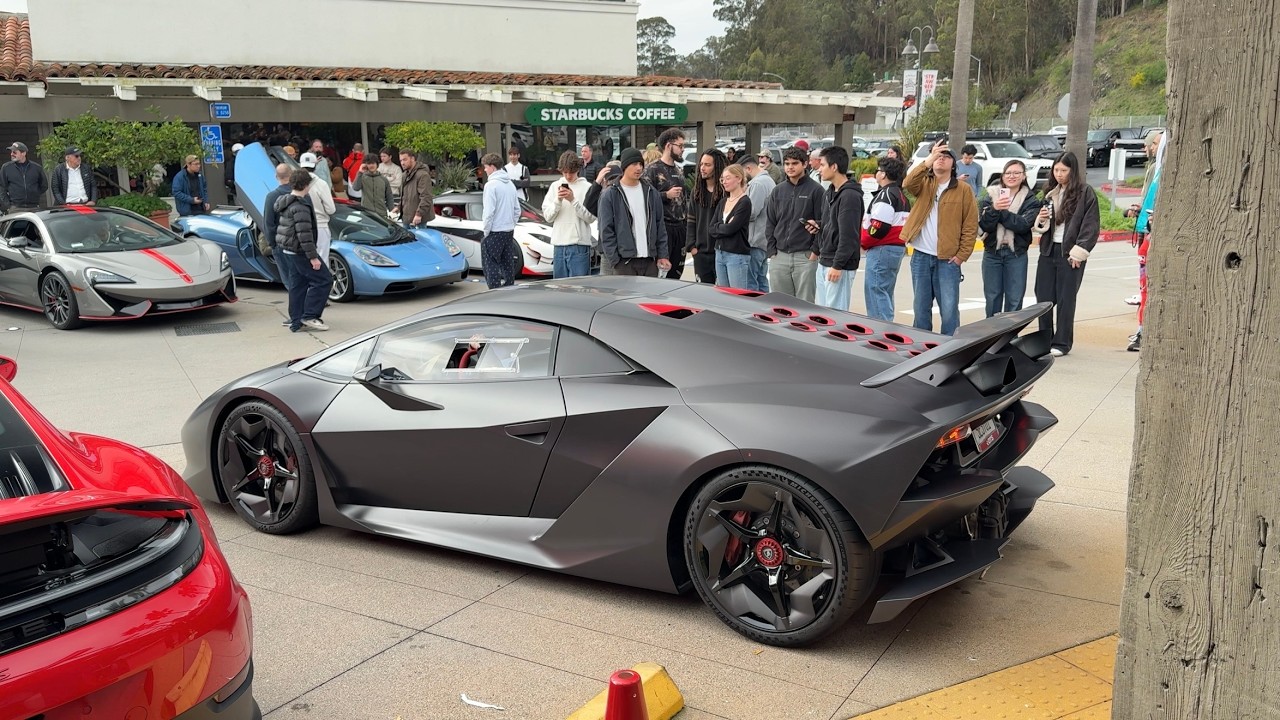
Evanston and the North Shore run their own recurring Cars & Coffee through the local visitors' bureau, pulling in the wealthy-suburb mix you'd expect: European exotics, restomods, and a steady rotation of daily-driven enthusiast cars from people who work downtown and garage their toys up north. Meanwhile, downtown itself gets dedicated "Chicago Car Meet" events, presented by national car-care sponsors and local car clubs, usually staged near Grant Park with a wide-open format that welcomes everything from JDM builds to muscle to full-blown collector cars.
The through-line across all of it: Chicago's meet culture is politer, more organized, and more sponsor-backed than a lot of the meets you'll find in Sun Belt cities. There's less of the loud, spontaneous street-corner energy and more of a "show up, register, park where you're told" structure. That's not a knock. It's just what happens when a car scene grows up in a city with strong municipal oversight and brutal winters that force everything indoors or into planned events for half the year.
Spota tip: the suburban Cars & Coffee circuit around the North Shore is some of the most underrated Photo Op territory in the Midwest. Fewer crowds than downtown, cleaner backgrounds, and owners who are genuinely happy to talk builds instead of just posing for a crowd.
🚗 Chi-Town Alley: The Auto Show Finally Notices Its Own City
For 2026, the Chicago Auto Show, the largest auto show in North America and one of the longest-running in the world, added something new: Chi-Town Alley, a dedicated exhibit and showcase contest built specifically around the city's own local car culture instead of just manufacturer press releases and concept cars.
That's a real shift. For decades, the Chicago Auto Show was a manufacturer showcase first and a car-culture event a distant second. Chi-Town Alley flips a piece of that: it's a space at McCormick Place specifically curated to spotlight the builds, the shops, and the enthusiasts who make up Chicago's actual scene, the stuff that normally only shows up on local Instagram pages and small regional meets, not a stage next to a new SUV reveal.
It's a small addition in the grand scheme of a show that pulls in over a million visitors across its run, but it's a signal. The people running one of the biggest car events in the country finally decided Chicago's homegrown scene was worth a dedicated spotlight instead of an afterthought. If you're building something in Chicagoland, that's the kind of visibility that used to only exist for manufacturers.
🛣️ Route 66 Starts Here (Literally)
Every enthusiast road trip conversation eventually gets to Route 66, and what a lot of people forget is that the Mother Road's eastern terminus, the actual starting line, is a sign on Adams Street in the Loop, a few blocks from Grant Park.
It's an easy thing to miss if you're not looking for it: no grand monument, just a green highway sign next to normal downtown foot traffic. But for a certain kind of car person, driving past that sign hits different once you know what it means. It's the starting point of 2,400 miles of the most mythologized road in American car culture, right there in the middle of a city most people don't associate with road-trip nostalgia at all.
It's a small thing to build a stop around, but it's real, it's free, and it's the kind of spot that photographs well against a build you're proud of. A car parked next to the actual start of Route 66 tells a better story than a car parked in a random lot.
🔥 Lower Wacker and the Ring of Fire Problem
Here's the part of Chicago's car culture that makes headlines for the wrong reasons: Lower Wacker Drive, a lower-level roadway that runs underneath the Loop's street grid, has become one of the most notorious street takeover locations in the country.
The pattern has repeated for years now. Dozens to hundreds of cars converge with little warning, block off a stretch of Lower Wacker or another arterial, and spectators encircle a car doing donuts, sometimes literally lighting a "ring of fire" around it with lighter fluid or tire smoke while it spins. Video of these takeovers, cars sliding through flames while a crowd films on phones, has gone viral repeatedly and drawn national news coverage. It's happened downtown, it's happened in Lincoln Park, and it's happened on the Far Southwest Side, which tells you it's not a one-neighborhood problem, it's citywide.
The city's response has escalated accordingly: tire deflation devices deployed by police, mass impounds, and at least one alderman publicly pushing to study how other cities have handled it, including looking at San Antonio's approach to the same problem. That's notable because it means Chicago is actively debating whether the answer is pure enforcement or something closer to what a few other cities have tried: creating a legal, controlled outlet for exactly this kind of car-culture energy instead of just chasing it block to block.
Whatever the outcome, it's worth understanding as part of the actual scene here, not separate from it. The same appetite that fills Lower Wacker at 2 AM is the same appetite that fills the North Shore Cars & Coffee lot at 9 AM. One's legal, documented, and welcomed by a stage at McCormick Place. The other gets a police response and a viral news clip. The difference isn't the passion, it's the venue.
🏙️ Where This Leaves the Scene
Chicago's car culture in 2026 is genuinely two-track: a growing, increasingly visible sanctioned scene getting real institutional attention for the first time through things like Chi-Town Alley, and a persistent underground one the city is actively trying to redirect or shut down. Neither one is going away this year.
If you're in the Chicagoland scene, or building toward it, the sanctioned side is where the actual community lives: the North Shore meets, the downtown Cars & Coffee gatherings, the Auto Show's new spotlight on local builders. That's where you find your people, get your car seen, and build a reputation that doesn't come with a police report attached.
For more on how to plug into any city's scene without waiting around for someone to invite you, check out how to find car enthusiasts nearby, and for the wider list of where car people actually gather worldwide, see the top 50 car spotting locations guide.
Chicago's scene isn't hiding anymore. Half of it just needs a better outlet than a highway underpass.