
👋 You've Driven Past That Lot Four Times Now
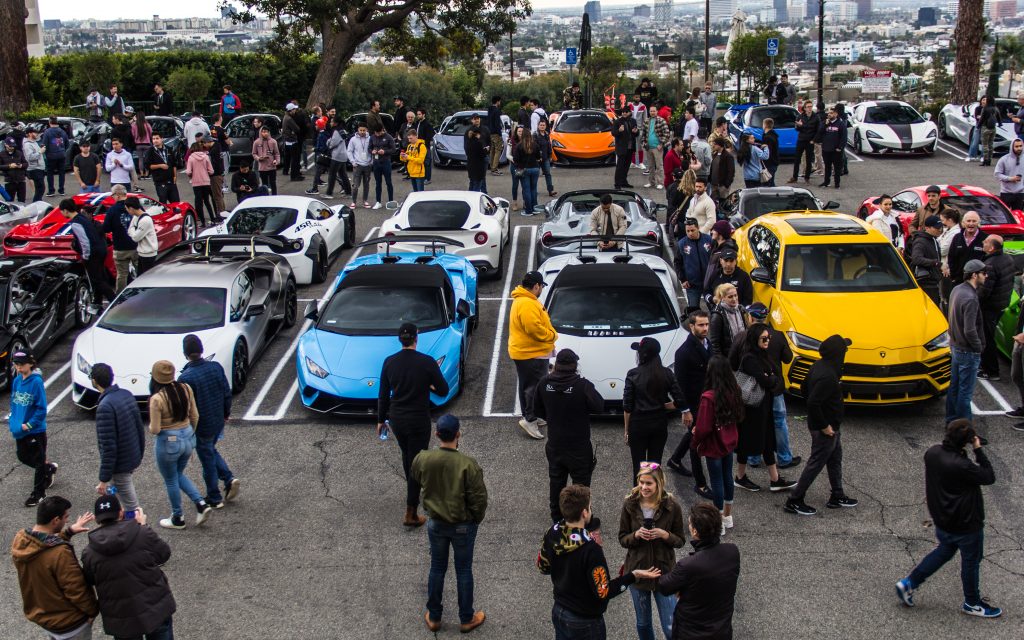
You know the one. Cars parked in neat rows every Saturday morning, hoods up, owners standing around with coffee, and you slow down every time without actually pulling in.
Maybe you just moved somewhere new. Maybe you just bought your first car worth looking at twice and don't know a single person who'd get why you're excited about it. Maybe you've lurked the local subreddit and Instagram tags for six months and still feel like an outsider looking through a window.
Here's the thing nobody tells you: every regular at that meet was once the person driving past it, too scared to turn in. Car scenes look like closed clubs from the outside. From the inside, they're actually starving for new people who show up consistently and aren't weird about it.
Getting in isn't about knowing the right person or owning the right car. It's about doing a handful of unglamorous things in the right order. Here's the actual playbook.
🔍 Do the Homework Before You Show Up
Walking into a scene cold, with zero context, is how you end up standing alone by your car for forty-five minutes. A little research before your first appearance changes everything.
- Find where it actually happens. Local subreddits (
r/[yourcity]carsor the general city sub), Instagram location tags on car photos, Facebook groups, and car-spotting apps will surface the real recurring meets faster than Googling "cars and coffee near me," which mostly returns dead Yelp listings. On Spota, opening the map in your city surfaces active Clubs and upcoming meetups in one place, which is a faster way to find what's actually still running than digging through five different apps. - Figure out the unwritten flavor of the scene. Is it JDM-heavy? Domestic muscle? A mixed bag? Track-focused or purely a look-and-talk meet? Scrolling photos from the last few weeks tells you more about what to expect than any description will.
- Note the format. Some meets are a fixed lot every week at the same time. Others rotate locations and only get announced a day or two out in a group chat. Rotating meets require you to actually join the group chat or Club page before showing up, not after.
- Check for any explicit rules. No burnouts, no revving after a certain hour, invite-only for the first month, whatever it is. Scenes that have been shut down by cops once tend to post their rules loudly because they don't want it happening again.
Fifteen minutes of scrolling before your first appearance is the difference between walking in knowing the vibe and walking in guessing.
🚗 Show Up Solo, Show Up Early, Say Nothing Yet
Your first time at a new meet is not the moment to introduce yourself to everyone. It's a reconnaissance mission with your car along for the ride.
- Arrive on the earlier side, when the lot's still filling in. It's a lot less intimidating to park among five cars than to roll into a packed lot of forty and feel every head turn.
- Park at a normal distance, not right in the middle of the action. Nobody's checking your car's specs at a meet you've never been to before. Give yourself room to observe first.
- Walk the lot before you talk to anyone. Look at builds, read the room, notice who seems to be the regulars versus who's clearly also new. This isn't about being antisocial, it's about not walking cold into a conversation you don't have context for.
- It's fine to just be there. You don't owe anyone an introduction on visit one. Plenty of regulars started exactly the same way: showing up, saying maybe three words to the guy parked next to them, and coming back the following week.
The goal of trip one isn't to make friends. It's to confirm the scene is what you thought it was, and to stop being a stranger to your own eyes the next time you show up.
🗣 Talking to People Without Being That Guy
Eventually you have to actually talk to someone, and this is where most newcomers either freeze or overcorrect into trying too hard. Neither works. There's a simple, low-pressure way in.
- Ask about the car in front of you, specifically. Not "nice car" (everyone says that, it lands as noise), but something that shows you actually looked: "is that the stage 2 kit or did you have it custom tuned?" Specific questions get real answers and real conversations.
- Never touch a car without asking, ever. Not the hood, not the wheel, not leaning on the fender for a photo. This is the single fastest way to torch a first impression in car culture. Ask, every time, even if it looks like it's just sitting there for show.
- Compliment the choices, not just the money spent. "The stance on this is dialed in" lands better than "this must've cost a fortune," because it signals you understand what you're looking at instead of just being impressed by the price tag.
- Answer the "what do you drive" question honestly, even if your car is stock or unremarkable. Nobody worth talking to actually cares what you drive on day one. They care whether you're into it.
- Bring a real question if you have one. "Anyone know a shop around here that does alignments for lowered cars without complaining about it" is a great icebreaker, because it gives people a chance to actually help you, and helping is how strangers become acquaintances.
You don't need charisma for this. You need genuine curiosity and the patience to let a few short exchanges be enough for one visit.
📸 Bring Something to the Table, Not Just an Opinion
The fastest way to go from "the new guy" to someone people actually remember is to be useful in some small, low-key way. Scenes run on people who contribute something, even informally.
- If you can shoot decent photos, offer to send someone a couple you took of their car. No strings, no "follow me back," just a genuinely nice gesture. This is one of the single most reliable ways to get remembered at a meet, and it's the same instinct behind why photographers struggle to find cars to shoot until someone bridges that gap for them.
- Show up with actual information, not gossip. Know a good source for a rare part, a shop that does quality work at a fair price, a route that's actually legal to cruise. Being a resource beats being a personality.
- Help without being asked when it's obviously needed, a jump start, holding a phone for someone's photo, pointing out a puddle before someone parks in it. Small and unglamorous, but scenes remember the person who did it.
- Don't try to buy your way in with expensive mods you rushed to install just to impress people. Regulars can smell a build that exists purely to flex, and it reads as trying too hard rather than being into it.
🔁 The Actual Secret Is Just Showing Up Again
Here's the part nobody wants to hear because it's not exciting: there's no single conversation, no single mod, no single flex that gets you "in." What gets you in is being there next time, and the time after that.
- Go to the same meet at least three or four times before judging whether it's "your scene." First visits are awkward for almost everyone. Familiarity does the heavy lifting that small talk can't.
- Remember names and cars, and use them. "Hey, weren't you the guy with the turbo Miata a few weeks back" turns you from a stranger into someone people expect to see.
- Say yes to smaller invitations before the big ones show up. A casual "couple of us are grabbing food after" is worth more than it looks like. That's usually where the actual friendships form, not in the parking lot small talk.
- Give it real time. Most tight-knit crews took months, sometimes years, to form. You're not behind for not being "in" after two weeks.
A Spota tip here: joining a Club through the app gives you a running feed of who's actually active and when the next meet is, which turns "hope I run into people again" into an actual, trackable pattern of showing up. It's a much faster way to go from stranger to regular than relying on catching the right Saturday by luck.
🏁 One Day You're the One Someone Else Is Nervous to Approach
Every scene has a moment where the new person becomes a regular, and it's rarely dramatic. It's just the week where someone waves at you before you've parked, or asks your opinion instead of the other way around, or invites you to something nobody posted publicly.
Do the homework, show up without forcing anything, ask real questions, be useful without making it a performance, and keep coming back. That's the entire playbook, and it works in literally any city with a car scene worth joining.
If you're still figuring out where your local scene actually gathers, how to find car enthusiasts nearby is the logical next read, and once you've got a crew worth formalizing, how Clubs work on Spota walks through turning a loose group of regulars into something official.