

📐 The Question Nobody Answers Clearly
"What offset should I run?" That question has started more forum arguments than any other mod decision. Everyone's got an opinion, half of them contradict each other, and most of them are answering for a completely different car than yours.
Here's the truth: fitment isn't a vibe, it's math. Not scary math, but math you actually have to do, because your fender, your suspension travel, and your tire size are all specific to your car. A wheel that fits perfectly on your buddy's Civic can absolutely destroy your fender liner on a Civic that's a trim level different, riding on different springs, with a different tire size mounted.
This is the method that actually works. No guessing, no "just send it and see." By the end you'll know exactly what to plug into a fitment calculator and why.
🔧 The Three Numbers That Actually Matter
Width. Measured in inches, this is how wide the wheel is from bead to bead, not the overall widest point of the wheel face (which can flare out wider than the bead width on deep-lip wheels, and that matters for clearance too). A wider wheel needs a wider tire and generally pushes more of the wheel's face outward, closer to the fender.
Offset. Measured in millimeters, this is the distance between the wheel's true centerline and its mounting surface (where it bolts to the hub). Offset is the number people obsess over and the one most likely to get misunderstood, so:
- Positive offset pushes the wheel's face toward the hub, tucking it further into the fender well. Most factory wheels run positive offset.
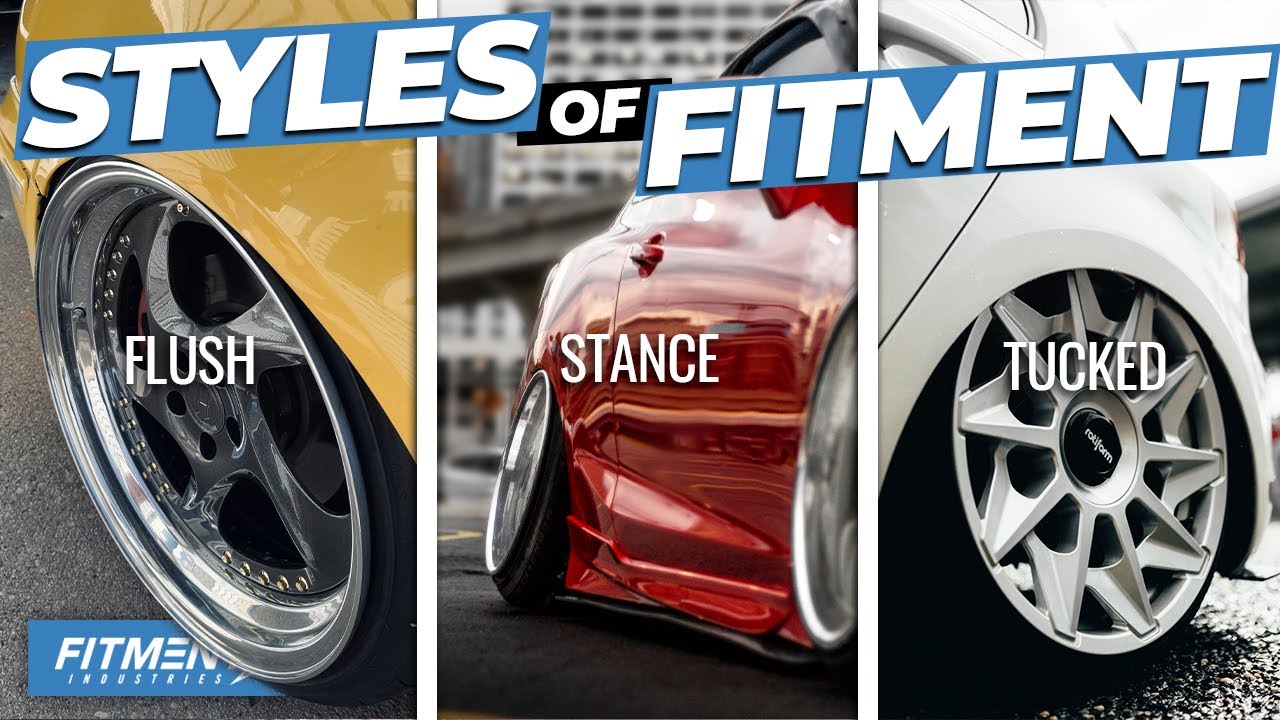
- Negative offset pushes the wheel's face away from the hub, poking it further out toward the fender lip (or beyond it). This is what creates aggressive, flush, or poke-y stances.
- Zero offset means the mounting surface sits exactly at the wheel's centerline.
Lower offset numbers (or more negative ones) push the wheel outward. That's the single sentence worth memorizing.
Backspacing. The distance from the wheel's mounting surface to the inner lip (the back edge, closest to your suspension and brakes). This is the number that decides whether your wheel clears your calipers, control arms, and struts, not your fender. Backspacing and offset are related but they're not the same measurement, and a fitment calculator needs both width and offset to derive backspacing, or you can just ask a wheel shop directly if a specific wheel clears your specific brake setup.
🧮 The Actual Method
Step 1: Start with your stock specs. Look up your car's factory wheel width, offset, and tire size. This is your baseline, the fitment you know for a fact already clears everything, because it's what the car shipped with.
Step 2: Decide what you're solving for. Are you trying to run a wider tire for grip? Fill out the fender for a more aggressive look? Fit a big brake kit that needs more inner clearance? Each goal changes which number you're actually adjusting.
- Wider tire, similar look: increase width slightly, keep offset close to stock, watch backspacing since a wider wheel at the same offset pushes both outward and inward.
- More aggressive stance: decrease offset (go more negative or less positive), which pushes the face out toward the fender lip. This is the move that causes fender rub if you go too far without also addressing fender clearance (rolling or pulling the fender lip).
- Big brake kit: you need more backspacing room on the inner side, which usually means going with a wheel that has less negative offset, or a wider wheel with the right offset math to still clear the caliper.
Step 3: Check suspension travel, not just static clearance. This is the step people skip and then rub two weeks later. A wheel that clears perfectly with the car sitting still can absolutely hit the fender liner or a strut at full compression, especially if you've also lowered the car (less remaining downward travel before the tire hits something) or you're running a lot of negative camber (which changes where the top and bottom of the tire sit relative to the fender). If you've lowered your car on coilovers, budget extra clearance versus stock ride height math, because you've eaten into the travel that used to protect you.
Step 4: Account for tire size, not just wheel size. A tire's actual width on the road (its "section width") isn't identical to its marked size, and it changes with wheel width too: mount a 265-width tire on a wider wheel and it measures wider than the same tire on a narrower wheel. Sidewall height changes clearance at full lock (steering) too, especially on the front axle, where the tire can contact the fender liner, strut, or even the frame at full turn if you've gone too aggressive.
Step 5: Use a fitment calculator, then verify with a real photo. Sites built specifically for your platform (a fitment calculator for your exact chassis code, not a generic universal one) will get you close. But forums and enthusiast groups for your specific car are worth more than any calculator, because someone has almost certainly already run the exact wheel and tire combo you're considering and posted a fender-well photo proving it works, or doesn't.
🚫 The Mistakes That Cause the Most Rubbing
- Copying a fitment from a different trim or generation. "It fit on the last-gen model" doesn't guarantee it fits yours. Fender shape, suspension geometry, and factory offset all shift between generations and sometimes between trims.
- Ignoring full-lock steering clearance. Static, straight-ahead clearance looking fine is not the same as clearance at full steering lock, especially on the front end. Turn the wheel all the way and check before you commit.
- Not accounting for a lowered ride height. Lowering springs or coilovers eat into your suspension travel. A fitment that was safe at stock height can rub at full compression on a lowered car.
- Trusting "it'll stretch in" logic on tire sidewalls. Stretched tires (a tire narrower than the wheel it's mounted on) change your actual outer width and sidewall behavior. Great for a specific look, risky if you didn't plan for it.
- Forgetting spacers change everything you just calculated. A wheel spacer effectively reduces offset by pushing the wheel outward by the spacer's thickness. If you add a spacer after doing your fitment math, redo the math, you've just moved the wheel closer to the fender than what you calculated.
🅿️ Spota Tip
Fitment threads on your specific chassis are some of the most valuable, most researched content car communities produce, and they rarely surface outside of scattered forum posts. If you're building out your Garage on Spota, log your actual fitment (width, offset, tire size, ride height) on your car's profile once you land on it. It becomes a real, dated reference for the next person running your exact chassis, instead of another vague "it just fits" comment with no numbers attached.
🏁 The Bottom Line
Wheel fitment isn't mysterious, it's just specific. What works is knowing your baseline, understanding what each number actually moves, checking clearance at full suspension travel and full steering lock, and verifying against someone who's actually run your combo on your exact car. Skip the guesswork, do the five steps, and you'll spend your first drive enjoying the new look instead of listening for that awful rubbing sound at every parking lot entrance.
Get the numbers right once, and you never have to think about it again.