
🗺️ The Cruise Is the Best Part of the Night. It's Also the Easiest Part to Ruin
Everyone remembers the meet. Nobody plans the drive.
You spend weeks picking the spot, hyping the flyer, making sure the lot has enough room for everyone's car. Then thirty cars roll out at once with zero plan, somebody redlines a pull on a residential street, three cars miss the turn and get split off, and by the time anyone checks the group chat there's a cop car parked at the exit of wherever you were headed next.
That's not bad luck. That's a route nobody actually planned.
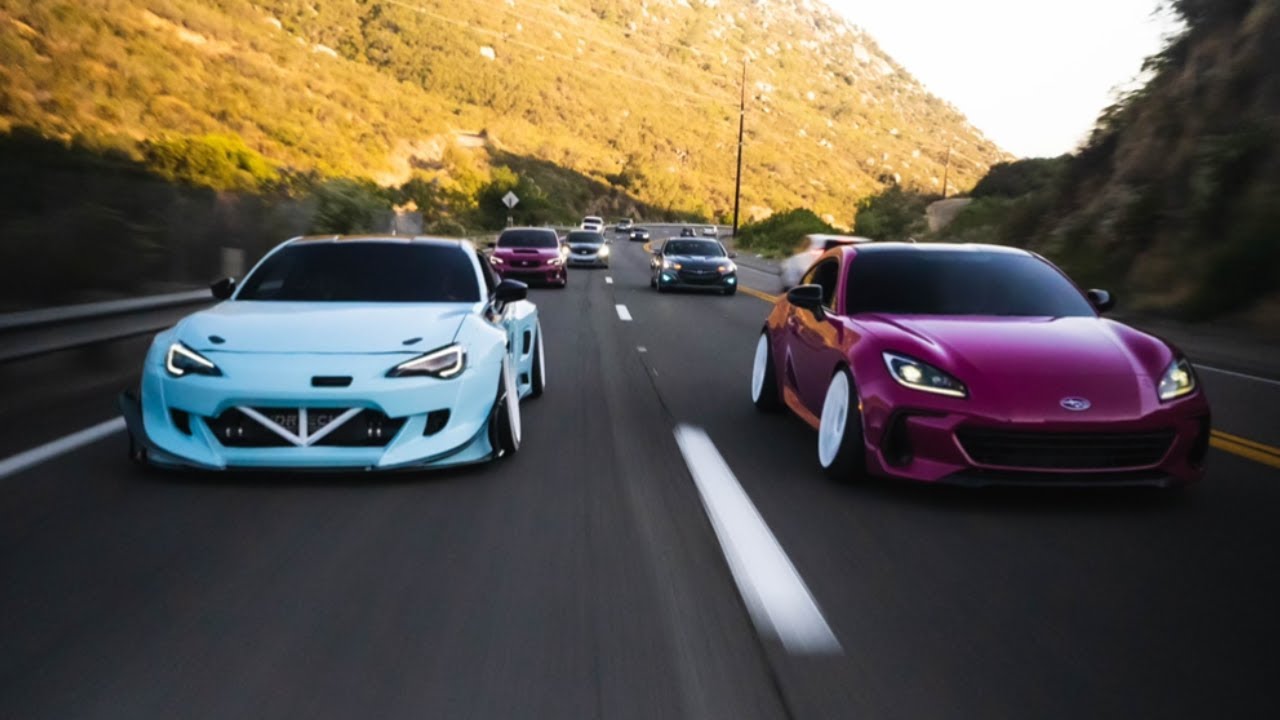
A cruise isn't just "drive somewhere as a group." It's logistics. It's timing, spacing, communication, and picking roads that don't put thirty modified cars in front of people who are already looking for a reason to call it in. Do it right and it's the best hour of the night. Do it wrong and it's the reason your next meet gets cancelled by the venue.
Here's how to actually plan one.
📍 Scout the Route Before You Ever Announce It
The single biggest mistake organizers make is picking a route off a map app the night before and trusting it. Google Maps doesn't know that the "scenic" road it picked runs past three houses with a standing HOA complaint history, or that the wide-open straightaway everyone's eyeing is also the one stretch of road the county just added speed cameras to.
Drive it first. Alone, in daylight, with no group behind you. You're checking for:
- Residential density. Roads lined with houses generate noise complaints fast, especially after 9 or 10pm. A road that's fine for one car is a different story for thirty.
- Known enforcement spots. Every local scene has roads cops sit on. Ask around before you assume a route is clean.
- Turn complexity. Sharp turns, unmarked forks, or a stretch with three consecutive lights people can get separated at. Every decision point is a place your group can fracture.
- Bailout points. Gas stations, empty lots, wide shoulders. If something goes wrong (a car overheats, someone gets pulled over, the group splits), you need somewhere obvious to regroup that isn't "wherever we end up."
- Legal speed and passing room. If the road doesn't comfortably support the speed your group actually drives at, don't use it. Find one that does, or accept a slower pace.
If you can't personally drive it, at minimum pull it up on satellite view and cross-reference with someone local who's driven it recently. "I think it looks good on the map" is not a scouting process.
🔢 Group Size Changes Everything About the Route
A five-car cruise and a fifty-car cruise are not the same activity, even on the identical road. Plan for the size you're actually expecting, not the size you hope for.
Small groups (5-10 cars) can run tighter, take more scenic or technical roads, and recover from a missed turn without losing half the pack. You have room to be a little more ambitious with the route.
Mid-size groups (10-25 cars) need wider roads with fewer turns, more predictable traffic light spacing, and a designated lead and sweep car (more on that below). This is the size where things start going wrong if nobody's managing the pack.
Large groups (25+ cars) should not be treated as one cruise. Split into waves of 8-12 cars leaving a few minutes apart on the same route. One giant pack of fifty cars is a traffic event. It draws attention, it can't move as a unit through lights, and if it gets flagged by police, the whole group gets treated as one incident instead of several unrelated small groups of enthusiasts driving the same road.
If your meet regularly pulls a big crowd, build the wave system into how you announce the cruise from the start so people expect it instead of getting confused in the moment.
📻 Set the Communication Plan Before Anyone Starts Their Car
The fastest way to lose a group isn't a wrong turn. It's not having a plan for what happens after the wrong turn.
- Designate a lead and a sweep. The lead sets the pace and calls turns. The sweep is the last car in the group and confirms nobody got dropped. If the sweep loses sight of someone, that's the signal to slow the pace, not speed up to catch a gap.
- Pick one communication method and stick to it. CB radio, a group text thread, a walkie app, whatever works for your group, but decide before you leave. Mixing methods mid-drive means half the group misses the message.
- Call turns early, not at the turn. "Left in half a mile" gives people time to get in lane. Calling it at the intersection guarantees someone in the back misses it.
- Have a default regroup point. If someone gets separated, they should already know where to go without asking. This is where your scouted bailout points from earlier come in.
- Brief new people. If it's someone's first cruise with your group, a thirty-second explanation of the plan before you leave saves you from having to explain it over radio at 40 mph.
None of this is complicated. It's the difference between a group that moves like one unit and a group that scatters into fifteen confused individual cars the second the first light turns yellow.
🚓 Respect Is the Actual Strategy, Not a Suggestion
This is the part that actually determines whether your cruise happens again next month or gets your local scene's reputation burned for a year.
- No redlining through neighborhoods. It's the single fastest way to generate a noise complaint that turns into a police presence at your next meet, not just this cruise.
- Full stops at stop signs, not rolling ones. It sounds obvious. It's also the number one reason cruises get individually pulled over, because it's an easy, obvious, defensible reason for a stop.
- No blocking intersections to let the group through together. It feels efficient in the moment. It's also the clearest possible signal to anyone watching that this is an organized group doing something coordinated, which draws more attention than thirty cars that each look like they're just driving somewhere.
- Keep the exhaust in check on residential stretches. Nobody's saying run a stock muffler. Just be aware that a 2am pull down a quiet street is how a cruise becomes "the reason the city passed a new noise ordinance."
- If you get pulled over, that's on you, not the group. Don't try to outrun a stop to "protect" the cruise. It puts everyone behind you at risk and turns a single traffic stop into a pursuit.
The uncomfortable truth: most cities don't actually care that a group of car enthusiasts drove somewhere together. What draws enforcement is the behavior, not the group size. A quiet, controlled, respectful cruise of forty cars draws less attention than five cars redlining through a school zone.
🧭 Build It Like a Route, Not a Vibe
The best cruise routes aren't improvised. They're built with a structure:
- Meet point. Somewhere with enough parking that cars aren't blocking a road or a business while everyone gathers.
- Staging window. Give people 15-20 minutes to actually arrive before you roll out. Nothing splits a group faster than half of it leaving on time and half showing up late.
- The route itself. 20-45 minutes is the sweet spot for most cruises. Long enough to feel like an event, short enough that you're not fighting driver fatigue, changing traffic conditions, or a growing chance something goes wrong.
- A planned end point. A second lot, a gas station, a food spot. Landing somewhere specific keeps the group together at the finish instead of everyone peeling off randomly the second the route ends.
- A real alternate route. Road closed? Construction? Cop sitting exactly where you planned to turn? Have a backup already scouted so the lead isn't improvising live with thirty cars behind them.
Spota tip: if you're building recurring cruises for your city, a Playlist step built around a scouted, legal cruise route is a way to hand new members a route that's already been vetted instead of explaining it fresh every time. It also means the route lives somewhere people can find it later instead of getting buried in an old group chat.
🛠️ What to Actually Bring
A cruise isn't just cars and a route. A few things that separate an organized group from a stranded one:
- A charged phone with the group's communication app already open, not something you set up while driving.
- A basic idea of who's driving what, in case someone needs to be identified as "part of the group" versus a random car that happened to be near the pack.
- Enough gas to finish the route and get somewhere else. Don't assume the group will wait for you to find a station.
- A plan for what happens if your car has an issue mid-cruise. Pull off immediately, hazard on, text the sweep. Don't try to nurse a problem car through the rest of the route.
🏁 A Good Route Is the Difference Between a Cruise and an Incident
The roads, the pacing, the communication plan, none of it is the exciting part of organizing a cruise. It's also the entire reason the good ones happen again next month and the sloppy ones get shut down after one bad night.
Scout it first. Size the group honestly. Set the plan before anyone starts their engine. Drive like you want to do this again next week, because that's the actual goal. The best cruise route isn't the flashiest one. It's the one nobody remembers because nothing went wrong.
For more on building a scene that lasts past one good night out, check out how to start a car club that actually sticks or browse more guides in how-tos.