
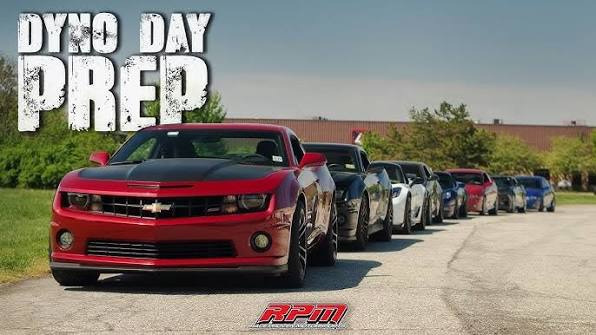
🌀 You Booked a Dyno Pull. Now What?
You've got a slot booked, a couple hundred bucks set aside, and a build you're finally curious enough about to put a real number on. Then the questions start creeping in. Does your car even need to be warmed up first? Will the shop judge your fuel trims? What happens if the number comes back lower than you hoped, in front of everyone standing around the bay?
Here's the truth: a dyno day is not a race and it's not a referendum on your build. It's a diagnostic tool. The number matters less than what you do with it. But showing up unprepared is how people waste a paid slot, get an inaccurate pull, or in the worst cases, hurt an engine that didn't need to get hurt.
This is the guide that walks you through exactly what to check, what to bring, and what to expect, so your first dyno day tells you something useful instead of just costing you money and confidence.
🔧 Mechanical Prep: What Actually Needs to Be Right First
A dyno doesn't care how clean your engine bay looks. It cares whether your car can survive sustained high-load pulls without something letting go.
Cooling system. This is the single most common thing that ruins a dyno day. A dyno pull holds your engine at high RPM and high load for longer than most street driving ever does, which means your cooling system has to work harder than it's used to. Flush old coolant, check for a healthy fan and a radiator that isn't half-clogged, and if you've had any hint of overheating on spirited drives, fix it before the dyno, not during.
Fluids across the board. Fresh oil at the correct level, not overfilled (foaming under hard load is a real thing and it kills oil pressure). Check your transmission fluid if it's a manual, since repeated full-throttle pulls put real heat into the gearbox too. Top off coolant and make sure there are no slow leaks you've been ignoring.
Fuel. Run at least a half tank, ideally closer to full, and make sure it's fresh, correctly-octane fuel that matches whatever your tune expects. If you're running E85 or a specific blend, confirm with the shop ahead of time that their dyno software is calibrated for it. Showing up with the wrong fuel for your tune is how you get a pull that looks nothing like your car's real potential.
Belts, hoses, and mounts. A dyno pull puts real torque through your drivetrain in a short burst. Check belt tension, look for any hose that's soft or cracked, and give your engine and transmission mounts a look if you've never replaced them. A bad mount under hard load is unpleasant to feel and worse to hear.
Tires and wheel security. You'll be strapped down hard, and the rollers put real lateral load through your tires. Make sure tread is even and pressures are set correctly. Spota tip: if you're tracking mods in your Garage, log your tire condition and pressures before the pull. It's a small habit that makes your next maintenance interval a lot easier to plan around.
Boost and tune sanity check. If you're running a piggyback tune, standalone, or a flashed ECU, do a final sanity check on your current tune before you go. Log a few pulls in a safe, legal setting if you can, watching for knock, unstable AFRs, or boost spiking past your target. A dyno operator can catch a dangerous tune before it does damage, but you don't want to find out your wastegate spring is mismatched with your target boost for the first time on someone else's rollers.
🧾 What to Bring and What to Ask Before You Strap Down
Bring your maintenance history if you have it. Not because anyone's grading you, but because a shop that knows your last oil change, your injector size, or your last tune revision can spot something off faster than one working blind.
Ask what kind of dyno they're running. A dynojet (inertia-based, measures wheel speed and acceleration) and a Mustang or Dynapack (load-bearing, can hold a steady RPM) produce different numbers for the same car, sometimes a meaningful amount apart. This matters if you're planning to compare your number against a friend's pull from a different shop. Ask, and don't panic if your number looks different from someone else's car on paper.
Ask about correction factors. Dyno software applies a correction (usually SAE or STD) to account for temperature, humidity, and altitude on the day of the pull. Two identical cars pulled a week apart in different weather can show different numbers purely from correction math, not anything mechanical. Ask which standard they use so you understand what you're actually looking at.
Decide what you're testing for. Are you chasing a baseline before you start modding? Verifying a new tune actually did what it claims? Diagnosing a power loss you've felt but can't explain? Walking in with a clear goal changes what the operator watches for and what data is worth paying attention to afterward.
Ask about safety procedures. A good shop will explain how the car is secured, what happens if something goes wrong mid-pull, and whether they do a warm-up pull before the pulls that count. If a shop can't answer basic safety questions clearly, that's worth noting.
🧠 The Mental Prep: Managing Your Own Expectations
Your number will probably not match your calculator math. Whatever number a mod forum or a parts calculator promised you, real-world dyno numbers almost always land lower once you account for drivetrain loss, altitude, temperature, and the fact that marketing claims are measured under ideal conditions your driveway doesn't have.
Wheel horsepower is not crank horsepower. Manufacturers advertise crank numbers. A dyno measures at the wheels, after the car has already lost power to the drivetrain, the transmission, and rotating mass. A 15 to 25 percent drivetrain loss is normal depending on your drivetrain layout, so don't panic if your wheel number looks a lot lower than your engine's rated output. That gap is expected, not a sign something's broken.
One pull is a data point, not a verdict. Temperature, fuel batch, tire pressure, and even how warm the engine was going in can all shift a single pull by a few percent. If a number matters to you (for a sale, a record, or just peace of mind), ask about doing a couple of back-to-back pulls once the car's fully warmed and see how consistent they are with each other.
A flat spot or dip in the curve is useful information, not a failure. A torque dip where you expected a smooth curve can point you toward a boost leak, a tune issue, or a mechanical problem you hadn't noticed yet. That's the actual value of the day: a real curve you can read instead of a guess.
🏁 After the Pull
Get the printout or the data log, not just the peak number. The full curve tells you far more than a single headline figure, whether the power builds smoothly, where torque peaks, and whether anything looks off compared to what you'd expect for your combo.
If something did look wrong, a good shop will usually tell you before you even ask. If you left with more questions than answers, that's a sign to find a shop that explains its process better next time, not necessarily a sign your car has a problem.
Log the results somewhere you'll actually find them again. A screenshot buried in your camera roll is easy to lose. Whether that's a build thread, a spreadsheet, or your Spota Garage timeline next to your mod history, future you (and anyone helping you diagnose something down the line) will thank you for having a real record instead of a memory of "it felt strong that day."
For more on getting your build ready for a big day out, check out our guide on prepping for your first track day, or browse more how-tos for everything else worth knowing before you commit to a mod.
Your first dyno pull isn't the finish line. It's the baseline everything else gets measured against. Show up prepped, ask good questions, and let the curve tell you the truth.