
📹 The Gadget Nobody Needed, Until Everybody Did
Ten years ago, dash cams were a joke. A Russian meme, mostly. Grainy YouTube compilations of Moscow drivers hitting black ice, getting rear-ended, or watching a meteor streak across the sky while somebody argued about lane discipline in the background. Car guys in the US shrugged them off as paranoid, cheap, and honestly kind of embarrassing to have suction-cupped to your windshield.
Now walk through any car meet parking lot and count the windshields without one. You'll run out of fingers before you run out of cars.
Something shifted. Dash cams stopped being a gadget for the anxious and became load-bearing insurance for anyone who's put real money into a build. If you've got a widebody kit, a fresh wrap, or a motor that isn't stock, a dash cam isn't paranoia anymore. It's just what you do.
Here's how that happened, and why it's not going back.
💥 The Parking Lot Is Where Builds Actually Die
Nobody wrecks their car doing something cool. Ask around at any meet and you'll hear the same story on repeat: the car survived a decade of spirited driving, track days, canyon runs, whatever, and then got clipped by a shopping cart chaperone backing out of a Target spot doing eleven miles an hour with zero situational awareness.
Parking lots are uninsured, unregulated chaos. No lane markings mean anything. Nobody signals. Everyone's looking at their phone, their kid, or the cart corral, not your quarter panel. And when contact happens, the other party's default move increasingly isn't to leave a note. It's to leave, period.
A dash cam with parking mode changes the math entirely:
- It's always recording, even with the engine off, triggered by motion or impact sensors
- It captures plate numbers, which is the difference between a police report with a suspect and a police report that goes nowhere
- It timestamps everything, which matters the moment your insurer asks "when did this happen"
- It survives the hit-and-run, because footage doesn't need the other driver to stick around and be honest
Without one, a hit-and-run on a modified car is often just a total loss you eat yourself, because your policy doesn't cover an unidentified driver the way it covers an identified one, and the body shop estimate on aftermarket parts is never pretty.
🎭 "Crash for Cash": The Scam That Made Dash Cams Mandatory
This is the part that actually moved the needle for a lot of owners, more than any parking lot ding ever did.
Insurance fraud rings running staged accidents, brake-checks, sudden lane cuts, "swoop and squat" maneuvers designed to bait a rear-end collision, aren't an urban legend. They're a documented, prosecuted, ongoing problem, and they disproportionately target drivers who look like they'll settle fast: nice cars, distracted drivers, anyone who looks like they have something to lose by fighting a claim in court.
The scam works like this. A car cuts in front of you and brakes hard for no reason, or two cars box you in and one brakes suddenly. You rear-end them. They immediately claim neck and back injuries, sometimes with passengers who weren't even in the car when it happened. Their attorney is somehow already involved by the time the tow truck shows up. Without evidence, it's your word against a coordinated story, and insurance companies often just pay out because litigating is more expensive than settling.
A dash cam ends that conversation immediately. Footage showing the other car brake-checking you for no reason, or showing their trunk was already open and empty when it was supposedly full of "several passengers," turns a five-figure fraudulent claim into a case that gets thrown out. Insurance companies know this, which is part of why some of them now offer premium discounts for dash cam ownership. It's cheap insurance against expensive lies.
🚔 Every Car Guy Has a "He Said, She Said" Story
Ask any enthusiast who's been driving anything remotely fast or modified for more than a few years, and they've got a story about being blamed for something that wasn't their fault, specifically because their car "looked like it was probably speeding."
That's not paranoia. It's a documented bias. A stock Camry involved in a fender bender gets treated differently by witnesses, cops, and insurance adjusters than an exhaust-tipped, lowered coupe involved in the exact same accident, even when the fault is identical on paper. Car guys know this instinctively, because most of them have lived it: the assumption that the modified car was "obviously" the aggressor, the reckless one, the one going too fast, regardless of what actually happened.
Footage removes the assumption from the equation. It doesn't matter what your car looks like if there's a timestamped video showing the other driver ran the red light. This is the same reason ride-share drivers, delivery drivers, and increasingly regular commuters all picked up the habit long before car culture did: when your word is worth less than someone else's by default, you stop relying on your word.
🛠️ What Actually Matters When You're Buying One
The dash cam market ballooned once demand did, which means there's a lot of junk mixed in with the genuinely good units. A few things separate a camera that actually protects you from one that's just decoration:
- Resolution that can actually read a plate. 1080p sounds fine until you're trying to zoom into a license plate at night from thirty feet away and it turns into mush. 2K or 4K front cameras are worth the extra cost specifically for plate legibility.
- A real parking mode with impact and motion detection. This is the feature that catches parking lot hits, and it needs either a hardwire kit into your fuse box or a dedicated battery pack, because running it off the cigarette lighter port alone drains fast and often isn't even wired to stay live with the car off.
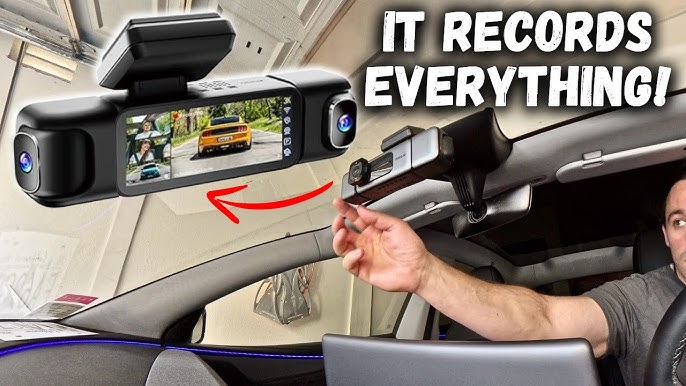
- Front and rear coverage. A front-only cam misses the most common insurance-fraud setup, the rear-end "swoop and squat." Dual-channel units cost more but close that gap.
- Loop recording with a large enough card, and ideally cloud backup for key clips. Footage that overwrites itself in twenty minutes because the SD card is too small doesn't help you if you don't pull the clip immediately after an incident.
- A mount that doesn't wreck your interior aesthetics. This sounds shallow until you've spent real money on a clean cabin and don't want a giant camera housing hanging off your windshield like a rearview mirror grew a tumor. Compact, mirror-integrated, or windshield-edge mounts exist specifically so the cam doesn't fight your build's vibe.
Hardwiring is worth the extra hour of install time. A dash cam that only records while the engine is running is a dash cam that misses the exact scenario, a parked car getting hit, where you need it most.
📸 The Documentation Instinct Runs Deeper Than Insurance
There's a broader shift happening here that's bigger than fraud protection. Car culture has quietly become a documentation culture. Build threads track every part number and every dyno pull. Garage apps log every mod with photos and dates. Owners who used to keep a shoebox of receipts now keep a digital paper trail on everything that's ever touched their car, because a documented build is worth more, is easier to insure accurately, and is easier to defend when something goes wrong.
A dash cam is just that same instinct extended to the road itself: if you're the kind of owner who tracks every mod in your garage, tracking what actually happens to your car while you're driving it is the same logic applied one layer further out. Spota tip: if you're already building out your car's timeline in your Garage, that documentation habit and a dash cam's footage habit come from the exact same place. One protects the build's history. The other protects the build itself.
🧾 The Legal Fine Print Nobody Reads Until It Matters
A dash cam isn't a universal legal shield, and treating it like one gets people in trouble. A few things worth knowing before you assume footage automatically wins an argument:
- Two-party consent audio laws exist in several states, meaning recording in-cabin audio without passenger knowledge can be a legal gray area depending on where you live. Video is almost always fine; audio is where it gets complicated.
- Placement rules on obstructing the windshield vary by state, so a cam mounted low near the edge of the glass, out of the wiper sweep and driver sightline, is safer than one plastered in the center of your view.
- Footage can cut both ways. If your camera also caught you doing something you shouldn't have been doing, it's discoverable evidence against you too. A dash cam rewards honest driving, not reckless driving with a camera as a shield.
None of that erases the upside. It just means the footage is a tool, not a magic "I win" button, and it works best paired with actually driving like the footage might get watched.
🏎️ Track Days and Meets: The Other Place Footage Saves You
Parking lots and highway fraud get most of the attention, but the track day and car meet scenes have their own version of this problem, and it's arguably worse because the stakes are higher and the audience is bigger.
On track, contact between two cars almost always comes down to who was where, at what point in the corner, and whether a pass was actually completed before the incident. Corner workers see part of it. Cameras see all of it. Most track day organizers and time attack events now either strongly encourage or flat-out require onboard footage specifically because it ends "I was already past you" arguments in seconds instead of turning into a paddock shouting match that ruins everyone's day. A dash cam that doubles as a track camera, or a dedicated action camera used alongside it, has become as standard as a helmet for anyone running open lapping days.
At meets, the calculus is different but just as real. Meets draw crowds, and crowds occasionally draw people who shouldn't be there: someone leaning on a car that isn't theirs, a kid climbing on a hood for a photo, an argument that escalates between two people who've never met. Owners who've had a car damaged at a meet, sometimes by another attendee, sometimes by a bystander who wandered too close, know that "someone saw it happen" isn't the same as having it on file. A parking-mode dash cam running the whole time a car sits static in a lot full of strangers is doing exactly the job it was built for.
💰 What It Actually Costs, By Tier
Pricing spans a wide range, and paying more does buy real capability, not just brand markup:
- Budget tier ($40-$80): Single-channel, 1080p, basic loop recording. Fine as a bare minimum, weak on parking mode, plate legibility is hit or miss at night.
- Mid tier ($100-$200): Dual-channel front and rear, 1440p-2K front resolution, real parking mode support, GPS logging of speed and location. This is where most serious owners land, because it covers the actual failure modes: hit-and-runs, staged rear-ends, and parking lot contact.
- Premium tier ($250-$450): 4K front resolution, three- or four-channel setups covering front, rear, and cabin, cloud upload for key clips, app-based footage management, and hardwire kits included in the box. Worth it for anyone with a car expensive enough that a single fraudulent claim or unresolved hit-and-run would actually hurt.
Installation adds cost most people skip on the cheap end and regret: a proper hardwire kit routed cleanly through the headliner and A-pillar runs another $20-$50 in parts if you do it yourself, or $75-$150 if a shop does the wiring so it doesn't look like an afterthought.
🏁 It's Cheap Insurance for Everything You Can't Control
You can drive perfectly, park in the farthest spot from the entrance, and still come back to a dented door with no note. You can get rear-ended by someone running a scam that's specifically designed to look like your fault. None of that is preventable. What's preventable is spending months fighting a claim with nothing but your word against someone else's, when a $150 camera could have ended the argument in thirty seconds.
That's the entire reason the dash cam went from meme to mandatory. It's not about distrust of every driver on the road. It's about not needing to trust them, because the footage doesn't care who tells a better story.
If your build's worth protecting, so is the truth about what happens to it.