
🇩🇪 The Badge That Bites Back
Every car guy knows somebody who bought a used 3 Series for $9,000 because it was "such a good deal." Give it eighteen months. That same guy is now on a first-name basis with his local independent BMW shop, has a spreadsheet tracking repair costs, and swears he's never buying German again.
Then he buys another one anyway.
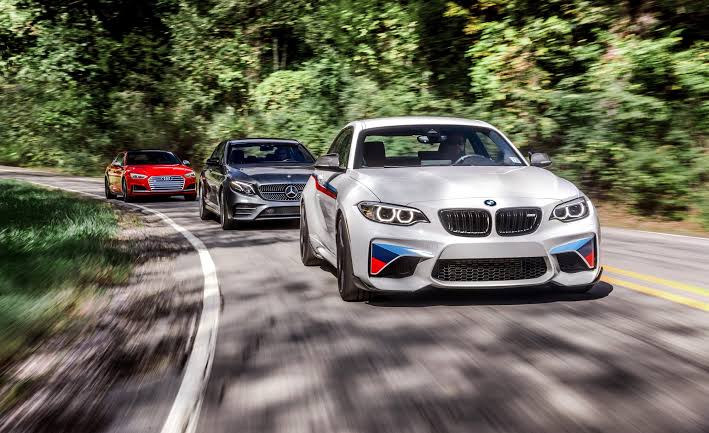
That's the German car paradox in a nutshell. These are some of the best-engineered, best-driving cars on the planet, and also some of the most punishing to actually own once the warranty clock runs out. It's not a myth, it's not internet exaggeration, and it's not just bad luck. There's a real, structural reason BMWs, Audis, and Mercedes cost more to keep running than a Honda or a Toyota, and it starts long before the car ever leaves the factory.
Let's get into why the badge that makes you feel like you've made it is also the badge that quietly drains your bank account.
⚙️ It Starts With the Engineering Philosophy
Performance First, Serviceability Second
German automakers design cars around one goal above all else: driving dynamics. Precise steering, flat cornering, engines that make power high in the rev range, suspension geometry tuned for feel over comfort. That obsession is exactly why these cars are so good to drive. It's also exactly why they're so expensive to keep alive.
What that engineering priority actually costs you downstream:
- Engines packaged tighter into the bay, leaving less room for a mechanic's hands
- Components stacked in layers, so replacing a cheap part means removing three expensive ones first
- Electronics integrated deeply into everything, from throttle response to suspension damping to climate control
- Materials chosen for weight savings and performance, not long-term durability under neglect
Compare that to Japanese economy-car design philosophy:
- Build for the widest possible ownership base, including people who never change their oil on time
- Prioritize accessibility: parts a home mechanic can reach with basic tools
- Over-engineer tolerances so minor neglect doesn't cascade into failure
- Keep electronics simple and modular, easy to diagnose and replace
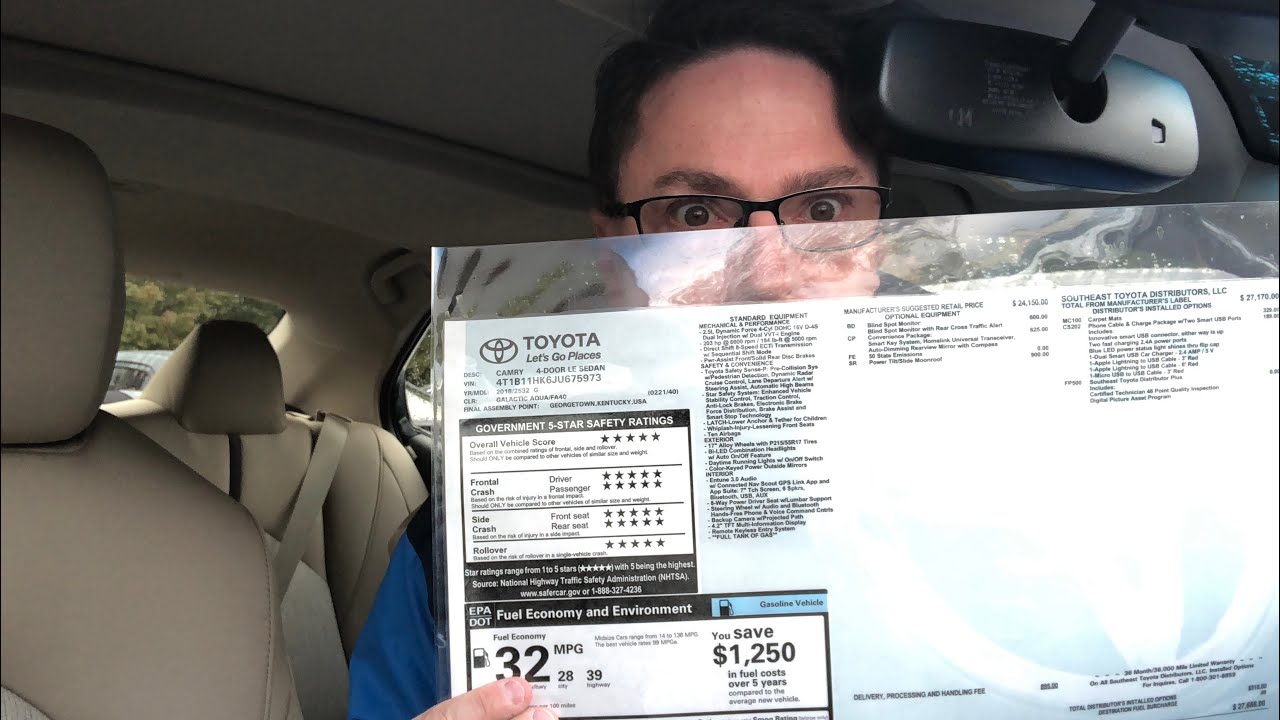
Neither approach is wrong. They're built for different goals. A Camry is engineered to survive 250,000 miles of mediocre maintenance. A BMW is engineered to feel like a scalpel at 8/10ths on a canyon road. You don't get both of those cars for the same maintenance bill.
🔧 The Parts Pricing Problem
Why a Sensor Costs Four Times What It Should
Here's where it gets painful. A coolant temperature sensor on a Toyota might run $25. The equivalent part on a BMW can run $150 to $250, and that's before labor. It's not always because the German part is objectively better engineered. It's because of who controls the supply chain and how the pricing model works.
Why German parts run so much higher:
- Dealer-controlled distribution: OEM parts are often sold through a tighter network, with fewer independent suppliers competing on price
- Lower production volume: BMW, Audi, and Mercedes sell a fraction of what Toyota or Honda sell globally, so parts don't benefit from the same economy of scale
- Complex part assemblies: A single "sensor" often comes bundled as part of a larger module, so you're not buying a $20 part, you're buying a $180 assembly that happens to contain a $20 sensor
- Import logistics: Many parts are still sourced from Germany or EU suppliers, adding shipping, tariffs, and currency conversion into the price
- Brand premium baked in: Yes, some of it is simply because they can charge it. Luxury badge, luxury parts pricing.
The aftermarket exists, but it's a trade-off:
- Aftermarket and OEM-equivalent parts (Bosch, Mahle, Febi, Lemförder) can cut costs 30-50%
- Quality varies wildly between brands, and cheap aftermarket electronics fail faster
- Some systems (specifically anything tied to the ECU or driver-assist sensors) really do need OEM parts to function correctly
🛠️ Labor Costs: Where the Real Money Disappears
Complexity Multiplies Time, and Time Is Money
Parts pricing gets the headlines, but labor is where German car ownership actually bleeds you dry. These cars are engineered with a level of mechanical density that turns simple jobs into multi-hour ordeals.
Jobs that are simple on most cars but brutal on German cars:
- Spark plug changes: On some V8 and V10 BMW engines, this means dropping the intake manifold, a job that can take 3-4 hours instead of 20 minutes
- Water pump replacement: Many German engines bury the water pump behind the timing components, turning a $200 part into an $800-1,200 job
- Battery replacement: Sounds absurd, but modern BMWs and Mercedes require battery registration through diagnostic software so the car's electrical system properly recognizes the new battery's charge characteristics
- Turbo replacement: Deeply integrated into the exhaust manifold on many modern BMW and Audi engines, meaning half the engine bay comes apart for what should be a bolt-on part
Independent shop labor rates for German specialists:
- $130-180/hour is common for BMW, Audi, and Mercedes specialists
- Dealership labor rates can run $180-250/hour depending on market
- Compare to $80-120/hour at a general shop for a Honda or Toyota
That gap compounds fast. A job that takes 1 hour on a Camry and 3 hours on a 5 Series isn't just "a little more expensive." At specialist rates, that's the difference between a $100 repair and a $450 repair for conceptually the same task.
🌡️ The Systems That Fail (and Why They're German-Specific)
Plastic Cooling Systems: The Silent Killer
This one deserves its own section because it's responsible for more roadside German car breakdowns than almost anything else. Many BMWs and some Mercedes models from the 2000s and 2010s used plastic components throughout the cooling system: expansion tanks, water pump impellers, thermostat housings, coolant pipes.
Why plastic cooling components fail:
- Constant heat cycling makes plastic brittle over 8-10 years
- Coolant pressure eventually finds the weak point and cracks it
- Failure is often sudden, not gradual, meaning a cooling system that worked fine yesterday can dump coolant on the highway today
- Replacing "just the cracked part" often isn't enough, because everything in that system is aging at the same rate
Electronics and sensor overload
Modern German cars run more onboard computers and sensors than nearly anything else on the road, often 60-100+ individual control modules in a single vehicle managing everything from adaptive suspension to lane keeping to climate zones. More electronics means more failure points, and more failure points mean more diagnostic time, which circles right back to labor cost.
Oil consumption and turbo wear
Many turbocharged German engines, especially BMW's N20, N26, and early B-series engines, are known for above-average oil consumption between changes. Ignore that and you're looking at accelerated turbo bearing wear, and turbo replacement is rarely a cheap afternoon.
💸 The Real Numbers: What Ownership Actually Costs
Rough five-year maintenance and repair cost comparisons for a comparable segment (2015-2019 model year, 60,000-90,000 miles), based on aggregated owner-reported data and independent shop estimates:
- Toyota Camry / Honda Accord: $2,500 - $4,000 total over 5 years
- BMW 3 Series / 5 Series: $6,000 - $12,000 total over 5 years
- Audi A4 / A6: $6,500 - $13,000 total over 5 years
- Mercedes C-Class / E-Class: $7,000 - $14,000 total over 5 years
Those ranges swing hard based on whether you're buying new with a warranty, buying used right after warranty expiration (the worst possible timing), or buying used with an extended warranty already burned through by the previous owner. That last scenario is where most of the internet's German-car horror stories come from: somebody bought a six-year-old 328i for cheap without understanding that "cheap to buy" and "cheap to own" are two completely different numbers.
🔩 Why People Buy Them Anyway
None of this is a secret. Anybody who's spent ten minutes in a BMW or Audi forum knows the reputation going in. And yet these badges keep selling, keep getting modded, keep showing up at every car meet in the country. Because the driving experience genuinely earns it.
What you're actually paying for:
- Steering feel and chassis balance that Japanese and American manufacturers still chase, decades later
- Interior materials and design language that feel a full class above the price point
- Engine character: the way an N54 spools, the way an S55 screams, the way a Mercedes AMG V8 burbles at idle
- Status and identity within car culture. Say what you want, but a clean E46 M3 or a B8 S4 still turns heads at every meet
There's a reason "buy German, budget accordingly" is basically its own genre of advice in car culture. Nobody's saying don't do it. They're saying go in with your eyes open.
🧰 How to Actually Survive German Car Ownership
If you're set on it (and let's be honest, a lot of you already own one and are reading this out of spite), here's how experienced owners keep the bills manageable:
- Buy from a specialist pre-purchase inspection, always. A $150 PPI at an independent European specialist can save you from a $4,000 mistake
- Find an independent specialist shop, not the dealer. Independent BMW/Audi/Mercedes specialists exist in almost every city and typically charge 30-40% less than the dealership for identical work
- Front-load preventative maintenance. Replace cooling system plastics, water pumps, and known-failure gaskets proactively around the 80,000-100,000 mile mark, before they fail on their own schedule
- Learn which generation and engine to avoid. Every German platform has a "good year" and a "problem year." Ten minutes of forum research before you buy saves years of headaches
- Budget a real maintenance fund. Serious owners set aside $150-250/month specifically for German car upkeep, separate from fuel and insurance
- Join the model-specific community. Whether it's a Bimmerforums thread or an Audizine build log, owner communities catch failure patterns dealerships won't tell you about
If you're tracking your own maintenance history and want it visible alongside your build instead of buried in a shop's paper invoice pile, that's exactly what a Garage profile is for on Spota: log every repair, every part swap, every mile, right next to the mods, so the ownership story is as documented as the build itself.
🏁 The Bottom Line
German cars aren't overpriced junk, and they're not scams. They're precision instruments built by engineers who cared more about how the car feels at 7,000 RPM than how easy the alternator is to reach. That trade-off is real, it's intentional, and it's been the same trade-off since the E30 was new.
You don't buy a BMW, Audi, or Mercedes because it's cheap to own. You buy one because nothing else feels quite like it does, and you decide the bill is worth paying. Just go in knowing exactly what that bill looks like, because the car sure won't warn you.
For more on what actually breaks and what doesn't across different platforms, check out our breakdown on why every Hellcat owner is on borrowed time or browse more under-the-hood deep-dives.