

🔊 The Tip That Ate the Internet
Somewhere in a group chat right now, someone is sending a picture of a hatchback with an exhaust tip the size of a coffee can and captioning it "this you?" Everyone laughs. Everyone knows exactly what it means. Nobody has to explain the joke.
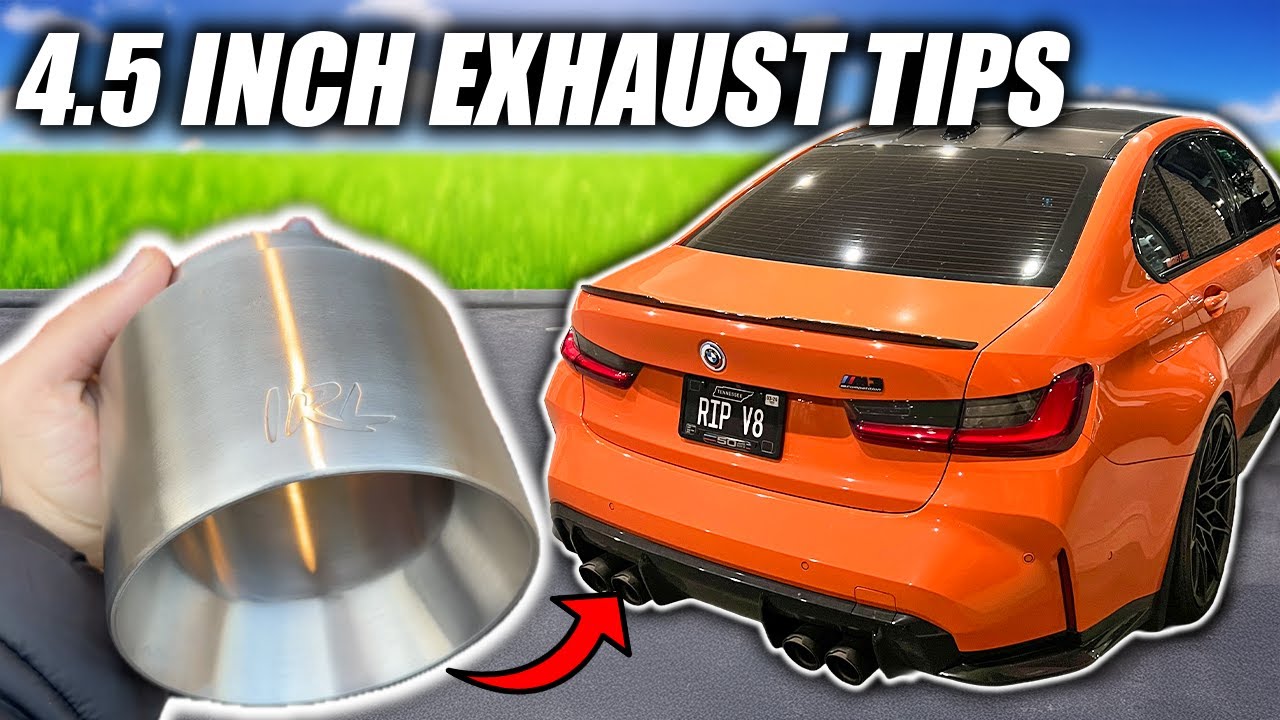
That's the strange power of the giant exhaust tip. It's a piece of stamped or rolled metal, bolted or clamped onto the back of a car, and it has become one of the single most recognizable visual shorthand symbols in all of car culture. You don't need to know anything about cars to clock it. You see a tip that looks like it belongs on a submarine hanging off a stock four-cylinder sedan, and your brain immediately files it under "compensating."
The thing is, the joke didn't come from nowhere. Big exhaust tips have a real history in tuning culture, a real (if wildly overstated) function, and a real reason they went from a legitimate mod to a punchline in under two decades. Understanding how that happened tells you a lot about how car culture actually works: how a real technique gets copied, cheapened, exaggerated, and eventually mocked by the same community that started it.
🏁 Where the Tip Actually Came From
Big exhaust tips weren't always a joke. Go back to Japanese tuning culture in the 80s and 90s, the actual source material for basically every "tuner" trope Western car culture ripped off and remixed, and you'll find oversized tips on genuinely serious cars. HKS, Blitz, Apexi, GReddy, all the big Japanese aftermarket houses were building full cat-back and turbo-back exhaust systems for tuned cars, and those systems ended in real tips, sized to match real piping.
Here's the part people skip: those tips were big because the pipe underneath them was big. A turbocharged inline-six or a built four-cylinder pushing serious boost needs to flow a lot of exhaust gas, and a 3-inch or 3.5-inch mandrel-bent exhaust system genuinely benefits from reduced backpressure at that volume. The tip on the end of that system wasn't decoration. It was the visible end of a piping diameter that was doing real work, on a car that could actually use it.
Drift culture and grip/time-attack culture in Japan leaned into this aesthetic hard. A big polished tip signaled "this car has a real exhaust system," the same way a big brake caliper behind a wheel signals "this car has real brakes." It was shorthand, but it was shorthand for something true.
Then it crossed the Pacific.
🎬 Fast and Furious, eBay, and the Great Cheapening
American tuner culture in the early-to-mid 2000s imported the aesthetic faster than it imported the engineering. The Fast and the Furious (2001) put big polished tips, wings, and body kits on movie screens in front of millions of teenagers who had never touched a torque wrench, and the visual language of "fast car" got permanently rewritten. A generation of car guys grew up associating a big tip with speed, whether or not there was anything behind it.
And here's where the meme really gets born: you didn't need a real exhaust system to get the look. eBay, and later Amazon, flooded with cheap universal "muffler tips," stainless steel shells that slip-fit or clamp directly onto a car's stock exhaust pipe. No cat-back system. No increase in pipe diameter. No tuning, no dyno time, no actual change to how the car breathes. Just a bigger-looking hole at the back of the car for twenty or thirty dollars and a Saturday afternoon.
This is the single biggest thing to understand about the modern meme: a huge tip clamped onto a stock exhaust does almost nothing. The restriction in a stock exhaust system isn't at the last six inches of pipe, it's the catalytic converter, the muffler internals, the piping diameter for the system's entire length. Slapping a 4.5-inch chrome shell on the end of a 2-inch factory pipe is like putting a firehose nozzle on a garden hose. The water still only comes out as fast as the hose behind it allows. You've changed the shape of the exit, not the capacity of the system.
Car guys figured this out fast, because car guys always figure it out fast. And once the trick was common knowledge, the giant clamp-on tip stopped being a signal of "this car is built" and started being a signal of the opposite: this car isn't built, and the owner knows just enough to fake it.
🐢 Enter the "Turbo" Sound Kit and the Modern Punchline
The meme got another gear in the 2020s with the rise of cheap Bluetooth exhaust sound simulators and speaker-based "fart can" setups, sold under names that lean hard into the fantasy: turbo whistle kits, backfire pop simulators, app-controlled exhaust notes you can trigger from your phone. Combine one of those with a huge clamp-on tip and you get a car that looks and sounds aggressive from the outside while making zero actual mechanical changes underneath.
That combination, big fake tip plus fake sound, is basically the platonic ideal of the modern car meme. TikTok and Instagram Reels turned it into a genre unto itself: someone revs a stock Civic with a coffee-can tip and a Bluetooth speaker taped under the bumper, and the comment section writes itself. "Free Turbo Sound App" is one of the most reliable jokes in car culture right now, and the giant tip is its visual mascot.
It's worth saying clearly: there's nothing wrong with wanting your car to sound and look a certain way. Plenty of people mod for vibes, not lap times, and that's a legitimate way to enjoy a hobby. The meme isn't really mocking the desire for a louder, meaner-looking car. It's mocking the gap between what the mod visually claims and what it actually does, especially when it's marketed (intentionally or not) as performance rather than styling.
📏 Does Tip Size Actually Matter At All?
Sort of, but not the way most people think, and definitely not in isolation.
- Piping diameter matters more than tip diameter. A properly sized cat-back system (2.5 inch for most naturally aspirated four and six cylinders, 3 inch and up for serious turbo builds) reduces backpressure and can genuinely help a tuned engine breathe. The tip is just the last few inches of that system and should be proportional to it, not oversized relative to it.
- Oversizing the tip relative to the piping does nothing for flow and can actually make an exhaust note flatter and less resonant, since the sudden diameter change right at the exit disrupts the pressure wave instead of letting it develop naturally through a properly matched system.
- A well-designed smaller tip on a well-designed system often sounds better than a giant tip slapped on stock piping, because tone comes from the whole system's resonance, not the exit hole's diameter.
- Weight matters at the margins. A five-pound stainless tip isn't moving anyone's 60-foot time, but a full cat-back swap from a heavy stock system to a mandrel-bent aftermarket one can shave real weight off the rear of the car, which matters more for handling balance than most people think.
- Backpressure needs differ by engine. Some turbocharged setups actually want a bit of backpressure for spool characteristics, which is why "bigger pipe everywhere" isn't universally correct even on genuinely built cars. Exhaust tuning is a real discipline, not just a diameter contest.
The honest takeaway: exhaust tip size, by itself, tells you almost nothing about a car's actual performance. It tells you what the owner wants you to assume about the car's performance, which is a very different thing, and car people have gotten extremely good at spotting the difference.
🚗 Reading a Real Setup vs. a Costume
If you want to actually tell the difference between a serious exhaust system and a costume tip, here's what car people actually look at:
- Follow the pipe forward. Does the piping stay a consistent, properly sized diameter all the way from the tip toward the front of the car, or does it neck down to factory size a foot or two behind the bumper? A flashlight and a look under the rear bumper settles most arguments in ten seconds.
- Check for a cat-back or turbo-back badge/receipt trail. Real systems come from real brands: Borla, Magnaflow, Invidia, HKS, Akrapovič, and dozens of others, each with a recognizable piping and tip design. A no-name universal clamp tip is the first tell.
- Listen at idle, not just on a rev. A genuinely tuned exhaust has a consistent tone that matches engine load. A Bluetooth sound mod often has a telltale lag, a slightly-off pitch, or pops that don't line up with actual throttle input.
- Look at what else has been done. A serious exhaust upgrade rarely shows up alone. Intake, tune, suspension, brakes, the rest of the build usually tells a consistent story. A giant tip on an otherwise bone-stock car, unchanged wheels, stock ride height, stock badges, is the classic mismatch.
None of this is about gatekeeping who's "allowed" to enjoy a loud car. It's about literacy: car people have collectively built a shared vocabulary for reading a build at a glance, the same way musicians can tell a real Stratocaster from a knockoff by the headstock. The giant fake tip became a meme precisely because that vocabulary got so widely shared that the cheap version stopped fooling anyone.
🏙️ Where the Culture Goes From Here
The meme has actually had a healthy effect on the mod scene overall. It pushed a lot of serious builders toward more subtle, purpose-driven exhaust setups (smaller, better-matched tips, systems built for tone and flow rather than visual shock value) partly as a reaction against being lumped in with the fake-tip crowd. At the same time, it hasn't killed the fun, tongue-in-cheek side of car culture at all. Plenty of people run an oversized tip on purpose, fully in on the joke, because it makes people laugh at meets and that's a perfectly valid reason to mod a car.
That's really the throughline for most of car culture's inside jokes: they start as real technique, get diluted by mass-market shortcuts, get roasted by the community that actually understands the underlying engineering, and eventually settle into a shared bit that everyone, builders and jokers alike, is in on together. The Nissan Altima meme went through the same arc. So did rolling coal. So will whatever mod becomes the next punchline.
If you're out chasing builds, memes, and the real stories behind them, that's exactly the kind of thing Spota's Playlists and Photo Ops are built around: real cars, real people, spotted in the wild, not just clipped from a feed. Pull up your city and go see what's actually rolling around out there, tip size and all.
Next time you see a coffee-can tip on a stock sedan, you'll know exactly what story it's telling, and it's usually not the one the owner thinks it is.