
🌧️ You Just Spent Two Hours On That Car. Here Comes The Rain.
You know the routine. Foam cannon, two-bucket method, microfiber towels laid out like surgical tools. You spend your Saturday morning getting every panel perfect, chase the water spots off the hood before they dry, and step back to admire a car that finally looks the way it did on the showroom floor.
By 3pm, the sky is gray. By 4, it's pouring.
Every car person has lived this exact sequence enough times that it stopped being a coincidence and became a law of nature. Ask ten enthusiasts and at least seven will tell you, dead serious, that washing your car is the single most reliable way to summon rain in your zip code. Some won't even wash the week before a big meet or a road trip because they don't trust themselves not to jinx it.
So is it real? Is there something about a clean car that actually attracts weather? Or is this just car culture's longest-running, most stubbornly believed inside joke?
Turns out the answer is more interesting than either "yes it's magic" or "no you're an idiot." It's a genuinely fascinating mix of real psychology, a little bit of real meteorology, and a culture that has built an entire ritual around a coincidence.
🧠 The Real Reason It Feels True: Confirmation Bias With a Bucket
Here's the uncomfortable statistical truth: it does not actually rain more often after a car wash. There is no dataset anywhere showing car washes cause precipitation. But the feeling that it does is one of the most well-documented quirks of human memory, and it has a name: confirmation bias.
Your brain is a pattern-matching machine, and it is spectacularly bad at tracking the times nothing interesting happened. Think about how this actually plays out:
- You wash your car on a clear Saturday. It stays clear. You go about your day and never think about it again. No story gets told. No memory gets reinforced.
- You wash your car and it rains four hours later. You immediately connect the two events, mention it to your buddy, post about it in the group chat, and the story sticks.
One of these outcomes generates a memorable story. The other one generates nothing. So over years of washing your car dozens of times a year, your brain only files away the instances that confirm the curse and quietly discards the much larger number of instances that don't. By the time you're 30, you've got a "lifetime of evidence" that's actually a highlight reel of your own selective memory.
This isn't a car-guy-specific phenomenon either. The exact same bias is why people swear their phone battery dies faster the moment they leave the charger at home, or why a "jinx" seems to work every time someone says "at least it can't get worse." Humans remember hits and forget misses. Car washes just happen to be a perfect setup for it: a discrete, memorable action followed by an outcome (weather) that changes constantly and is completely out of your control.
☁️ The Actual Meteorology Behind The Coincidence
Confirmation bias explains why it feels true even when it isn't causally true. But there's a second layer here that's actually rooted in real weather behavior, and it's the reason the myth persists as hard as it does.
Most people wash their car on nice days. That's not a coincidence, it's a rational choice. Nobody drags out a bucket and a hose during a storm, and most people avoid washing right before a forecasted rain because it feels pointless. So the population of "car wash days" is heavily skewed toward clear mornings, especially in regions with unstable, fast-changing weather patterns.
Here's the thing about clear mornings in a lot of the country: they're frequently followed by afternoon instability. This is especially true in:
- The humid Southeast and Midwest, where morning sun heats the ground, moisture builds through the day, and that heat plus humidity triggers classic afternoon pop-up thunderstorms by 3 or 4pm.
- Mountain and high-plains regions, where daytime heating drives convection that wasn't visible at 9am.
- Coastal areas with sea breeze patterns that pull in moisture as the day warms.
So if you're the kind of person who checks the morning forecast, sees "sunny," and decides that's your window to wash the car, you're statistically loading the dice toward exactly the kind of day that's more likely to develop afternoon storms in a lot of climates. You didn't cause the rain. You picked a day whose morning conditions correlate with afternoon rain more than random chance would suggest, then washed your car during the one part of the day that looked clear.
It's not causation. It's not even really correlation in a strict sense. It's selection bias stacked on top of confirmation bias, and together they're strong enough to convince entire regions of car people that they've personally angered a weather god.
🚗 Why Car Culture Latched Onto This So Hard
Plenty of hobbies have superstitions. Baseball players don't step on the foul line. Actors won't say "Macbeth" in a theater. But the car wash curse hits different because of how much effort and identity goes into the ritual it's attached to.
Washing and detailing your car isn't just chores. For a lot of enthusiasts it's the closest thing to meditation they get: hands on the panels, checking for new chips or scratches, running a hand over the paint to feel for contamination before it goes anywhere near a towel. It's time invested, sometimes real money invested in ceramic coating or a proper wash kit, and the payoff is supposed to be a car that looks its absolute best.
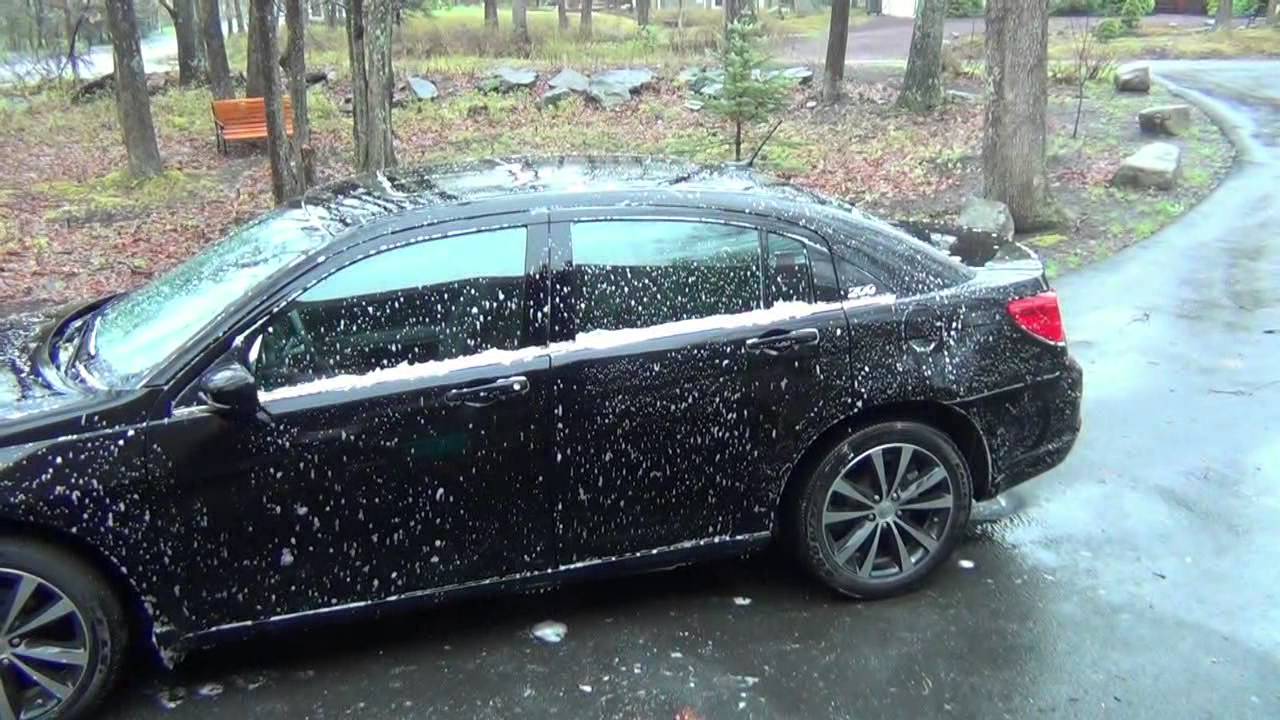
When rain shows up and undoes that in an hour, dumping water spots and road grime right back onto a car you just spent your whole Saturday on, it doesn't feel like a random weather event. It feels personal. And humans are wired to turn things that feel personal into stories with meaning, which is exactly how folklore gets made in the first place.
There's also a community reinforcement loop at play. Car meets, forums, and group chats are full of people trading "it happened to me too" stories, and every retelling adds weight to the myth even though none of it is actual evidence. Spota tip: if your city's Club has a group chat, watch how fast a "just washed my car and now it's raining" post gets replies. It's one of the most universally relatable jokes in car culture because nearly everyone's lived it at least once, and that shared experience does more to cement the myth than any actual data ever could.
💧 The Actual Practical Problem: Rain Right After a Wash Genuinely Sucks For Your Paint
Set the curse aside for a second, because there's a real, non-superstitious reason this feels like such a personal betrayal: rain hitting a freshly washed car actually can cause more visible spotting than rain on a dirty one, and that's not folklore, that's chemistry.
- Freshly washed paint has less protection sitting on top of it if you didn't seal or wax after washing, meaning water sits directly on bare clear coat.
- Rainwater isn't pure water. It picks up minerals, pollution, and airborne particulates on the way down. When it evaporates off a hot hood or trunk lid, it leaves those minerals behind as visible water spots.
- A freshly cleaned car shows every new spot instantly because there's no layer of grime to hide it in. The same rain on a dirty car just blends into the existing dullness.
So the "curse" isn't just a psychological trick, there's a real reason the timing feels uniquely cruel. If you're going to wash on a day with any rain chance at all, drying the car completely and adding a quick spray sealant or detailing spray afterward gives you an actual physical buffer, not a superstitious one, against whatever falls on it next.
🔮 So Should You Actually Check the Radar Before You Wash?
Genuinely, yes, but not because you believe in the curse. Checking an hourly forecast before committing your Saturday to a full wash and wax is just good time management. If there's a real chance of rain in the next 4-6 hours, especially in a region prone to afternoon convection, it's worth either moving the wash earlier, doing a quick rinse instead of the full detail, or just waiting a day.
That's not superstition, that's reading the same weather pattern that's been fooling car people into thinking they're cursed for decades. The myth and the practical advice point in the exact same direction, they just get there for completely different reasons.
And if it does rain on your freshly washed car anyway? You're not cursed. You're just a car person, on a normal day, having a completely ordinary and statistically unremarkable run of bad luck that you will absolutely still bring up at the next meet like it means something.
❓ FAQs
Does washing your car actually cause it to rain?
No. There's no physical mechanism by which washing a car influences local weather. The pattern people notice is driven by confirmation bias (remembering the times it rained, forgetting the times it didn't) and selection bias (people tend to wash on clear mornings, which in many climates are exactly the conditions that precede afternoon storms).
Why does it feel like it happens every time?
Because your brain files away confirming memories and discards non-events. You remember every time it rained after a wash because it was annoying and memorable. You don't remember the dozens of times it stayed dry because nothing happened worth remembering.
Is there any real weather pattern behind this?
Sort of. Clear, sunny mornings in humid or high-elevation regions often build into afternoon thunderstorms as the day heats up. If you're choosing to wash based on a clear morning forecast, you're unknowingly picking days with a higher baseline chance of afternoon rain in a lot of climates.
Does rain actually damage a freshly washed car more than a dirty one?
It can look worse. Freshly washed paint shows new water spots and mineral deposits instantly because there's no existing grime to mask them. A quick spray sealant after washing adds a real protective buffer against spotting.
Should I check the forecast before washing my car?
Yes, for practical reasons, not superstitious ones. Checking an hourly forecast before a full wash and wax saves you the frustration of redoing work, especially in regions prone to fast-building afternoon storms.
Is this superstition unique to car culture?
Not really, the same confirmation bias shows up in plenty of hobbies and daily life (jinxes, "Murphy's Law" moments, phone battery myths). Car culture just has a uniquely strong, ritual-heavy relationship with the specific act of washing, which makes the myth land harder and spread faster.
Wash it anyway. Cursed or not, a clean car is still a clean car, even if it only lasts an hour.