
🦶 A Skill Almost Nobody Learns Anymore
Ask ten people under 30 what heel-toe downshifting is and you'll get nine blank stares and one person who saw it in a YouTube video once. That's not an insult, it's just the math. Manuals are a rounding error of new car sales, automatics rev-match on their own now, and most people who do drive stick never push their car hard enough to need the technique in the first place.
But twenty years ago, heel-toe was just how you drove a manual well. Not a party trick. Not something reserved for racing drivers. A basic expectation if you wanted to brake and downshift into a corner without your car lurching like it just got rear-ended.
That skill is disappearing fast, and the people who still have it know exactly how rare it's become. This is why it matters, why it's dying, and why some car guys still treat it as a line in the sand between "drives a manual" and "actually knows how to drive."
🔧 What Heel-Toe Downshifting Actually Is
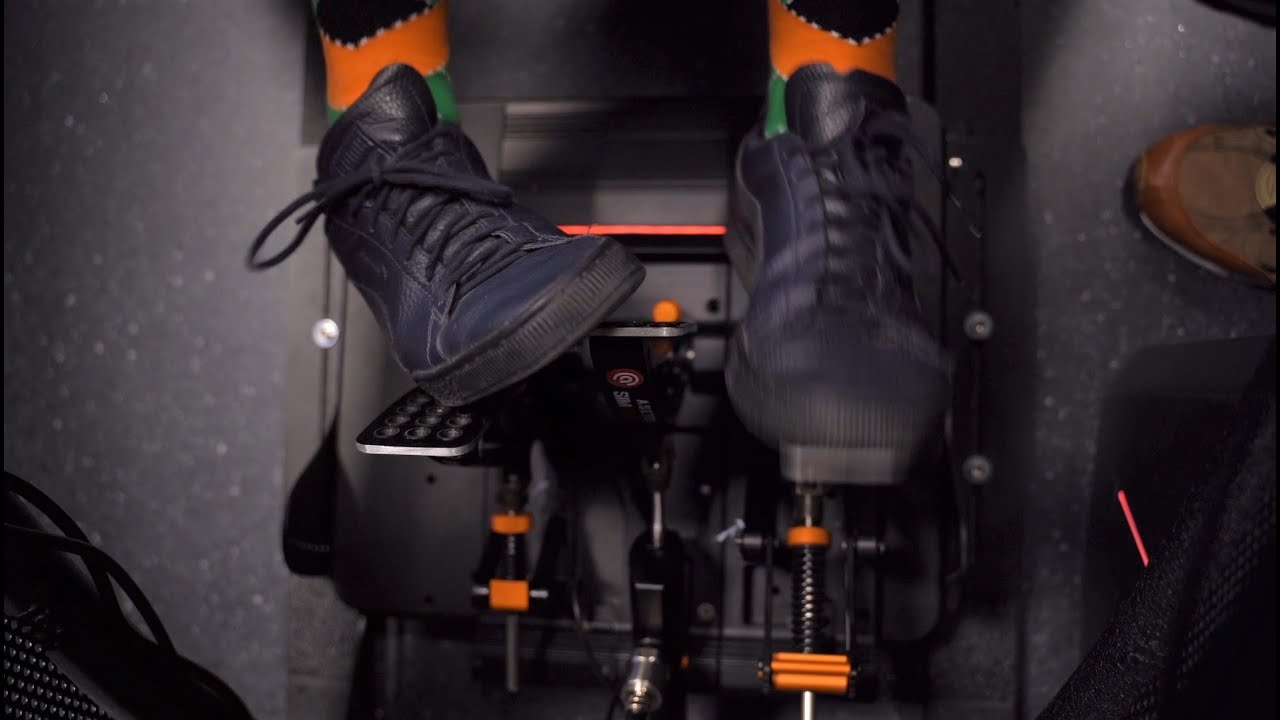
Heel-toe (sometimes called "heel-and-toe," even though almost nobody actually uses their heel) is the technique of operating the brake and throttle at the same time with one foot while your other foot works the clutch, so you can downshift smoothly while still braking hard into a corner.
Here's the problem it solves. When you're braking hard and need to drop from, say, 4th gear to 2nd before a corner, the engine RPM at 2nd gear speed is way higher than the RPM your engine is currently sitting at while you're slowing down. If you just clutch in, shift down, and let the clutch out, that mismatch slams the drivetrain. The rear wheels (or front, depending on your car) momentarily fight the engine's slower speed, and you get a lurch, a chirp from the tires, or in a bad case, a loss of traction right when you need grip the most.
The sequence, broken down:
- Brake with the ball of your right foot like normal
- Clutch in with your left foot
- Roll the edge or side of your right foot onto the throttle to blip the RPM up, without lifting off the brake
- Shift down
- Release the clutch smoothly, now the engine speed matches what the new gear expects
- Keep braking through all of it
Done right, the whole thing happens in under a second and the car barely notices you changed gears. Done wrong, everyone in the car notices.
🏎️ Why It Used To Be Table Stakes
Before rev-matching automatics and dual-clutch transmissions did this job electronically, heel-toe wasn't optional if you drove anything with sporting pretensions. Every driving instructor taught it. Every track day novice got yelled at for skipping it. It showed up in car magazine tech articles as a basic skill, not an advanced one.
Part of that was necessity. Cars with carbureted engines or early fuel injection didn't have throttle-by-wire systems doing anything for you. If you wanted a smooth downshift, your foot had to do the rev-matching, full stop. There was no computer backup plan.
It was also just how driving culture worked. Learning stick wasn't the finish line, it was the starting point. Once you could operate a clutch without stalling, the next milestone was smoothing out your shifts, and heel-toe was the technique that separated "can drive a manual" from "drives a manual well."
Racing culture reinforced this hard. Every driver's ed article, every amateur racing forum, every track day mentor treated heel-toe as fundamental. You didn't get taken seriously on track without it. Rally drivers used it constantly on tight, technical stages where braking and downshifting happen in the same half-second. It wasn't a flex, it was just the job.
📉 Why the Skill Is Disappearing
The Cars Do It For You Now
This is the biggest reason, and it's not close. Modern automatic transmissions, especially dual-clutch and torque-converter automatics with sport modes, rev-match their own downshifts. Even some manual cars now come with an automatic rev-matching feature (Porsche calls it Auto Blip, other automakers have their own names) that does the throttle blip electronically when the driver downshifts.
If the car handles the hard part automatically, there's no functional reason left to learn it by hand. That's not laziness, that's just what happens when technology solves a problem people used to solve themselves. Nobody laments that they don't hand-crank their car to start it either.
Manuals Themselves Are Nearly Extinct
You can't practice heel-toe in an automatic. Full stop. With manual transmissions down to a sliver of new car sales and a shrinking list of models that even offer one, the number of drivers who have regular access to a clutch pedal, let alone one they push hard enough to need rev-matched downshifts, keeps shrinking every year.
Spota tip: if you're one of the drivers keeping stick alive, the Garage is where that kind of ownership story belongs, mods, milestones, the whole build history, not just a spec sheet nobody reads.
Most Driving Never Requires It
Heel-toe only matters when you're braking hard and downshifting at the same time, which basically means aggressive street driving or track driving. Most commuting doesn't ask for it. Most people who own a manual today bought it for the engagement or the theft-deterrent factor, not because they're threading canyon roads or hot-lapping a track on weekends. Without a real use case, a skill this specific just doesn't get picked up by accident.
Driving Schools Don't Prioritize It
Formal driver's ed in most places barely covers manual transmissions at all anymore, let alone advanced technique. What used to be a standard part of learning to drive well has become a niche skill you have to actively seek out, usually from a track day instructor, an enthusiast forum, or an older relative who still daily drives a stick.
🧠 Why Some Car Guys Still Guard It Like a Badge of Honor
Ask around at any track day and you'll find a specific type of driver who treats heel-toe like a litmus test. Not because it makes you faster in any measurable way on a modern car with electronic aids, but because of what it represents: you learned to do with your feet what the car now does with a computer.
That distinction matters to a certain kind of enthusiast the same way knowing how to drive stick at all matters. It's proof of a deeper relationship with the mechanics of driving, not just the result of it. Anyone can point a car at a corner and brake. Fewer people can feel the RPM mismatch coming and correct for it before it happens.
There's also a real, if narrower, performance case that keeps the skill alive in racing circles. On older race cars, rally cars, and any manual without automatic rev-matching, heel-toe still isn't optional if you want to be fast and keep your drivetrain in one piece. Autocross and time attack communities in particular keep the technique very much alive, because a badly matched downshift mid-corner can unsettle a car right when grip matters most.
And there's a simpler reason too: it feels good. Nailing a clean heel-toe downshift, hearing the engine blip exactly right, feeling the car settle instead of lurch, is one of those small mechanical satisfactions that no automatic transmission, however smooth, can replicate. That feeling is worth learning a dying skill for, even if nobody's grading you on it.
🛣️ Should You Bother Learning It?
If you drive an automatic exclusively, there's no practical reason to. The skill doesn't transfer and you'll never use it. But if you own a manual, or you're planning to, learning heel-toe is one of the cheapest ways to genuinely improve as a driver. It costs nothing, it doesn't require a track, and it builds a feel for engine speed and clutch timing that makes you a smoother, more confident driver even when you're not doing anything dramatic.
Start slow, in an empty parking lot, at low speeds, before you ever try it braking hard into a real corner. Get the foot positioning down first. It feels impossible for the first hour and then, almost overnight, it clicks.
Skills that are becoming rare are worth more, not less, because of that rarity. Heel-toe downshifting won't show up on a spec sheet and it won't make you faster than a modern automatic in a straight comparison. But it will make you a driver who actually understands what's happening between the pedals and the pavement, and that's a kind of car knowledge that doesn't go out of style even as the manuals it depends on quietly disappear.
Related reading: why manual transmissions refuse to die, why rev hang ruins your downshifts.