
📱 The Slab of Glass Nobody Asked For
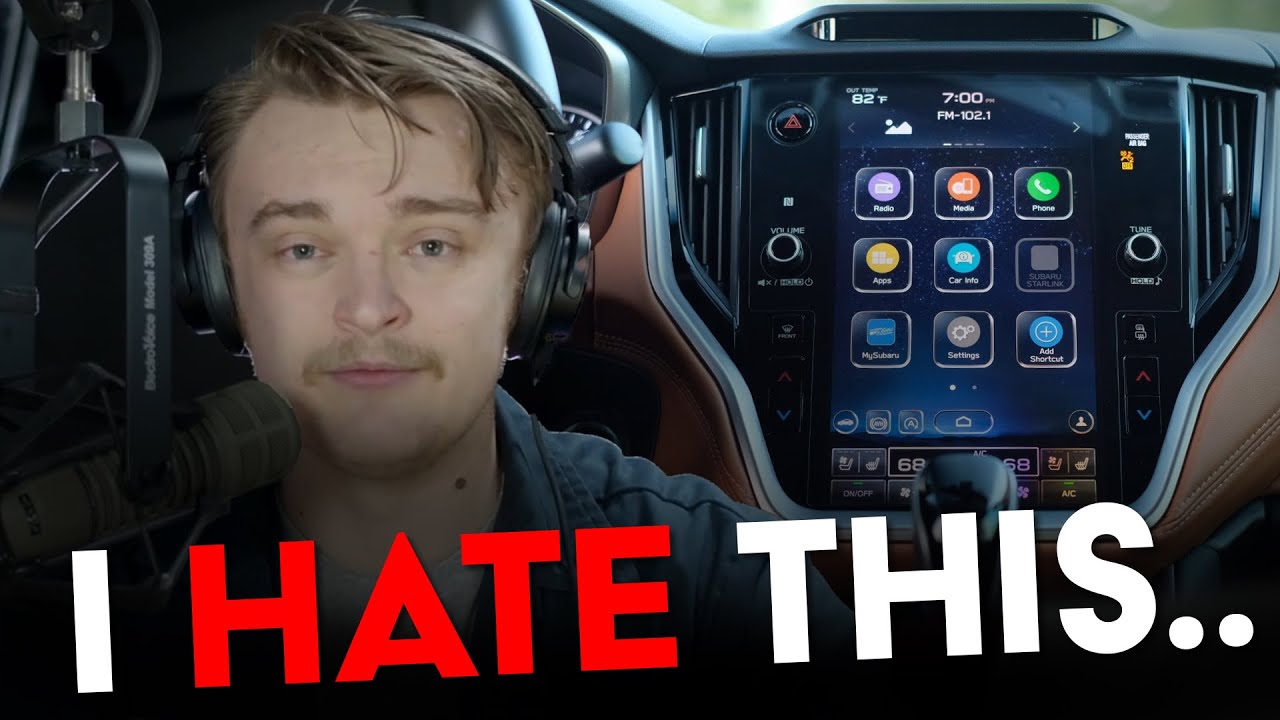
Sit in almost any new car built in the last five years and you'll find the same thing staring back at you: a giant black rectangle where the climate controls used to be. No knobs. No buttons. Just glass, and a menu three taps deep to turn the seat heater on while you're doing 70 on the interstate.
Car guys hate this. Not in a "get off my lawn" way, in a "I nearly rear-ended someone trying to turn down the AC" way.
And here's the part that makes it interesting: the industry is starting to agree with them. Porsche brought buttons back. Hyundai brought buttons back. Volkswagen, after catching years of grief for the Golf Mk8's touch-slider steering wheel, is reversing course too. Even the brand that started the whole minimalist-screen trend is facing pressure to walk it back.
This isn't nostalgia. It's a real design failure that took the industry the better part of a decade to admit.
🖥️ How We Got Here: Blame the Bill of Materials
Screens Are Cheaper Than You'd Think
Here's the part automakers don't put in the brochure: a single touchscreen with software-defined controls is often cheaper to manufacture than a dashboard full of physical switches, dials, and the wiring harnesses behind them.
One screen replaces:
- Climate control knobs and their backlighting
- Physical stereo buttons and volume dials
- Drive mode selectors
- Seat and mirror memory buttons
- Half a dozen warning lights and toggle switches
Fewer unique parts means fewer supplier contracts, fewer points of failure on the assembly line, and a dashboard that can be reskinned for a facelift with a software update instead of a tooling change. From a spreadsheet, it's a clean win.
Tesla Made It Look Inevitable
Tesla's Model S launched in 2012 with almost the entire interior condensed into one central screen, and it became the template everyone else chased. It photographed well. It felt futuristic in a showroom. And it let automakers claim their car was "always updating" like a phone, which sounded great to investors even when it made the actual driving experience worse.
The rest of the industry followed, not because drivers were asking for it, but because it was the aesthetic that read as premium and modern in a press photo. Spota tip: if you're building a Garage profile and want interior shots that actually stand out, an analog dash with real gauges photographs better than a black mirror ever will.
🚨 The Safety Data the Industry Ignored
Physical Controls Are Measurably Faster
This isn't just a vibe. It's been tested.
Sweden's Vi Bilägare magazine ran a now-famous comparison in 2022, timing how long it took a driver to complete four common tasks (adjust climate, change radio station, dim the dash, reset the trip computer) at 68 mph, comparing a 2005 Volvo V70 with old-school buttons against several modern touchscreen cars.
The results:
- The 2005 Volvo, with zero digital interface at all: 10 seconds
- The fastest modern touchscreen car in the test: 20+ seconds
- The slowest: over 44 seconds
Twenty years of "technological progress" made the basic act of adjusting your AC four times slower, and at highway speed, that's the difference between a few hundred feet of distracted driving and nearly a mile of it.
Muscle Memory Doesn't Work on Glass
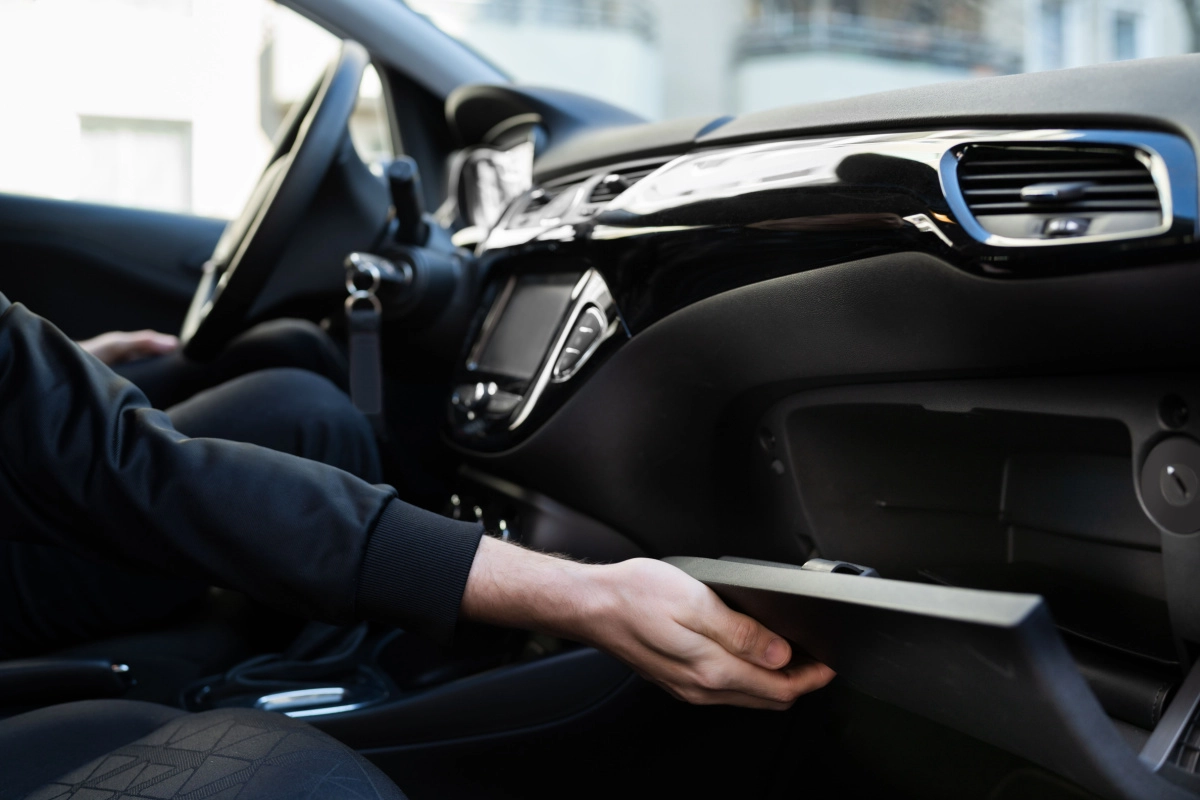
A physical knob has an edge, a texture, a click, and a fixed location. Your hand learns where it is and what it does without your eyes ever leaving the road. That's not a design nicety, it's the entire point of a control interface in a moving vehicle.
A touchscreen has none of that. Every button looks and feels identical: flat glass under your finger. Every menu can move in a software update. You have to look to confirm you hit the right target, every single time, because there's no tactile confirmation that you didn't just turn on the hazards instead of the defrost.
This is why researchers studying automotive HMI (human-machine interface) design consistently find that touch-based secondary controls increase glances-away-from-road time compared to tactile controls, even when the driver is already familiar with the menu layout.
Regulators Noticed Too
Euro NCAP, the independent body that crash-tests cars sold in Europe and assigns their star safety ratings, announced that starting in 2026 it will require physical controls for basic functions (turn signals, hazard lights, horn, windshield wipers) for a car to earn a full five-star rating. Burying those controls in a touchscreen menu will cost automakers points, full stop.
That's not a car magazine's opinion. That's a regulator telling the industry the experiment failed.
🔧 The Backlash, Brand by Brand
Porsche Never Fully Left
Even at its most screen-heavy, Porsche kept a row of physical shortcut buttons flanking its central display and never gave up the ignition-adjacent key twist (later a button) as a tactile ritual. The new Cayenne and Panamera generations lean further back into physical switchgear for climate control, a deliberate contrast to the rest of the industry.
Hyundai and Kia Went Public About It
Hyundai's head of interior design has said outright that the brand studied the backlash and is bringing back physical buttons and knobs for critical controls across its lineup, specifically citing driver distraction and muscle memory. Kia's newer interiors follow the same logic: screen for infotainment and navigation, real buttons for climate and volume.
Volkswagen's Course Correction
The Mk8 Golf's touch-capacitive steering wheel controls and unlit touch sliders for volume and temperature became a running joke in the automotive press, hard to use in daylight, nearly impossible in the dark, and prone to being triggered by accident. VW's leadership publicly admitted the backlash was justified and confirmed a return to physical buttons on future models, starting with the ID.2 and rolling forward from there.
Even the Trendsetters Are Adjusting
Rivian, which launched with a heavily screen-based interior, kept a physical volume knob and drive selector stalk from day one, a quiet acknowledgment that some controls just work better as hardware. It's a small detail, but it tells you which lessons the newer EV brands already absorbed from watching Tesla and the copycats stumble.
🎛️ What Enthusiasts Actually Want (It's Not "No Screens")
This gets misrepresented a lot. Car people aren't asking for a return to 1998. Nobody's mad that infotainment, navigation, and backup cameras live on a screen. A big central display is genuinely useful for maps, media, and configuration menus you touch once and forget about.
The line enthusiasts draw is specifically about controls you use constantly, without looking:
- Climate, because you adjust temperature and fan speed dozens of times a drive
- Volume, because you're reaching for it every time a song changes or you take a call
- Drive mode / traction settings, because you sometimes need them instantly, not three menus deep
- Hazards, wipers, and turn signals, because these are safety-critical and muscle memory needs to be instant and consistent car to car
Screen for the stuff you glance at. Knobs and switches for the stuff your hand should already know. That's the whole ask, and it's why the "buttons are back" wave isn't really a retreat from technology, it's the industry finally separating what a screen is good at from what it isn't.
If you've spent any time on a /blog/categories/how-tos thread about build priorities, you've probably seen this same argument play out about aftermarket head units: the guys who actually daily their builds gravitate back toward a hybrid setup every time, not because they're old-fashioned, but because it's faster and safer in practice.
🧪 The Cost Nobody Prices In: Long-Term Reliability
There's a second problem that gets less airtime than distraction, and it matters just as much once a car is a few years old: touchscreens fail, and when they do, they take everything with them.
When a single physical knob dies, you lose that one function. Maybe the fan speed dial gets sticky. Annoying, cheap to fix, doesn't touch anything else.
When the central touchscreen dies in a modern car, you can lose:
- Climate control entirely, because there's no physical fallback
- Backup camera and parking sensors
- Radio, media, and phone pairing
- Drive mode and traction control settings
- In some cars, even basic functions like adjusting mirrors or unlocking doors from inside
Owners of early Tesla Model S and Model X units, Cadillac CUE-equipped cars from the early 2010s, and a long list of touchscreen-first infotainment systems have documented exactly this: one cracked solder joint or one failed eMMC storage chip, and a five-figure repair bill shows up for something that used to be a $12 knob. Forums for these cars are full of owners who paid four figures to replace a screen just to get their AC back.
That's not a hypothetical enthusiast gripe. It's a real cost that shows up on used-car listings, where a touchscreen-heavy interior with a flickering or dead display tanks resale value in a way a worn button never did.
🧠 The Psychology Behind the Backlash
Part of why this debate gets so heated in car culture specifically, more than it does for, say, kitchen appliances, is that a car's controls are something you interact with under real stakes. You're not annoyed by a confusing microwave menu while merging onto a highway at 65 mph.
Car people also tend to keep vehicles longer and modify them more than the average driver, which means they interact with the same interior thousands of times over years, not months. A control that costs you two extra seconds per interaction doesn't feel like two seconds. It feels like death by a thousand cuts, compounding every single drive, every single errand, every single track day where you're trying to adjust traction control mid-corner instead of digging through a sub-menu.
There's also a status element buried in here that's worth naming honestly. A lot of the original touchscreen push was about making interiors look like an iPhone, because "looks like an iPhone" reads as premium to a certain kind of buyer. But car people generally value function they can feel over aesthetics they can only see, which is a big part of why this crowd was shouting about the problem years before the automakers, regulators, or general press caught up.
💰 The Market Is Voting With Its Wallet
Consumer research firms have been tracking this shift for a few years now, and the numbers back up what the forums have been saying. J.D. Power's annual initial-quality and tech-experience studies have repeatedly flagged infotainment and control complexity as one of the top sources of owner complaints across the industry, ahead of things like engine performance or ride comfort. That's a strange result for features that are supposed to make cars feel more modern and desirable.
Consumer Reports has gone further, specifically dinging vehicles in its reliability and usability scoring for burying safety-relevant controls in touchscreen menus, and its editors have said directly that a well-designed set of physical controls is now a factor that pushes a car up or down their recommended list.
None of this is subtle anymore. When the publication that tests refrigerators and washing machines for a living starts weighing in on your climate control UX, you've built something the average person finds genuinely worse to use, not just less nostalgic.
🛠️ What This Means If You're Shopping or Building
If you're car shopping and this stuff matters to you (and if you've read this far, it probably does), a few practical signs to check before you buy:
- Sit in it at night. A lot of touch-slider controls look fine in a bright dealership showroom and become nearly invisible once the sun goes down. Test it in the dark before you sign anything.
- Try the controls without looking down. If you can't find volume or climate blind after five minutes in the driver's seat, that's not going to improve with familiarity, it's a layout problem.
- Ask what happens if the screen fails. Some automakers have quietly kept a minimal physical fallback for climate and hazards even in screen-heavy interiors. Others haven't. That's worth knowing before the warranty runs out.
- Check owner forums for known screen failures, especially on used cars outside the manufacturer warranty window. A cracked or dead touchscreen on an older EV or luxury car can be one of the most expensive single repairs on the vehicle.
For builders working on an interior refresh, this same logic applies in the aftermarket world. A double-DIN head unit swap that keeps physical climate controls intact is almost always going to feel better to live with day to day than one that consolidates everything into a single tablet-style screen, even if the tablet looks flashier for photos.
🏁 A Design Trend That Finally Met Its Data
The touchscreen-everything era wasn't really about what drivers wanted. It was about what looked good in a showroom and what was cheaper to build at scale. For a few years, that was enough to make it the industry default.
But car guys have been saying the quiet part loud since roughly 2018: a control you can't find without looking is a control that shouldn't exist in a moving vehicle. It took crash-test regulators, a viral Swedish magazine test, and a wave of consumer complaints for the automakers to catch up to what any enthusiast could've told them from the driver's seat.
The dashboard of the future isn't glass or buttons. It's glass and buttons, each doing the job the other one is bad at. Took the industry a decade to relearn something a 2005 Volvo already knew.