
🌬️ The Mod Everyone Buys and Everyone Argues About
Walk into any car guy's first year of ownership and there's a decent chance the first box that shows up on his porch is a cold air intake. It's cheap, it's a weekend install, and it makes the car sound angrier the second you crack the throttle. For a lot of people, it's the gateway mod, the thing that turns "I own a car" into "I mod cars."
And yet nothing in car culture gets argued about more. Ask ten people if a cold air intake actually makes power and you'll get ten different answers, usually delivered with the confidence of someone who's never seen a dyno sheet in their life. Forums have entire threads, some running into the hundreds of pages, litigating whether a $300 intake is worth it or whether you just bought yourself a fancier way to suck in hot engine bay air.
The truth sits in an uncomfortable middle ground that doesn't fit neatly into either camp's argument. Cold air intakes do something. They just don't do what most people think they do, and that gap between expectation and reality is exactly why the debate refuses to die.
Let's actually get into the airflow science, the real dyno numbers, and why this specific mod became the one car culture can't stop fighting about.
🔬 What a Cold Air Intake Actually Changes
The Basic Pitch
The sales pitch is simple enough to fit on a box: colder air is denser air, denser air holds more oxygen molecules per cubic inch, and more oxygen means your engine's computer can inject more fuel and make more power on the same combustion event. Stock airboxes, the argument goes, pull air from a cramped, restrictive box tucked right next to a hot engine, so replacing that box with an open filter and a wider tube should mean cooler, more plentiful air getting to the throttle body.
That part of the science is real. It's just incomplete.
What's actually true:
- Cooler intake air genuinely is denser and does carry more oxygen
- A less restrictive filter and a smoother, wider intake tube can reduce airflow resistance
- Removing the factory airbox's tight bends and narrow points can measurably improve flow at high RPM
- Most factory intakes are engineered around noise regulations and cost targets, not maximum airflow, so there's real room to improve
What the marketing conveniently leaves out:
- Stock engines rarely run "restricted" at normal RPM, they're not starving for air at a stoplight
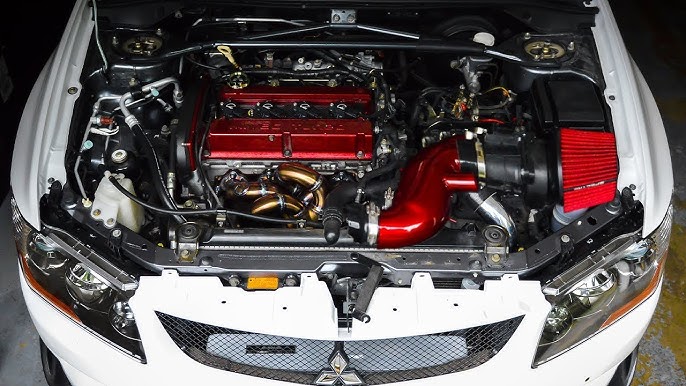
- An open filter sitting in the engine bay pulls in air that's been heated by the radiator, the exhaust manifold, and the block itself, sometimes negating the "cold" part entirely
- Most gains from a bolt-on intake show up at the top of the RPM range, not in daily driving
- The factory ECU's fuel and timing maps weren't built around the new airflow curve, so some of the theoretical gain gets left on the table until you tune for it
📊 What the Dyno Actually Says
Real Numbers, Not Forum Legend
This is where the argument should end and never does. Independent dyno testing on stock, unmodified engines with a bolt-on cold air intake and nothing else (no tune, no supporting mods) tends to land somewhere in the range of 3 to 10 horsepower at the wheels, and that's on a good day with a well-designed intake. Poorly designed intakes have shown up on dynos making less power than stock, because a badly routed tube pulling hot underhood air can actually be worse than the factory setup it replaced.
What consistently moves the needle:
- Intakes with a proper heat shield or sealed box separating the filter from engine bay heat
- Smooth, mandrel-bent tubing with no sharp bends that create turbulence
- A filter sized correctly for the engine's actual airflow demand, not oversized for the sake of looking aggressive
- Forced induction cars (turbo and supercharged) tend to see more meaningful gains than naturally aspirated ones, because the turbo is already compressing air and benefits more from a cleaner, cooler charge feeding it
What doesn't move the needle much on its own:
- Naturally aspirated engines with no supporting tune
- Intakes with exposed filters sitting directly over a hot exhaust manifold
- Cheap universal intakes not engineered for the specific engine bay
- Any claim of double-digit gains without a dyno sheet to back it up
Spota tip: if you're documenting a build on your Garage timeline, this is exactly the kind of mod worth logging with before-and-after numbers instead of just "installed CAI, feels faster." Feels-faster is not a unit of measurement, and the community will call it out every time.
🎧 The Real Reason People Buy Them
It's Not About the Horsepower
Here's the part of the argument nobody wants to admit out loud: most people who buy a cold air intake aren't actually chasing 5 horsepower. They're chasing the sound. An open element filter under a hood turns a boring commuter drone into an induction snarl on throttle, and that noise, that intake whoosh on a hard pull, is genuinely addictive in a way a dyno sheet can't capture.
There's nothing wrong with buying a mod for the sound. Car culture has always been as much about how a car feels and sounds as what it does on paper. The problem is when people convince themselves the sound is proof of a power gain, then get defensive when someone points out the dyno numbers don't back that up. That's where the arguments turn personal instead of technical.
The honest breakdown of why people actually buy them:
- The sound, unapologetically, is the number one reason for most buyers
- It's cheap relative to almost every other mod, often under $300 installed
- It's an easy DIY install that doesn't require a shop or a lift
- It looks good under the hood for meets and photos
- There's a real, if modest, power gain to point to when someone asks "does it even do anything"
🏁 Where the Debate Actually Splits People
Camp One: "It's Basically Cosmetic"
This camp has dyno charts saved in their bookmarks and isn't afraid to link them in every thread. They'll tell you, correctly, that a $300 intake on a naturally aspirated daily driver is closer to a sound mod than a power mod, and that the money is better spent on something with a bigger, provable return: an exhaust, a tune, or saving up for forced induction.
Camp Two: "Every Bit Helps"
This camp isn't wrong either. Five horsepower is five horsepower, and on a build where every mod stacks (intake, exhaust, tune, pulleys), the sum of a bunch of "small" gains adds up to something real. They'll also point out, fairly, that a lot of dyno testing happens on engines that already have other supporting mods, muddying exactly how much credit the intake deserves on its own.
The Actual Answer
Both camps are describing the same mod from different angles. On its own, on a bone-stock engine, a cold air intake is a small, real, unglamorous gain that's easy to overstate. Paired with a proper tune that actually adjusts fuel and timing to take advantage of the new airflow, the gain gets meaningfully bigger. Buy it for the sound, be honest that the sound is why, and don't be the guy claiming 20 horsepower off an intake alone. That's the line that separates a credible car guy from the one everyone quietly rolls their eyes at.
🧰 Short Ram vs. Cold Air: The Sub-Argument Nobody Escapes
Even inside the intake debate there's a smaller civil war: short ram intakes (a shorter tube keeping the filter under the hood, closer to the engine) versus true cold air intakes (a longer tube routing the filter down toward the fender or behind the bumper, away from engine heat).
Short ram intakes:
- Cheaper and simpler to install
- Louder, more aggressive induction sound under hard acceleration
- More exposed to underhood heat, especially in stop-and-go traffic
- Popular on front-wheel-drive platforms where there's nowhere else to route a longer tube
True cold air intakes:
- Pull air from outside the engine bay, genuinely cooler air
- Better real-world gains, especially in hot climates or heavy traffic
- More expensive and involved to install correctly
- Risk of hydrolock if routed low and the car drives through deep water, a real and not-hypothetical failure mode
Neither one is objectively "the mod," they solve for different priorities. The car guy obsessing over sound at a stoplight wants short ram. The car guy who actually reads dyno charts before buying anything wants true cold air, and knows exactly where his intake tube sits relative to a flooded intersection.
📜 A Legal Gray Zone That Trips Up First-Timers
CARB, 50-State Legal, and the Sticker Nobody Reads
Before anyone buys their first intake, there's a legal wrinkle that catches a surprising number of new enthusiasts off guard. Aftermarket intakes that alter the factory air intake system can affect emissions certification, and in states with strict emissions testing (California being the strictest, with plenty of other states adopting CARB standards), running a non-compliant intake can mean failing an inspection or, in rare enforcement cases, a fix-it ticket.
What to actually check before buying:
- Look for an intake explicitly labeled "50-state legal" or carrying a CARB Executive Order (EO) number
- Check whether your state and county actually do emissions testing at all, plenty don't
- Understand that "50-state legal" refers to the part itself, not a guarantee your specific installation passes a visual inspection
- Keep the original airbox and factory intake tube in storage. If you ever need to pass inspection or sell the car, reverting takes twenty minutes
Why this matters to the culture, not just the law:
- A shocking number of intakes sold on marketplace listings and smaller online stores are not CARB certified despite implying they are
- Enthusiasts in emissions-testing states have built an entire sub-community around swapping notes on which specific intake, for which specific car, actually has a real EO number
- It's a rare case where the "boring, responsible" choice and the "avoid a $500 emissions repair bill" choice are the exact same choice
🛠️ Installing One Without Making It Worse
Where First-Timers Actually Go Wrong
A cold air intake is genuinely one of the easier mods to install yourself, which is part of why it's such a common first purchase. But easy doesn't mean foolproof, and a sloppy install is exactly how someone ends up in the "it made zero difference" camp for reasons that have nothing to do with the part itself.
Common installation mistakes that quietly kill the gains:
- Not properly sealing the intake tube to the throttle body, creating a vacuum leak that hurts idle and throttle response
- Skipping the heat shield or leaving a gap that lets hot air get pulled straight into the filter
- Routing the tube too close to the exhaust manifold or radiator without insulation
- Overtightening or undertightening the hose clamps, both cause their own headaches down the line
- Forgetting to reset the ECU's adaptive fuel trims afterward, which can leave the car running slightly rich or lean until it relearns
What a clean install actually looks like:
- Every clamp torqued to spec, no leaks you can hear with the engine running
- The filter fully shielded from underhood heat sources
- Smooth routing with no kinks or tight bends in the tubing
- A quick check of the MAF sensor (if applicable) since some intakes require oiling the filter correctly, and over-oiling a reusable filter can actually foul a mass airflow sensor and cause real drivability problems
💵 The Cost-to-Benefit Math People Skip
Where an Intake Actually Sits on the Priority List
Car culture loves ranking mods by "bang for buck," and cold air intakes usually land in an odd spot: cheap enough that almost nobody regrets buying one, but rarely the mod that gives the biggest return per dollar spent. For someone building a mod list with an actual budget, it helps to see where it stacks up.
Typical cost, in context:
- A quality bolt-on intake: roughly $150 to $400 installed, most of it DIY-able
- A cat-back exhaust, by comparison: $400 to $1,200, with comparable or bigger real-world gains plus the sound most people actually wanted from the intake in the first place
- A proper ECU tune: often $300 to $800, and frequently the single mod that unlocks the most from everything already installed, including the intake
- Forced induction upgrades: several thousand dollars, but in an entirely different performance category
The honest priority order most experienced builders will actually recommend, if pure performance-per-dollar is the goal, tends to put a tune ahead of an intake, and an intake roughly alongside or just behind a cat-back exhaust. None of that makes the intake a bad purchase. It just means the community's obsession with it isn't really about it being the most efficient mod on the list. It's about it being the most accessible one.
🔁 Why This Specific Argument Never Dies
Car culture argues about plenty of mods (exhaust systems, tunes, wheel fitment) but none of them have the staying power of the cold air intake debate. Part of it is accessibility: it's usually the first mod a new enthusiast buys, so there's a constant stream of new people re-litigating the same question the community answered a decade ago. Part of it is that both sides are partially right, which means neither side can fully win, so the thread just restarts every few months with a new username.
But the bigger reason is that it's a proxy war for a much older argument in car culture: does this mod actually make the car better, or does it just make the owner feel like it did. That question applies to underglow, to fake exhaust sound systems, to half the parts catalog. Cold air intakes just happen to be cheap enough, common enough, and testable enough that the argument keeps finding fresh ammunition every time someone posts a new dyno run.
If you're building your first mod list and logging it in your Garage, buy the intake if you want the sound and the honest, modest gain that comes with it. Just don't be the one arguing it's worth 20 horsepower with no dyno sheet to show for it. The community's heard that claim before, and it's never once held up.
Want to see what other car people are actually running under their hoods? Check out how the Garage works to see how mod timelines get tracked, or dig into why every car guy becomes a mechanic after buying mods for the chapter that usually comes right after the intake.