
🧰 The Universal Truth
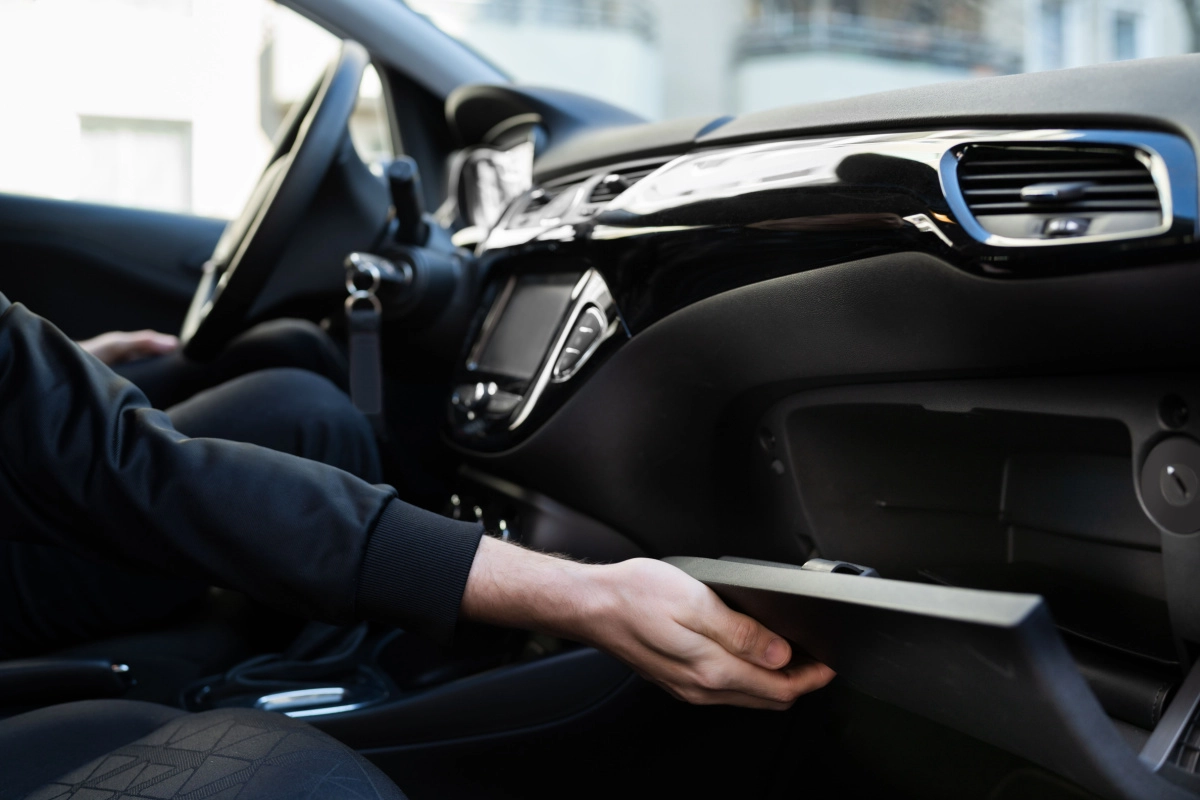
Open any car guy's glovebox. Go ahead. We dare you.
You'll find the usual suspects: registration, insurance, maybe some napkins. But dig deeper. Way deeper.
There it is. The broken part. The one that "might be useful someday." The one with "sentimental value." The one you're "definitely going to fix."
It's not just one part. It's a collection. A museum of automotive failures, upgrades, and "I'll deal with this later" moments.
Every car guy has one. Every. Single. One.
But why? What drives this universal compulsion to hoard broken car parts in the most inconvenient storage space possible?
Let's dive into the psychology, culture, and undeniable truth behind why every car guy's glovebox is a graveyard of automotive history.
🧠 The Psychology: Why We Can't Let Go
The "I'll Fix It Later" Mentality
The eternal promise:
- "I'll fix this when I have time"
- "I can probably repair this"
- "It's not that broken"
- "I just need the right tools"
Here's the thing: "Later" never comes.
But we keep the part anyway. Because admitting we'll never fix it means admitting defeat. And car guys don't admit defeat. We just postpone it indefinitely.
Sentimental Value: The Story Behind Every Part
Every broken part has a story:
- The first mod you ever installed
- The part that failed at the worst possible moment
- The upgrade that didn't work out
- The OEM part you replaced with something better
These aren't just broken parts. They're memories. They're milestones. They're proof of the journey.
You can't throw away memories, even if they're broken.
The "Might Be Useful" Delusion
The eternal optimism:
- "I might need this for reference"
- "Someone else might need this"
- "I can use this for a project"
- "This could be useful for troubleshooting"
Spoiler alert: You won't need it. But the possibility is enough to justify keeping it.
The Cost Justification
The financial reasoning:
- "I paid good money for this"
- "This was expensive"
- "I can't just throw away money"
- "Maybe I can sell it"
Even if it's broken beyond repair, the sunk cost fallacy keeps it in the glovebox.
The Fear of Regret
The "what if" factor:
- "What if I need this exact part?"
- "What if I can't find another one?"
- "What if I regret throwing it away?"
- "What if this becomes rare?"
Fear of future regret outweighs current inconvenience.
🚗 The Evolution: From Stock to Modded
The First Broken Part
It starts innocently:
You buy your first mod. Install it. The old part comes out. It's not broken. It's just replaced.
But where does it go? The garage? Too far. The trunk? Too messy. The glovebox? Perfect.
And so it begins.
The Upgrade Cycle
Every upgrade creates a broken part:
- Stock air intake → replaced with cold air intake
- OEM exhaust → replaced with aftermarket
- Factory wheels → replaced with custom
- Stock suspension → replaced with coilovers
Each upgrade leaves behind the old part. And where does it go? The glovebox.
The Failure Collection
Not all parts are replaced, some just break:
- Fuse that blew during a mod
- Switch that stopped working
- Connector that came loose
- Sensor that failed
These aren't upgrades. They're failures. But we keep them anyway. Because reasons.
The "Temporary" Storage
The temporary solution becomes permanent:
- "I'll move this to the garage later"
- "I'll organize this weekend"
- "I'll clean this out eventually"
"Temporary" becomes "permanent" in car guy time.
📦 Common Broken Parts: The Glovebox Hall of Fame
Electrical Components
The most common culprits:
- Blown fuses: "I'll need these for reference"
- Broken switches: "I can fix this"
- Faulty relays: "Might be useful"
- Dead sensors: "For troubleshooting"
Electrical parts are small, so they accumulate quickly.
Interior Parts
The upgrade leftovers:
- Old shift knobs: "Sentimental value"
- Broken trim pieces: "I'll fix this"
- Replaced badges: "Might want to go back"
- Old floor mats: "Backup set"
Interior parts are easy to store, so they pile up.
Exterior Components
The mod casualties:
- Broken side markers: "Reference for wiring"
- Old emblems: "Nostalgia"
- Replaced grilles: "Might need this"
- Cracked lenses: "I'll repair this"
Exterior parts are bulky, but we make room.
Engine Bay Parts
The performance upgrade leftovers:
- Stock air filters: "Emergency backup"
- Old spark plugs: "For comparison"
- Replaced belts: "Just in case"
- Broken sensors: "Troubleshooting"
Engine parts are small enough to justify keeping.
Random Hardware
The miscellaneous collection:
- Bolts and screws: "Might need these"
- Clips and fasteners: "Always useful"
- Wire connectors: "For projects"
- Random brackets: "You never know"
Hardware accumulates because you never know.
🎯 The Practical Reasons (Or So We Tell Ourselves)
Reference and Comparison
Legitimate use case:
- Comparing old vs. new parts
- Checking part numbers
- Understanding how things fit
- Troubleshooting issues
Sometimes, old parts are actually useful for reference.
Emergency Backup
The "just in case" logic:
- "What if the new part fails?"
- "What if I need to go back to stock?"
- "What if I can't find a replacement?"
Emergency backups make sense, in theory.
Parts for Friends
The community service:
- "Someone might need this"
- "I can help a friend"
- "The car community shares"
Sharing is caring, even if it never happens.
Future Projects
The "someday" projects:
- "I'll use this for a build"
- "This could be a custom project"
- "I have plans for this"
Future projects justify current hoarding.
Selling or Trading
The financial angle:
- "I can sell this"
- "Someone will buy this"
- "This has value"
Even broken parts have perceived value.
🧩 The Psychology of Car Guys
The Collector Mentality
Car guys are collectors:
- We collect cars
- We collect parts
- We collect knowledge
- We collect experiences
Broken parts are part of the collection.
The Problem Solver Mindset
Car guys are problem solvers:
- We fix things
- We modify things
- We improve things
- We understand things
Broken parts are puzzles to solve: eventually.
The Emotional Attachment
Cars are emotional:
- They're not just transportation
- They're expressions of identity
- They're sources of pride
- They're parts of our story
Every part is part of that story.
The Optimism Bias
Car guys are optimists:
- "I'll fix it"
- "I'll use it"
- "I'll need it"
- "It'll be useful"
Optimism keeps broken parts in gloveboxes.
🏁 The Car Culture Connection
The Shared Experience
Every car guy understands:
- We've all been there
- We all have that glovebox
- We all keep broken parts
- We all justify it the same way
It's a universal experience in car culture.
The Community Stories
Broken parts create stories:
- "Remember when this broke?"
- "This was from my first mod"
- "This failed at the worst time"
- "I replaced this three times"
Stories connect the community.
The Right of Passage
It's a car guy milestone:
- First broken part in glovebox
- First "I'll fix it later"
- First "might be useful"
- First glovebox overflow
It's part of becoming a car guy.
The Inside Joke
The community laughs together:
- Memes about gloveboxes
- Jokes about broken parts
- Stories about "useful" parts
- The universal understanding
It's a shared joke we all understand.
🔧 The Practical Reality
Glovebox Organization (Or Lack Thereof)
The organizational challenge:
- Registration buried under parts
- Insurance card lost in the pile
- Can't find anything
- Everything falls out when opened
Organization is optional when broken parts are involved.
The Weight Problem
Gloveboxes get heavy:
- Parts add weight
- Glovebox sags
- Hinge wears out
- Door doesn't close properly
Weight is a small price for keeping broken parts.
The Space Issue
Gloveboxes are small:
- Limited space
- Parts pile up
- Overflow into other areas
- Trunk becomes secondary storage
Space is a suggestion, not a limit.
The Cleaning Challenge
Cleaning becomes impossible:
- Can't find anything
- Don't know what to throw away
- Everything "might be useful"
- Cleaning means decisions
Decisions are hard when everything has value.
🎨 The Sentimental Journey
The First Car
The origin story:
Your first car. Your first mod. Your first broken part.
It all starts here. The glovebox collection begins.
The Build Journey
Every build creates parts:
- Stock parts removed
- Upgrades installed
- Failures along the way
- Lessons learned
Every part tells part of the story.
The Milestone Moments
Parts mark milestones:
- First performance mod
- First aesthetic change
- First major upgrade
- First failure and recovery
Milestones deserve preservation.
The Emotional Connection
Cars are emotional:
- Pride in modifications
- Frustration with failures
- Joy in improvements
- Attachment to the journey
Emotions keep broken parts close.
🚀 The Mod Culture Connection
The Upgrade Mentality
Mod culture is about upgrades:
- Always improving
- Always changing
- Always upgrading
- Always evolving
Upgrades create broken parts: it's inevitable.
The "Never Stock" Philosophy
Many car guys never go back:
- Once modded, always modded
- Stock parts become irrelevant
- But we keep them anyway
- Because you never know
"Never stock" doesn't mean "throw away stock".
The Custom Build Culture
Custom builds require parts:
- Reference parts
- Comparison parts
- Backup parts
- Project parts
Custom builds justify keeping everything.
The Community Sharing
Car communities share:
- Parts swaps
- Helping friends
- Community support
- Paying it forward
Broken parts might help someone: someday.
💡 The Real Reasons (The Honest Truth)
We're Hoarders (But Just for Car Parts)
Let's be honest:
We keep broken parts because we're hoarders. But only for car stuff. That makes it okay, right?
Selective hoarding is still hoarding.
We're Optimists
We believe in possibilities:
- "I'll fix it"
- "I'll use it"
- "I'll need it"
- "It'll be useful"
Optimism keeps broken parts in gloveboxes.
We're Sentimental
We attach meaning to things:
- Every part has a story
- Every part is a memory
- Every part is part of the journey
- Every part matters
Sentimentality keeps broken parts close.
We're Practical (In Our Minds)
We justify everything:
- "It might be useful"
- "I'll need this"
- "Someone else might need it"
- "This has value"
Justification keeps broken parts stored.
We're Part of the Culture
It's what car guys do:
- Everyone does it
- It's normal
- It's expected
- It's part of being a car guy
Culture normalizes broken parts in gloveboxes.
🎯 The Spota Connection: Organizing the Chaos
Digital Organization
Spota helps organize:
- Track your mods
- Document your build
- Share your journey
- Connect with community
Digital organization complements physical hoarding.
Community Sharing
Spota enables sharing:
- Find people who need parts
- Connect with local enthusiasts
- Share your build journey
- Help the community
Community sharing gives broken parts purpose.
Build Documentation
Spota documents builds:
- Track modifications
- Document changes
- Record milestones
- Preserve memories
Digital documentation preserves the story.
The Modern Car Guy
Technology meets tradition:
- Digital organization
- Physical collections
- Community connection
- Shared experiences
Spota bridges old and new car culture.
🏆 The Glovebox Hall of Fame
Most Common Broken Parts
The universal collection:
- Blown fuses: Every car guy has these
- Old shift knobs: Sentimental value
- Broken trim pieces: "I'll fix it"
- Replaced badges: Nostalgia
- Old spark plugs: Comparison reference
These are in every glovebox.
Most Justified Keeps
Parts that actually make sense:
- OEM parts: In case you go back to stock
- Reference parts: For troubleshooting
- Rare parts: Hard to find replacements
- Expensive parts: Too valuable to throw away
Some parts are worth keeping.
Most Questionable Keeps
Parts that make no sense:
- Completely broken parts: Beyond repair
- Generic hardware: Available anywhere
- Worn-out consumables: Used up
- Random brackets: No idea what they're for
But we keep them anyway.
🔄 The Lifecycle: From New to Broken to Glovebox
The Purchase
It starts with buying:
- New part purchased
- Excitement builds
- Installation planned
- Upgrade anticipated
The journey begins.
The Installation
The moment of truth:
- Old part removed
- New part installed
- Old part set aside
- "I'll deal with this later"
The broken part is born.
The Storage Decision
The critical moment:
- Where does it go?
- Garage? Too far
- Trunk? Too messy
- Glovebox? Perfect
The glovebox becomes home.
The Accumulation
The collection grows:
- One part becomes two
- Two becomes five
- Five becomes ten
- Ten becomes... a lot
The collection grows organically.
The Acceptance
The final stage:
- Glovebox is full
- Organization is impossible
- Cleaning is out of the question
- Acceptance sets in
This is just how it is.
🎭 The Social Aspect
The Conversation Starter
Broken parts create stories:
- "Why do you have this?"
- "What's this from?"
- "When did this break?"
- "Are you going to fix it?"
Stories connect people.
The Community Bond
Shared experience:
- Every car guy understands
- No explanation needed
- Universal recognition
- Community connection
Broken parts bond the community.
The Meme Material
Internet gold:
- Glovebox memes
- Broken parts jokes
- "I'll fix it later" humor
- Universal relatability
Broken parts are meme-worthy.
The Right of Passage
Becoming a car guy:
- First broken part
- First "might be useful"
- First glovebox overflow
- First acceptance
It's part of the journey.
🧹 The Cleaning Attempt (And Why It Fails)
The Decision to Clean
The rare moment:
- "I should clean this"
- "This is getting ridiculous"
- "I can't find anything"
- "Time to organize"
The cleaning attempt begins.
The Sorting Process
The impossible task:
- "Keep or throw away?"
- "Might be useful"
- "Sentimental value"
- "I'll need this"
Every part has a reason to keep.
The Failure
The inevitable outcome:
- Can't throw anything away
- Everything "might be useful"
- Sentimentality wins
- Cleaning fails
The cleaning attempt fails.
The Acceptance
The final realization:
- "This is just how it is"
- "Every car guy has this"
- "It's not that bad"
- "I'll clean it later"
Acceptance sets in: until next time.
💰 The Financial Perspective
The Sunk Cost Fallacy
We paid for it:
- "I spent money on this"
- "I can't throw away money"
- "This has value"
- "Maybe I can sell it"
Sunk costs keep broken parts.
The Replacement Cost
New parts are expensive:
- "What if I need this?"
- "Replacement is expensive"
- "I'll keep it just in case"
- "Better safe than sorry"
Replacement cost justifies keeping.
The Perceived Value
Everything has value:
- "Someone will buy this"
- "This is worth something"
- "I can trade this"
- "This has value"
Perceived value keeps parts.
The Reality Check
The honest truth:
- Most broken parts are worthless
- No one wants them
- They're not sellable
- They're just taking space
But we keep them anyway.
🎯 The Practical Solutions (That We'll Never Use)
The Garage Organization
The proper solution:
- Organize parts in garage
- Label everything
- Create storage system
- Keep glovebox clean
We'll do this someday.
The Digital Inventory
The modern approach:
- Document parts digitally
- Create inventory list
- Track what you have
- Organize virtually
Technology could help, but we won't use it.
The Community Sharing
The helpful solution:
- Give parts to friends
- Donate to community
- Share with enthusiasts
- Help others build
We'll share someday.
The Acceptance
The realistic solution:
- Accept the glovebox
- Embrace the chaos
- Enjoy the collection
- Laugh about it
This is probably the best solution.
🌟 The Cultural Significance
The Universal Experience
Every car guy has this:
- No exceptions
- Universal truth
- Shared experience
- Community bond
It's part of car culture.
The Right of Passage
Becoming a car guy:
- First broken part
- First "I'll fix it later"
- First glovebox overflow
- First acceptance
It's a milestone.
The Community Joke
The shared humor:
- Everyone understands
- Everyone relates
- Everyone laughs
- Everyone accepts
It's a community joke.
The Cultural Identity
Part of being a car guy:
- It's expected
- It's normal
- It's part of the identity
- It's who we are
Broken parts are part of the identity.
🏁 The Bottom Line
Every car guy's glovebox is full of broken parts. It's not a bug. It's a feature.
We keep broken parts because:
- Sentimental value: Every part has a story
- Optimism: "I'll fix it later"
- Practicality: "Might be useful"
- Culture: It's what car guys do
- Emotion: Cars are emotional
We can't help it. We don't want to help it. And honestly, we're not going to change.
The glovebox collection is:
- A museum of automotive history
- A timeline of modifications
- A collection of memories
- A testament to the journey
- A universal car guy experience
So embrace it. Laugh about it. Share stories about it. Because every car guy understands.
And when someone asks why your glovebox is full of broken parts, just smile and say: "You wouldn't understand."
But we do. We all do.
❓ FAQs
Why do car guys keep broken parts in their gloveboxes?
Car guys keep broken parts for sentimental value, the "I'll fix it later" mentality, the possibility they might be useful, and because it's a universal part of car culture. Every part has a story and represents part of the build journey.
What are the most common broken parts in gloveboxes?
The most common include blown fuses, old shift knobs, broken trim pieces, replaced badges, old spark plugs, and random hardware. Electrical components and interior parts are the most common due to their small size.
Is it normal for car guys to hoard broken parts?
Yes, it's completely normal and universal in car culture. Every car guy has a collection of broken parts, whether in the glovebox, trunk, or garage. It's part of the car enthusiast identity.
Should I throw away broken car parts?
It depends. Some parts have legitimate value (OEM parts for going back to stock, rare parts, reference parts). Others are just taking space. But most car guys keep them anyway for sentimental or "might be useful" reasons.
How do I organize my glovebox full of broken parts?
Most car guys don't organize. They accept the chaos. But if you want to organize, consider moving parts to the garage, creating a digital inventory, or sharing parts with the community. Realistically, most just embrace it.
Why can't car guys throw away broken parts?
It's a mix of sunk cost fallacy (we paid for it), optimism bias (we'll fix it), sentimentality (every part has a story), and fear of regret (what if we need it). These psychological factors make it hard to let go.
Do broken parts in gloveboxes have any practical value?
Some do: OEM parts for reverting to stock, reference parts for troubleshooting, rare parts that are hard to find. But most broken parts are kept for sentimental or "might be useful" reasons rather than practical value.
How do I clean out my glovebox of broken parts?
The honest answer: most car guys don't. But if you want to try, sort parts into "definitely keep" (OEM, rare, reference), "maybe keep" (sentimental, might be useful), and "probably trash" (completely broken, generic hardware). Then keep most of them anyway.
The glovebox isn't just storage. It's a museum. It's a timeline. It's a collection of memories. And every broken part? It's part of the story. Because in car culture, we don't just drive. We collect, we remember, and we keep the broken parts that remind us of the journey.