
🕳️ The Engine Design That Cleans Itself Into a Corner
Pop the hood on almost anything built in the last decade and there's a good chance you're looking at a direct injection engine. Honda, Ford, BMW, VW, Toyota, all of them switched over because DI makes real numbers: more power, better fuel economy, cleaner combustion on paper. It sounds like a pure upgrade.
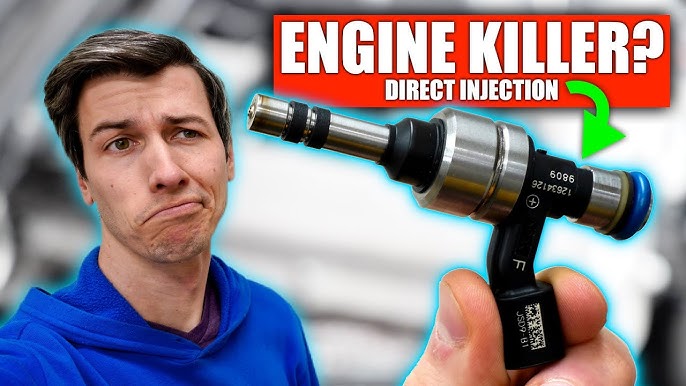
Here's the part nobody put on the window sticker: direct injection engines slowly clog their own intake valves with carbon, and there's basically nothing the fuel itself can do to stop it.
Car people have been finding this out the hard way for over a decade now. Rough idle at 60,000 miles. A check engine light for a misfire that comes and goes. A mechanic pulling the intake manifold and holding up a valve that looks like it got dipped in tar. It's one of those problems that's completely invisible until it isn't, and then it's a four-figure repair on a car that's supposedly "low maintenance."
This is the trade-off nobody talks about when they're bragging about their DI turbo's dyno numbers. Let's get into why it happens, why it's basically unavoidable by design, and what car people are actually doing about it.
🔧 Why Port Injection Never Had This Problem
To understand why DI causes this, you have to understand what changed.
Port injection (the old way):
- Fuel injectors spray directly onto the back of the intake valve, right before it opens
- Gasoline is a solvent. It's constantly washing the valve every single time it fires
- Any carbon or oil vapor trying to stick gets rinsed off before it can bond
Direct injection (the new way):
- Fuel injectors are moved into the combustion chamber itself, spraying straight into the cylinder
- Fuel never touches the back of the intake valve at all
- Nothing is washing the valve, ever, for the entire life of the engine
That's the whole story in two bullet points. Port injection engines had a built-in cleaning system they didn't even know they had. Direct injection engines threw that system away to get better atomization, more precise timing, and higher compression ratios, all real benefits. But the valve is now sitting there completely bare, with nothing protecting it from what's about to hit it.
🌫️ What Actually Builds Up There
The stuff that coats a DI intake valve isn't fuel residue. It's a mix of two things the engine can't avoid producing:
- Oil vapor from the PCV system. Every engine recirculates a small amount of crankcase blow-by gas back through the intake to meet emissions standards. That vapor carries oil mist with it.
- Exhaust gas from EGR systems. Emissions-compliant engines route a bit of exhaust back into the intake to lower combustion temps and cut NOx output.
Both of those streams pass right over the back of the intake valve on their way into the cylinder. On a port injection engine, gas washes it off every cycle. On a DI engine, that oil mist and exhaust soot just sits there, gets baked by exhaust heat radiating back through the valve when it opens, and slowly hardens into a lacquer-like carbon crust.
It doesn't happen overnight. It's a slow bake, cycle after cycle, for tens of thousands of miles. That's why it sneaks up on people: the car runs fine for years, and then one day it just... doesn't, and nobody can point to a single cause because there wasn't one. It was accumulation.
Spota tip: if you're documenting a build in your Garage, a valve carbon comparison photo (before and after a cleaning) is one of the most satisfying "reveal" posts you can put on your car's timeline. Car people love a gross-out shot.
📉 What Carbon Buildup Actually Does to the Car
This isn't cosmetic. A carbon-caked valve changes how air moves into the cylinder, and that has real consequences:
- Restricted airflow. Thick carbon narrows the valve opening and disrupts the smooth flow of intake air, which chokes the engine's ability to breathe.
- Rough idle and hesitation. Uneven buildup across cylinders means uneven airflow between them, which shows up as a lumpy idle or a stumble off the line.
- Misfires. In bad cases, carbon flakes can interfere with proper valve sealing, or buildup gets severe enough to disrupt the air-fuel mixture enough to cause an outright misfire code.
- Lost power and mileage. Less efficient airflow means less efficient combustion, which quietly eats into both the horsepower numbers and the fuel economy DI was supposed to deliver in the first place.
- Long-term valve damage. In extreme, neglected cases, buildup can affect valve seating enough to cause burnt valves over time.
The frustrating irony is real: an engine technology adopted partly to improve fuel economy ends up losing some of that efficiency back to the exact side effect its own design created.
🚙 Which Engines Get Hit Hardest
Not every DI engine suffers equally, and the pattern tells you a lot about why it happens.
- Pure DI engines (most modern turbo fours and V6s from Honda, VW/Audi, BMW) are the most exposed, since there's zero port-injection fuel washing the valves at any point.
- Port + direct injection hybrid systems, which some automakers (Toyota, Lexus, some Ford applications) started using specifically to fight this, spray a small amount of fuel through traditional port injectors at certain RPM ranges alongside the direct injectors. That reintroduces just enough washing to meaningfully slow the buildup.
- High-mileage highway commuters tend to fare better than stop-and-go city cars, because sustained higher RPM and hotter combustion temps burn off some deposits naturally, while short trips and constant idling let oil vapor condense and bake without ever getting hot enough to self-clean.
- Turbocharged DI engines often get it worse than naturally aspirated DI engines, because turbo systems typically route more PCV and EGR volume through the intake tract to manage boost and emissions.
If you've ever wondered why the 2.0T crowd swaps notes on carbon cleaning schedules like it's an oil change interval, this is why. It basically is one now.
🏷️ The Engines With a Reputation
Some specific engine families have become infamous enough in enthusiast forums that "carbon cleaning interval" shows up right next to "oil type" in the owner's manual threads.
- VW/Audi EA888 (2.0T, found in GTI, Golf R, Audi A4/A5/Q5): Probably the most talked-about case in the DI world. Owners routinely plan a walnut blast somewhere around 60,000 to 80,000 miles, and the forums treat it as a known, expected maintenance item rather than a defect.
- BMW N54 and N20: The N54's twin-turbo setup pushes a lot of PCV volume through the intake, and buildup on these is well documented enough that it has its own line of aftermarket "catch can" kits designed specifically to intercept oil vapor before it ever reaches the valves.
- Honda's 1.5T (Civic, CR-V, Accord): A newer offender. Honda's turbo four picked up a reputation for both carbon buildup and an unrelated but equally infamous oil dilution issue, which made service intervals a hot topic among owners almost as soon as the engine launched.
- GM's Ecotec 2.0T and 2.4L direct injection engines: Similar story, with enough owner complaints that carbon cleaning became a common recommendation from independent shops well before dealers started mentioning it proactively.
- Toyota/Lexus D-4S engines (port + direct hybrid): Worth naming specifically because they're the counterexample. The dual-injection design measurably slows buildup compared to DI-only competitors, which is part of why Toyota leaned on it for engines expected to rack up huge mileage.
None of this means any of these engines are bad. It means carbon buildup isn't some rare fringe case, it's a documented, named, forum-famous maintenance item on some of the most common engines on the road right now.
🧽 How Car People Actually Deal With It
There's no additive you pour in the tank that fixes this, because nothing in the tank ever reaches the valve. That's the whole problem. So the fix has to be physical.
Walnut blasting (the real fix):
- Intake manifold comes off, walnut shell media gets blasted at the valves with a vacuum running to catch the debris
- Physically removes the carbon crust without damaging the valve surface
- Typically runs $300 to $700 depending on the engine and shop labor rates
- Recommended interval varies a lot by engine, but a lot of DI-turbo owners plan for one somewhere between 60,000 and 100,000 miles, sooner if they're noticing symptoms
Chemical intake cleaning:
- Sprays a cleaning solvent into the intake tract while the engine runs at idle
- Cheaper and faster than walnut blasting, but far less effective on heavy, hardened deposits
- Better as light maintenance between real cleanings than as a fix for a genuinely clogged engine
Preventive driving habits:
- Occasional hard highway pulls that get the engine hot and the valves working keep deposits from ever fully hardening
- Staying on top of oil changes matters more than people think, since fresher, cleaner oil means less gunk riding through the PCV system in the first place
- Using a full-synthetic oil rated for the engine's spec tends to produce less sludge-forming residue over time
Catch cans (the mod-world answer):
- An aftermarket catch can sits inline in the PCV system and traps oil vapor in a reservoir before it ever reaches the intake tract
- Popular on the BMW N54/N20 crowd and increasingly common on other turbo DI platforms
- Doesn't eliminate buildup entirely (EGR-sourced carbon still gets through on cars that have it), but owners who run one consistently report noticeably lighter buildup at inspection
- Requires periodically draining the reservoir, which is a small price for slowing down a problem that otherwise runs unchecked
Buying smart:
- If cross-shopping a used DI car, ask directly whether it's ever had a carbon cleaning
- A rough idle or hesitation on a test drive of a DI-equipped car with 70,000+ miles is worth taking seriously, not brushing off as "just how it drives"
None of this is complicated. It's just one more maintenance item that didn't exist ten years ago, and a lot of owners don't find out about it until a mechanic tells them why their "reliable" car suddenly runs like garbage.
🤷 Why Automakers Haven't Just Fixed It
Reasonable question. If everyone in the industry knows this happens, why is it still happening on brand-new engines?
The honest answer is that direct injection's benefits (higher compression, more precise fuel control, real gains in power and efficiency under EPA test conditions) are worth more to an automaker's compliance numbers and marketing than the long-term carbon problem costs them in warranty claims, because most of this damage shows up well outside the powertrain warranty window. Adding back a secondary port injection system, like the hybrid setups mentioned above, adds real cost and complexity to the engine. Some manufacturers have decided it's worth it. A lot haven't.
It's the same pattern car people run into constantly: the stuff that makes an engine look great on a spec sheet and an EPA test isn't always the stuff that makes it age well in the real world. See also: why manual transmissions refuse to die even though automakers would rather not build them, or why rotary engines get forgiven for reliability nobody else would tolerate. Car culture has a long history of engineering trade-offs that only reveal themselves after the warranty runs out.
🛠️ Signs Your Valves Are Getting Gunked Up
Watch for these, especially past the 60,000-mile mark on a DI-only engine:
- Idle that feels lumpy or slightly inconsistent, especially cold
- A faint hesitation or flat spot on light throttle tip-in
- Random misfire codes that don't point to a single obvious cause (bad coil, bad plug, etc.)
- A noticeable drop in fuel economy with no other explanation
- Slightly reduced power that's hard to put your finger on until you drive a clean example back to back
None of these are dramatic on their own, which is exactly why so many owners live with it for years before someone finally scopes the intake valves and shows them what's actually going on in there.
🏁 The Bottom Line
Direct injection isn't a scam and it isn't going anywhere. The power and efficiency gains are real, and pretty much the entire industry has moved to it for good reason. But it came with a quiet cost that never made it into the brochure: without fuel washing the intake valves anymore, oil vapor and exhaust gas are free to bake themselves into a hard carbon shell over tens of thousands of miles, choking airflow and eventually causing the exact rough-running symptoms that make an otherwise solid engine feel unreliable.
The fix isn't complicated, it's just not automatic. Walnut blasting works. Preventive habits help. Hybrid port/direct systems are a genuinely smart engineering answer that more automakers should be using. But if you're driving a DI engine and nobody's ever mentioned carbon cleaning to you, that's not because your engine is immune. It's because the symptoms haven't shown up loud enough yet.
Add it to the maintenance list now, before your engine tells you the hard way.
❓ FAQs
How do I know if my car has direct injection?
Check your owner's manual or look up your engine code online. Most turbocharged four-cylinders and V6s built after roughly 2010 across Honda, VW/Audi, BMW, and GM use some form of direct injection. Automakers using hybrid port/direct systems (some Toyota and Lexus models) are less exposed to this specific issue.
At what mileage does carbon buildup usually become a problem?
It varies a lot by engine and driving style, but symptoms commonly start showing up somewhere between 60,000 and 100,000 miles. Short-trip, stop-and-go driving accelerates it. Regular highway driving that gets the engine hot slows it down.
Does premium gas prevent carbon buildup?
No. Fuel quality has nothing to do with this specific problem, because the fuel never touches the back of the intake valve on a direct injection engine. Octane rating and fuel additives can't wash a surface they never contact.
Can I clean carbon buildup myself?
Chemical intake cleaners are DIY-friendly for light maintenance, but a proper walnut blasting job requires pulling the intake manifold and specialized equipment. It's realistically a shop job unless you're comfortable doing serious engine disassembly at home.
Does this affect resale value?
It can, if buildup gets severe enough to cause a rough idle or misfires that show up on a test drive or pre-purchase inspection. A documented carbon cleaning in the maintenance history is genuinely a selling point on a high-mileage DI car.
Is this covered under warranty?
Almost never, since it's classified as normal wear from a design characteristic rather than a manufacturing defect, and most of the buildup happens well past the powertrain warranty window anyway. A few automakers have issued technical service bulletins acknowledging the issue on specific engines, which is worth checking for your exact model.
Direct injection gave us more power and better numbers on paper. It just forgot to mention the cleaning bill that comes due a few years later.