
🌡️ The Ritual Every Turbo Owner Knows
You pull into the driveway after a spirited drive. Engine's hot, turbo's glowing somewhere under a few layers of metal you can't see. And instead of shutting it off, you just... sit there. Windows down, music still on, letting it idle for a minute or two before you finally kill the ignition.
Anyone who's owned a turbo car has done this. It's not paranoia. It's not superstition passed down from some forum thread in 2004 (though a lot of it did come from exactly that). There's real mechanical reasoning behind it, and understanding it tells you a lot about why turbocharged engines behave differently from naturally aspirated ones.
Let's get into what's actually happening under the hood, why the "let it cool down" rule became gospel in turbo culture, and whether it still matters on a modern car.
🔥 What Heat Soak Actually Is
The Turbo Runs Hotter Than You Think
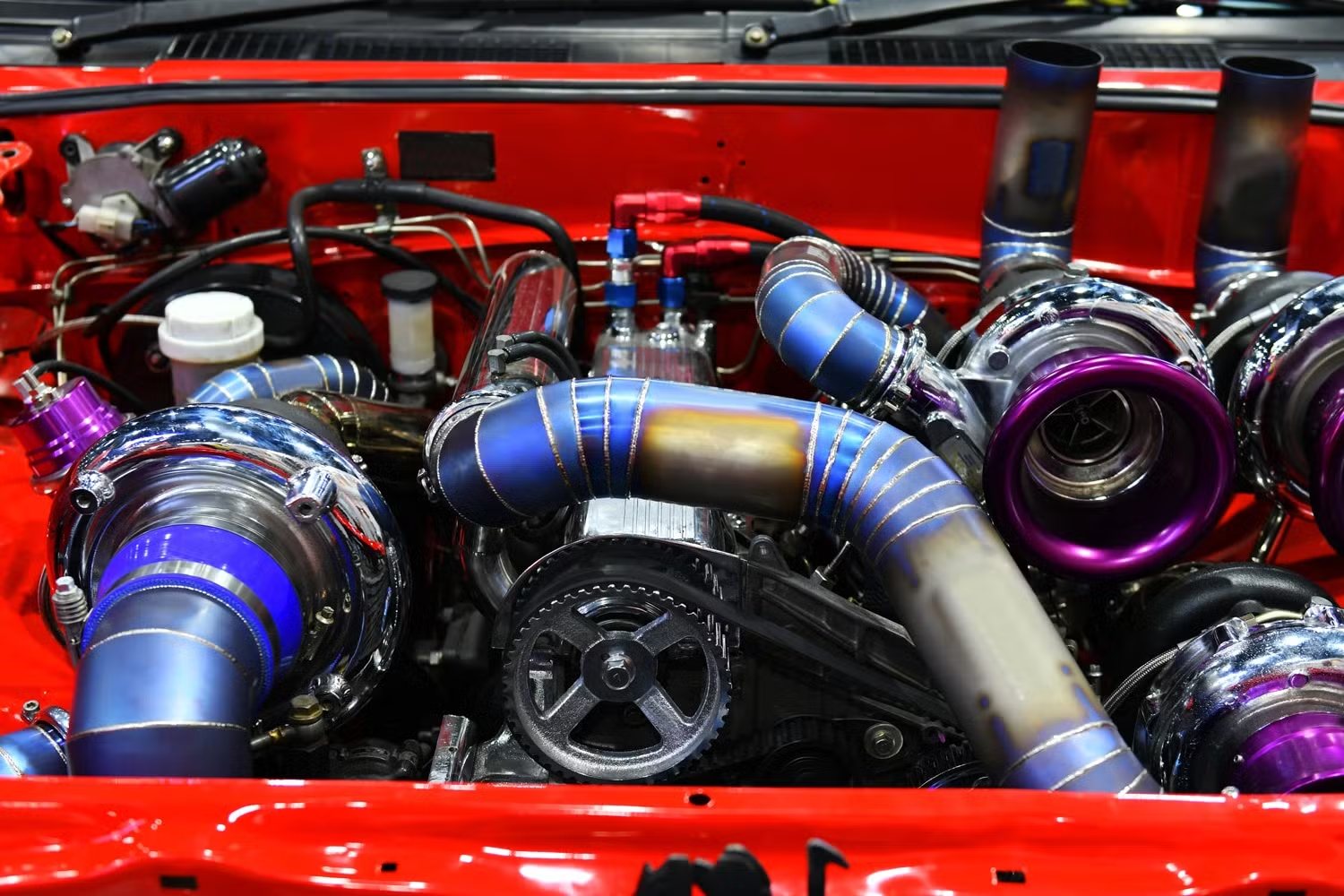
A turbocharger's turbine wheel is spun by your exhaust gases, and exhaust gas temperatures on a turbo car under load can hit 1,600°F to 1,800°F depending on the setup. That heat doesn't just disappear the second you lift off the throttle. The turbine housing, the center section, and the oil sitting inside the turbo's bearings are all sitting well above the temperature your engine bay runs at normal cruise.
Heat soak is what happens when that stored heat has nowhere to go once you shut the engine off. The moment you kill the ignition:
- Oil flow to the turbo bearings stops immediately
- Coolant circulation stops (on liquid-cooled turbos)
- The turbine housing keeps radiating stored heat into everything around it, including the oil sitting stagnant inside the center cartridge
With the engine off, there's no fresh oil moving through to carry that heat away. The oil that's left inside the turbo just sits there, soaking up heat with nowhere to go.
Why That's a Problem
Engine oil isn't designed to survive being static at extreme temperatures indefinitely. When oil sits still inside a hot turbo center section, the light, useful components of the oil start to break down and evaporate, leaving behind the heavier stuff.
That heavier residue is called coking.
⚙️ Coking: The Turbo Killer Nobody Sees Coming
What Coking Does
Coked oil is oil that's been baked into a hard, carbon-like deposit. It's not a metaphor, it genuinely looks like tar or varnish once it forms. Inside a turbo, coking tends to build up:
- In the oil feed line, restricting oil flow to the bearings
- In the oil drain line, causing oil to back up and get forced past seals
- On the bearings themselves, where it acts like sandpaper instead of lubrication
Once coking builds up enough, you start seeing symptoms that look like a dozen other problems: blue smoke on startup (oil getting past the seals), a whining or grinding turbo, boost that comes in inconsistently, or in bad cases, a seized center cartridge.
Why It's Progressive
Coking rarely kills a turbo in one shutdown. It's cumulative. Every hard drive followed by an immediate shutdown adds a little more baked residue. A daily driven turbo car that always gets shut off hot might run fine for years before symptoms show up, and by the time they do, the damage inside the center section is already done. It's a slow tax, not a sudden bill, which is exactly why so many owners ignore the habit until it's too late.
⏱️ Where the Turbo Timer Came From
The 90s and 2000s JDM Answer
If you've spent any time around Japanese performance cars, you've seen the turbo timer: a small aftermarket module wired into the ignition that lets the engine idle on its own for a set period (usually 60-180 seconds) after you pull the key and walk away. Supras, Skylines, RX-7s, WRXs: it became a defining accessory of the era, glowing on the dash next to the boost gauge.
The logic was simple. Factory turbo cars from that era, especially ones running higher boost from the factory or with basic aftermarket tuning, generated serious heat, and daily drivers weren't always disciplined about manually idling before shutdown. A turbo timer automated the cool-down so you didn't have to remember, or sit around waiting.
Why It Became a Culture Symbol, Not Just a Function Part
Here's the honest truth: turbo timers became as much about flex as function. A glowing turbo timer on the dash told everyone in the car (and everyone who peeked in the window at a meet) that this was a serious, boosted, built car. It said "I take this seriously" before you even popped the hood. That's part of why it stuck around in car culture long after the mechanical need started shrinking, it became shorthand for enthusiast credibility, the same way a boost gauge or a big turbo poking through the hood does.
🚙 Does Your Car Still Need This in 2026?
Modern Turbo Engineering Changed the Math
Most turbocharged cars built in the last 10-15 years are meaningfully better protected against heat soak than the classics that made turbo timers famous:
- Water-cooled center sections are now standard on most modern turbos, not an upgrade. Coolant continues to passively circulate through the turbo even after the engine shuts off, using a thermosiphon effect, pulling heat away without needing the engine running.
- Better synthetic oils have higher thermal breakdown thresholds than the dino oils common in the 90s, so they resist coking longer.
- ECU-controlled electric auxiliary water pumps on many modern turbo and hybrid platforms actively keep coolant moving for minutes after shutdown specifically to manage heat soak, no timer required.
This is why you'll rarely see a turbo timer on a modern WRX, GR Corolla, or Golf R the way you would on an old Supra or Skyline. The engineering does more of the work now.
When It Still Matters
That doesn't mean the underlying physics went away, it just means modern cars are more forgiving of a quick shutdown. A cool-down still genuinely matters if:
- You just got off the highway, a canyon run, or a track session where you were on boost hard right up until you parked
- You're driving an older turbo platform without water cooling on the center section
- Your car is tuned for more boost than the factory oil and cooling system were designed around
- You just towed, hauled a heavy load, or drove in extreme heat
In any of those situations, a 60-90 second idle before shutdown, or even just driving the last mile or two gently instead of hammering it right up to your driveway, costs you nothing and meaningfully protects the turbo.
What Actually Works Without a Timer
You don't need a $150 module wired into your ignition to get the benefit. Just build the habit:
- Ease off boost for the last stretch of your drive instead of driving hard right up to parking
- Let the car idle 60-90 seconds before shutting off after a hard drive or track session
- If you're in a rush, at minimum avoid shutting off immediately after redlining it into your parking spot
🧠 Why This Debate Never Fully Dies
Ask ten turbo owners whether timers are "necessary" in 2026 and you'll get ten different answers, and half of them will be more about identity than mechanics. Some owners run a timer purely because it's part of their car's build theme, JDM-inspired setups especially. Others will tell you modern water-cooled turbos made the whole debate obsolete. Both are kind of right.
What's not debatable: the physics of heat soak and coking are real and well documented. It's the same underlying story as why every Hellcat owner is on borrowed time: the supercharger has its own heat and lubrication demands under sustained boost, just like a turbo does. Whether you solve it with a $150 turbo timer, a $0 habit of idling for a minute, or a modern water-cooled setup that handles it automatically, the underlying lesson is the same: boosted engines run hotter than the rest of the car, and hot components need a plan for shedding that heat before everything goes static.
For more on how the internet's other favorite car debates hold up, check out why car people rev at tunnels or browse the rest of the under-the-hood archive.
If you're chasing more mods and want your build actually documented instead of just talked about at a meet, log it in your Garage on Spota. Every part, every tune, every mile, tracked against a car that's actually yours, not just claimed in a group chat.
❓ FAQs
Do I really need to let a turbo car idle before shutting it off?
It depends on how hard you were driving and what generation of turbo you have. After hard driving or a track session, yes, a 60-90 second cool-down genuinely helps. For gentle daily driving on a modern water-cooled turbo, the risk is much lower.
What happens if I never let my turbo cool down?
Over time, oil sitting static in a hot turbo center section can break down and coke, leaving hard carbon deposits that restrict oil flow and wear bearings. It's cumulative damage that usually shows up as blue smoke, turbo whine, or inconsistent boost years down the line.
Are turbo timers still worth installing?
On an older turbo platform without water-cooling, or a heavily modified/tuned car making more heat than stock, a turbo timer is still genuinely useful. On most modern factory turbo cars, it's more of a style choice than a mechanical necessity.
Does a turbo timer damage my car or void warranty?
Installing one involves wiring into the ignition system, which can complicate warranty claims depending on the manufacturer and how it's installed. Check your warranty terms and consider a reputable installer if you go this route.
Is heat soak the same as engine overheating?
No. Heat soak is stored, residual heat radiating through components after shutdown, it's not the engine actively overheating while running. It's a passive process caused by stopping oil and coolant flow, not a cooling system failure.
Do naturally aspirated cars need a cool-down too?
Not in the same way. NA engines don't have a turbocharger spinning at extreme RPMs and temperatures, so there's no equivalent hot spinning component left without lubrication the instant you shut off.