
💀 The Sound Is Disappearing
Pop the hood on a new Ram 1500 and there's a decent chance you'll find a turbocharged inline-six where the Hemi used to live. Check the spec sheet on a new Mercedes-AMG C63 and the "V8" badge on the trunk is lying to you: it's a turbo four with an electric motor bolted on. Ford killed the Explorer ST's V8 years ago. Cadillac's CT4/CT6 V-series went twin-turbo V6. Even the Corvette, the last holdout of pure American V8 theater, now shares a lineup with a hybrid variant wearing a small-block badge like a costume.
The V8 isn't gone. Not yet. But it's on a very short leash, and everyone in the industry knows it.
Car people have noticed, and they're not happy about it. Forums are full of eulogies. Comment sections under every "new V8 discontinued" headline read like a funeral procession. But the anger usually skips the actual reasons this is happening, and those reasons are more complicated (and more inevitable) than "automakers hate fun."
Here's what's actually killing the V8, why it's happening now, and what's coming to fill the void.
📉 Reason One: CAFE Standards Don't Care How It Sounds
The single biggest force behind V8 extinction isn't consumer demand or an EV conspiracy. It's the Corporate Average Fuel Economy (CAFE) standard, a federal regulation that's been quietly reshaping every automaker's engine lineup since the 1970s.
How CAFE actually works:
- Automakers don't need every car to hit a fuel economy target. They need their entire fleet's average to hit it.
- Every V8-powered truck or muscle car sold drags the fleet average down.
- Missing the target isn't a warning letter. It's a per-vehicle fine, multiplied across every unit sold that year.
- Those fines have gotten steep enough that automakers now treat them as a real line item, not a rounding error.
That means a brand can still sell you a V8, but every single one they sell has to be balanced out somewhere else in the lineup: a hybrid Corolla, an EV, a turbo-four commuter car. The V8 has effectively become a "tax" the rest of the lineup has to pay for.
This is why you'll see automakers still build a V8 for the halo car (a Mustang GT, a Wrangler Rubicon) while quietly turbo-four-ing everything underneath it. The flagship V8 survives because it sells in low enough volume that the fleet math can absorb it. The mainstream V8, the one in your dad's truck or your uncle's SUV, doesn't get that luxury.
🌡️ Reason Two: Turbos Do the Job With Less Displacement
Here's the part that actually frustrates engineers, not just accountants: a well-tuned turbocharged four or six-cylinder can put up horsepower numbers that would've required a V8 twenty years ago, while burning less fuel doing it.
Case in point:
- Ford's 3.5L EcoBoost V6 makes more horsepower and more torque than the old 5.0L V8 it replaced in the F-150, with better EPA numbers.
- Mercedes-AMG's turbo four in the current A45 makes over 400 horsepower from 2.0 liters, a specific output that would've been unthinkable from a naturally aspirated engine a generation ago.
- Cadillac's twin-turbo V6 in the CT4-V Blackwing outproduces plenty of last-generation V8s.
Turbocharging lets an automaker downsize the engine (less displacement, less internal friction, less parasitic loss) while using boost pressure to make the power on demand instead of all the time. Under light throttle (commuting, cruising, most of what a car actually does 95% of its life) the smaller engine sips fuel. Stomp the pedal and the turbo spools and you get the power when you actually want it.
The tradeoff is real and car people know it: turbo engines add complexity (more parts to fail, more heat to manage, that infamous turbo lag some systems still haven't fully engineered out) and they rarely sound as good doing it. But from a pure numbers-on-a-spec-sheet standpoint, the case for turbocharging over displacement got very hard for engineers to argue against.
🔋 Reason Three: Electrification Changes the Math Entirely
Hybridization doesn't kill the V8 directly, it kills the reason to build one. When an electric motor can fill in low-end torque instantly, the traditional argument for a big, heavy V8 (immediate torque, effortless power at any RPM) gets a lot weaker.
That's exactly what's happening with the new AMG C63: a turbo four paired with a hybrid system that nets more horsepower than the outgoing V8 it replaced, with a claimed 0-60 time that beats it too. Mercedes didn't do this because they ran out of engineers who know how to build a V8. They did it because the hybrid four-cylinder makes a better business case on every metric that matters to a boardroom: emissions compliance, fuel economy, and, on paper at least, performance.
The Corvette E-Ray is the same story from a different angle: keep the naturally aspirated V8 (because it's the Corvette's whole identity) but bolt an electric front axle onto it for instant torque and genuine all-wheel-drive grip. It's not a replacement, it's a hedge, and it's a preview of how a lot of "V8s" will survive going forward: as one component in a hybrid powertrain instead of the whole story.
🏁 What This Means for Car Culture
The V8 isn't disappearing overnight, but its role is shifting:
- Halo cars keep it. Mustang, Corvette, Wrangler, and a handful of others will keep a naturally aspirated or lightly boosted V8 as a brand identity flex, even if it costs the automaker fleet-average points elsewhere.
- Everything underneath goes turbo or hybrid. Trucks, SUVs, and mainstream performance sedans are turbo-four or turbo-six territory now, permanently.
- Used V8s become more valuable, not less. The last generation of naturally aspirated V8 trucks and muscle cars (think the final years before each swap) is already commanding a premium on the used market from buyers who see the writing on the wall.
- The aftermarket adapts. Expect more attention on tuning, sound engineering, and preservation of the V8s already on the road, since the supply of new ones keeps shrinking.
If you're the kind of person who cross-shops a car by exhaust note, the smart move isn't waiting for the V8 to come back. It's finding the last good one and taking care of it, or shifting your appreciation to what a well-tuned turbo six can actually do, because that's where a lot of the real engineering talent is being spent right now whether car culture likes it or not.
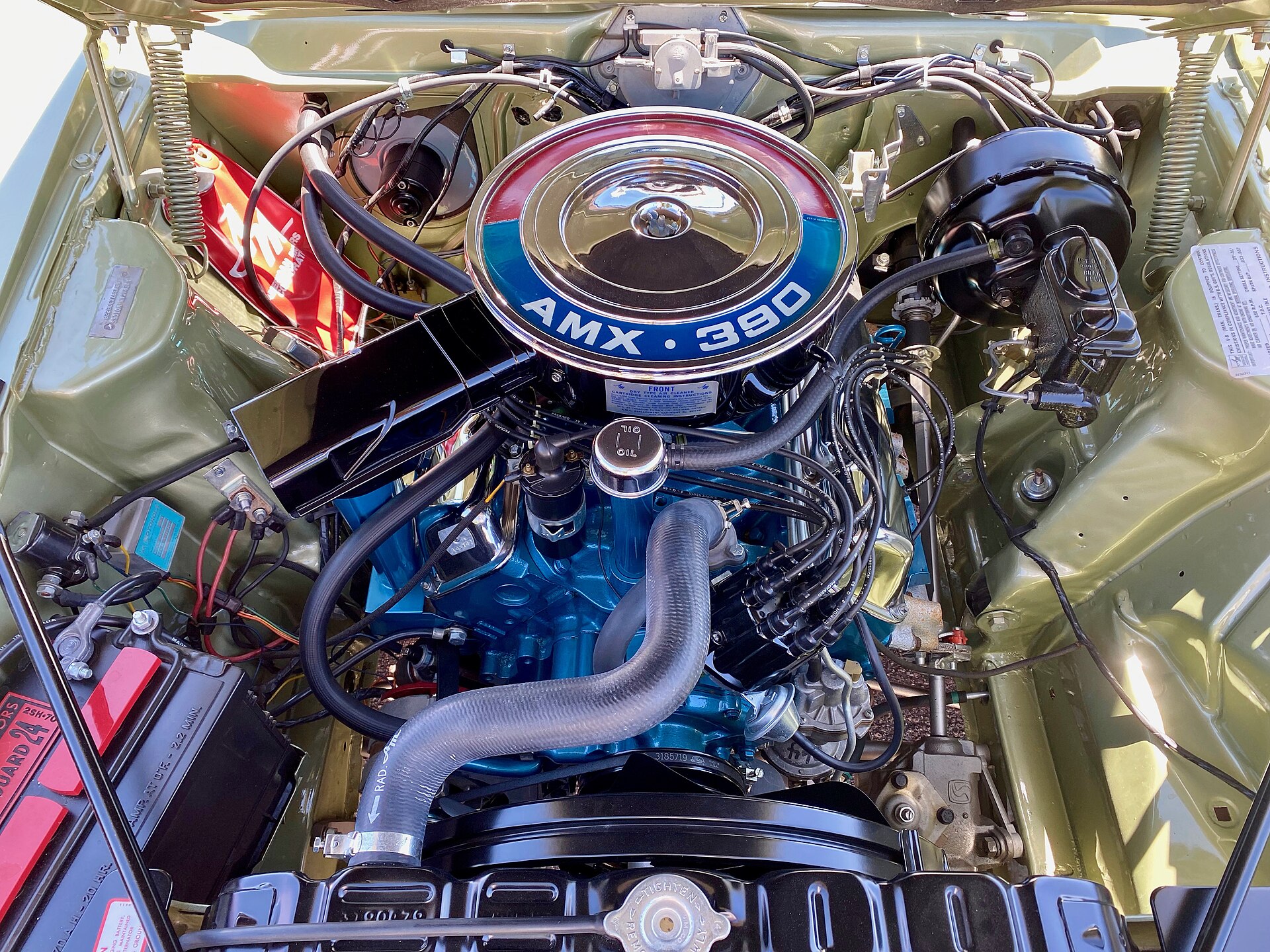
Spota tip: if you've still got a naturally aspirated V8 in your garage, document it. Log the mods, the maintenance history, the sound clips, all of it, in your Garage profile. In ten years that engine bay photo is going to mean a lot more than it does today.
🗣️ The Debate Isn't Going Away
Car forums will keep arguing about whether a turbo four "counts" as a real performance engine, and honestly, that argument is part of what makes car culture what it is. But the regulatory and engineering pressure pushing V8s out of mainstream lineups isn't a trend that reverses because enough people post angry comments about it.
The V8 had a great run. It's not dead yet, but it's becoming the exception instead of the rule, and every car person watching the spec sheets already knows it. For more on what's replacing it under the hood, check out why turbo cars need a cool-down or browse the full under-the-hood archive.
Enjoy the sound while it lasts.