
🚨 The Sound Everyone Learned to Hate and Ignore
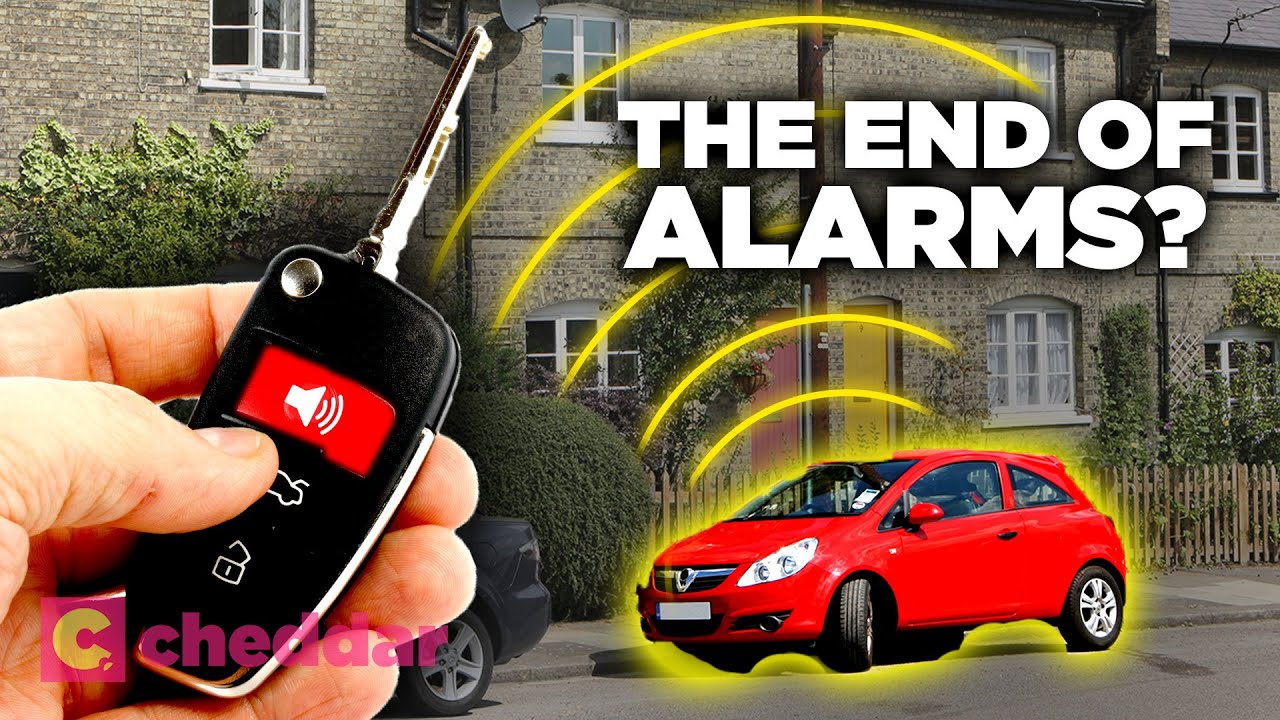
You know the sound. Somewhere in the parking lot, a car alarm is screaming its lungs out. Horn blaring, lights flashing, siren cycling through three or four different tones like it's auditioning for a part. Nobody looks up. Nobody breaks stride. The guy two cars down doesn't even glance over.
That's not you being a bad neighbor. That's basically everyone, everywhere, all the time.
Car alarms were supposed to be the thing that made a thief think twice. Instead they became the thing you tune out faster than a text notification. And the strange part is, that reaction isn't irrational. It's data-backed. Decades of studies, city surveys, and insurance research all point to the same conclusion: car alarms cry wolf so often that our brains stopped listening on purpose.
Here's the actual story behind the sound nobody trusts anymore, and what's quietly replacing it.
📊 The Numbers Nobody Wants to Admit
Start with the part that should embarrass the entire car alarm industry: most alarm activations aren't real.
A widely cited Columbia Journal of Environmental Law study on New York City found that somewhere between 95 and 99 percent of car alarm triggers were false, set off by a passing truck's vibration, an electrical glitch, or nothing identifiable at all. Separate surveying backed that up from the human side: only about 5 percent of people who heard an alarm went off felt any urge to actually do something about it. The other 95 percent just filtered it out, the same way you filter out traffic noise.
Progressive Insurance ran its own version of that question and got an even starker number: less than 1 percent of people said they'd call the police after hearing a car alarm go off. Not because people don't care about car theft. Because everyone's internal model, built from a lifetime of false triggers, says the odds of this specific alarm meaning an actual crime are basically zero.
That's the real reason nobody reacts. Not apathy. Statistics.
🕰️ A Sound That's Been Losing Trust for Over a Century
Car alarms aren't a modern invention that recently got annoying. They've been losing credibility since before most people's grandparents were born.
The first audible car alarm is generally credited to 1913, built (somewhat ironically) by a man serving time in prison. A few years later, in 1918, inventors St. George Evans and Edward Birkenbuel filed the first patent for a fully electric car alarm system. For most of the 20th century these stayed relatively rare and relatively simple: a switch, a horn, done.
The real escalation happened once alarms went mainstream and manufacturers started competing on how hard it was to ignore them. Sirens got louder. Sensitivity got dialed up to catch anything, footsteps near the car, a strong gust of wind, a bird landing on the hood, because a missed real theft was seen as worse than an oversensitive system. Nobody was optimizing for "don't cry wolf." Everybody was optimizing for "never miss a real one," and that tradeoff is exactly what trained an entire population to stop listening.
Modern systems can push past 125 decibels, roughly five decibels louder than a jet engine at a distance and only a few decibels short of the threshold where sound starts to physically hurt. It's an arms race that won on volume and lost on trust.
🧠 This Isn't Laziness, It's Alarm Fatigue
There's a name for what's happening in your brain when you hear an alarm and don't react: alarm fatigue. It's a documented phenomenon, studied extensively in hospitals where nurses are exposed to hundreds of monitor beeps a shift and the overwhelming majority turn out to be false or clinically insignificant. Staff start to unconsciously deprioritize alarms, sometimes even ones that matter, because the signal-to-noise ratio trained them to.
Car alarms are the exact same mechanism playing out on a city-wide scale. Every false trigger, the leaf, the truck, the static from a nearby garage door remote, is a tiny withdrawal from the alarm's credibility account. After a few thousand withdrawals citywide, the balance hits zero and the sound just becomes ambient noise, like a siren in the distance that's clearly someone else's problem.
It's the boy who cried wolf, except the wolf never shows up 95 times out of 100, and everyone in earshot has personally lived through that math without ever running the numbers.
🔧 Why the Thing Keeps Going Off for No Reason
If you've owned a car with a factory or aftermarket alarm, you already know the usual suspects:
- Motion and vibration sensors set too sensitive. Heavy trucks, buses, and even loud stereo bass from another car can shake a vehicle enough to trip a shock sensor.
- Keyless entry interference. A fob with a weak battery, sitting too close to another fob, or catching stray RF interference can confuse the system into thinking someone's trying to get in.
- Battery voltage drops. A weak or aging battery can dip low enough under load to trigger a fault the alarm reads as tampering.
- Weather. Wind rocking the car, hail, even a hard rainstorm hitting a sensitive glass-break sensor can set it off.
- Aftermarket install gremlins. Poorly grounded aftermarket alarms are notorious for phantom triggers that factory systems mostly avoided.
Every one of those is a false positive that costs the alarm a little more credibility. Multiply that by every car on every street, every night, for decades, and you get a population that's been conditioned to associate that sound with "annoying," not "emergency."
🕵️ Even When It's Real, Alarms Barely Slow Down a Thief
Here's the part that stings if you've ever actually had a car broken into while the alarm was blaring: audible alarms don't do much against anyone who actually knows what they're doing.
Industry estimates put organized theft rings, not opportunistic amateurs, behind roughly 80 percent of the billions of dollars in vehicle theft that happens annually in the US. These aren't people fumbling with a coat hanger. A practiced thief can defeat a basic alarm in seconds and a sophisticated aftermarket system in a few minutes at most. Worse, that blaring siren everyone's ignoring can actually work for the thief, covering the sound of a window breaking or a door being forced, while giving them a countdown clock nobody around them is paying attention to anyway.
Research from the insurance side backs this up bluntly. The Highway Loss Data Institute has publicly stated that when they compared theft rates on insured vehicles with and without alarms, the presence of an alarm alone didn't meaningfully move the needle. That's not a popular thing to hear if you just paid for a system, but it's the honest data.
If you want the deeper dive on how modern thieves actually get into cars without ever touching an alarm sensor, the relay attack problem behind keyless car theft is worth reading next. It's a completely different, much scarier vector than a random smash-and-grab, and it doesn't trip a traditional alarm at all.
🔑 What Actually Moves the Needle
The alarm isn't useless as a concept, it's just outdated as a primary strategy. The technology that's actually shown measurable results looks nothing like a siren:
- Passive immobilizers. These stop the engine from starting at all without the correct chip-embedded key, no siren required. Ford saw a documented 77 percent drop in Mustang thefts after rolling out passive immobilization. Nissan's Maxima data showed average theft-related losses drop from roughly $14,148 per stolen vehicle down to $5,429 once immobilizers were standard, largely because it stopped a huge chunk of thefts from succeeding in the first place instead of just making noise after the fact.
- GPS trackers and telematics. A hidden tracker doesn't scare anyone off, but it turns "the car is gone forever" into "the car is recoverable," which is a very different insurance and outcome story.
- Steering wheel locks and kill switches. Unglamorous, cheap, and still remarkably effective specifically because they add physical friction a relay attack or a fob clone can't touch.
- Dash cams and doorbell-style cameras. Even when they don't stop the attempt, they turn a shrug into evidence. If you haven't already, here's why dash cams became non-negotiable for car guys, and the same logic applies to a driveway or garage angle covering the car itself.
- Faraday pouches for keyless fobs. A five-dollar fix for a very modern problem: blocking the relay signal that lets thieves "extend" your key's range from inside your house to your driveway.
None of these rely on a stranger in a parking lot deciding to care. That's the real shift. Modern car security stopped betting on human reaction and started betting on making the theft itself harder or the recovery easier.
🏙️ Cities Started Fighting Back on the Noise, Not the Crime
Because so few alarms mean anything, plenty of cities have quietly shifted from treating them as a security feature to treating them as a noise problem. Multiple municipalities have ordinances on the books that fine a car owner if their alarm goes off and isn't silenced within a set window, sometimes as short as 45 seconds to a few minutes. Enforcement is inconsistent, and honestly, good luck finding an officer nearby the exact moment a random 2 a.m. alarm starts screaming. But the direction of the policy says everything: the sound stopped being treated like an emergency signal and started being treated like a public nuisance that happens to sometimes, rarely, mean something.
Noise complaint surveys back this up too. Loud, unresolved alarms consistently rank as one of the top quality-of-life complaints in dense cities, right up there with construction and loud parties, not because people hate security, but because the signal got so noisy it stopped functioning as one.
📱 The Industry Already Knows, Which Is Why It Went Quiet
Look at where car security actually invested over the last decade and the message is clear: automakers and aftermarket brands quietly stopped betting on the siren.
Tesla's Sentry Mode doesn't blast a horn as its first move, it records, tracks nearby movement with cameras, and pushes a notification straight to your phone. Modern telematics systems from mainstream brands do the same thing: a door forced or a window smashed triggers an alert on your phone before it triggers anything the neighborhood can hear. Aftermarket trackers and smart alarm brands built entire product lines around app notifications instead of decibels.
That's not a coincidence, it's an admission. The industry ran the same numbers this article just walked through and reached the same conclusion: a sound nobody reacts to is worse than useless, it's a false sense of security that costs the owner nothing to install and the neighborhood everything in noise. A silent alert that actually reaches a person who'll do something about it, even if that person is just you, checking your phone from inside a restaurant, beats a siren screaming into a parking lot full of people who've already decided it doesn't mean anything.
😂 Every Car Guy Has Set Off Their Own Alarm at 2 A.M.
There's a very specific, very universal moment in car ownership: fumbling with your keys in your own driveway, bumping the door a little too hard, and suddenly your own car is screaming at full volume while you frantically mash the fob trying to make it stop before a neighbor's porch light flips on. Everyone's laughed about it in a group chat. Everyone's been the person apologizing the next morning.
It's become one of those small, shared bits of car culture precisely because the alarm has stopped meaning "emergency" and started meaning "mildly embarrassing inconvenience," even to the person who owns the car it's attached to. When the person the system is supposed to protect can't take their own alarm seriously in the moment, that tells you everything about where the sound sits in everyone else's priority list too.
Spota tip: if you've actually upgraded your car's security, swapped in a better immobilizer, added a tracker, installed a dash cam setup, it's worth logging that in your car's Garage timeline anyway. It's not just bragging rights. A documented history of security upgrades and maintenance is exactly the kind of paper trail that helps with insurance, resale, or proving what's actually on the car if it's ever recovered.
🏁 The Bottom Line
Car alarms didn't fail because they're a bad idea. They failed because they optimized for the wrong thing for over a century, catching everything instead of catching the right thing, and in doing so trained an entire planet to stop listening. The data is blunt about it: 95 to 99 percent false, less than 1 percent of people willing to act on one, and barely a dent in theft rates once you're dealing with anyone who actually knows what they're doing.
The cars that are actually harder to steal today mostly aren't the ones screaming the loudest. They're the ones quietly refusing to start, quietly reporting their location, or quietly recording everything, while the siren down the block keeps blaring at an audience that stopped showing up decades ago.
Related reading: if you want to understand the newer threat that doesn't trip any alarm at all, why keyless car theft terrifies every car guy breaks down the relay attack problem, and why dash cams became non-negotiable for car guys covers the modern alternative that actually gets results.