
🚨 The Icon That Ruins Your Day
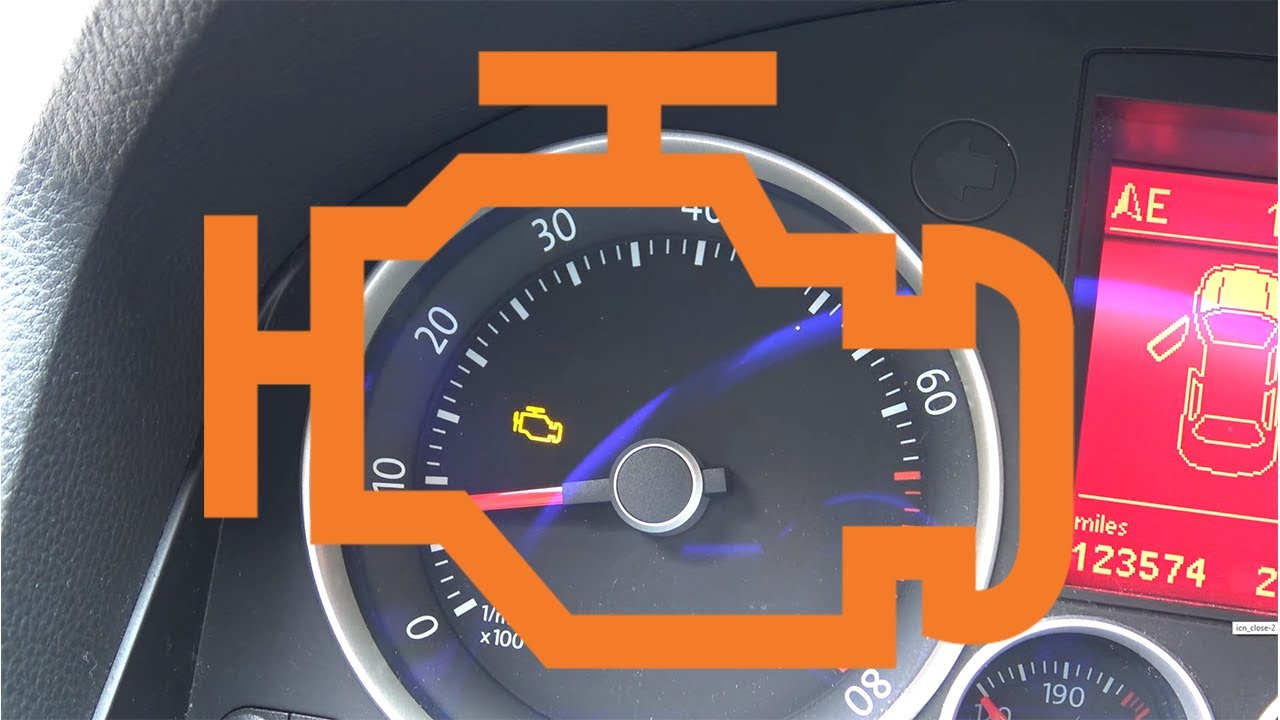
You're driving. Everything's fine. Radio's on, coffee's still warm, nothing sounds wrong, nothing feels wrong. Then you glance down and there it is: a small orange engine outline, glowing on the dash like it's been waiting for the worst possible moment to show up.
Your stomach drops before your brain even catches up. Is it the transmission? A blown head gasket? Something that's about to strand you on the shoulder? Or is it nothing, a loose gas cap, a sensor having a bad day, something that'll clear itself in a week?
That's the cruelty of the check engine light. It looks identical whether your car needs a $12 part or a $4,000 engine rebuild. No color coding, no severity scale, no hint. Just one flat, ominous icon that means "something, somewhere, isn't reading right," and leaves you to sort out whether that's a footnote or an emergency.
Here's why it's built that way, what's actually happening under the hood when it lights up, and how to read the situation like someone who's been through it before instead of someone about to get upsold at the dealership.
🔧 What the Light Actually Is (And Isn't)
The check engine light, officially the "malfunction indicator lamp" or MIL, isn't a damage report. It's a notification that a sensor detected something outside its expected range. That's it. It's your car's way of saying "something doesn't match what I expected," not "something is broken."
Every car built since 1996 in the US runs OBD-II (On-Board Diagnostics, second generation), a standardized system that constantly monitors dozens of parameters: fuel trim, oxygen sensor readings, misfire counts, emissions system performance, transmission shift patterns, and more. When one of those readings falls outside its programmed threshold for long enough, the engine computer logs a diagnostic trouble code (a DTC, something like P0420 or P0300) and lights the lamp.
That threshold matters more than people realize. Automakers calibrate it to avoid nagging you over nothing, which means by the time the light actually comes on, the deviation has usually been happening consistently, not as a one-off blip. The system is designed to catch real patterns, not noise. That's part of why the light feels so ominous: it rarely turns on for something truly random.
The problem is the light gives you zero information about severity. A P0442 (small evaporative emissions leak, often just a loose gas cap) and a P0301 (cylinder 1 misfire, which can be catalytic-converter-destroying if ignored) look exactly the same to the driver. Same icon, same color, same dread. You need the actual code to know which one you're dealing with.
🟡 Solid vs. Flashing: The One Distinction That Actually Matters
Most drivers don't know this, and it's the single most useful piece of check-engine knowledge there is:
- A solid, steady check engine light means "something's off, get it checked when convenient." It's not an emergency. You can usually keep driving normally for days or weeks without doing further damage, as long as the car isn't otherwise running rough.
- A flashing check engine light means "an active misfire is dumping unburned fuel into the catalytic converter right now, and it's overheating." This one actually is an emergency. A flashing light means pull over, don't keep driving, and get it towed if you can. Continuing to drive on a flashing light is one of the more reliable ways to turn a $150 ignition coil into a $2,000 catalytic converter replacement.
That single distinction, solid versus flashing, is worth more than every other check-engine folk wisdom combined. If your light is just steadily glowing, breathe. If it's flashing, stop.
🎯 The Usual Suspects (Ranked by How Often They're Actually It)
The check engine light has a reputation for being scary and vague, but in practice, a small handful of causes account for the overwhelming majority of triggers:
- Loose or faulty gas cap. Genuinely the most common cause. The EVAP system monitors for fuel vapor leaks, and a gas cap that isn't sealed properly reads as a leak. Tighten it until it clicks, and the light often clears itself within a few drive cycles. This is the reason every car guy has a story about panicking over the light, then feeling like an idiot when it was the cap the whole time.
- Oxygen sensor. These wear out over time and are one of the most common actual-part failures behind the light. Not an emergency, but ignoring it long-term hurts fuel economy and can eventually damage the catalytic converter.
- Catalytic converter. Either failing on its own (rare, usually age-related) or, more often, damaged as a downstream consequence of ignoring a misfire or bad O2 sensor for too long. This is the expensive one, and it's usually preventable if the earlier warning signs weren't ignored.
- Mass airflow sensor (MAF). Gets dirty or fails, throws off the air-fuel ratio calculation, can cause rough idle or hesitation. Often cleanable rather than requiring full replacement.
- Ignition coils and spark plugs. Especially common on higher-mileage cars or anyone who's stretched a plug change interval too far. Left alone, a failing coil turns into a misfire, and a misfire is what gets you the flashing light.
- EVAP system components beyond the gas cap: purge valves, vent valves, charcoal canister issues. Annoying, rarely urgent, but will keep the light on and can fail emissions testing.
Notice the pattern: the cheap, common stuff (gas cap, sensors, plugs) vastly outnumbers the expensive, catastrophic stuff. Statistically, panic is usually the wrong first reaction. A five-minute check is the right one.
📟 Read the Code Yourself Before You Pay Anyone
This is the move that separates car people from everyone else: you don't have to wait for a shop to tell you what's wrong. A basic OBD-II scanner costs $20-$40, plugs into the port under your dash (usually driver's side, below the steering column), and pulls the exact code in about ten seconds. Even cheaper, most auto parts stores (AutoZone, O'Reilly, Advance Auto) will read the code for free if you don't want to own a scanner.
Once you've got the code, plug it into a search engine along with your car's year, make, and model. P-codes are standardized across manufacturers for the generic definitions, though some are manufacturer-specific extensions. Forums, YouTube diagnostic videos, and repair databases will usually tell you within minutes whether you're looking at a five-dollar part or a five-hundred-dollar one.
This single habit saves an enormous amount of money and anxiety over a car's lifetime. Walking into a shop already knowing your code is P0442 (small EVAP leak, probably the gas cap or a purge valve) instead of just saying "the check engine light is on" is the difference between a fair, targeted diagnosis and an open invitation for a shop to run a full diagnostic fee and find things to fix that weren't the actual problem.
A cleared code that comes right back is meaningful information too: it tells you the underlying condition is still present, not intermittent, and it's worth actually fixing rather than clearing again and hoping.
🗂️ Why Every Car Speaks the Same Diagnostic Language
Part of why the twenty-dollar scanner trick works at all on almost any car is a piece of regulatory history most drivers never think about. Before 1996, every automaker ran its own proprietary diagnostic system, with its own connector, its own code format, and its own tool required to read it. A Ford code meant nothing to a GM scanner. Independent shops needed a shelf full of manufacturer-specific tools just to diagnose basic problems, and home mechanics were locked out entirely.
The EPA mandated OBD-II starting with the 1996 model year specifically to standardize emissions monitoring across every manufacturer selling cars in the US. That single decision is why the same 16-pin connector sits under the dash of a Honda, a Ford, a BMW, and a Chevy, and why the same generic P-codes mean roughly the same thing across all of them. It wasn't designed with car guys doing driveway diagnostics in mind, it was designed so regulators and smog-check stations could verify emissions compliance consistently. The fact that it also handed every owner the ability to read their own car's mind was a side effect, but it's the side effect that matters most to anyone who'd rather diagnose a problem themselves than pay a shop's diagnostic fee just to find out what's wrong.
That standardization is also why aftermarket scanner apps and Bluetooth OBD-II dongles exploded in popularity. A small dongle that costs less than a basic handheld scanner, paired with a phone app, delivers live data streaming instead of just codes: real-time fuel trims, sensor voltages, freeze-frame data captured at the exact moment the code triggered. For anyone who actually wants to understand what their car was doing when the light came on, not just what the code number is, that live data is where the real diagnosis happens.
🧪 The Emissions Test Trap
There's one consequence of an unresolved check engine light that catches people off guard even after they've decided the underlying issue isn't urgent: in states and counties that require periodic emissions testing, a lit check engine light is an automatic fail, full stop, regardless of what the actual code means or how minor the underlying issue is.
It doesn't matter if it's just a loose gas cap that's since been tightened. If the light is on, or if the car's onboard monitors haven't completed a full drive cycle since the last code was cleared, the test fails and registration renewal stalls behind it. This trips up a specific group of people every year: someone clears a code right before their test appointment, thinking a clean dash means a clean pass, and gets rejected anyway because the emissions monitors reset to "not ready" status when the code was cleared and haven't had enough driving time to re-run their checks.
The fix is just patience. Most cars need somewhere between one and several complete drive cycles, a mix of city and highway driving, cold starts included, before all the monitors report back as "ready." Clearing a code the morning of an emissions test is close to the worst possible timing. Clearing it a week or two out, then driving normally, gives the monitors time to finish their checks and the light time to either confirm the fix worked or come back to tell you it didn't.
🛠️ When to Actually Worry
Not every check engine light deserves the shrug-it-off treatment. A few signs mean this one's real and needs attention sooner rather than later:
- The light is flashing, not solid. Covered above, this is the one true emergency case.
- The car is running noticeably differently: rough idle, hesitation on acceleration, stalling, a new smell (especially anything sweet, like coolant, or sulfurous, like a rich fuel mixture).
- Fuel economy drops sharply and suddenly, which often points to an oxygen sensor or a fuel system issue actively costing you money every mile.
- The light comes back immediately after being cleared, meaning whatever triggered it is still actively happening, not a one-time blip.
- Multiple codes appear at once. One code is often isolated. Several codes together, especially across different systems, sometimes points to something upstream causing a cascade, like a failing sensor feeding bad data to multiple subsystems.
If none of those apply and the car drives exactly like it did yesterday, it's genuinely fine to read the code, note it, and plan the fix without treating it as a crisis.
🧾 The Trust Problem: Why Car Guys Are Skeptical of "Just Bring It In"
Part of why the check engine light triggers such a strong reaction in car culture specifically isn't just the light itself, it's the history of shops using vague dashboard warnings as leverage. A driver who doesn't know their code, doesn't know their car, and just wants the light to go away is exactly the customer a bad shop wants: no way to push back on a diagnosis, no baseline to compare against, no leverage in the conversation.
Enthusiasts who've built out a Garage full of mods, timelines, and maintenance history tend to treat this differently. A documented car, one where every service, part, and mileage interval is actually tracked, makes it much harder for a shop to invent a problem, because the owner already knows what's been touched and what hasn't. Spota tip: if you're already logging mods and maintenance in your Garage, treating a check engine light like just another entry to research and log, instead of an unknown to panic over, fits the same instinct.
That's the real skill here. Not never getting a check engine light. Everyone does, eventually, especially on higher-mileage cars. The skill is knowing enough to walk into the conversation as an informed owner instead of a nervous one.
🏁 It's Information, Not a Verdict
The check engine light isn't trying to ruin your week. It's a sensor doing exactly what it's designed to do: flagging a deviation before it becomes a bigger, more expensive problem. The dread it produces is mostly a symptom of not knowing what's actually being flagged, and that's the one part that's completely fixable with a twenty-dollar scanner and five minutes.
Next time it comes on, don't spiral. Check if it's flashing. If it's not, pull the code. Nine times out of ten, it's smaller than the panic made it feel.