
🔦 The Car That Looks Ten Years Older Than It Is
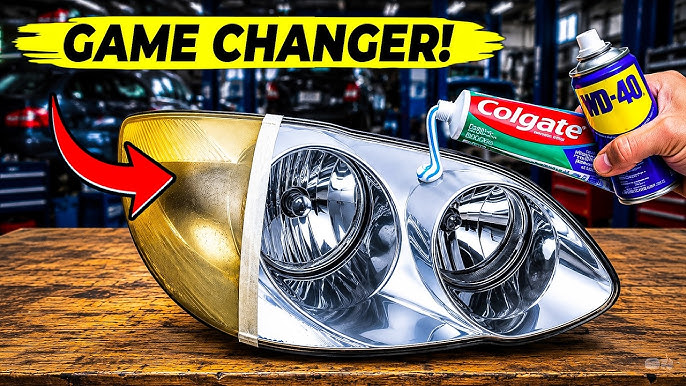
You know the look. A car with decent paint, decent wheels, nothing obviously wrong with it, and then you get to the front end and both headlights look like they've been dipped in weak tea. Cloudy. Yellow. Sometimes almost orange. It doesn't matter how clean the rest of the car is, foggy headlights make the whole thing read as neglected, tired, a car someone stopped caring about years ago.
Here's the part that surprises people: it's not dirt. You can wash that car every week for a year and the headlights will stay exactly as yellow as they were. It's not the bulb either, swapping in a brighter bulb behind a fogged lens is like putting a new light bulb behind a dirty lampshade. The problem is the lens itself. The clear plastic cover in front of the actual headlight assembly is slowly, chemically breaking down, and once it starts, it does not stop on its own.
Car people argue about a lot of things that don't really matter. This one actually costs you something: a hazy lens throws less light exactly where you need it most, at night, in the rain, when a deer or a stalled car is fifty feet ahead of you. It's a safety issue wearing a cosmetic issue's disguise, and almost nobody treats it with the urgency it deserves.
☀️ It's UV Damage, Not Dirt
Headlight lenses used to be glass. Glass doesn't yellow, doesn't cloud, doesn't oxidize in any meaningful way over a car's lifespan. Somewhere in the late 1980s and accelerating hard through the 1990s and 2000s, automakers switched almost universally to polycarbonate.
Polycarbonate is a fantastic material for a headlight lens. It's a fraction of the weight of glass, it can be molded into the aggressive, swept-back shapes modern headlight design demands, and critically, it doesn't shatter into a spray of glass shards when a rock kicks up off the highway. It flexes and survives. Every practical reason points to polycarbonate, and there's no going back to glass for mainstream production cars.
The tradeoff is that polycarbonate has one real weakness: ultraviolet light. Bare polycarbonate exposed to UV radiation undergoes a process called photo-oxidation. UV photons have enough energy to break the polymer chains in the plastic apart at a molecular level. As those chains break down, the material's surface structure changes, microscopic cracks and pits form, and the once-smooth, transparent surface starts scattering light instead of passing it straight through. Scattered light reads to your eye as cloudiness. As the reaction goes deeper and picks up oxidized byproducts and trapped UV-degraded resin, that cloudiness shifts toward yellow and eventually amber or brown.
This is why the fix is never "just clean it harder." You're not removing a film sitting on top of clean plastic. You're looking at plastic that has chemically changed, sometimes microns deep, sometimes (on badly neglected lenses) well into the material. Soap and water does nothing to reverse a chemical bond that's already broken.
Manufacturers know this, obviously, and every headlight lens leaves the factory with a UV-resistant clear coat on top, similar in concept to clear coat on paint. That coating is the sacrificial layer, it's designed to absorb the UV punishment so the polycarbonate underneath doesn't have to. The problem is that clear coat is thin, it's exposed to the harshest conditions on the car (sun, road grime, wiper fluid, ice scrapers, bird droppings, tree sap), and it has a service life. Once it degrades and fails, and it always eventually does, the bare polycarbonate underneath starts taking direct UV hits with nothing left to protect it. From that point, the clock on visible yellowing is running, and it typically shows up faster than most owners expect.
🌡️ Why Some Cars Get It Way Worse Than Others
Walk any parking lot and you'll see two cars from the same model year in wildly different states, one still glass-clear, one gone completely amber. A few real variables explain the spread:
- Climate and sun exposure. UV intensity is the single biggest driver, full stop. A car that's spent its life parked outside in Phoenix or Miami is going to oxidize dramatically faster than the same car garaged in Seattle or Minneapolis. Altitude matters too, thinner atmosphere means less UV filtering, which is why cars from Denver or mountain-adjacent cities often show heavier yellowing than you'd expect for their age.
- Garage access. This is the single most controllable factor and the one most people ignore. A covered car, even under a simple carport, sees a fraction of the cumulative UV dose of a car parked in an open lot every day. Two identical cars, same age, same city, garage versus driveway, can look like they're ten years apart in headlight condition.
- OEM clear coat quality. Not every manufacturer's factory UV coating is created equal, and this is a real, documented variable. Some mid-2000s and early-2010s models from certain brands became known in owner forums for lenses that started hazing within just a few years, well before the rest of the car showed any age. If you're shopping used and a specific model has a reputation for early headlight yellowing, believe the forums.
- Lens shape and angle. More aggressively raked, swept-back headlight designs catch more direct and reflected sunlight throughout the day than flatter, more upright lenses. Modern aerodynamic styling, ironically, can accelerate the exact problem it has no relationship to functionally.
- Aftermarket and improper cleaning history. Someone scrubbing a hazy lens with an abrasive pad or the wrong compound, without ever reapplying a UV-protective coat afterward, can actually accelerate the next round of oxidation by stripping away whatever protective layer was left.
None of this is about how well the car was maintained mechanically. You'll see meticulously kept cars with 40,000 miles and pristine paint sporting headlights that look like they belong on a hooptie, purely because of where they lived and how much sun they saw.
🧪 What Restoration Kits Actually Do
The gas station and auto parts store headlight restoration kits genuinely work, and they genuinely have limits, and understanding both saves you from a bad experience.
The typical process, whether you're using a $15 kit or paying a detailer for a full service, follows the same logic:
- Wet sand the oxidized layer away. Progressively finer grits of sandpaper, usually starting around 400-600 and working up to 2000-3000, physically remove the damaged, cloudy top layer of polycarbonate until you reach clear material underneath.
- Polish to restore optical clarity. Sanding alone leaves a hazy, matte finish, even on clear plastic. A polishing compound, worked by hand or with a buffer, brings back the glass-like transparency.
- Apply a fresh UV-protective coating. This is the step people skip, and it's the one that determines whether the fix lasts six months or two years. Without reapplying a UV sealant, resin, or ceramic coating over the freshly exposed bare polycarbonate, you've just reset the clock on a lens with zero protection. It will start yellowing again, often faster than before, sometimes within a matter of months in a hot, sunny climate.
Done properly, a restoration can genuinely bring a badly yellowed lens back to near-factory clarity, and it's dramatically cheaper than the alternative. But it is not permanent. You've sanded away material that doesn't grow back, and you're relying on a fresh protective coating with its own limited service life. Most realistic estimates put a quality DIY or professional restoration at somewhere between one and three years before it needs to be redone or touched up, depending on climate and UV exposure.
Spota tip: if you're building out a Garage entry for a project car, a before-and-after headlight restoration is one of the more satisfying quick wins to document. It's a visible, dramatic improvement that takes an afternoon, not a season.
💸 Replacement Is the Real Fix, and Everyone Knows It
Ask anyone who's actually dealt with a badly oxidized lens, deep pitting, cracking, yellow gone all the way through, and they'll tell you the honest answer: restoration is a maintenance step, replacement is the fix. A new OEM or quality aftermarket headlight assembly starts with fresh polycarbonate and a full-strength UV coating, no sanded-down material, no compromised base layer.
The math is what stops most people. OEM headlight assemblies on newer vehicles with integrated LED modules, sensors, and adaptive lighting hardware can run anywhere from a few hundred dollars to well over a thousand per side. That's before labor, and on some modern platforms, before the dealer has to recalibrate driver-assist cameras that live inside or adjacent to the headlight housing. A restoration kit at fifteen to forty dollars, or a detailer service in the same rough range, is simply the more rational move for most owners on most cars, especially if the plan is to sell within the next few years anyway.
Where replacement genuinely makes sense: lenses that are cracked, lenses with condensation actively getting inside the housing (a sign the seal has failed, which is a separate and worse problem than surface oxidation), or lenses so far gone that sanding would need to remove more material than the lens can safely lose without compromising its optical shape.
🚔 Yes, It Can Actually Fail You an Inspection
In states with vehicle safety inspections, badly oxidized headlights aren't just a cosmetic embarrassment, they can be a legitimate failure point. Inspectors are checking for adequate light output and beam pattern, and a lens cloudy enough to visibly scatter and dim the beam can absolutely trigger a fail, the same category as a burned-out bulb or misaimed headlight. It's a detail plenty of owners don't find out until they're standing in the inspection bay getting handed a rejection sticker for something they assumed was purely cosmetic.
Insurance and resale carry a softer version of the same penalty. A used car listing photo with two amber, cloudy headlights reads as neglected before a buyer's even opened the door, and it tends to invite lowball offers on the theory that if the headlights were ignored, what else was. It's one of the cheapest, highest-visibility fixes available before listing a car for sale, right up there with a wash and a vacuum.
🛠️ Prevention Beats Restoration Every Time
The cheapest fix for headlight oxidation is never having it happen in the first place, and the tools for that are boring but effective:
- Park under cover whenever you can. Even partial shade cuts cumulative UV exposure meaningfully over years, not days.
- Apply a dedicated UV-protective sealant on new or freshly restored lenses, and reapply on a schedule, roughly every six months to a year depending on climate, the same logic as reapplying wax or sealant to paint.
- Wash headlights as part of a normal detail, not because dirt causes oxidation, but because road grime and bug residue trap moisture and can accelerate wear on a compromised clear coat.
- Address the failure early. The very first sign of a slight haze is the cheapest possible moment to intervene, before UV has had time to work deep into the material. Waiting until the lens is fully amber means more aggressive sanding, more material removed, and a shorter-lived fix.
For garages and shops running fleets, or for any car guy who's serious about keeping a build looking sharp for the long haul, treating headlight UV protection as a recurring maintenance item, the same mental bucket as ceramic coating or paint correction, beats treating it as a one-time emergency fix after the damage is already visible from across the parking lot.
Headlights are one of those parts of a car nobody thinks about until they're staring at a cloudy amber mess in a parking lot, wondering how a car with a clean interior and fresh tires ended up looking like it's been sitting in a junkyard. It's chemistry, not neglect, and it's fixable, but only if you actually understand what's happening under that yellow haze instead of scrubbing it with dish soap and wondering why nothing changes.
Keep your headlights clear, keep them protected, and your car will look every bit as young as the rest of it actually is.