
😤 You Lifted Off the Gas. Why Is the RPM Still Sitting at 4,000?
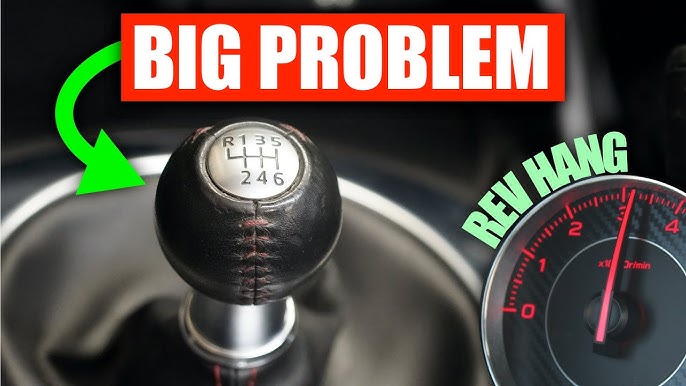
You're heel-toeing into a corner, you've done this a thousand times, and the blip lands clean. Except the needle doesn't drop back down where it's supposed to. It just hangs there for an extra half second, floating well above idle, while you're already trying to let the clutch out into the lower gear. The result is either an awkward lurch or you have to wait out the hang and lose your rhythm completely.
If that sounds familiar, you haven't suddenly forgotten how to drive stick. You've run into rev hang, and it's not a mechanical fault or bad technique. It's a deliberate piece of ECU programming that a huge number of modern manual cars ship with, and it has turned into one of the most quietly infuriating things in car culture because it fights against the exact skill enthusiasts spend years trying to perfect.
This one gets people heated because it feels personal. You did the work to learn rev-matching, you nailed the blip, and the car still won't cooperate. Here's what's actually going on under the hood, why manufacturers built it in on purpose, and what car people have figured out to deal with it.
⚙️ What Rev Hang Actually Is
Rev hang is the delay between lifting off the throttle pedal and the engine's RPM actually dropping back toward idle. On an old cable-throttle car, lifting your foot physically closes a butterfly valve in the throttle body almost instantly, air stops flowing into the engine, and RPM falls fast. Clean, mechanical, predictable.
Modern cars don't work that way. There's no cable. Your throttle pedal is just a sensor sending a signal to the ECU, which then decides how to actually move the throttle body. That's throttle-by-wire, and it gives the computer full authority over exactly when and how fast the throttle closes, completely independent of what your foot is physically doing.
When you lift off the gas, the ECU doesn't necessarily snap the throttle shut. On a lot of cars it intentionally holds it open a bit longer and lets RPM decay slowly instead of dropping it instantly. That lag, that hang, is rev hang. It's not a delay in the system responding to you. It's the system choosing not to respond to you immediately, on purpose.
🌫️ Why Manufacturers Actually Built This In
This is the part that makes people angriest once they learn it: rev hang exists almost entirely because of emissions regulations, not because of any driving benefit.
- Sudden throttle closure creates a lean spike. When the throttle snaps shut instantly, the engine briefly gets an air/fuel mixture that's leaner than the ECU wants, right as intake vacuum spikes. That transient condition produces a spike in NOx and other emissions that's hard to control cleanly.
- A slower, computer-managed throttle close lets the ECU keep the air/fuel ratio stable through the transition. By holding the throttle open a little longer and tapering it off gradually instead of instantly, the engine avoids that lean spike and stays inside the emissions window regulators test for.
- Catalytic converter protection plays a role too. Abrupt drops in RPM and load can send unburned fuel or a rough mixture toward the cat, and manufacturers tune around that as well, especially with tighter cold-start and warm-up emissions standards.
- It's cheaper than a mechanical fix. Rather than engineering hardware to manage the transition cleanly, it's far simpler for a manufacturer to handle it entirely in software with a calibration table, and that calibration is exactly what's giving you that hang.
None of this has anything to do with making the car nicer to drive. It's a byproduct of passing emissions certification, and enthusiasts are the ones stuck living with the side effect.
🚗 Which Cars Get Named Constantly For This
Rev hang shows up to different degrees across nearly every throttle-by-wire manual car, but a handful of models get brought up over and over in owner forums and comment sections whenever this topic comes up.
- Mazda MX-5 Miata (ND generation). This is probably the most talked-about case in enthusiast circles, mostly because the Miata is such a beloved driver's car that the hang feels like a betrayal of everything else the car does right. Owners have written entire forum threads dedicated to fighting it.
- Honda Civic Si and Civic Type R. Honda's throttle-by-wire tuning has drawn complaints for years, especially on earlier generations, where the hang was pronounced enough that rev-matching felt like fighting the ECU instead of working with it.
- Subaru WRX and BRZ. Both get regular mentions, with the BRZ/86 platform in particular generating a steady stream of "is this normal" threads from new owners who assumed something was wrong with their car.
- Ford Focus ST/RS and Fiesta ST. European-market emissions tuning carried over to these hot hatches, and rev hang is a frequent topic in their respective owner communities.
The severity varies by model year and even by trim, since manufacturers do tweak the calibration over time, sometimes making it worse and occasionally dialing it back after enough owner pushback.
🔥 Why This Specifically Enrages the Rev-Matching Crowd
Regular drivers who never learned heel-toe technique mostly never notice rev hang. It's invisible if you're not trying to time a throttle blip against a clutch release. But for the exact subset of car people who put in the reps to rev-match properly, it's maddening for a specific reason: the hang actively works against the timing the technique depends on.
Rev-matching is about bringing RPM up to meet the lower gear right as the clutch re-engages. When you blip the throttle and then lift, a normal cable-throttle car lets that RPM spike fall away cleanly, right when you need it to. With rev hang, the RPM you just brought up with your blip refuses to come back down on schedule, so instead of a clean match you get an overshoot, the engine still spinning too high when the clutch grabs, which produces exactly the jerky, mismatched shift that rev-matching is supposed to eliminate in the first place.
So the people who care most about smooth downshifts are the ones who get hit hardest by a feature that has nothing to do with driving and everything to do with a lab test. That mismatch between who's affected and why it exists is a big part of why this topic gets so much traction anytime it comes up.
🛠️ What People Actually Do About It
There's no single universal fix, and results vary a lot by platform, but here's what shows up most often in the communities dealing with this.
- ECU tunes and piggyback controllers. On platforms with an active aftermarket, tuners have specifically targeted rev hang calibration tables and reduced or eliminated the hang as part of a broader tune. This is the most reliable fix where it's available, but it's not free, it can affect emissions compliance, and it isn't an option on every car.
- Adjusting technique around it. Some drivers learn to blip earlier and shorter, anticipating the hang and timing the clutch release to land after the RPM has actually settled rather than right after the blip. It's not as clean as a proper instant-response throttle, but it's a workable compromise once you know the car's specific hang duration.
- Aftermarket throttle controllers. These sit between the pedal and the ECU and remap how pedal input translates to throttle signal. Results are mixed since they're adjusting sensitivity and response curve rather than the underlying hang logic itself, but some owners report it helps.
- Living with it. A lot of owners eventually just accept the car's specific quirk and adjust their expectations, especially once they understand it's emissions-driven and not a defect. Knowing why it happens takes some of the sting out of it, even if it doesn't fix the shift.
Forums for hang-prone cars are full of threads comparing tune results, and it's common to see owners cross-shopping a car partly based on how bad the reputation for rev hang is, which says something about how much this one specific quirk matters to the driving-focused crowd.
🧠 The Bigger Pattern: Emissions Rules Shaping How Cars Feel to Drive
Rev hang is really just one visible example of a much larger trend. As emissions and fuel economy regulations have gotten tighter, manufacturers have handed more and more control of the driving experience over to software, often in ways that trade a small amount of driver feel for a compliance win that most buyers will never notice or care about.
It's the same underlying story as electric power steering replacing hydraulic feel, or active sound design pumping synthetic exhaust noise through the speakers instead of letting the real exhaust note through. Car people notice these tradeoffs because they're the ones paying close enough attention to feel the difference between a mechanical response and a computer-mediated one. Everyone else just drives the car and never thinks about it.
That's not likely to reverse. If anything, as emissions standards keep tightening and throttle-by-wire systems keep getting more sophisticated, expect more of the driving experience to get shaped by calibration tables nobody outside the engineering department ever sees, with enthusiasts left to reverse-engineer why their car behaves the way it does.
Spota tip: if you've got a tune sorted out on a rev-hang-prone car, or you've dialed in your technique around it, that's exactly the kind of build detail worth logging in your Garage. Mod notes and before/after driving impressions are what turn a car's page into an actual story instead of just a parts list.
🏆 The Bottom Line
Rev hang feels like a mechanical problem because it shows up as a mechanical symptom, RPM that won't fall when it should. But it's software, built in on purpose, to satisfy an emissions test that has nothing to do with how the car feels from the driver's seat. Once you know that, the fix stops being "get better at rev-matching" and starts being "understand your specific car's hang and either tune around it or time your inputs to it." Either way, it's one more reminder that a lot of what frustrates enthusiasts about modern cars isn't bad engineering. It's a tradeoff nobody driving the car ever agreed to.
Related reading: check out why rev-matching became the ultimate car guy flex and why electric power steering killed steering feel, or browse more under-the-hood breakdowns of the stuff car people argue about.