
🛞 The Sound Every Car Guy Knows Before They Even Look
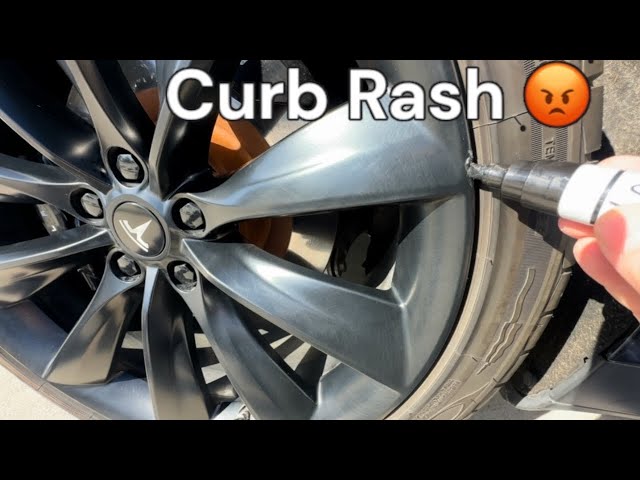
You already know the sound. That dull, sickening scrrrt as your rim kisses a curb, a parking block, or the lip of a driveway you've pulled into a thousand times without issue. You don't even need to look. You already know.
You pull over anyway. You crouch down next to the wheel like you're checking on an injured animal. And there it is: a silver gash cut straight through the clear coat, the paint, sometimes right down into bare aluminum. One second of bad luck. A lifetime of looking at it every time you walk up to your car.
Curb rash isn't just cosmetic damage. For a huge chunk of car culture, it's a small, permanent wound to something you were proud of five seconds ago. And the worst part is how avoidable it always feels in hindsight, and how unavoidable it actually is when you're driving a lowered car with 19s stretched to the edge of the fender on a street built for a minivan.
Let's get into why this specific kind of damage hits different, why it happens so much more than people admit, what it actually costs to deal with, and how to keep it from happening to you.
🔬 What's Actually Happening When a Wheel Meets a Curb
"Curb rash" sounds casual, almost cute. What's actually happening is a lot more violent than the name implies.
A modern alloy wheel is built in layers:
- Bare cast or forged aluminum as the structural base
- A primer layer to help everything else stick
- Base color coat (silver, black, bronze, whatever the finish is)
- A clear coat on top to protect the color and add shine
When a wheel scrapes a curb, that impact doesn't gently rub the surface. It's a sideways collision between soft-ish aluminum and unforgiving concrete, usually happening at an angle and under load, since the tire is compressed and the car's weight is pressing the rim right into the point of contact. The clear coat goes first. Then the color coat. In a hard enough hit, you're grinding straight into raw aluminum, and you'll see bright, silvery gouges where the finish is completely gone.
Depth matters a lot here:
- Surface-only (clear coat scraped, paint intact): cosmetic, relatively cheap to fix
- Through the paint (color coat gone, aluminum showing): needs real refinishing
- Structural gouging (deep enough to feel with a fingernail, or that's chipped a visible chunk): this is where a wheel shop starts talking about whether the wheel is even safe to keep running, especially if it's near the bead seat where the tire seals
That last category is the one people don't think about enough. A deep enough curb strike right at the barrel or bead seat can create a slow leak, or in the worst case, weaken the wheel structurally. Most curb rash is cosmetic. Not all of it is.
😤 Why This Damage Hits Different Than Every Other Kind
Car guys shrug off rock chips on the hood. They'll drive a car with a cracked bumper clip for years and never think about it. But curb rash? That gets a reaction most other cosmetic damage doesn't.
A few reasons this one stings more:
- Wheels are the thing you actually chose. Most people don't pick their hood or their door panels. They picked their wheels, specifically, on purpose, sometimes after weeks of scrolling fitment threads and building spreadsheets comparing offsets. Damaging them feels personal in a way factory panel damage doesn't.
- It's permanent-feeling in a way most damage isn't. A scratch on a bumper can be buffed, painted, forgotten. Curb rash sits right at eye level, on a rotating, always-visible part of the car, and every single time that wheel spins past your line of sight, you see it.
- It's a status marker in the community, whether anyone admits it or not. Pull up to a meet with clean wheels and nobody says anything. Pull up with visibly rashed rims and, fair or not, some part of the crowd quietly files you under "doesn't take care of the car."
- It usually happens somewhere embarrassing. Rarely is curb rash a dramatic story. It's almost always a parking garage, a tight residential street, a drive-thru, or backing out of your own driveway. There's no glory in the origin story, just a wince.
None of that is really about the money. Plenty of people who could easily afford to fix it still feel sick about it for days. It's an emotional injury wearing a cosmetic-damage costume.
📉 Why It Happens So Much More Than People Admit
Ask around at any meet and almost everyone has a curb rash story, even people running perfectly sensible fitment. But the risk isn't distributed evenly. Some setups are basically begging for it.
The biggest multipliers:
- Aggressive fitment and stretched tires. The whole point of an aggressive wheel and tire package is pushing the rim's lip as close to the outer edge of the tire, and as close to the fender, as physically possible. That's less sidewall cushioning the rim from a curb, and less margin between the wheel's outer edge and disaster. If you've read our breakdown on why wheel fitment became car culture's most complicated obsession, you already know the tradeoffs people accept for the look.
- Lowered ride height. Drop a car and you lose the suspension travel and ground clearance that used to absorb small misjudgments. A curb height that was a non-event on stock suspension becomes a direct hit on coilovers.
- Negative camber. Aggressive camber angles tuck the top of the wheel in and push the bottom of the tire's contact patch outward, which changes exactly where the sidewall and rim sit relative to a curb during a tight turn. We've gone deep on this in why negative camber became car culture's favorite flex, and the fitment tradeoff shows up here too.
- Bigger wheels, shorter sidewalls. An 18-inch wheel wrapped in a tall, cushy tire has real sacrificial rubber between the rim and the world. A 20 or 22-inch wheel on a low-profile tire has almost none. Less sidewall means less forgiveness.
- Unfamiliar parking structures. Most curb rash doesn't happen in your own driveway. It happens in a parking garage you've never used, judging a concrete wheel-stop through a mirror you don't fully trust yet, or squeezing past a support pillar in a spot clearly not designed for anything wider than a compact sedan from 2004.
- Valet and rental situations. Handing your car's keys to someone who has zero emotional stake in your wheels, then watching them attack a parking garage ramp at a speed you'd never choose yourself, is its own special kind of anxiety. Plenty of curb rash stories start with "I wasn't even driving."
Put a couple of those factors together, aggressive fitment plus a low car plus an unfamiliar parking garage, and you've basically built a curb rash machine. It's not bad luck. It's math.
💸 What It Actually Costs to Fix
This is where people either get pleasantly surprised or genuinely shocked, depending on how bad the damage is and what kind of wheel got hit.
DIY touch-up (surface scrapes only):
- Curb rash repair pens or paint kits: $15 - $40
- Works fine for shallow, cosmetic-only scrapes
- Never fully invisible up close, but good enough from a few feet away
- Doesn't restore the factory finish or protect against corrosion the way a real refinish does
Professional wheel repair shop (the most common route):
- Sanding, filling, reshaping the lip, repainting, and reclearing: $75 - $200 per wheel
- Mobile wheel repair services that come to you tend to run similar pricing, sometimes a bit more for convenience
- Turnaround is usually same-day or next-day for straightforward cosmetic damage
- This is the sweet spot for most curb rash, cosmetic, annoying, fixable without drama
Diamond-cut or machined-finish wheels:
- These need a specialized lathe process to restore the exact machined pattern, not just a repaint
- $150 - $350 per wheel, and not every shop offers true diamond-cut restoration
- If you own diamond-cut wheels, you already know this. If you're shopping for them, factor this into the decision now, not after the first scrape
Structural damage or a wheel that's simply too far gone:
- Full refinishing (powder coat, full strip and repaint): $150 - $400 per wheel
- Replacement wheel, OEM: anywhere from $300 to well over $1,000 depending on the car
- Replacement wheel, aftermarket forged: can run $500 - $2,000+ per wheel for the setups people actually build spreadsheets around
The math that actually stings: a full set of four rashed wheels, even at the cheap end of professional repair, is easily $300 - $800 for something that took less than a second to cause. On forged or diamond-cut setups, that number climbs fast.
🧠 The Psychology of Prevention (Or the Lack of It)
Here's the uncomfortable part: almost everyone who's had curb rash knew, in the moment, that they were cutting it close. The gap between "this feels tight" and "I just heard that sound" is usually about a second and a half, and in that window, pride, distraction, or just plain misjudging the wheel's actual position wins out over caution.
The tools that actually help, and why people skip them anyway:
- Curb feelers: genuinely effective, genuinely unpopular, because they look like something out of a 1970s land yacht rather than a modern build
- Front and rear parking sensors: great for judging distance to a curb you can't see over the hood, if the car has them
- A backup camera with guidelines: solid for reverse parking, less useful for forward curb strikes, which cause plenty of rash too
- Just slowing down: the single most effective, most free, and most consistently ignored fix. Nobody curbs a wheel doing 3 mph
- Knowing your car's actual width: a surprising number of curb strikes come from people who've owned a lowered or widebody car for months and still misjudge exactly where the fender ends
None of this is exciting advice. It's the automotive equivalent of "wear your seatbelt." But ask anyone with clean wheels on an aggressive build how they've managed it, and it's almost always some combination of going slow in tight spots and simply paying attention during the five seconds that actually matter.
🏷️ How Curb Rash Follows a Car Forever
Curb rash doesn't just cost money to fix. It follows a car through its entire ownership history, whether or not it ever actually gets fixed.
Where it shows up later:
- Resale listings and forum "for sale" posts almost always specify wheel condition, and "no curb rash" is treated as a genuine selling point, not just a throwaway line
- Trade-in appraisals at dealerships routinely knock money off for visibly damaged wheels, even when everything mechanical is perfect
- Private buyers inspect wheels first, often before they even sit in the car, because rashed wheels read as a proxy for how carefully the whole vehicle was driven
- It becomes part of the car's story, for better or worse. Plenty of enthusiasts can point to a specific scrape and tell you exactly when and where it happened, like a scar with a story attached
That last one is honestly a little bit wholesome, once you stop being mad about it. A car that's actually been driven, actually been to meets, actually been lived in, tends to have a mark or two. The goal isn't necessarily zero damage forever. It's not being careless about something that expensive.
Spota tip: your Garage profile is built to track the real story of your car, mods, milestones, and yes, the battle scars included, so a wheel repair or a full refinish is worth logging as a milestone, not hiding. The community respects an honest build history a lot more than a suspiciously spotless one.
❓ FAQs
Can curb rash always be repaired? Most curb rash is repairable. Shallow scrapes that only hit the clear coat or paint layer are straightforward cosmetic fixes. Deep gouges near the bead seat or structural damage to the rim itself may mean the wheel needs to be replaced rather than repaired, since safety takes priority over cosmetics there.
How much does it cost to fix one curbed wheel? A professional repair for cosmetic curb rash typically runs $75 to $200 per wheel. Diamond-cut or machined-finish wheels cost more, usually $150 to $350, because they require a specialized lathe process instead of a standard sand-and-repaint job.
Is curb rash covered by insurance? Standard auto insurance rarely covers curb rash, since it's classified as cosmetic damage from driver error rather than a covered incident. Some wheel and tire protection add-ons, common with leased or financed vehicles, do cover it, so check your specific policy or dealer add-ons before assuming you're out of luck.
Does curb rash affect a car's value? Yes. Buyers and dealer appraisers notice wheel condition quickly, and visibly rashed wheels are treated as a sign of careless driving even if the rest of the car is immaculate. It's one of the easier things to fix before a sale, and one of the first things a serious buyer checks.
Why do lowered and widebody cars get curb rash more often? Lower ride height reduces the clearance that would normally absorb a small misjudgment, and aggressive fitment with stretched tires leaves less sidewall cushioning the rim from impact. Negative camber changes the wheel's angle relative to the curb too, which is why aggressive stance builds see curb rash far more often than stock setups.
Can you prevent curb rash entirely? Not entirely, not if you actually drive the car. But slowing down in tight parking situations, learning your car's real width and wheel position, and using parking sensors or a backup camera where available cuts the risk dramatically. Most curb rash happens in the same handful of situations: unfamiliar parking garages, tight residential streets, and valet or rental scenarios where someone else is behind the wheel.
Every car guy has a curb rash story. The ones with clean wheels just have fewer of them, not none. Slow down in the tight spots, know where your fenders actually end, and when it happens anyway, fix it, log it, and keep driving. That's the whole game.