
🚗 The Car That Became a Punchline
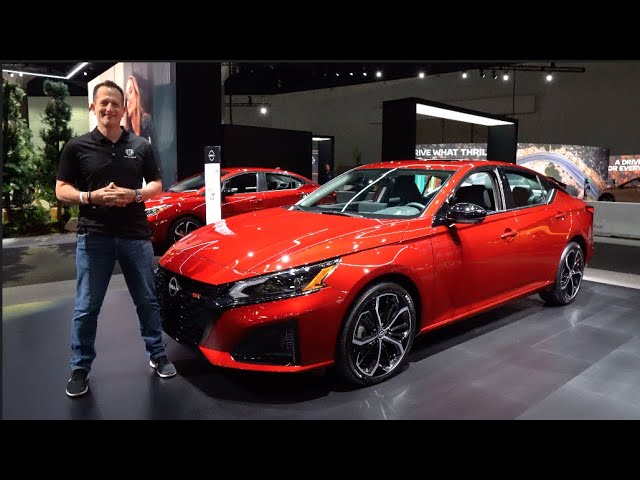
Say "Nissan Altima" in any group of car people and watch what happens. Somebody laughs. Somebody does the swerve motion with their hand. Somebody brings up a missing hubcap, a duct-taped bumper, a driver who changed three lanes without ever touching the turn signal stalk. Nobody had to set up the joke. The car set up the joke by itself, years ago, and it's never really stopped being funny.
That's a strange thing to happen to a mid-size sedan. The Altima isn't a bad car on paper. It's not slow, it's not ugly by any honest standard, and it's sold well enough for over two decades to be one of the best-selling sedans in America. Plenty of unremarkable cars exist and quietly disappear into commuter traffic without anyone building an entire mythology around them. The Altima didn't get that mercy. It got a reputation instead, one that outran the car itself and turned into one of the most durable running jokes in modern car culture.
This is the story of how that happened, and why a perfectly ordinary sedan ended up as the internet's go-to shorthand for chaotic, missing-headlight, zero-turn-signal driving.
📉 It Started With the Used Market, Not the Showroom
The Altima meme wasn't born from brand-new Altimas rolling off the lot. It was born from the used ones, specifically the ones that hit rental fleets, rideshare apps, and cheap used lots by the tens of thousands.
Nissan built the Altima to be attainable. Reliable-enough powertrain, roomy cabin, competitive price, and a CVT that made it easy to drive and cheap to lease. That combination made it a magnet for rental companies and fleet buyers, who bought them in bulk because they were affordable and serviceable at scale. Rental fleets cycle cars fast, and a huge share of those Altimas eventually landed on used lots at prices low enough that basically anyone could afford one, regardless of whether they could afford to maintain one.
That's the part that matters. A car that's cheap to buy but not necessarily cheap to keep running well tends to end up in the hands of owners who are financially stretched from the moment they sign the paperwork. Bumper damage doesn't get fixed. A cracked headlight housing waits months, sometimes years, for a replacement that never comes. Tire pressure lights get ignored. None of that is unique to Altima owners specifically, it's true of any cheap, plentiful used car bought by buyers on tight budgets. But the Altima was uniquely positioned to be that car at scale, in huge volume, in nearly every city in the country, which meant more people saw more beat-up Altimas more often than they saw any other single model in the same condition.
Visibility compounds. Once you've noticed three sketchy Altimas in a week, your brain starts flagging every Altima you see afterward. That's confirmation bias doing exactly what confirmation bias does, and it's the actual engine behind the meme, not anything mechanically wrong with the car itself.
🛣 The Driving Behavior Reputation
The missing-headlight jokes are one half of the meme. The other half, arguably the bigger half, is about how Altimas supposedly get driven: aggressive lane changes with no signal, tailgating at highway speed, cutting across three lanes for an exit at the last possible second.
Nobody has hard data proving Altima drivers, as a population, are measurably worse than drivers of any other high-volume sedan. What actually happened is simpler and less flattering to human psychology: once a stereotype exists, every data point that confirms it gets remembered, and every data point that contradicts it gets ignored. If a Camry cuts you off, it's just traffic. If an Altima cuts you off, it's "of course it did," and that sentence gets remembered long after the incident itself is forgotten.
There's also a real structural reason Altimas show up disproportionately in rideshare and delivery driving, and that's the same affordability factor from the used market. Gig driving rewards a cheap, reliable, roomy sedan that's easy to find parts for. That means more Altimas logging more miles, more hours, more traffic situations per car than a typical personally-owned commuter vehicle sees. More miles driven under time pressure, chasing the next fare or the next delivery window, statistically produces more aggressive lane changes and more rushed merges, independent of what badge is on the trunk. The Altima wasn't cursed with bad drivers. It was disproportionately represented in exactly the kind of driving that generates aggressive-driving stories, and the internet did the rest.
😂 How the Internet Turned It Into a Full Bit
Somewhere in the mid-2010s, the jokes stopped being scattered observations and started becoming a shared format. "You know you're dealing with an Altima when..." became a setup people could finish without thinking. The missing front bumper. The one headlight that's technically still working. The Bluetooth speaker duct-taped to the dash because the factory stereo died years ago. The swerve, always the swerve, cutting across lanes like the driver just remembered their exit exists.
Social media didn't invent the reputation, but it did something the reputation needed to actually become a meme: it gave it a repeatable shape. A joke about a beat-up sedan is just an observation. A joke format that a thousand different people can fill in with their own version, their own near-miss story, their own photo of a duct-taped bumper, that's a meme. The Altima became a template car people could project their worst-driver stories onto, the same way a specific breed of dog becomes shorthand for a certain kind of chaos regardless of any individual dog's actual temperament.
It also helped that the joke is essentially harmless. Nobody's getting hurt laughing about a headlight. There's no politics in it, no real controversy, nothing that requires taking a side. It's just a shared bit that almost everyone who's spent time in American traffic can nod along to, which is exactly the kind of low-stakes, universally-relatable material that spreads fastest and lasts longest online.
🔧 Is There Anything Actually Wrong With the Altima?
Mechanically, no, not in any way that explains the meme. The Altima's biggest real weak point over the years has been its CVT, which has had documented reliability issues in certain model years, particularly a few generations back, with symptoms like shuddering, hesitation, and premature failure. That's a legitimate ownership concern worth researching before buying a used one. But CVT complaints are a completely separate conversation from missing-headlight jokes, and the two rarely overlap in the actual meme content. Nobody's making Altima jokes about transmission failure modes. They're making jokes about cosmetic neglect and driving behavior, which traces back to the economics of who ends up owning high-mileage used Altimas, not to anything Nissan's engineers got wrong.
If anything, the Altima's actual mechanical story is a decent argument that the car does its job. A car that's cheap, easy to find, easy to get parts for, and durable enough to survive years of deferred maintenance and still be on the road to get memed about is, in a backhanded way, proof the platform holds up. Cars that are genuinely fragile don't survive long enough in bad hands to build a reputation. They just get scrapped.
📹 The Viral Moments That Kept the Fire Lit
Reputations built purely on vibes tend to fade. The Altima's stuck around because the internet kept getting fresh, specific footage to point to. Dashcam culture exploded over the same stretch of years the meme was building, and dashcams don't care about reputations, they just record whatever happens. When a dashcam clip shows a car swerving across four lanes without a signal, a caption doesn't need much embellishment. If the car in frame happens to be a silver Altima with a cracked bumper, the internet's already primed to recognize it instantly and pass it around.
That's the mechanism that separates a slow-burning stereotype from an actual meme: repeatable proof. Every time a new clip surfaces, whether it's a near-miss on a highway on-ramp or a parking lot mishap, it gets slotted into the same existing joke format instead of starting a new conversation. The Altima didn't need a single viral moment to cement its reputation. It needed hundreds of small ones, spread out over years, each one reinforcing what people already believed rather than introducing anything new. That's a much more durable kind of virality than any single clip could produce on its own, and it's why the joke has outlasted plenty of shorter-lived internet car trends.
🌍 A Global Pattern With a Local Flavor
The "cheap, plentiful car becomes the designated meme" phenomenon isn't unique to the U.S. or to Nissan. Nearly every country with a large used-car market has its own version. Certain Peugeot and Renault models carry similar reputations in parts of Europe. Specific taxi-fleet Toyota and Hyundai models get the same treatment in cities where they dominate rideshare and cab fleets. The shape of the joke barely changes: high volume, low individual ownership cost, disproportionate visibility, and a stereotype that calcifies faster than anyone can fact-check it.
What makes the Altima specifically the meme in American car culture, rather than a Camry or a Sentra which share a lot of the same market position, probably comes down to a mix of factors that lined up just right: strong enough rental and rideshare presence to guarantee volume, a design era with headlight housings and bumper covers that show damage more visibly than some competitors, and, honestly, a name that's just fun to say with exasperation. "Of course it's an Altima" has a rhythm to it that "of course it's a Sentra" doesn't quite match. Memes are partly about mechanics and partly about cadence, and the Altima won on both counts.
🏁 The Bigger Pattern: Every Segment Has Its Meme Car
The Altima isn't actually alone here, it's just the most famous current example of a pattern that shows up constantly in car culture. Every era, every segment, seems to crown one specific model as the punchline for a stereotype that's really about ownership demographics and volume, not the car itself.
Go back a decade and the "ricer" stereotype attached itself to specific Honda and Acura models, not because those platforms were inherently worse than anything else, but because they were affordable, tunable, and hugely popular with a young, budget-constrained modding crowd who sometimes prioritized loud exhaust and body kits over mechanical sympathy. Go back further and certain domestic sedans carried their own version of the same joke. The specific car changes generation to generation. The underlying mechanism doesn't: cheap, plentiful, easy to obtain equals disproportionate visibility equals disproportionate share of the bad examples equals a reputation that outlives the actual statistics.
Understanding that pattern doesn't kill the joke, and it shouldn't. It's still funny. But it's worth knowing that the Altima meme says less about Nissan's engineering and more about what happens to any car that becomes the default cheap, reliable option for a huge, financially stretched slice of American drivers. The car did its job. The joke is about everything that happened after the car left the dealership, not the car itself.
Spota tip: if you're out hunting Photo Ops or collectibles around your city and you spot a truly legendary duct-taped-bumper Altima, that's the kind of only-in-real-life car culture moment Spota's built for. Snap it, add it to your garage feed, and let the local scene appreciate it.
🚙 The Punchline Isn't Going Anywhere
Memes about specific cars usually fade once the platform gets discontinued or the used-market supply dries up. The Altima's still in production, still selling in huge numbers, still landing on rental lots and used-car rows by the truckload, which means the raw material for the joke isn't going anywhere either. As long as there's a steady supply of high-mileage, budget-owned Altimas on the road, somebody's going to get cut off without a signal and reach for their phone to complain about it.
Car culture loves an easy shorthand, and the Altima earned its spot the honest way: by being everywhere, being affordable, and being just visible enough, in just enough bad moments, for millions of people to independently arrive at the same joke. That's not really an insult to the car. That's the car doing exactly what it was built to do, at a scale most other sedans never reach.
For more on the running jokes and quiet rivalries that make up modern car culture, check out why BMW drivers don't use turn signals or browse the full under-the-hood archive.