
🏔️ Why One Japanese Word for "Mountain Pass" Took Over Car Culture
Say "touge" to a car guy and watch what happens. Their eyes light up a little. Maybe they hum a few bars of Eurobeat without meaning to. Maybe they just say "Akina" like it's a real place they've been to, even though it isn't.
Touge (pronounced roughly "toh-gay") is just the Japanese word for a mountain pass. That's it. No mystique required. It's the kind of word you'd use to describe a road on a map, the same way you'd say "highway" or "switchback." And yet somehow this one plain, functional word became shorthand for one of the most romanticized, most imitated, and most misunderstood corners of the entire car scene.
Almost nobody who uses the word "touge" today has actually driven a real one. Most car guys chasing that feeling live nowhere near Gunma Prefecture. That's kind of the point of this piece: touge isn't really about the roads anymore. It's about a feeling those roads produced, one that got exported, animated, remixed, and chased by an entire generation that never set foot in Japan.
🗾 What Touge Actually Was, Before It Was a Vibe
Strip away the culture for a second and touge is infrastructure. Japan is roughly 73% mountains, which means for centuries the only way to move people and goods between towns was over winding passes cut into hillsides. These roads are old. Some predate cars entirely, built for foot traffic and ox carts before anyone paved them.
What makes a touge road distinct isn't just that it's twisty. It's the specific character of the twists: tight, decreasing-radius hairpins stacked one after another, blind crests, narrow shoulders with nothing but a guardrail (if you're lucky) between you and a real drop, and elevation change that keeps rewriting the physics of every corner. A touge road never lets you settle into a rhythm the way a flowing canyon road might. It demands constant recalibration.
By the late 1970s and through the 1980s, a specific subculture had formed around driving these roads fast, late at night, when commercial and commuter traffic had cleared out. Drivers would meet at the base of a pass, run it solo or in pairs, and use hazard lights and headlight flashes as informal signals: I'm coming up, I see you, go ahead, hold your line. No sanctioning body. No entry fee. Just an unwritten code enforced entirely by peer pressure and self-preservation.
Some passes became legendary within this scene specifically because of their layout. Mount Haruna in Gunma Prefecture is the most famous example, mostly because of what happened to it in fiction (more on that in a second). Real touge spots like Hakone, Nikko's Irohazaka switchbacks, and roads around Rokko Mountain near Kobe built their own local reputations the same way a skatepark or a surf break earns a name: word of mouth, and whoever could actually handle it.
🌀 The Accidental Birthplace of Drifting
Here's the part that made touge matter far beyond Japan's borders: it's widely credited as the birthplace of drifting as a driving discipline.
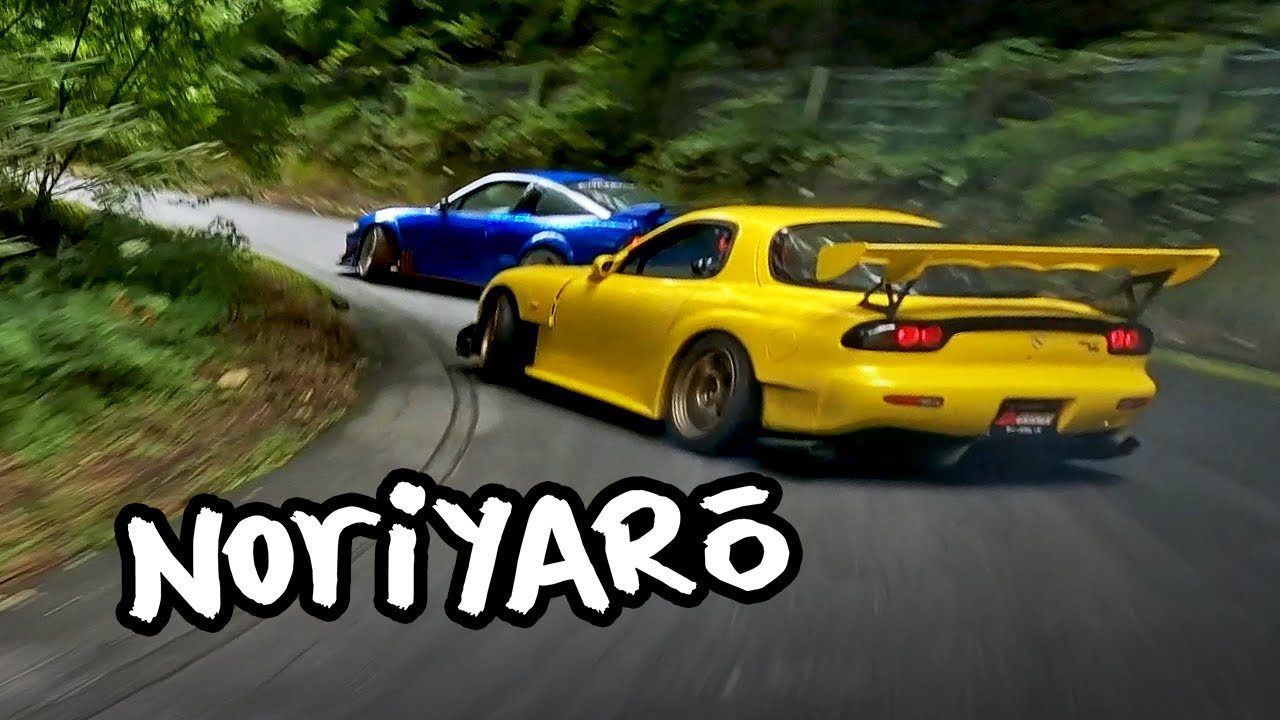
The story, as it's usually told, centers on Keiichi Tsuchiya, who earned the nickname "Dorikin," the Drift King. Tsuchiya wasn't inventing a trick for spectators. He was solving a practical problem. On certain touge corners, especially tight hairpins where a car couldn't carry enough corner speed to stay efficient through a traditional grip line, drivers found that inducing a controlled slide let them rotate the car faster, keep the engine in its power band, and get back on the throttle sooner exiting the corner. It wasn't showing off. It was lap time.
Tsuchiya and other touge drivers of that era got exposure through the Best Motoring video series, which filmed real cars running real mountain passes, often at night, often with genuinely terrifying camera angles from cars that had no business being that close to a cliff edge. Those tapes did for touge what skate videos did for skateboarding: they turned a local, word-of-mouth practice into something you could study, frame by frame, from anywhere in the world.
Organized drifting as a motorsport, complete with judged competitions and closed courses, grew directly out of this. But it's worth sitting with the irony: the sport that now fills stadiums with tire smoke and sponsor decals started as a handful of guys solving a cornering problem on public mountain roads with no cameras rolling and no prize money on the line.
⚙️ Why Touge Cars Were Never About Horsepower
Here's the mechanical detail that gets lost once touge becomes a fashion statement instead of a driving discipline: the cars that actually dominated real touge battles were rarely the fastest cars in a straight line. They were the lightest, the best balanced, and the easiest to place precisely, corner after corner, for ten minutes straight without the driver's arms giving out.
That's why the AE86, a car with a naturally aspirated four-cylinder making somewhere around 130 horsepower from the factory, became the defining touge weapon instead of something with three times the power. A touge run isn't a drag strip. It's a sequence of dozens of tight, technical corners where a car has to rotate, settle, and get back on power almost continuously. Extra weight over the nose kills turn-in. Extra power you can't put down through a hairpin apex is just wasted heat in the tires. A skinny 165-section tire on a lightweight rear-wheel-drive coupe with a well-sorted limited-slip diff will often out-handle a car with double the horsepower and none of the balance.
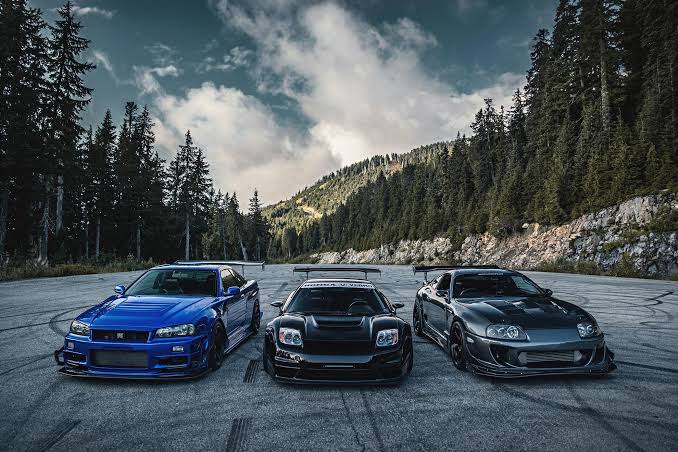
This is the same logic that shows up constantly in track-focused build culture more broadly, and it's a big part of why lightweight, momentum-focused chassis (AE86, early Silvias, RX-7s, Civic-based front-drivers running their own competitive line) still command a cult following decades after they stopped being fast by any modern standard. Touge culture is arguably the purest real-world proof that a car doesn't need big numbers to be genuinely great to drive, it needs to talk to the driver clearly through every corner, which is a much harder thing to engineer than raw output.
🗣️ The Vocabulary and Unwritten Rules of a Real Battle
Touge racing developed its own specific language and etiquette, most of which never made it into the West's version of the culture but is worth knowing if you want to understand what you're actually watching in old Best Motoring footage.
A real touge run is typically framed as a battle, one car chasing, one defending, run either as an uphill battle or a downhill battle depending on the direction of the pass, because the two demand completely different skills. Downhill runs reward late, aggressive braking and a willingness to carry speed into blind corners. Uphill runs reward corner-exit traction and an engine that pulls hard out of tight hairpins.
A few terms that come up constantly:
- Sente ("leading car") and kōsha ("chasing car"), the two roles in a battle, with position swapping between runs.
- Defending your line meaning the lead car drives the widest, safest, fastest line through a corner specifically to make it harder for the chase car to find a gap to pass through.
- Gap runs, when the chasing driver spots daylight on the inside or outside of a corner and commits to a pass mid-battle rather than waiting for a straight.
- Kamikaze runs, an older and much riskier style where a driver pushes past the point most people would consider a safe margin, specifically to intimidate a rival. It's exactly as dangerous as it sounds, and it's a big reason the culture's reputation for danger isn't exaggerated.
None of this was ever officiated. There was no judge scoring a battle. The entire system worked because everyone involved understood the stakes were real and the etiquette existed to keep people alive, not to make the sport more exciting for an audience.
📺 Then Initial D Happened, and the Whole World Wanted In
If touge culture was a regional phenomenon through the '80s and '90s, one piece of media turned it global: Initial D.
Shuichi Shigeno's manga, and the anime that followed, told the story of Takumi Fujiwara, a tofu delivery driver who'd unknowingly become one of the fastest touge racers in the region purely from years of running mountain deliveries in a beat-up Toyota Sprinter Trueno AE86. The show fictionalized real touge culture, most famously reimagining Mount Haruna as "Mount Akina," and turned every downhill battle into an operatic showdown scored with pounding Eurobeat.
For a huge chunk of car enthusiasts outside Japan, Initial D was the entry point into all of this. It's the reason the AE86 became a cult object worth more used today than it cost new (we've gone deep on that one separately: why Initial D made every car guy want an AE86). It's the reason "touge" entered the vocabulary of car people who'd never heard the word "Gunma." It's a big reason drifting itself exploded in popularity in the West years before most of those fans had ever seen a real drift event in person, something we've broken down in why drifting became car culture's ultimate obsession.
That's the strange, specific power touge culture has: it's one of the only pieces of car culture that got globally famous almost entirely through animation and video, rather than through the cars physically leaving the country. You could be obsessed with touge culture in Ohio in 2004 having never seen a JDM car in person, and plenty of people were.
🚗 Why It Never Actually Left
Twenty-plus years after Initial D peaked, touge culture hasn't faded. If anything, it's had multiple resurgences, and each one says something different about what people actually want from it.
The sim racing revival. Long before "touge" was a hashtag, it was a mod. Assetto Corsa's modding community rebuilt Mount Akina, Mount Myogi, and half a dozen other fictional and real passes with obsessive accuracy, and touge lobbies (two cars, one following, trading the lead back and forth) became one of the most popular ways people actually experience "running touge" today. No mountain required, no risk to anyone, same adrenaline. It's arguably the most honest modern version of the culture, because it's entirely about the driving, not the aesthetic.
The kaido racer and VIP crossover. Touge's visual language, deep front lips, aggressive stance, oil cooler scoops, big triangular mud flaps, has bled into other JDM subcultures that have nothing to do with actually running a mountain. We've covered how that specific look took over builds that will never see a hairpin in why kaido racer style is taking over car culture. That's touge as an identity, not an activity, and it's a completely legitimate way people express the same fascination.
The organized, legal version. Events like TougeCon in Arkansas have built an entire weekend, mountain cruises on scenic public roads at legal speeds, a curated Japanese car show, a night meet styled after Tokyo's drift and street scene, around the aesthetic and community of touge culture without the actual illegal racing. It's a smart pressure release valve: you get the winding roads, the cars, the night meet energy, and nobody's trading paint with a guardrail at midnight.
The canyon carving crossover in the US. America never had "touge" as a word, but it absolutely had the roads and the same impulse. Angeles Crest Highway outside LA, Mulholland Highway, the Ortega Highway in Southern California, the Tail of the Dragon in Tennessee: these became America's touge, chased by sport bike riders and canyon-carving car guys who never used the Japanese term but were doing the exact same thing for the exact same reason. And they got the exact same real-world consequences: repeated crackdowns, closures, and a body count that eventually forced local governments to get aggressive about enforcement.
⚠️ The Part Nobody Romanticizes: It's Genuinely Dangerous
It's worth being straight about this instead of just mythologizing it, because touge culture has never pretended otherwise. Running an unlit, ungrated, guardrail-optional mountain road at speed, at night, with oncoming blind traffic still technically possible, is one of the more objectively dangerous things you can do in a car. Real touge racing has always been illegal in Japan, exactly like street racing anywhere else, and the community's own unwritten rules (spotters posted to watch for civilian traffic, an understanding that you bail immediately if headlights appear going the wrong way) exist because people have died learning the roads the hard way. The same is true of every canyon road in America that's ever earned a nickname from riders and drivers. The romance of the mountain pass and the reality of a wet hairpin with no shoulder are two very different things, and the culture at its best has always known that.
That tension, thrilling road, real consequences, is probably the most honest reason touge has stayed culturally relevant for four decades instead of aging out like a lot of car trends do. It's not a mod you can buy or a paint color you can order. It's a specific, controlled kind of fear that a video game can approximate but never fully replicate, which is exactly why people keep chasing the real thing.
Spota tip: if canyon roads are part of your scene, Spota's Photo Ops are built around exactly this kind of spot, the scenic overlook at the top of the pass, the hairpin everyone photographs their car at, without needing anyone to actually push limits to get the shot. Log the mods that got you there in your Garage, and let the photo do the flexing instead of the clock.
🏁 The Feeling Is the Whole Point
Touge was never really about a specific road, even when it started as one. It's about a very particular sensation: a narrow ribbon of pavement, a car you know intimately, and a corner that punishes the smallest mistake and rewards the smallest improvement. Whether you're chasing that on a real Gunma mountain pass, in an Assetto Corsa lobby at 1 a.m., at a legal cruise through the Ozarks, or just running a clean line through your local canyon road within the speed limit, you're participating in the same forty-year-old tradition.
The word survived because the feeling did. Everything else, the anime, the Eurobeat, the AE86 prices, is just how it got to you.