
🏁 The Cars That Look Like They Time-Traveled From 1985
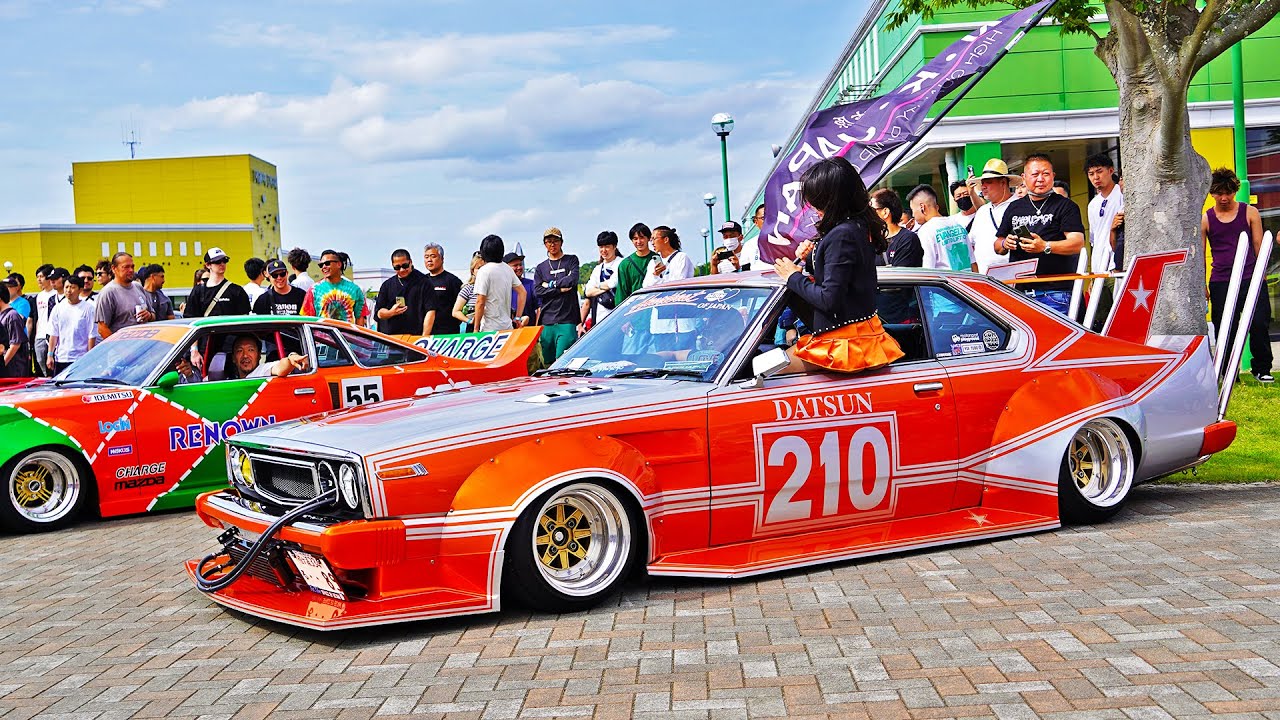
Scroll through car meet photos long enough and you'll start seeing them. A boxy old Toyota Chaser or Nissan Laurel, slammed to the pavement, wearing fender flares wide enough to hide a full-grown adult, with a chrome exhaust pipe jutting up and over the roofline like a samurai sword.
It looks insane. It looks impractical. It looks like nothing else at the meet.
And it's everywhere right now.
Kaido racer style, sometimes called "kaido racer" builds, sometimes just lumped in with bosozoku by people who don't know the difference, has gone from a niche Japanese subculture almost nobody outside JDM forums knew about to one of the fastest-growing aesthetics in global car culture. Car guys who spent a decade chasing clean, subtle, "OEM+" builds are suddenly bolting on wings the size of ironing boards and painting takeyari pipes gold.
So what actually is this style, why did it come from Japan's street racing underground, and why is it suddenly blowing up everywhere from Long Beach to London? Let's get into it.
🛣️ What "Kaido Racer" Actually Means
It's Not the Same Thing as Bosozoku
This is the mistake almost everyone makes first: kaido racer and bosozoku are related but not identical.
Bosozoku ("violent speed tribe") refers to the actual outlaw biker and car gangs that terrorized Japanese highways from the 1950s through the 1990s, known for illegally modified motorcycles, matching jumpsuits, and running red lights in formation. It's a criminal subculture with a documented history of violence and organized crime ties.
Kaido racer (literally "highway racer") is the aesthetic that grew up alongside and partly out of that scene, specifically the visual style of cars built for Japan's illegal highway street racing culture in the 1970s and 80s, before Japan's expressways got heavily policed. Think Mid Night Club, the legendary (and now-disbanded) group of street racers who ran triple-digit speeds on the Shuto Expressway around Tokyo.
The cars from that era developed a specific look for very specific, very practical reasons, and that look is what's being recreated (and exaggerated) today.
The Core Visual Elements
A true kaido racer build pulls from a specific parts bin:
- Takeyari exhaust ("bamboo spear" pipes): oversized, often chromed dual pipes that curve upward past the roofline
- Oversized over-fenders: dramatically flared wheel arches, sometimes riveted on in visible layers
- Aggressive front lips and air dams: low, wide, and often painted or chromed
- Shakotan stance: slammed suspension, negative camber, and a stance that looks almost broken
- Deep-dish wheels: usually with aggressive negative offset to fill those massive fenders
- Painted "team" graphics or sponsor-style decals, even though the car isn't actually racing anything
Individually, some of these overlap with other JDM styles (VIP, stance, shakotan). Together, in that specific combination, it reads as unmistakably kaido racer.
⚙️ Why the Look Exists: Function Before It Was Fashion
Here's the part most people skip: kaido racer styling wasn't originally about looking cool for Instagram. It solved real problems for street racers running illegal, unregulated highway speeds in cars never designed for it.
The fender flares were functional. Once you fit wider wheels and tires for grip at highway speeds, factory fenders can't cover them. Flares aren't decoration, they're rubbing clearance.
The exhaust placement was practical. Cars running hard and low sometimes had ground clearance issues with rear-exit exhaust, especially with lowered suspension. Routing pipes up and over kept them from scraping or getting damaged, while also freeing up flow for tuned performance.
The aggressive stance was about weight transfer and grip, not just looks, at a time when suspension tuning knowledge was still developing in the enthusiast scene rather than locked behind factory engineering teams.
The style became detached from its function decades ago. Nobody building a kaido racer today is actually running triple-digit speeds on public roads. But the look survived because it's visually loud in a way almost nothing else in car culture is, and loud reads well on camera, which matters a lot more in 2026 than it did in 1983.
📈 Why It's Exploding Right Now
Retro JDM Is Having a Moment
The 25-year import rule keeps unlocking new eligible cars every year, and a wave of boxy 1980s and early-90s Japanese sedans, the Toyota Chaser, Nissan Laurel, Toyota Crown, Mazda Cosmo, are hitting American shores for the first time. These cars are perfect kaido racer canvases: big, boxy body panels with tons of surface area for flares and graphics, and a design language that already looks period-correct for the style.
At the same time, the mainstream JDM aesthetic has been dominated by clean, subtle "time attack" and OEM+ builds for the better part of fifteen years. Kaido racer is the exact opposite of that, loud, maximalist, unapologetically weird, and that contrast is exactly why it's cutting through. When everyone's build looks like it just rolled off a dealer lot with slightly better wheels, the guy with a three-foot-wide fender flare and a chrome pipe over his roof is the one people stop to photograph.
It's Extremely Photogenic
Kaido racer builds are, functionally, built for spectacle. Wild proportions, unusual silhouettes, and a color palette that leans into chrome, gold, and matte finishes make them stand out in a sea of phone camera photos in a way subtle mods just can't. In an era where a build's reach is measured as much by how it performs on a feed as how it drives, that matters. A parked kaido racer at a meet gets photographed by ten strangers before its owner even finishes their coffee.
The Parts Are Finally Available Outside Japan
For years, sourcing authentic takeyari pipes or period-correct over-fenders meant importing directly from Japanese specialty shops, at brutal shipping costs and with long wait times. That's changed. More US and European fabricators are now producing kaido-style parts domestically, and a handful of Japanese specialty brands have started shipping internationally in volume. Lower barrier to entry, more builds, more visibility, more people discovering the style, more builds. It's a feedback loop.
🚨 The Debate: Homage or Appropriation?
Not everyone in car culture is thrilled about kaido racer's crossover moment, and the criticism is worth taking seriously.
The "it's just a costume" critique: some JDM purists argue that Western builders are copying the aesthetic without understanding (or caring about) its origins in Japan's illegal street racing scene, and worse, some builds lean into bosozoku's gang-adjacent visual language (specific graphic styles, jumpsuit-inspired liveries) without any awareness of what that actually represented in Japan.
The "styles evolve and travel" counterpoint: car culture has always been a remix machine. American muscle car styling influenced Japanese tuner culture in the 60s and 70s. JDM styling has shaped American builds for decades. Stance culture, VIP style, even drifting itself all crossed borders and got reinterpreted along the way. Kaido racer crossing over isn't unprecedented, it's just the latest example of a pattern that's been running for fifty years.
There's a reasonable middle ground here that most thoughtful builders land on: know where the style comes from, don't lean into the actual gang iconography (some of it is tied to real organized crime history, not just an "edgy" look), and treat it as an homage to a specific era of Japanese car culture rather than a costume with the history stripped out. Most people building genuinely great kaido racer cars in the US and Europe right now do exactly that, they've done the research, they credit the Mid Night Club era and the builders who inspired them, and they build with respect for where the look came from.
🔧 Building One Without Wrecking Your Daily Driver
If the style's got you tempted, a few things worth knowing before you start cutting fenders:
- Start with the right donor car. Boxy 80s-90s Japanese sedans and coupes work best. Curvier, more organic body lines (think 2000s-era anything) fight the aesthetic instead of complementing it.
- Fender flares change your legal width. Depending on your state, oversized flares can push you over legal vehicle width limits or affect your ability to pass inspection. Check local regulations before you commit to the widest flares you can find.
- Takeyari pipes are a sound and smell commitment. Routing exhaust up and near the cabin means more noise and more exhaust smell reaching the driver, especially at low speeds or idle. It's part of the character, but know what you're signing up for.
- This is a stance-first build, ride quality suffers. Shakotan-style lowering isn't gentle. Expect a rougher daily ride and more careful driveway/speed bump navigation.
- Respect the history in your execution. Skip the gang-specific graphics and liveries tied to actual bosozoku groups. Build the look, not the costume.
Spota tip: kaido racer builds are exactly the kind of car that makes a Garage profile worth having. The build progression from stock sedan to full takeyari-and-flares monster is a story, and a lot of the appeal of this style specifically is watching it evolve panel by panel.
🗾 The Cars That Started It All
The kaido racer look wasn't invented in a vacuum. It traces back to a specific lineage of Japanese sedans and coupes that became the unofficial uniform of the highway racing scene:
- Toyota Chaser / Cresta / Mark II (the "JZX" chassis): the archetypal kaido racer canvas. Rear-wheel drive, boxy proportions, and a chassis code that's basically shorthand for "already halfway to a build" among JDM enthusiasts.
- Nissan Laurel and Gloria: bigger, more formal sedans that somehow look even more absurd once you slam them and bolt on takeyari pipes, which is exactly the appeal.
- Toyota Crown: the ultimate "grandpa's car gone rogue" build. Its boxy, upright styling from the 80s and early 90s makes the contrast with aggressive flares and stance hit even harder.
- Mazda Cosmo and Nissan Cedric: less common, but showing up more as import inventory diversifies past the usual Skyline and Supra suspects.
None of these were originally "enthusiast cars" in the way a Supra or an RX-7 was marketed. They were company cars, family sedans, taxi fleet vehicles. Building a kaido racer out of one is part of the joke and part of the point: taking the most boring, corporate car imaginable and turning it into the loudest thing at the meet.
🌐 Where the Scene Is Actually Building These
This isn't just happening in isolated garages. A real ecosystem has formed around the style outside Japan:
- Specialty shops in the US, UK, and Australia have started fabricating takeyari exhausts and over-fender kits domestically, cutting shipping costs and wait times that used to make a full kaido build a years-long project.
- Meet-specific cliques have formed around the aesthetic at larger JDM-focused events, the same way stance and time attack builders cluster together, giving new builders a community to learn from instead of reverse-engineering the look from old Japanese magazine scans.
- Restoration and fabrication YouTube channels documenting full kaido builds from stock sedan to finished car have become some of the most-watched build content in the JDM space, exposing the style to viewers who'd never heard the term "kaido racer" a year earlier.
That combination, real parts availability plus real community plus real content, is usually what turns a niche aesthetic into a durable subculture instead of a one-summer trend.
🏆 The Bottom Line
Kaido racer style isn't a trend that appeared out of nowhere. It's a forty-year-old aesthetic finally getting its overdue crossover moment, helped along by import eligibility, a maximalist backlash against a decade of subtle builds, and an internet that rewards anything that photographs like nothing else on the road.
Whether it sticks around as a permanent fixture in global car culture or fades back into a niche the way most trends eventually do, one thing's certain: nobody's walking past a chromed takeyari pipe without stopping to look.