
🔥 Ten Seconds That Shouldn't Work This Well
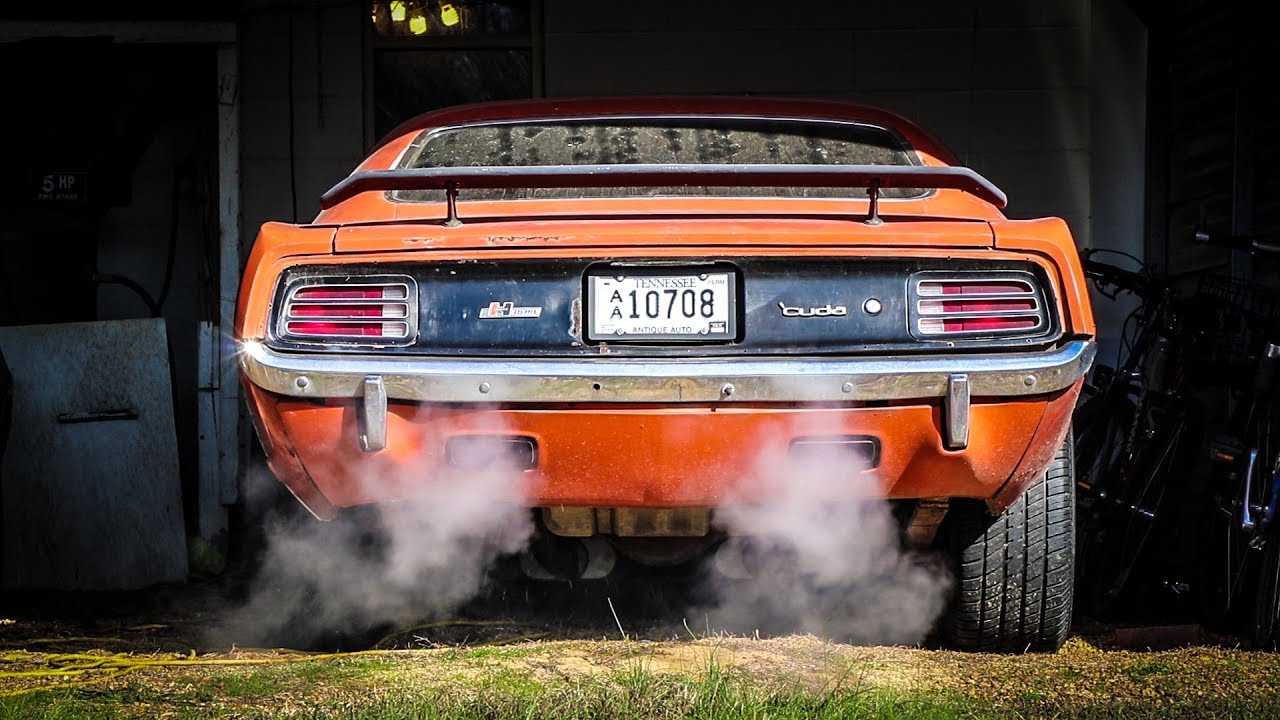
Open any car account on Instagram or YouTube and you'll find it eventually: a phone propped on a hood, an owner reaching for a key, and then... nothing. Just an idle. A rev or two. Maybe a pop on the overrun. Fifteen seconds, tops. No plot, no voiceover, no cuts.
And it has millions of views.
"Cold start" has become its own genre inside car culture, right up there with dyno pulls and pull-away shots. Channels exist that do nothing else. Some Supra, GT-R, or LS-swapped truck owner fires up their car in a cold garage at 6am, and that clip outperforms videos that took weeks to edit.
That shouldn't make sense. It's the least produced content format in automotive media, and it wins anyway. So what's actually going on here, and why did car people collectively decide that the sound of an engine waking up deserves its own subculture?
🎬 What Actually Counts as a "Cold Start"
Before getting into why it works, it helps to be precise about what the genre actually is, because car people are picky about this.
A real cold start video needs a few things to earn the label:
- The engine has to actually be cold. Not "been sitting for twenty minutes," but genuinely cold: overnight, first start of the day, oil not yet circulated.
- No warm-up cheating. Purists get annoyed at clips where the car was clearly idled off-camera first, then "started" again for the shot. The internet calls this out fast in the comments.
- The exhaust note has to be raw. A cold engine idles differently than a warm one: richer fuel mixture, looser tolerances before everything expands to spec, sometimes a rougher, lumpier idle that smooths out as it warms. That imperfection is the appeal, not a flaw to edit around.
- Minimal editing. Cuts, music, and slow-motion are allowed, but the core moment (key turn to stabilized idle) usually plays out in real time.
Purists will die on this hill: a warmed-up rev clip is not a cold start, and mislabeling one is close to automotive fraud in the comments section.
🧠 Why the Brain Actually Cares About This
There's a real psychological reason cold starts hit differently than any other car sound clip, and it comes down to anticipation and payoff.
The setup creates tension. Watching someone reach for the key or push the button is a tiny, universal moment of suspense. Will it start clean? Will it be loud? Will there be a cough or a stumble before it settles? That few-second gap between action and sound is doing more psychological work than people give it credit for.
The payoff is unpredictable in a controlled way. Unlike a static rev clip where you already know what you're getting, a cold start has variance built in. Turbo spool on a cold car sounds different. A big cam idle sounds rougher before oil pressure builds. A straight-piped V8 barking to life in a quiet garage hits harder than the same car revved on a dyno.
It's a sensory ASMR trigger for a very specific audience. The same mechanism that makes tapping or whispering videos oddly satisfying to some people applies here: a crisp, textured sound in an otherwise quiet environment, played through good speakers or headphones, creates a small dopamine spike. Car people just happen to be wired to find an idle satisfying instead of a keyboard click.
It's honest in a way most car content isn't. A cold start can't be faked with a sound clip layered over B-roll (well, it can, and when it is, the comments section turns into a courtroom). A real cold start is proof: proof the exhaust is real, proof the build runs, proof the owner actually drives the thing instead of just posting static shots.
🏗️ Why Cold Starts Sound Different From a Warm Rev in the First Place
There's actual mechanical truth behind why a cold start sounds distinct, and it's not just imagination or hype.
- Fuel mixture runs richer. Cold engines need more fuel relative to air to run cleanly before everything reaches operating temperature, and that changes combustion character and exhaust note slightly.
- Metal tolerances are looser. Pistons, rings, and other components are sized to expand to spec at operating temperature. Cold, everything sits a hair looser, which can add a mechanical clatter or ticking that disappears once things warm up (this is also why a rod knock or lifter tick is sometimes only audible cold, which is its own terrifying sub-genre of car video).
- Oil hasn't fully circulated yet. Thicker, cold oil takes a few seconds to reach every component, which is part of why idle can sound rougher for the first several seconds before smoothing out.
- Exhaust systems are cold too. A cold exhaust resonates differently than a heat-soaked one, which is part of why the same car can sound sharper or drastically different first thing in the morning versus after a highway run.
None of this is mysterious to anyone who's spent time under a hood, but it's exactly the kind of detail that makes cold starts feel authentic instead of staged. The car is doing what a real, cold engine does. There's no faking that texture.
📈 How a Niche Format Became a Full-Blown Genre
Cold start content didn't start as a strategy. It started because someone with a loud exhaust and a phone realized their morning start-up sounded better than anything they could produce on purpose.
Forums and early YouTube built the appetite. Long before short-form video, enthusiast forums had threads dedicated entirely to exhaust note recordings, and cold starts were the gold standard because they were the hardest to fake.
Short-form platforms rewarded the format perfectly. A cold start is naturally 10-20 seconds: no wasted setup, instant payoff, easy to loop. That's exactly the shape algorithms on TikTok, Reels, and Shorts favor, which meant cold start clips got pushed hard once those platforms matured.
Specific builds became famous for their cold start alone. Certain combinations (big cam LS builds, straight-piped rotaries, turbo Supras with anti-lag pops on cooldown) built entire followings because their cold start became recognizable on its own, independent of the rest of the car.
It became a competitive flex. Once cold starts had an audience, having a genuinely good one became something to chase. People started tuning, exhaust-shopping, and cam-selecting partly with the cold start moment in mind, which says a lot about how much the format has shaped actual build decisions.
It crossed into mainstream car media. Outlets that would never have run a fifteen-second no-commentary clip five years ago now regularly post cold start content because it performs. The format graduated from niche enthusiast habit to something even non-car-people recognize.
🚙 The Builds That Dominate the Genre (And Why)
Not every car makes a good cold start. Some combinations are practically designed for it.
- Big cam LS swaps: the lumpy, uneven idle from an aggressive cam profile is basically the platonic ideal of a rough cold idle, and it's a huge reason the LS swap became as culturally dominant as it is.
- Straight-piped or resonator-delete exhausts: no muffling means the raw mechanical and combustion character actually reaches the mic, for better or worse.
- Turbo cars with anti-lag or cold spool character: the whoosh and occasional pop or chirp on a cold turbo car adds a texture warm revs don't have.
- Rotary engines: the rotary's distinct, buzzy idle is instantly recognizable and has its own dedicated cold start fanbase.
- Big displacement naturally aspirated V8s: nothing complicated here, just raw displacement and a mechanical bark that a smaller engine can't replicate.
Notice what's missing: quiet, stock, well-behaved daily drivers rarely go viral for their cold start, no matter how reliable or well-built they are. The genre rewards character, not perfection, which tracks with everything else about car culture's relationship with imperfection.
🔊 The Etiquette Nobody Wrote Down But Everyone Follows
Like most things in car culture, cold starts have unwritten rules that people enforce hard in the comments.
- Neighbors matter. A 6am cold start with a straight pipe is a great way to make enemies. Plenty of cold start creators film these late morning or midday specifically to avoid waking anyone up, even though "cold" technically just means the engine, not the hour.
- Don't rev it to redline immediately. A cold engine hasn't built oil pressure everywhere yet, and revving hard before it warms up is a fast way to accelerate wear. The community is quick to call out clips that do this, partly out of genuine concern for the car.
- Label it honestly. As covered above, faking a cold start with a pre-warmed engine gets called out. Car people can often hear the difference, and trust matters more in this genre than almost any other.
- Don't drown it in music. The whole point is the raw sound. A cold start buried under a trap beat defeats the purpose, and most serious cold start accounts either use no music or drop it in after the initial start-up moment plays clean.
🚗 Spota Tip: Turning Cold Starts Into Garage Content
If you've got a build with a cold start worth bragging about, don't let it disappear into your camera roll. Spota's Garage is built exactly for this: log your build's progress, drop clips and photos tied to specific mods, and give your cold start somewhere permanent to live instead of getting buried in a random Instagram grid. Pair it with a Photo Op shot from the same morning and you've got a real entry in your car's timeline, not just another clip in the void.
🎯 Why This Genre Isn't Going Anywhere
Cold start videos work because they're one of the last genuinely unfakeable formats left in car content. In a world of sponsored posts, staged dyno pulls, and audio-swapped exhaust clips, ten raw seconds of an engine waking up is proof of life. It's a car doing the one thing a car actually does, with nothing standing between the mic and the exhaust tip.
That's a hard thing to manufacture, and an easy thing to keep watching. Set an alarm, walk out to a cold garage, and hit record. The internet's been waiting.