
🛻 One Guy's Ground Clearance Is Another Guy's Punchline
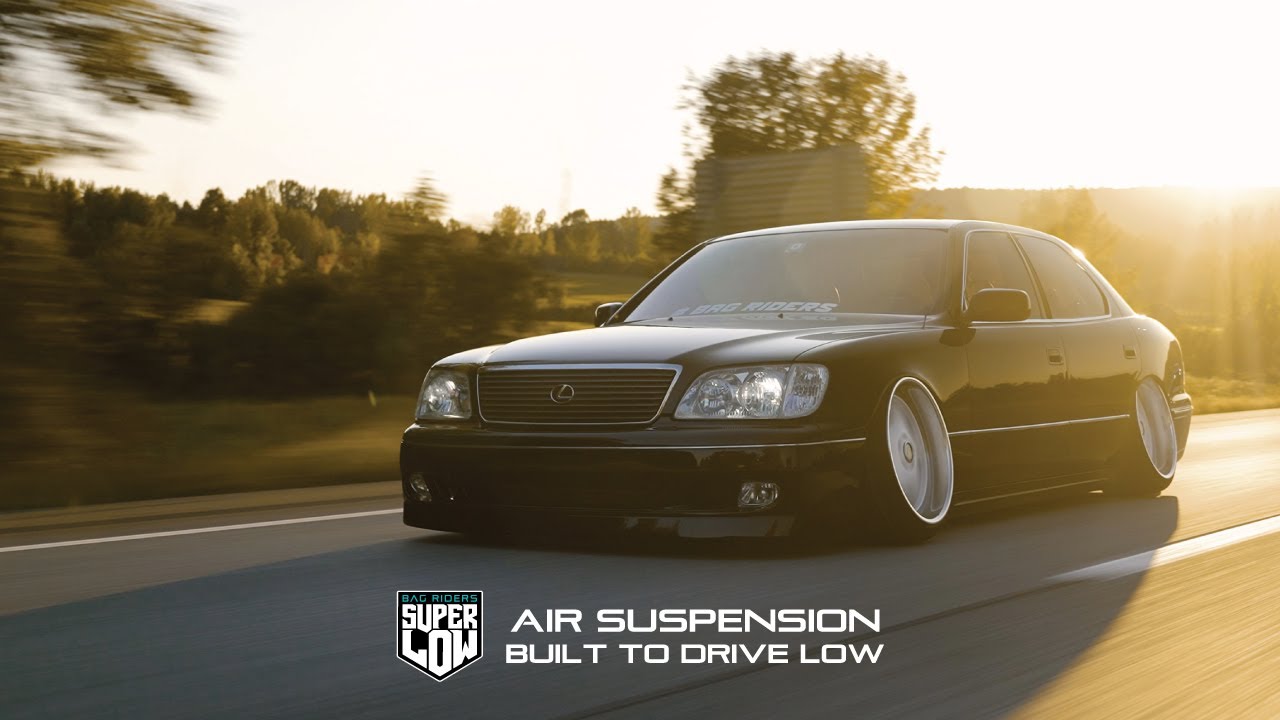
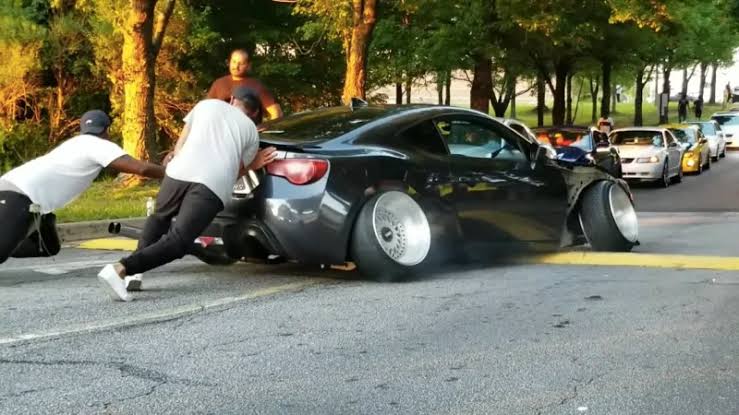
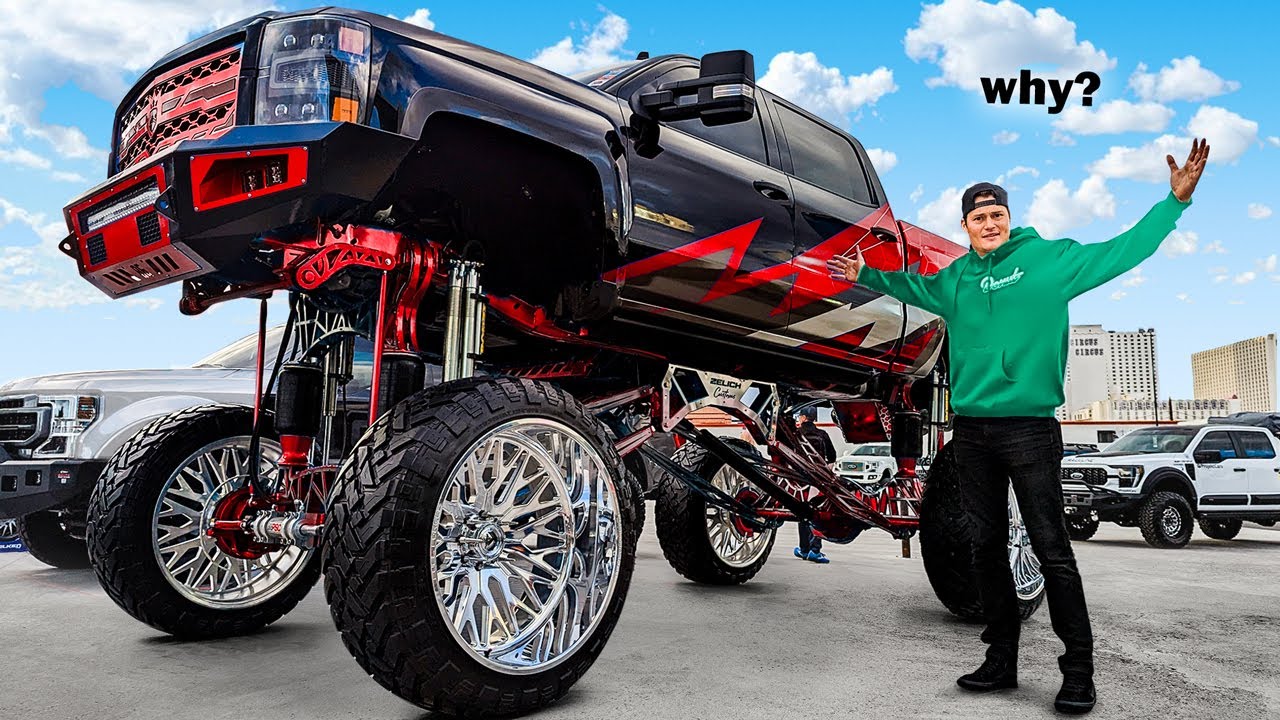
Pull into any big parking lot in America and you'll see it within thirty seconds: a truck jacked up on 37-inch tires with a lift kit doing absolutely nothing except looking tall, parked two spots down from a Civic slammed so low it needs a jack just to clear a speed bump. Neither one of them is going off-road today. Neither one of them is going to the track. And somehow, both of them think the other guy is the one doing it wrong.
That's the truck-vs-car divide, and it might be the single most visceral rivalry in the entire hobby. Import vs. domestic is an argument about engineering philosophy. Truck vs. car is closer to a gut reaction. Ask a stance guy what he thinks of a bro-dozer and watch the disgust hit his face before he even finishes the sentence. Ask a truck guy what he thinks of a car "in the weeds" and you'll get the exact same reflex, just aimed the other direction.
So where did this actually come from, is either side's disgust actually earned, and why does the internet argue about this literally every single day? Let's get into it.
🏗️ It Started as Two Completely Different Jobs
Here's the thing people forget when they're clowning on each other in a Cars & Coffee parking lot: trucks and lowered cars weren't built to compete with each other. They were built to solve opposite problems.
Trucks exist, historically, to move weight over rough terrain. Ground clearance, a stiff frame, and a suspension with real travel aren't styling choices on a work truck, they're the entire point. A farm truck that scrapes its belly pan crossing a rutted field is a truck that fails at its one job. Ground clearance is function, full stop, in the truck's original design brief.
Lowered cars exist for the opposite reason. A car's center of gravity is directly tied to how it handles: lower the car, and you reduce body roll, improve aerodynamics, and put more contact patch under load in a corner. Every real race car in history, from Formula 1 to a spec Miata, sits as low as the rules and the suspension geometry will allow, because low is fast. That's not an aesthetic opinion, it's just physics.
The part both sides conveniently skip over: almost nobody doing either mod today is actually chasing the original function.
- A stock lift kit and 37s on a truck that never leaves pavement isn't solving a ground-clearance problem, it's a styling statement borrowed from a functional off-road build
- A static-lowered street car sitting on stretched tires and scraping every driveway in town isn't chasing lap times, it's a styling statement borrowed from a functional race setup
Both camps took a real engineering purpose, stripped out the function, and kept the look. That's not an insult, that's just how car culture works. Nobody's daily-driven stanced S13 is actually optimized for a road course either. But it does mean the moral high ground both sides claim ("mine's functional, yours is just for show") mostly evaporates the second you actually check the mileage on the off-road tires or the ride height on a car that's never seen an apex.
📢 The Insults Each Side Throws (And Why They Landed)
This rivalry has its own dialect at this point, and both sides have had decades to sharpen it.
What car guys say about trucks:
- "Bro-dozer" - the label for a lifted truck that's never touched dirt, used specifically to mock trucks bought purely for the aesthetic of capability
- "Compensating" jokes, the oldest and laziest shot in the book, usually aimed at trucks lifted well past anything a real trail would require
- "You paid $80,000 for a truck that hauls mulch twice a year" - the affordability jab, since modern trucks with lift kits and 35-inch-plus tires routinely cross into luxury-car pricing
- Fuel economy mockery, since a lifted truck with aggressive off-road tires can genuinely tank MPG compared to the stock configuration
What truck guys say about lowered cars:
- "It can't even clear a parking curb" - the practicality jab, and honestly, a fair one for cars slammed to the point of scraping on flat pavement
- "You'll break an axle stub the first time you hit a pothole wrong" - a real risk with extreme negative camber and stretched tires, not just trash talk
- "Toy car" framing, dismissing anything low and small as incapable of doing actual work, hauling anything, or surviving a real winter
- Ground clearance jokes about speed bumps, driveways, and literally any parking lot that isn't freshly repaved
Same pattern as every car culture rivalry: both scripts describe the worst, most extreme example of the other category, not the median build. A tastefully lifted Tacoma that still tows and off-roads and a slammed E36 that's actually been to track days are not the strawmen either side is punching at.
🔧 The Real Engineering Tradeoffs (Because Some of the Trash Talk Is Actually Correct)
Strip the memes away and there are genuine, measurable engineering consequences on both sides of this divide. This part isn't tribal, it's just physics and suspension geometry.
What a lift kit actually costs you:
- Raised center of gravity - more rollover risk in an emergency maneuver, which is why lifted trucks post worse numbers in insurance rollover testing than the same truck stock
- Altered suspension geometry - a lift without a proper geometry correction kit changes your control arm angles, which chews through CV joints, ball joints, and tie rod ends faster than stock
- Steering and handling changes - taller, heavier tires add unsprung weight and rotational mass, which is why a heavily lifted truck on 37s brakes and turns noticeably worse than the same truck on stock tires, regardless of how good the lift kit itself is
- Real fuel economy losses - bigger, more aggressive tires and a worse aerodynamic profile can tank highway MPG by double digits percentage-wise
What a static lowering setup actually costs you:
- Reduced suspension travel - the car runs out of compression travel faster, which is exactly why lowered cars bottom out and crash into their bump stops over potholes and speed bumps that a stock-height car shrugs off
- Negative camber wear - aggressive camber for stance or handling gains chews the inside edge of a tire unevenly, sometimes down to the cord in a few thousand miles if it's pushed too far
- Ground clearance failures - scraping a front lip or splitter on literally every driveway transition isn't a meme, it's a direct consequence of running less ride height than the road surfaces around you were designed for
- Real ride quality tradeoffs - a properly lowered car on quality coilovers can ride fine, but a cheap static drop on stock dampers rides brutally, which is where a huge chunk of the "these cars are unusable" reputation comes from
Neither camp is lying about the downsides. They're just each pretending their own mod doesn't have any.
🌎 The Split Is Regional, and That Tells You Something
This rivalry isn't evenly distributed across the country, and where it's strongest says a lot about why it exists at all.
Truck culture runs deepest in rural and exurban regions, the South, the Midwest, mountain states, places where trucks genuinely do agricultural or work duty and where off-road terrain is actually nearby and used. Lowered car culture runs deepest in dense urban and coastal metros, Southern California, big East Coast cities, places with smooth pavement, tight parking, and a decades-old JDM and stance scene feeding the aesthetic.
That's not a coincidence. A huge amount of this rivalry is really a proxy fight between rural and urban car culture identities, and the mods each side favors line up almost perfectly with what actually makes sense in each environment. A 6-inch lift is genuinely more useful on an unpaved rural road than it is in a parking garage. A slammed static setup is genuinely more livable on smooth city streets than it is on a farm road full of washboard ruts.
Neither side's preferred mod is "wrong" for where they actually live. It just stops making sense the moment someone builds the same setup somewhere it doesn't fit, which is exactly when you get the bro-dozer commuting on perfect pavement or the slammed car trying to survive a gravel driveway.
🤝 Why the Hate Is Quietly Fading
Spend time in the actual enthusiast spaces instead of the comment sections, and the truck-vs-car divide looks a lot softer than the internet makes it seem.
A few reasons the old lines are blurring:
- Overlanding culture has given "functional truck build" a genuine, respected identity again, one that even lowered-car purists tend to acknowledge is a real engineering pursuit, not just a look
- Truck-based sports builds (the Ford Raptor R, the Ram TRX before it was discontinued, the Colorado ZR2) gave truck people a genuine performance flex that doesn't rely on height at all
- Mini-trucking and truck lowering, dropped trucks on big wheels, has existed as its own respected niche since the 80s and proves the "trucks can't be low" framing was never fully true to begin with
- A growing chunk of enthusiasts daily a truck for work or family reasons and still keep a lowered project car for the weekend, which makes picking a permanent side kind of pointless when the same person owns both
Spota tip: if your Garage roster includes both a project car and a truck, don't be shy about showing both. Builds that cross the truck-vs-car line tend to get real respect precisely because the owner clearly isn't just repeating a tribal script, they've actually lived both sides of the argument.
❌ Myths Both Sides Keep Repeating
A handful of claims keep resurfacing on both sides of this fight no matter how often they get debunked.
- "Lifted trucks are never actually off-road." Plenty are. Overlanding and off-road racing communities put serious miles on genuinely built rigs, and a lift kit paired with real off-road tires and skid plates is functional equipment for that use case, not just a look.
- "Lowered cars can't handle real roads." A properly set up coilover on quality dampers, at a sane ride height with correct alignment, rides and handles fine on real streets. The reputation comes almost entirely from cheap static drops on stock shocks pushed way past what the hardware can absorb.
- "Truck guys don't understand handling." Modern performance trucks with factory-tuned suspensions (the Raptor's long-travel setup is the obvious example) represent a genuinely sophisticated handling philosophy, it's just optimized for high-speed rough terrain instead of pavement grip.
- "Car guys can't do anything practical." Plenty of lowered-car owners also own a truck, a hitch, and a trailer for exactly the hauling and towing jobs their project car was never meant to do. Owning a fast car doesn't mean someone's incapable of owning practical transportation too.
🏁 Different Tools, Same Obsession
Truck vs. car isn't really about which vehicle is objectively better, because they were never built to do the same job in the first place. It's height as identity: how tall or how low you sit says something about where you're from, what you actually use your vehicle for, and which era of car culture shaped you.
The trail-riding truck guy and the apex-hunting stance guy have more in common with each other than either one has with someone who doesn't care about cars at all. Both of them spent real money and real weekends chasing a specific feeling out of a machine most people just use to get to work. That's the actual common ground underneath all the parking lot trash talk.
So yeah, keep parking the bro-dozer next to the slammed Civic. The jokes aren't going anywhere. But next time, actually go look at both builds before you decide which one's doing it wrong.