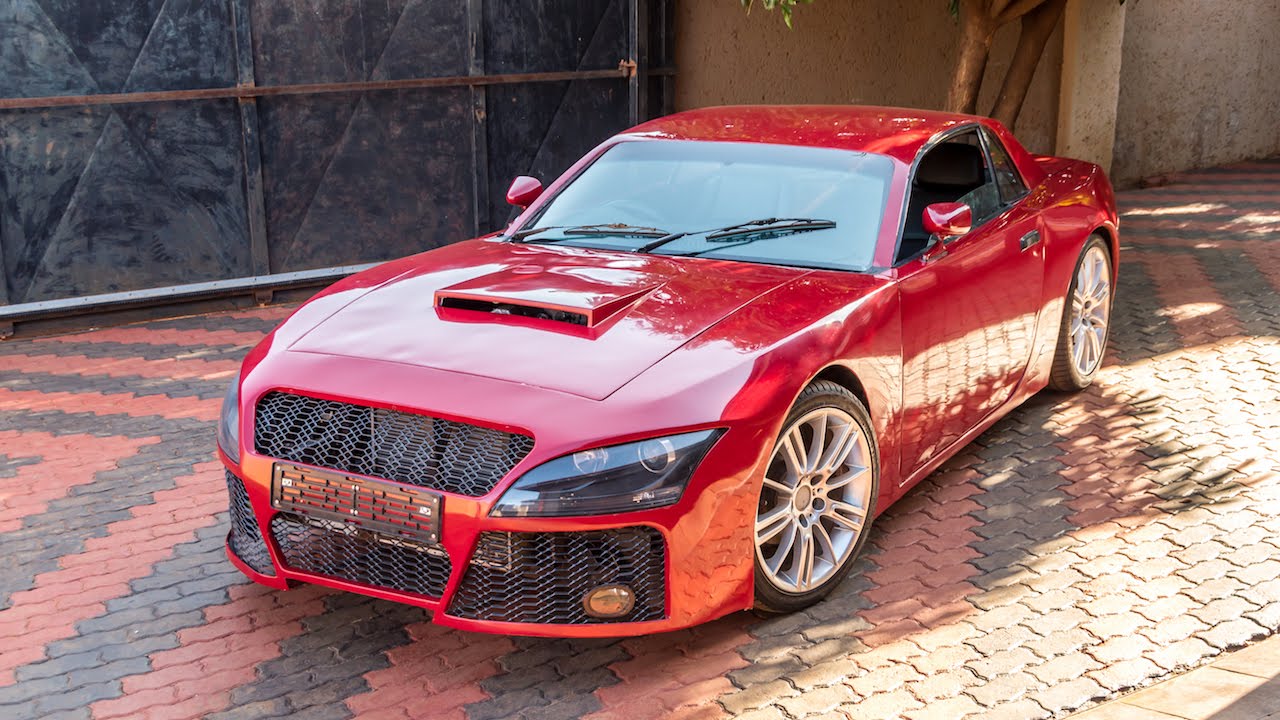


🔧 The Build That's Been "Almost Done" Since 2023
Every car guy knows one. Might be you. There's a car up on jack stands in a garage somewhere, hood off, seats out, a cardboard box of bolts labeled in Sharpie that nobody can read anymore. Ask the owner when it's getting finished and you get the same answer you got eight months ago: "close, man. Just need to sort out one more thing."
That car isn't broken. It's not abandoned, not exactly. It's in a state car people know intimately and rarely talk about honestly: garage purgatory. Not dead, not alive, just perpetually almost there.
Here's the thing nobody wants to admit out loud: this isn't a personal failing. It's basically the default outcome of modding a car with any ambition. The finished build is the exception. The stalled one is the rule, and there are real, structural reasons why.
📦 Reason One: "Finished" Isn't a Real Destination
Ask ten builders what "done" means and you'll get ten different answers, and half of them will contradict themselves within the same sentence. That's because a project car doesn't have a finish line the way a home renovation does. There's no inspector who signs off and says "complete."
A stock car is finished by definition, the factory decided that. A modded car is finished by choice, and choice is a moving target. You solve the power problem and suddenly the suspension feels wrong for the power you have now. You fix the suspension and the brakes feel undersized for how the car stops now. Every upgrade recalibrates what "enough" looks like.
The moving-target problem shows up everywhere:
- New wheels expose how tired the paint looks
- More power exposes a weak clutch you'd never have noticed otherwise
- A better exhaust note makes the stock intake sound embarrassing by comparison
- Lowering the car reveals every panel gap you used to ignore
This isn't bad luck. It's the mechanism. Modding a car doesn't converge toward an endpoint, it reveals the next problem. Guys who "finish" builds usually didn't hit some objective completion point, they just decided, consciously, to stop chasing the next reveal. That's a mental move, not a mechanical one, and most people never make it.
💸 Reason Two: The Money Never Arrives All at Once
Nobody budgets a project car the way they'd budget a kitchen remodel. Contractors give you one number up front. Car builds don't work that way, because the scope keeps expanding as reason one above plays out.
So funding happens in bursts. A tax return covers the turbo kit. A bonus covers the tune. Then six months of nothing while regular life eats the discretionary income, and the car sits exactly as capable as it was in March, just uglier because now it's disassembled and stagnant.
That stop-start funding pattern does something psychologically brutal: it kills momentum every single time it happens. Getting back into a build after a three-month gap takes real activation energy. You have to remember where you left off, re-diagnose half-finished work, sometimes even re-learn a system you gutted and forgot the wiring for. A lot of builds don't die from lack of money. They die from too many restarts, each one a little more exhausting than the last.
🧩 Reason Three: The Parts Bin Problem
Every long-term builder has a bin, a shelf, sometimes a whole corner of the garage, full of parts bought for "the build" that never made it onto the car. Some were impulse buys during a sale. Some were replaced by better options before they got installed. Some are still perfectly good and just haven't found their moment.
That parts bin isn't clutter, it's a mirror. It shows you every version of the build you imagined before you actually started turning wrenches on it, and none of those imagined versions match the one sitting on stands right now. Reconciling the plan in your head with the car in front of you is its own kind of work, and a lot of guys avoid it by just buying more parts instead. New parts feel like progress. Sorting through old ones feels like admitting a mistake.
🛠️ Reason Four: Solo Builds Have No External Pressure
Compare a project car to literally any collaborative project. A job has deadlines and a boss checking in. A group project has other people counting on you. A garage build, for most people, has none of that. Nobody's waiting on it. Nobody notices if it sits for a month, or a year.
Without external pressure, momentum depends entirely on internal motivation, and motivation is famously inconsistent. It spikes after watching a build video at 1 a.m., after a good drive in someone else's finished car, after a car meet where your ride felt one step behind everyone else's. Then it fades back to baseline once regular life takes over, and the wrenches go back in the drawer.
Spota tip: this is exactly why Clubs exist. A crew that actually asks "how's the build coming" every week creates the same accountability a deadline does, minus the boss. External pressure doesn't have to come from a job. It just has to come from somewhere.
📱 Reason Five: Social Media Broke the Definition of "Enough"
Twenty years ago, "done" was judged against the cars you saw at a local meet or in a magazine you bought once a month. Now it's judged against a global feed of the best builds on the planet, refreshed every time you open your phone. That's an impossible bar, and it's a moving one, because someone somewhere just dropped a new personal best on the exact platform your build is running.
Comparison used to be occasional. Now it's constant, and it does something specific to a half-finished project: it makes "good enough for me" feel like settling. A guy who'd have been thrilled with his build in 2008 now scrolls past a dozen more extreme versions of the same platform before he's finished his coffee, and suddenly his own progress feels smaller than it is. That's not a fair comparison, most of what shows up on a feed is someone's best month ever, not their average one, but it doesn't feel unfair in the moment. It just feels like your car isn't there yet. So it stays in the garage a little longer, waiting for a version of "there" that keeps sliding further away.
The forums and comment sections make it worse in a specific way too. Ask a build question online and you won't get one answer, you'll get fifteen, half of them contradicting each other about whether you actually need the part you were about to buy. That's useful information in theory. In practice, it's decision paralysis with extra steps. A lot of builds stall not because the owner doesn't know what to do next, but because they've been talked into believing there are four "right" ways to do it and they haven't picked one.
🧠 Reason Six: Sunk Cost Makes Selling Feel Like Losing
Here's an uncomfortable one. At some point, a lot of stalled builds cross a line where finishing them no longer makes financial sense. The parts, the labor, the opportunity cost of a car that's been undrivable for a year, it can add up to more than the car will ever be worth, even fully built. Rationally, the smart move is sometimes to cut losses, sell the parts, sell the shell, and start over with a cleaner plan or just buy something finished.
Almost nobody does this, and it's not because the math is unclear. It's sunk cost bias doing exactly what it always does: the more you've already put into something, the harder it feels to walk away, even when walking away is objectively the better move from where you're standing today. Every dollar and weekend already spent gets treated like collateral that has to be redeemed by finishing, instead of what it actually is: money and time that's already gone regardless of what happens next.
This is why some of the healthiest builders aren't the ones with the most discipline. They're the ones willing to have the honest conversation with themselves about whether a project still deserves the garage space it's occupying, and to sell it guilt-free if the answer is no. A build you sell half-finished isn't a failure. A build you keep half-finished out of pure sunk cost, resenting it the whole time, arguably is.
🏆 What "Finished" Actually Looks Like For the Builds That Make It
Look closely at the project cars that do reach a real stopping point, the ones that show up complete at a show or get driven daily without an asterisk, and a pattern shows up. It's rarely one heroic six-month sprint. It's almost always a series of small, deliberately scoped phases, each one treated as its own complete project instead of a fragment of some distant final vision.
Phase one might just be "reliable daily with better wheels." Phase two, a year later, might be "add the power." Phase three, whenever it happens, might be the widebody kit that's been in the mood board since day one. Each phase actually finishes, actually gets driven and enjoyed, before the next one starts tearing things apart again. The car spends real time on the road between phases instead of permanently on stands.
That's the structural difference. Builders stuck in garage purgatory are usually trying to execute the entire mood board as one continuous project with no intermediate finish lines. Builders who actually finish things keep declaring victory along the way, on purpose, even knowing there's more to do eventually.
🎯 So How Do Builds Actually Get Finished?
The ones that do get finished tend to share a few things in common, and none of them are "more money" or "more free time," even though that's what everyone assumes is missing.
What actually moves a stalled build forward:
- A hard external deadline. A car show, a track day, a trip, something on the calendar that doesn't move. Deadlines that only exist in your own head are negotiable. Deadlines with a date on a flyer aren't.
- Redefining "done" on purpose. Pick a version of the car you'd be happy to drive today, write it down, and treat anything beyond that as phase two. Phase two can wait. Phase one has to actually happen.
- Breaking the build into weekend-sized chunks. "Finish the car" is not a task, it's a category. "Bleed the brakes Saturday morning" is a task. Builds stall when every remaining step feels equally massive and undefined.
- Telling people. Publicly committing to a timeline, even just to a Club or a group chat, adds the external pressure a solo garage project is missing by default.
- Selling or donating the parts bin you're not using. If a part hasn't gone on the car in over a year, it's probably not going on the car. Clearing it out removes the guilt tax and often funds the thing you're actually missing.
None of that guarantees a car gets finished on any particular timeline. But it breaks the specific mechanism that keeps most builds stuck: an undefined endpoint, inconsistent funding, an expanding parts bin, and zero outside pressure, all reinforcing each other in a loop that never resolves on its own.
🏁 The Real Truth About "Finished"
Here's the part that actually matters: a stalled project car isn't a failure. It's the default state of ambition applied to a machine that will always have one more thing worth upgrading. The builders who look "done" from the outside almost always have a list in their head just as long as yours, they've just decided to stop broadcasting it and start driving the car as-is.
If you're staring at a build that's been "close" since last summer, you're not behind. You're in the same garage purgatory every serious car person has stood in at least once. The difference between the car that stays on stands and the car that hits the road again usually isn't more skill or more cash. It's picking a stopping point on purpose, instead of waiting for the build to tell you it's done. It never will.
If you want people who'll actually check in on your progress instead of letting the car quietly gather dust in the corner of your feed, that's what a good Club is for. Track your build in your Garage, post the ugly in-progress shots, not just the reveal, and let a crew that gets it hold you to the deadline you'd never set for yourself.