
🛞 The Look That Started a Thousand Arguments
Park two identical cars side by side. Same wheels, same offset, same ride height. Put a normal tire on one and a stretched tire on the other, and you'll get two completely different reactions from two completely different crowds.
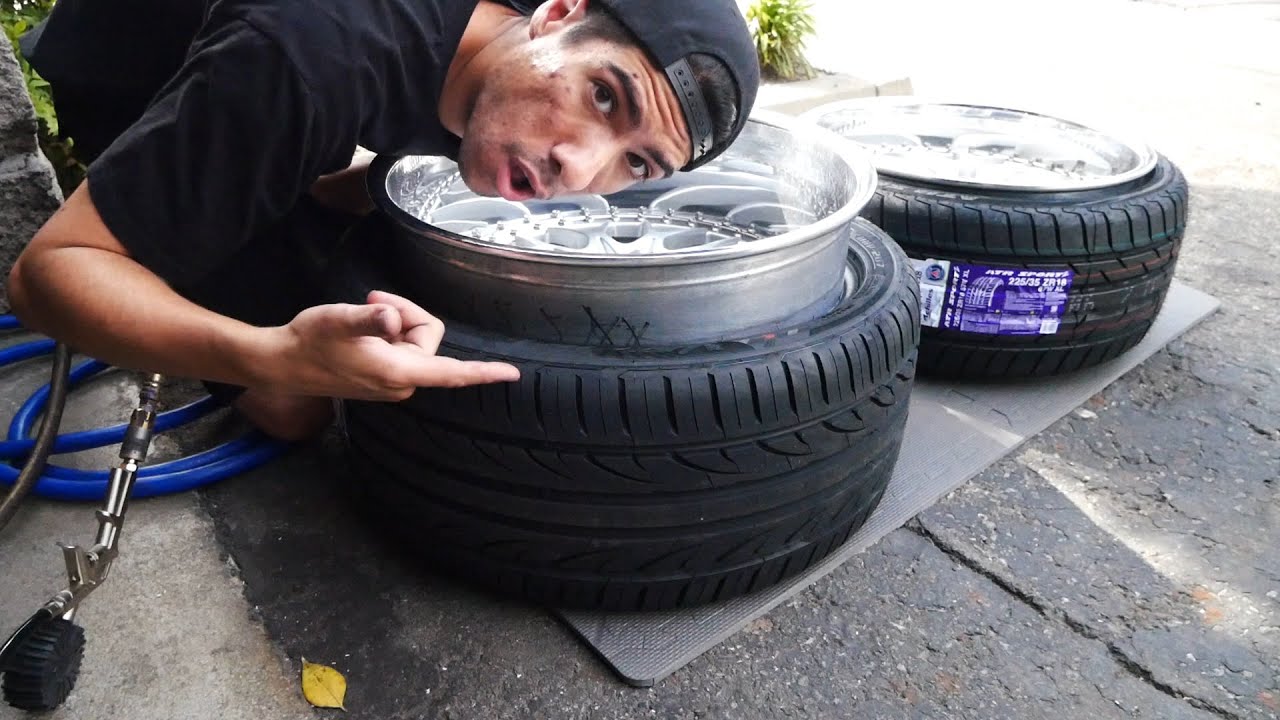
The stretched one gets the fitment nerds leaning in for a closer look. The sidewall curves inward off the wheel lip in one smooth, taut line, no bulge, no slack, like the tire got vacuum-sealed to the barrel. It looks intentional. Engineered, almost.
The other reaction comes a beat later, usually from someone who actually knows tires: "that thing's gonna pop off the bead in a hard corner." And they're not entirely wrong to worry.
Tire stretch sits in a weird spot in car culture. It's one of the cheapest ways to transform how a car looks, a few hundred dollars in wheels and the right tire size, and it's also one of the mods most likely to get you laughed out of a tire shop, denied at track day tech inspection, or lectured by your insurance adjuster. Nobody's neutral on it. Let's get into why.
📏 What "Stretch" Actually Means
Every tire is designed to be mounted on a wheel within a specific rim width range. A 245-width tire, for example, might be rated for anywhere from an 8 to a 10-inch wide wheel. Mount it on an 8, and the tire's sidewalls bulge out slightly past the wheel's edge, the way tires look on basically every car that leaves a factory.
Stretch happens when you mount a tire on a wheel wider than its recommended range, sometimes way wider. Take that same 245 tire and put it on an 11 or 12-inch wheel, and instead of bulging out, the sidewall gets pulled taut and curves inward to meet the wider rim. The tire's contact patch narrows, the sidewall goes rigid, and the whole tire takes on that smooth, stretched look that fitment culture chases.
There's a rough vocabulary for how far it goes:
- Mild stretch: a subtle inward lean, common enough that some manufacturers' recommended widths already produce a light stretch look without anyone trying.
- Aggressive stretch: the tire is visibly pulled thin, sidewall curving hard, often paired with poke (the wheel/tire sitting outside the fender line) for the classic "hellaflush" look.
- Extreme stretch: multiple wheel-width sizes beyond spec, seen mostly on show cars and static builds that never see a real corner, where the tire is closer to a rubber band than a functional contact patch.
None of this happened by accident. It came out of the same VIP and kaido racer lineage that built stance culture generally: Japanese show-car builders in the 90s chasing a specific silhouette, refined through Southern California's import scene, and eventually turned into its own competitive discipline with its own Instagram accounts, its own slang, and its own internal hierarchy of what counts as "clean" versus "sloppy" stretch.
⚠️ Why Tire Engineers Hate It
Here's the part that keeps this debate alive: the people who actually design and rate tires are not on board, and they've got real physics behind their concerns.
- Bead seat integrity. A tire's bead, the reinforced inner edge that clamps onto the wheel, is engineered to seal against a specific rim width. Stretch it far enough past spec and that seal weakens. In extreme cases, a hard enough side load in a corner can pop the bead loose from the rim entirely, which means instant, total loss of that tire's air and grip.
- Sidewall stress in the wrong direction. Sidewalls are built to flex a certain way under load. Pulling them taut across a wider rim changes the angles those stresses travel through, and tire manufacturers will tell you flatly that this isn't a load case they tested for or warrantied.
- A narrower contact patch. The whole point of a wider tire is more rubber on the road. Stretching that same tire over a wider wheel doesn't add rubber, it just repositions the tire's existing width, and the actual flat contact patch touching pavement often shrinks. You paid for grip and got less of it.
- Increased blowout risk at speed or under hard cornering. Combine a stressed bead, a repositioned sidewall, and real-world potholes or curb strikes, and you've got a tire that's meaningfully more likely to fail catastrophically than the same tire mounted correctly.
This is why most reputable tire shops will refuse to mount a tire outside its manufacturer-recommended width range, and why plenty of race tracks and time attack events specifically ban stretched setups at tech inspection. It's not gatekeeping. It's liability, and it's grounded in something tire engineers have tested and you probably haven't.
🎨 Why People Do It Anyway
None of that stops the look from being genuinely, visually effective, and that's the whole reason the argument never dies.
A properly stretched tire does something a normal tire can't: it makes the wheel the star. Without sidewall bulge softening the transition from tire to rim, you see the wheel's full design, the lip, the spokes, the concavity, in one continuous line down to the fender. Stance and fitment photographers will tell you straight up that stretch is what separates a wheel photo that looks flat from one that looks sculpted.
There's also a practical side that rarely gets mentioned in the "this is stupid and dangerous" takes: mild stretch, done within a reasonable margin, isn't the same conversation as extreme stretch. A tire stretched one size over its recommended width, on a car that's actually driven and maintained, is a very different risk profile than a show car running three sizes over on a static setup that never leaves a trailer. Fitment culture knows this distinction even if outsiders lump it all together. The community has its own informal safety line, "stretch within reason," even if that line moves depending on who you ask.
And there's the simplest reason of all: car culture has always rewarded doing something hard on purpose. Getting stretch right, matching the right tire brand's sidewall profile (some stretch cleaner than others, and fitment forums have entire threads ranking which tires "stretch nice"), the right wheel width, the right offset, takes real trial and error. It's a skill people show off. That's true of a lot of things car people do that a strict function-first read would call pointless.
💰 The Money Side Nobody Talks About
Fitment culture doesn't get discussed as a financial decision very often, but stretch changes the math on a build in ways that catch a lot of first-timers off guard.
Going wide on wheels to chase a stretch look usually means buying wheels that don't match what the car came with, which means custom offsets, sometimes spacers, sometimes fender work to clear the new width. That's before the tire even enters the picture. Then the tire itself: running a narrower tire than the wheel "should" have means you're not maximizing what you paid for in rubber, and narrower, stretched tires often wear faster on the inner edge from the altered contact patch, similar to what aggressive camber does to a tread. Budget for tires more often, not less.
Insurance is the other quiet cost. Most policies don't ask about tire width directly, but a claims adjuster investigating an accident involving a modified fitment setup can absolutely flag it during the process, especially if a tire failure is part of the incident. Some builders run their stretch setup as a "show only" configuration and switch back to spec-width tires for daily driving specifically to avoid that conversation ever coming up. It's an extra set of wheels and tires, extra cost, but it's the cleanest way to have both the look and a normal insurance relationship.
None of this makes stretch a bad financial call. Plenty of car mods cost real money for zero functional upside, that's most of what a show build is. It just means the actual cost of a clean stretch setup is higher than "buy wide wheels, mount narrow tires," and builders who've been doing this a while will tell you the hidden costs are where most newcomers get surprised.
🔧 How Shops Actually Handle the Request
Ask around and you'll find tire shops fall into roughly three camps when a stretch fitment order comes in.
Some shops flatly refuse, full stop, citing liability and manufacturer specs, and won't mount anything outside a tire's rated width regardless of how mild the request is. That's a defensible, conservative position and plenty of national chains take it as a blanket policy.
Some shops will do it but make the customer sign a waiver acknowledging the tire is being mounted outside manufacturer specification, explicitly shifting liability for anything that goes wrong onto the person requesting the work. This is the most common middle-ground approach among independent shops that serve a fitment-heavy customer base.
And some shops specialize in it entirely, built a reputation specifically around clean stretch mounts, know which tire brands stretch predictably versus which ones look uneven or lopsided when pulled wide, and treat it as a craft the same way a body shop treats paint matching. These shops tend to be the ones fitment forums actually recommend by name, because a bad stretch mount (uneven, uses excessive lubricant that leaves visible residue, or damages the bead in the process) is its own kind of embarrassing.
If you're going to do this, which shop you use matters more than almost any other variable in the build.
🏁 Where the Line Actually Gets Drawn
Even inside fitment culture, tire stretch isn't a free-for-all. There's a real, if unofficial, set of rules people who take it seriously tend to follow:
- Stay within a tire's rated width range when the car is actually driven regularly, and save the extreme stuff for cars that are functionally show pieces.
- Run a stretch setup at lower tire pressures than normal driving would call for, since some builders argue slightly softer pressure reduces bead stress. Others disagree hard on this one, and it's one of the more contested details in fitment forums.
- Avoid stretch entirely on anything that sees a track, an autocross course, or regular hard cornering, since that's exactly the load case that makes bead failure a real risk instead of a theoretical one.
- Check state and local vehicle code before going extreme. Some jurisdictions have tire-to-wheel fitment rules buried in equipment regulations, and a stretched setup can be an easy target for a fix-it ticket even where it's not explicitly named.
The tire industry's position is simple: don't do it, full stop, any width outside spec is outside spec. The fitment community's position is more nuanced: mild stretch within reason is a manageable tradeoff for a look people genuinely love, extreme stretch on a driven car is asking for trouble, and extreme stretch on a static show car is a different category of risk entirely because the car isn't actually cornering at speed.
Both of those positions can be true at the same time, which is exactly why this debate has run for two decades without either side winning.
🚗 The Bigger Pattern
Stretched tires are really just the sharpest example of something that runs through basically every corner of car culture: the gap between what a car is engineered to do and what a car person wants it to look like doing. It's the same tension behind negative camber, behind low-offset wheels, behind static drops that make speed bumps a genuine threat. Fitment culture has never claimed to optimize for lap times. It optimizes for a look, on purpose, with full knowledge of the tradeoff, which is a different thing than not knowing the tradeoff exists.
If you're chasing that look yourself, or just want to see what it looks like done right on cars that actually pull it off, Spota's city playlists send you to real meets and Photo Ops where builds like this show up in person, not just in a feed algorithm. Spota tip: check a car's Garage on the app before you judge its setup from one photo. Half the "how is that legal" builds have a whole build history explaining exactly what they traded off and why.
Related reading: check out Why Stance Culture Divides the Car Scene for the wider form-versus-function fight this all comes from, or browse more explainers like this one at Under the Hood.
Stretch it too far and you're gambling with a bead seal. Stretch it right and you've got a wheel photo that stops the scroll. Car culture has never needed a tire engineer's blessing to decide what looks good, and it's not about to start now.