
🔴 The Red Caliper Behind Every Set of Spokes
Look through the wheel of literally any modified car at a meet and you'll find one. Red. Yellow. Blue. Sometimes a color that doesn't exist on any factory paint chart. Peeking out from behind five spokes of polished aluminum like it's trying to get noticed, because it is.
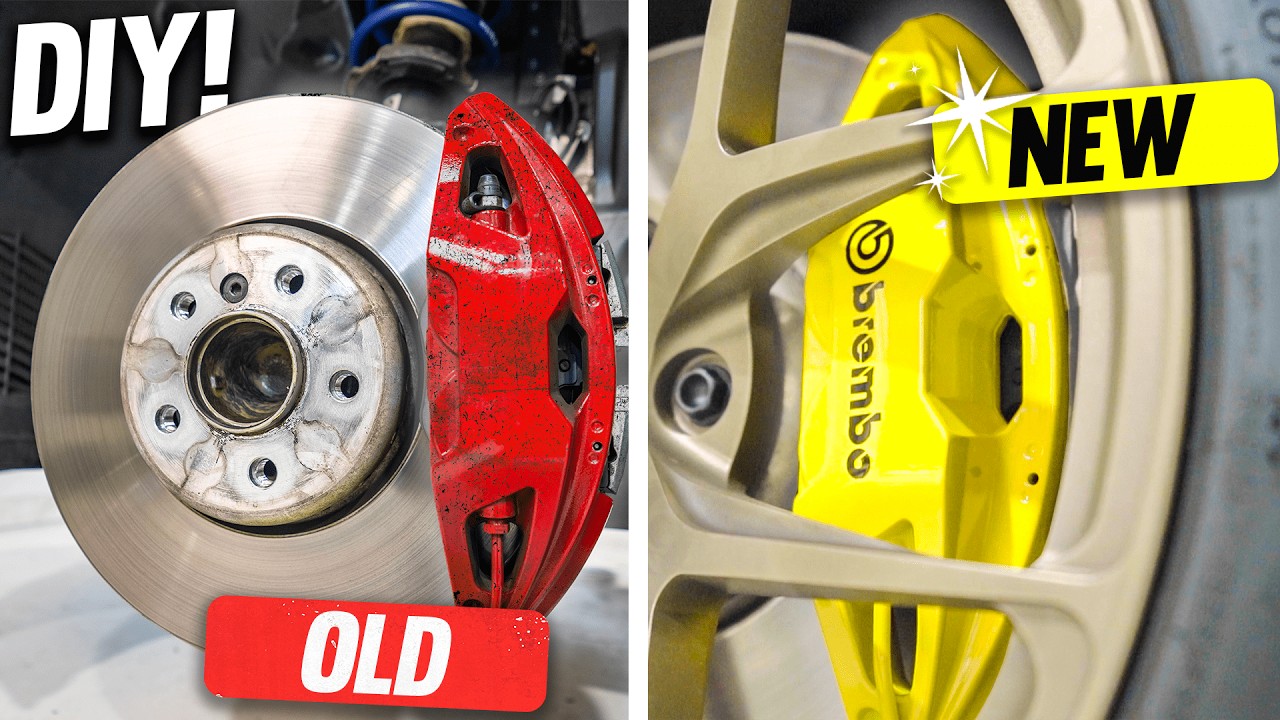
Painted brake calipers are one of the cheapest, most argued-about mods in car culture. A $40 kit and an afternoon can turn a boring gray caliper into the loudest accessory on the car. And somehow that tiny detail sparks more debate in comment sections than turbo kits do.
Half the scene calls it a legitimate flex. The other half calls it lipstick on a pig, a way to fake performance you don't actually have. Both sides are partly right, and that's exactly why this mod refuses to go away.
Here's the real story behind the caliper paint obsession: where it started, why it triggers so many purists, whether it actually does anything, and how to tell a genuine high-performance caliper from a rattle-can impostor.
🏁 Where the Trend Actually Started
Painted calipers didn't start as a fashion statement. They started as a byproduct of motorsport.
High-end factory performance brakes, most famously Brembo, have shipped in bright red, yellow, and sometimes black or blue for decades. The color wasn't picked for looks. It let technicians and race engineers identify caliper brands and grades at a glance from across a pit lane or paddock. Ferrari, Porsche, and other performance manufacturers followed the same logic: put the good brakes in a color that says "these aren't the base package."
Once those factory colored calipers started showing up on genuinely fast cars, the association stuck. Red caliper became visual shorthand for "this car has upgraded brakes," even before most buyers understood what a big brake kit actually did. Manufacturers noticed the shorthand worked and leaned into it, offering colored caliper packages as an option on trims that had nothing to do with the track.
By the time aftermarket big brake kits from companies like Brembo, StopTech, and Wilwood became attainable for regular enthusiasts in the 2000s, the color was baked into the culture. Fast cars had colored calipers. So if you wanted your car to look fast, you painted yours to match.
That's the entire origin story in one sentence: paint didn't create the trend, brand recognition did, and paint is just the cheap way to borrow it.
🎨 Why It Became Such a Popular Mod
A few things make caliper paint uniquely appealing compared to almost any other modification:
- It's cheap. A quality high-heat caliper paint kit runs $30-$60. Compare that to a $1,500+ big brake kit for the same visual payoff.
- It's fast. Most DIY jobs take an afternoon per axle, no lift required if you're patient with a jack and stands.
- It's high visibility for low effort. Wheels are the first thing anyone notices on a modified car, and calipers sit right in that sightline. A painted caliper reads from 20 feet away, unlike an intake or a tune nobody can see or hear until you rev it.
- It photographs incredibly well. In an era where builds live and die by how they look in a phone photo or a reel, a pop of color behind a wheel is an easy win for anyone building a page.
- It's reversible-ish. Unlike a lot of mods, a bad paint job can be stripped and redone without touching anything structural.
Basically, caliper paint sits at the intersection of cheap, fast, and photogenic, which is exactly the combination that spreads through car culture the fastest. It's the same reason underglow and vinyl wraps caught on: low barrier to entry, big visual return.
⚠️ The Fake Brembo Problem
Here's where the whole thing gets contentious. Somewhere along the way, painting your stock calipers red stopped being "I like how this looks" and started being read as "I want you to think I have real Brembos."
That's the accusation that shows up in literally every comment section under a painted caliper photo: "Fake Brembo." Even when the owner never claimed otherwise.
Some people take it further and add fake "BREMBO" lettering decals to calipers that have never been within a hundred miles of an actual Brembo factory. That's the version that legitimately annoys people who've spent real money on real big brake kits, because it's not decoration anymore, it's a deliberate attempt to misrepresent what's actually stopping the car. Most active enthusiast forums and subreddits treat fake-lettered calipers as one of the more embarrassing mods you can do, right up there with fake exhaust tips and dealer-badge swaps for a trim you don't own.
The distinction the culture has mostly settled on: painting a caliper a color is fine, it's your car. Adding a fake brand name to a component you didn't buy is where it crosses from styling into lying. If you want the lettering, buy the caliper covers that clearly say something else, or just leave it blank and let the color speak for itself.
🔧 Does Painting a Caliper Actually Hurt It?
This is the part that gets argued with more confidence than accuracy, so let's separate fact from forum myth.
The real risk: brake calipers get hot. Not "engine bay hot," but during hard braking, especially repeated hard stops or track use, caliper surface temperatures can climb well past 300°F, sometimes over 400°F on aggressive track days. A cheap spray paint not rated for that heat will discolor, bubble, or flake almost immediately. That's not a performance issue, it's just an ugly, wasted afternoon.
What it doesn't do: properly done, caliper paint has no meaningful effect on braking performance. It doesn't touch the piston seals, the brake fluid, or the friction surface between pad and rotor, assuming you (or a shop) mask those areas correctly during the job. The pistons and seals are internal. The paint lives on the external caliper body only.
Where people actually mess it up:
- Skipping proper degreasing, so paint doesn't bond and flakes within weeks
- Using a paint that isn't rated for sustained high heat, causing bubbling and discoloration
- Overspray getting onto the rotor's braking surface, which can cause noise or uneven pad contact until it wears off
- Painting over rust or pitting instead of addressing it, which just hides a problem that keeps getting worse underneath
Done correctly, with a proper high-temp caliper paint (brands like G2, VHT, or Foliatec are common choices), a wire brush or sandblast prep, and careful masking of the rotor and pads, caliper paint is cosmetically harmless and can last years, even under regular street and occasional track use.
🏎️ What Actually Matters for Braking Performance
If you're chasing real stopping power instead of just the look, paint is the least important part of the equation. Here's what actually moves the needle, in rough order of impact:
- Pad compound - the single biggest factor in bite, fade resistance, and dust. A track-oriented pad on a street caliper will outperform a painted stock setup every time.
- Rotor size and design - bigger rotors dissipate heat better and resist fade under repeated hard stops, which is the entire point of a real "big brake kit."
- Brake fluid - stock DOT 3/4 fluid boils at a lower temperature than a quality DOT 4/5.1 track fluid, and boiling fluid means a soft, fading pedal at the worst possible moment.
- Caliper piston count and rigidity - more pistons and a stiffer caliper body reduce flex under hard braking, which is what genuine multi-piston Brembo, StopTech, and similar kits are actually selling you, not the color.
- Tires - it sounds unrelated, but the contact patch between rubber and road ultimately caps how much any brake upgrade can actually help you stop shorter.
None of that shows up in a wheel-well photo. All of it shows up on a track day or a panic stop. That gap between what looks fast and what stops fast is exactly why the painted caliper debate never resolves: one side is optimizing for the photo, the other is optimizing for the physics, and both are legitimate goals for different owners.
Spota tip: if you're logging a build in your Garage, this is a perfect example of a mod worth separating into "looks" versus "performance" in your notes. Future you (or anyone checking out your car's timeline) will actually understand what you did it for.
🧰 How to Do It Right, If You're Going to Do It
If the debate hasn't scared you off and you want painted calipers without joining the "fake Brembo" pile-on:
- Pull the wheel and clean thoroughly. Degrease and wire-brush the caliper to bare, sound metal. Paint over grime or brake dust film and it will peel within months.
- Mask aggressively. Cover the rotor's braking surface, the pads, any rubber seals, and the bleeder screw completely. Overspray in the wrong place is the most common rookie mistake.
- Use an actual high-temperature caliper paint, not generic spray paint from a hardware store. Look for a rating of at least 500°F if you do any spirited driving or track days.
- Apply thin coats and let each one cure fully per the can's instructions. Rushing coats is the second most common way these jobs fail early.
- Skip the fake branding. If you want a name on there, it's a cheap, honest flex to just leave it blank, or go get the real kit if the badge matters that much to you.
- Let it cure the full recommended time before driving hard. Most kits need 24-72 hours before the paint reaches full hardness, and hard braking too soon can mark up a soft finish.
Done right, it holds up for years and does exactly what it was always meant to do: make your wheels look better without pretending to be something the car isn't.
🚗 The Bottom Line
Painted calipers are a mirror for car culture's oldest tension: the pull between looking fast and being fast. Neither side is wrong to care about the thing they care about. The problem only starts when the paint is trying to lie about what's underneath it.
Paint your calipers if you want to. Just paint them because you like how they look, not because you're trying to convince someone at a meet you've got brakes you don't. The car people who actually know brakes will clock the difference in about two seconds anyway, usually by asking what pads you're running instead of what color the calipers are.
If you're building out your own car's story, from the mods that are pure style to the ones that actually change how it drives, that's the same form-versus-function question that comes up in wheel fitment or a ceramic coating job: some mods are about how the car performs, some are about how it reads in a photo, and the best builds are honest about which is which. If you're the type who ends up in these debates at every meet, you already know car culture's real currency isn't paint, it's knowing the difference.
❓ FAQs
Does painting brake calipers void a warranty?
Generally no, as long as the job is done externally without disassembling the caliper or affecting the piston seals. Some manufacturers may scrutinize brake-related warranty claims more closely if aftermarket work is visible, so keep documentation of what was and wasn't touched.
Is painting calipers myself safe, or should I pay a shop?
DIY is safe if you follow proper prep, masking, and high-temp paint. Shops typically charge $150-$400 per axle for a professional job, which includes better prep and often ceramic-coated finishes that outlast basic spray kits.
How long does painted caliper paint actually last?
A properly prepped, high-temp job typically holds up 2-5 years under normal street driving. Heavy track use, road salt, and repeated brake dust buildup shorten that window.
Can I paint calipers without removing the wheel?
Technically some kits are marketed as "no-removal" using stencils through the wheel spokes, but the results are almost always worse. Pulling the wheel gives full access for proper prep and clean edges.
Do real Brembo calipers ever come in colors besides red and yellow?
Yes. Depending on the vehicle and trim, factory and aftermarket Brembo calipers have shipped in black, blue, silver, and orange, among others. Color alone was never a reliable way to identify a genuine Brembo.
Is it illegal to paint calipers to look like a brand you don't have?
No, color alone isn't a legal issue. Adding counterfeit branding or lettering isn't illegal for personal use either, but it's widely viewed in the community as misrepresenting the car, and it's the single fastest way to get called out at a meet.