
🛞 That Hum You've Been Telling Yourself Is Just "Tire Noise"
Every car guy has heard it. A low hum that shows up around 40 mph, gets louder in a turn, and quiets down (or changes pitch) when you shift your weight in the seat like that's somehow diagnostic. You tell yourself it's the tires. New pavement. Road noise. Wind.
It's usually none of those things.
It's a wheel bearing, and it's been talking to you for weeks, maybe months, before you finally admit it. Wheel bearings are one of the most ignored failure points in the entire car, because the early symptoms are so easy to explain away and the part itself is completely invisible. You can't see it degrade. You can only hear it, and by the time most people actually do something about it, "hear it" has turned into "feel it," which is a much worse place to be.
This is the story of why bearings fail, why the sound is so easy to dismiss, and why waiting on this specific repair is one of the few maintenance gambles that can actually get someone hurt.
⚙️ What a Wheel Bearing Actually Does
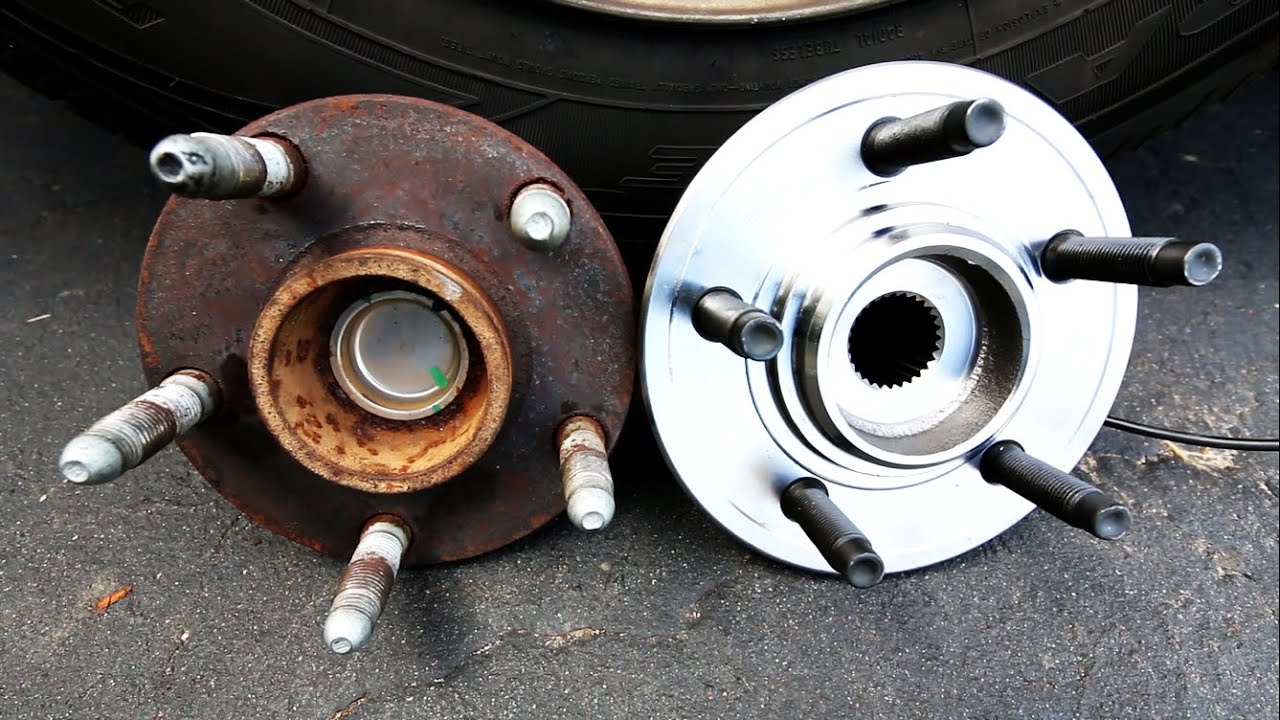
A wheel bearing sits between the wheel hub and the spindle, and its entire job is to let the wheel spin freely while still handling every ounce of the car's weight pressing down on it, plus the lateral loads from cornering, plus braking forces, plus whatever pothole you just didn't see. It's a ring of steel balls or tapered rollers packed into a race, sealed up with grease, and asked to spin thousands of times a minute for years without complaint.
Modern cars use a wheel hub bearing assembly: the bearing, the hub, and sometimes the ABS sensor ring are all one sealed unit. Older cars, trucks, and plenty of aftermarket setups still use serviceable tapered roller bearings that get repacked with grease and adjusted by hand. Either way, the principle is the same. It's a precision part living in one of the harshest environments on the car, exposed to heat, water, road salt, and constant vibration, and it's rated for a finite number of miles before the internal races start to pit and the rollers start to skate instead of roll smoothly.
When that happens, the bearing doesn't just quietly stop working. It announces it, loudly, for a long time before it actually gives up.
🔊 The Sound: What a Bad Bearing Actually Sounds Like
Here's the thing that trips people up. A bad wheel bearing doesn't sound like one specific thing. It evolves.
Early stage: a low-pitched hum or drone, speed-sensitive (gets louder as you go faster, quieter or disappears at a stop), often mistaken for:
- Tire noise, especially from cupped or unevenly worn tires
- Wind noise at highway speed
- Road surface texture
Mid stage: the hum sharpens into more of a growl or a rumble, and it starts changing character when you turn. A bearing on its way out will often get louder when you load it, meaning turning left loads the right-side bearings and vice versa. If the noise gets noticeably worse in one direction, that's a strong clue which corner is failing.
Late stage: grinding, clicking, or a metallic groan, sometimes with a vibration you can feel through the steering wheel or the seat. At this point the bearing has physically pitted or the rollers are skidding instead of rolling. This is not a "get to it next month" noise. This is a "the wheel can separate from the car" noise.
Spota tip: if you're not sure which corner is making the sound, find an empty parking lot and do slow, wide S-turns at low speed with the windows down. A failing bearing will usually get louder or change pitch on one side more than the other. It's not a substitute for a real diagnosis, but it narrows things down before you're paying shop diagnostic time.
🚗 Why Car Guys Ignore It Longer Than Almost Any Other Warning Sign
This is the part that's genuinely interesting, not just mechanically but psychologically. Car people are usually paranoid about noises. A new tick, a new rattle, a new whir, and most enthusiasts are already Googling it before the drive is over. So why does a wheel bearing get a pass that a lifter tick never would?
A few reasons, and they stack:
- It sounds exactly like road noise. Unlike a knock or a rattle, a bearing hum blends into ambient highway sound almost perfectly, especially in anything with all-season tires or a stiffer suspension that already transmits more road noise into the cabin.
- It develops slowly. You don't wake up one day with a loud bearing. It creeps in over weeks or months, and your ear normalizes to it the same way you stop noticing a ticking clock in the room. The car guy who drove it every day doesn't hear the change. The passenger who rides in it once a month does, which is why "hey, does your car always sound like that?" is such a common way people finally find out.
- There's no dashboard light for it. Unless the ABS sensor ring is integrated into the hub and the wear has thrown a wheel speed sensor code, a bearing can be failing with zero warning lights on the cluster. No check engine light, no message, nothing. It's pure audio and feel, and most people trust their dash more than their ears.
- It's easy to convince yourself it's tires. Especially if the tires are getting up there in mileage anyway, "yeah, probably just need new tires soon" is the path of least resistance, and sometimes it's even partially true (cupped tires do make bearing wear worse and sound similar). It's a convenient excuse that happens to be plausible.
- The fix feels disproportionate. A wheel bearing job, especially on a modern hub assembly, isn't cheap, and it's not a part anyone gets excited about replacing. There's no performance gain, no visual upgrade, nothing to post. It's pure maintenance, and pure maintenance always loses the priority fight against the next mod.
💀 What Happens If You Actually Let It Go
This is where the stakes are different from most "eh, I'll get to it" repairs. A worn timing belt gives you a countdown. A dying alternator gives you a slow fade with warning lights. A wheel bearing, left long enough, can fail catastrophically and suddenly.
As a bearing's internal races pit and degrade, play develops. That play means the wheel can start to wobble on the spindle under load. Push it far enough and the bearing can seize (locking the wheel and potentially causing loss of control) or, in worst-case scenarios that do happen, especially on trailers and less commonly on passenger cars, the wheel can separate from the hub entirely while driving.
That's not fear-mongering for clicks. It's the actual physics of a rotating assembly with degraded internal geometry under constant load. It's also why a failed wheel bearing is one of the few noises a genuinely competent mechanic will tell you to stop driving on immediately rather than "get to it this week."
The good news: bearings almost never go from "makes noise" to "catastrophic failure" without significant warning time, usually measured in weeks or months of worsening sound. The bad news: plenty of people push right up against that window because the noise never becomes undeniable until it's genuinely dangerous.
🔧 What Actually Causes a Bearing to Fail
Bearings are wear items, so eventually every one of them fails from simple fatigue. But a few things dramatically shorten their life:
- Water intrusion. Modern hub assemblies are sealed, but seals degrade, and once water gets into the grease, corrosion and pitting accelerate fast. Cars that regularly see deep water crossings, off-roading, or a lot of car washes with a pressure washer aimed straight at the hub are at higher risk.
- Impact damage. Hitting a deep pothole hard, or curbing a wheel badly, can brinell the bearing races (creating small dents from the rollers under sudden shock load) even if nothing sounds wrong immediately. The bearing then wears unevenly from that point on and fails faster than it should.
- Improper installation or torque. Hub nuts have very specific torque specs for a reason. Overtighten or undertighten a hub assembly and you either preload the bearing incorrectly or leave play in it, both of which shorten its life dramatically.
- Aggressive driving and heavy loads. Repeated hard cornering, track days, or a car regularly loaded well beyond its intended weight all add cyclical stress that accelerates fatigue.
- Cheap aftermarket bearings. This one matters more than people think. Bearing manufacturing tolerances genuinely vary, and a budget hub assembly from an unknown brand can fail in a fraction of the miles a quality OEM or reputable aftermarket unit (Timken, SKF, NTN, Moog, and similar established names) would last. This is one of those parts where buying the cheapest option on the shelf is a bad trade.
💰 What It Actually Costs to Fix
Costs vary a lot by vehicle and whether you're doing it yourself, but rough ranges for a single corner:
- Front-wheel-drive daily driver, hub assembly replacement: roughly $250-$500 at an independent shop, often less DIY if you already have a press or can borrow one
- Truck or SUV, especially 4WD/AWD: commonly $350-$700 per corner due to more involved disassembly
- Luxury or performance vehicles: can run well past $700-$1,000 per corner, especially anything with integrated ABS sensors, adaptive suspension components nearby, or bearings that require specialty tools
- Rear bearings on many modern unibody cars: often cheaper than fronts since they carry less load and are frequently simpler press-in or bolt-on units
Compare that to the cost of ignoring it: a seized or separated wheel, a totaled car, a tow bill, or worse. It's one of the rare maintenance items where the ROI on "just fix it now" isn't close.
If you're comfortable with basic tools, hub assembly replacement on most front-wheel-drive cars is a genuinely approachable DIY job. Older serviceable bearings that require packing with grease and precise preload adjustment are a different story and better left to someone experienced, since getting preload wrong can fail the new bearing faster than the old one lasted.
🎯 The Bottom Line
Wheel bearings fail slowly, quietly enough to explain away, and loud enough eventually that you can't. The gap between "I think that might be a bearing" and "that is definitely a bearing" is exactly the window where most car guys sit and do nothing, partly because the noise is genuinely ambiguous at first and partly because nobody wants to spend real money on a part that doesn't make the car faster, louder, or better looking.
But this is one of the few items on the maintenance list where "get to it eventually" and "get to it now" aren't the same decision with different timing. They're different outcomes entirely. If you've got a hum that gets louder with speed and shifts when you turn, get it checked. Your ears already told you. You just haven't wanted to listen.
If you're logging maintenance milestones and want an easy way to keep a running history of what's been done to your car (and brag about the stuff that actually deserved it), Spota's Garage feature is built for exactly that. For more real talk on the parts of ownership nobody posts about, check out why every car guy distrusts the dealership service department or browse the full under-the-hood archive.
Fix the bearing. The wheel staying attached to the car is not negotiable.