
⏱️ The Part Nobody Thinks About Until It's Too Late
Every car guy has a mental list of parts that get respect. Turbos. Clutches. Head gaskets. The timing belt is never on that list. It's a rubber loop buried behind a plastic cover, doing a job most owners couldn't explain if you asked them.
That's exactly the problem.
The timing belt is the single cheapest, most boring, most skippable-feeling maintenance item on a huge number of engines. It's also, on the wrong engine, the one part that decides whether your car needs an oil change or a new short block. Not "needs work." Not "runs rough." Dead. Engine. Right now. On the side of the road.
This is the story of why one worn-out $150 part turns into a $6,000 (sometimes $10,000+) bill, why the manufacturer's own recommended interval gets ignored constantly, and why "it was running fine" is the last thing a lot of people say before their engine isn't.
🔧 What a Timing Belt Actually Does
Every four-stroke engine has two sets of parts that have to move in perfect sync: the crankshaft (spinning the pistons up and down) and the camshaft (opening and closing the valves). If they get out of sync, even by a few degrees, the engine either runs badly or doesn't run at all.
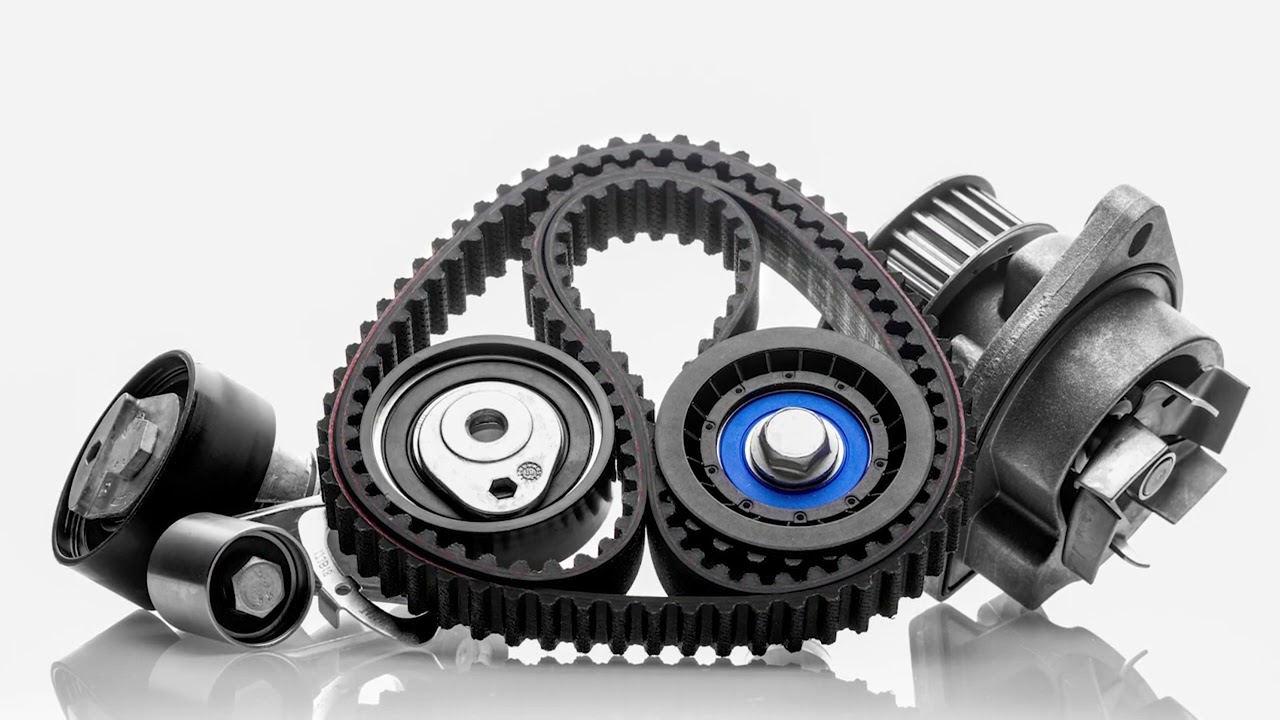
The timing belt (or timing chain, depending on the engine) is what keeps that sync locked in. It's a toothed rubber belt looped around the crankshaft pulley and the camshaft pulley (or pulleys, on a dual-cam engine), turning the cams at exactly half crank speed, exactly in time, for the entire life of the engine.
What the belt is up against:
- Constant heat cycling from cold start to full operating temp
- Oil and coolant contamination if a seal starts weeping nearby
- Rubber degradation from age alone, even on a car that barely gets driven
- Tensioner and idler pulley bearings wearing out right alongside it
- Water pump failure, on engines where the pump is driven off the same belt
None of this is exotic. It's just rubber and bearings doing their job for 60,000 to 100,000+ miles, depending on the manufacturer. And rubber, eventually, loses.
💥 The Word That Changes Everything: "Interference"
Here's where this gets expensive, and here's the part a lot of casual owners genuinely don't know about their own car.
Engines fall into two categories:
- Non-interference engines: the pistons and valves occupy separate enough space that if the timing belt snaps, the valves and pistons don't collide. The engine just stops. You're stranded, you need a tow, you need a new belt. Annoying, not catastrophic.
- Interference engines: the piston and valve travel paths physically overlap by design, to improve compression and efficiency. As long as timing is correct, they never actually touch, they just pass through the same space at different moments. The instant the belt snaps or skips a few teeth, that timing is gone, and an open valve is sitting right where a piston is about to arrive at full speed.
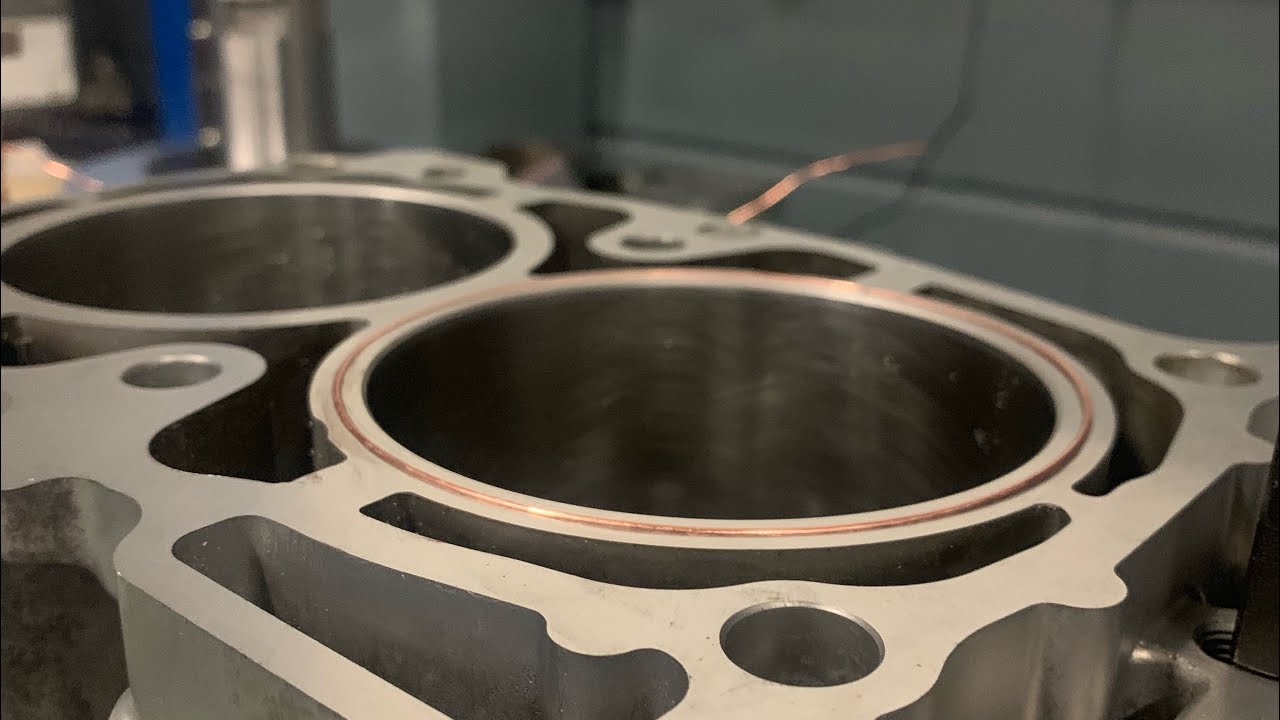
On an interference engine, a snapped timing belt doesn't just stall the car. It bends valves, sometimes cracks pistons, sometimes scores cylinder walls, and on a bad day it turns a connecting rod into shrapnel. The overwhelming majority of modern gas engines, especially anything performance-oriented or high-compression, are interference designs. That includes a huge chunk of the Honda, VW/Audi, BMW, Subaru, and Toyota lineups that show up constantly in car culture.
💸 The Bill, Broken Down
This is where the "it's just a belt" mentality falls apart.
Preventive replacement, done on schedule:
- Belt, tensioner, idler pulleys, water pump (do them together, always): $500-$1,200 parts and labor on most engines
- Some transverse V6 layouts with hard-to-reach belts run higher, $1,000-$1,800
What happens if it breaks first, on an interference engine:
- Bent valves only, caught immediately: $1,500-$3,000 for a valve job
- Bent valves plus piston damage: $3,000-$6,000 for a partial rebuild
- Cracked piston, scored cylinder, rod damage: $6,000-$10,000+, frequently exceeding the car's value
That last number is why insurance adjusters and mechanics both use the same phrase for a snapped belt on an interference engine: totaled by neglect. Nobody crashed the car. Nobody did anything dramatic. A $150 part just quietly aged out, and the owner didn't know or didn't act.
🙄 Why So Many People Skip It Anyway
Spota tip: if you're logging mod progress or maintenance milestones in your Garage, timing belt intervals are exactly the kind of unglamorous entry that's easy to forget and expensive to skip. Track it like you'd track a dyno number.
The math on why this keeps happening isn't complicated once you look at it honestly:
- It's invisible. You can't see a timing belt without pulling covers off. There's no dashboard light for "your belt is at 85% of its rated life."
- The car feels fine right up until it doesn't. Unlike a clutch that starts slipping or brakes that start squealing, a timing belt gives almost no warning. It works perfectly, then it's over.
- The interval feels arbitrary. 90,000 miles sounds like a long way off when you're at 60,000, especially on a car that runs great.
- Buying used muddies the record. A huge percentage of belt failures happen on cars bought secondhand where the previous owner's maintenance history is a guess, not a fact. If the CarFax doesn't mention it and the seller doesn't know, the belt's true age is unknown.
- Mechanics get told no. Plenty of shops flag it during an oil change and get waved off because "it's not broken."
That last one stings the most, because it means the failure was preventable and someone chose not to prevent it, usually because $800 felt like a lot of money for a part that "wasn't doing anything wrong yet."
🚗 The Engines That Made This Debate Famous
Ask around any forum thread about timing belts and a handful of names come up over and over, for very different reasons.
Honda/Acura V6s (J-series, late 90s through mid-2000s): These earned a rough reputation specifically because they're interference engines with a belt that also drives the water pump, meaning a coolant leak from a failing pump can take the belt down with it. Owners who treated the 90k-mile interval as a suggestion learned the hard way that "it still sounds fine" means nothing on a belt that's about to shred.
VW/Audi 1.8T and early 2.0T engines: Chronic timing-related headaches, between belt intervals that some owners stretched way past spec and tensioner failures that could let the belt skip teeth without fully snapping, which is arguably worse: the engine keeps running, just out of time, grinding valves against pistons at partial contact instead of full impact.
Older Toyota/Lexus V6 and V8s: Toyota built a reputation for bulletproof reliability partly by being aggressive about belt-driven water pumps and clear factory intervals, but even a "reliable" brand's interference engine isn't forgiving if the schedule gets ignored.
Subaru's flat-fours and flat-sixes: Mixed bag depending on generation, some interference, some not, which is exactly the kind of ambiguity that makes "just look it up for your specific engine" the only safe approach instead of assuming based on brand reputation.
The pattern across all of them isn't that any particular brand is a ticking bomb. It's that reliability reputations get built and destroyed by how forgiving an engine is of the one maintenance item that's easiest to defer.
⛓️ Why "Just Get a Timing Chain Car" Isn't a Real Answer
Every timing belt thread eventually has someone show up with "this is why I only buy timing chain engines," and it's not bad advice exactly, but it oversimplifies a real tradeoff.
Chains don't need scheduled replacement in most cases because they run in an oil bath and are built from metal, not rubber. That sounds like a clean win until you look at what's gone wrong on a chunk of 2010s-era direct-injection four-cylinders (several GM, Ford EcoBoost, and VW/Audi engines have had well-documented chain-stretch and guide-wear issues): a chain that's "supposed to last the engine's life" stretching early, throwing timing codes, or in worse cases jumping teeth anyway. When a chain fails, it's frequently even more expensive to fix than a belt, because the chain and its guides live deep inside the engine, behind the timing cover, sometimes requiring the engine to come out of the car entirely.
The honest takeaway: neither design eliminates the risk, it just relocates it. A belt fails on a predictable schedule you can plan around. A chain fails unpredictably, usually later, but with less warning and often a bigger bill when it happens. Knowing which one your engine has changes your maintenance plan, not whether you need one.
🔍 How to Know If You're at Risk
This isn't a guessing game. You can find out in about ten minutes.
- Check if your engine has a timing belt or a timing chain. Chains are metal, live in oil, and generally last the life of the engine (with real exceptions, looking at you, certain early direct-injection four-cylinders). Belts have a hard replacement interval.
- Search "[your exact engine] interference or non-interference." This is public information for essentially every engine on the road. Five minutes of searching tells you whether a snapped belt means a tow truck or a rebuild.
- Find your manufacturer's replacement interval, usually somewhere between 60,000 and 105,000 miles, or a time-based interval (often 7-10 years) if the mileage is low. Time matters as much as mileage. Rubber degrades sitting still too.
- Get real maintenance records if you're buying used. No records for a belt-interval engine past 80,000 miles isn't a minor gap, it's a five-figure question mark you're inheriting.
🛠️ The Bigger Lesson Here
Car culture obsesses over the parts that make noise: exhausts, turbos, big power numbers. The timing belt gets none of that attention and arguably deserves more of it than almost anything else under the hood, because it's the one maintenance item where "I'll get to it" has a genuine chance of ending your engine's life in under a second.
It's the same lesson buried in why every Hellcat owner is on borrowed time: the parts that fail catastrophically are rarely the ones that feel dramatic day to day. They're the boring, scheduled, easy-to-ignore items. If you want the full picture of what else falls into that category, maintenance mistakes that kill cars slowly covers the rest of the list.
Check your interval. Check your records. It's the cheapest insurance policy your engine will ever get.