
🐴 The Joke That Follows Every Subaru Home
Say "Subaru" to a room full of car people and someone will say "head gasket" before you finish the sentence. It's automatic. Like a nervous tic built into car culture itself.
Doesn't matter if you're talking about a 2003 WRX or a clean 2015 Legacy GT. Doesn't matter that Subaru fixed most of the actual problem over a decade ago. The joke doesn't care about facts. It just keeps running.
Here's the thing that makes this one different from most car memes: it's not entirely wrong. There's a real engine, a real design decision, and a real chunk of Subaru's history buried under the joke. Most car culture memes are exaggeration piled on exaggeration until nobody remembers the original truth. This one started as an actual, documented, well-understood failure mode, and the internet just never let it go.
So let's actually dig into it: what the EJ engine's head gasket problem really was, why it happened, why it stuck to Subaru specifically instead of fading like every other brand's old reliability scare, and whether it's still something you need to worry about if you're eyeing a Subaru today.
🔧 What a Head Gasket Actually Does (And Why It Matters Here)
Before you can understand why this became such a big deal, you need to know what the part actually does.
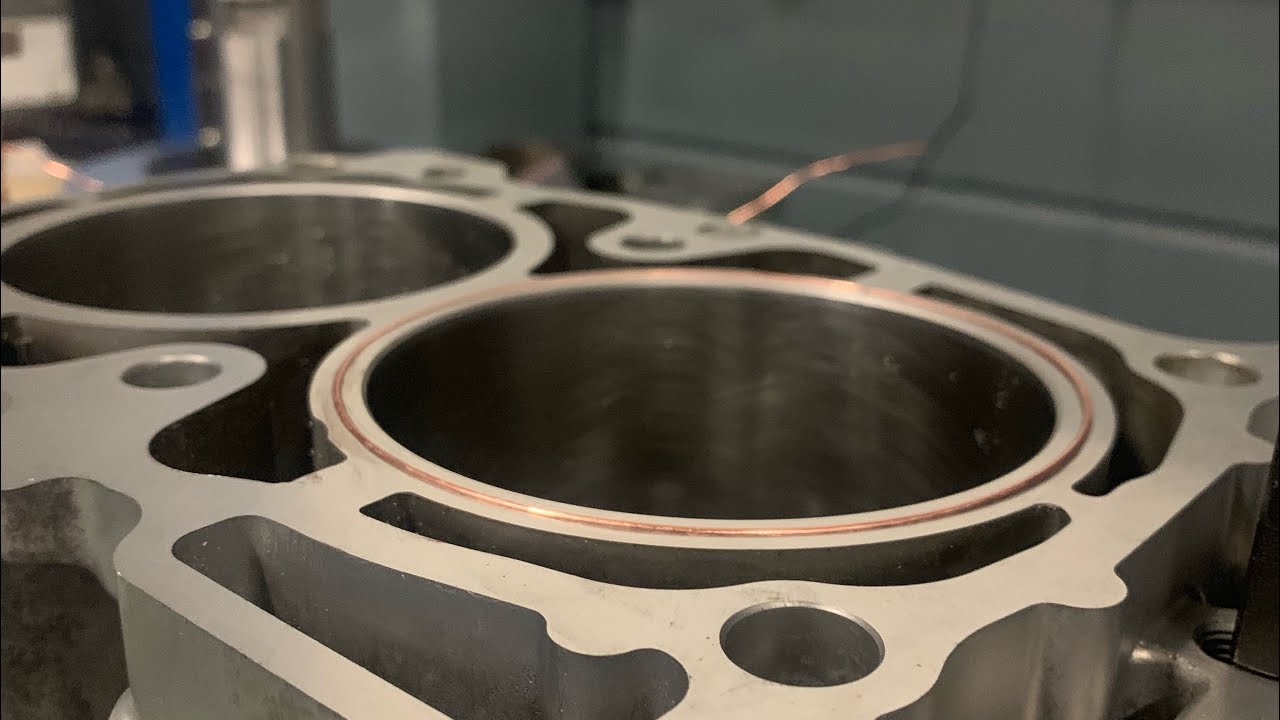
The head gasket sits between the engine block and the cylinder head. It's a thin, precisely engineered seal that has to do three jobs at once, under brutal conditions, for the life of the engine:
- Seal combustion pressure inside each cylinder so compression doesn't leak out
- Seal coolant passages so coolant flows where it's supposed to and doesn't get into the cylinders or the oil
- Seal oil passages so oil stays in the lubrication system and doesn't contaminate the coolant or burn in the combustion chamber
That gasket lives at the single hottest, highest-pressure junction in the entire engine. It expands and contracts through thousands of heat cycles. It's squeezed between two different metal surfaces that expand at different rates when they heat up. It is, by design, one of the hardest sealing jobs in the whole car.
Most engines get away with this because the head and block are matched well, torqued correctly, and don't move much relative to each other under heat. Subaru's boxer engines had a specific set of design choices that made this harder than normal. That's where the story actually starts.
🔥 Why the EJ Engine Specifically Had a Problem
Subaru's EJ-series engines (the boxer four-cylinders that powered Imprezas, WRXs, STIs, Legacys, and Foresters from the early '90s through the mid-2010s) had a real, documented pattern of head gasket failure, especially in turbocharged variants like the EJ20 and EJ25 in the WRX and STI.
A few things stacked up to cause it:
The open deck block design. Subaru used an "open deck" cylinder block on many EJ engines, meaning the cylinder walls aren't fully supported by material connecting them to the outer block wall the way a "closed deck" design supports them. Open deck blocks are lighter and cast more easily, but they flex more under heat and combustion pressure. More flex at the head-to-block junction means more stress on the gasket sealing that junction.
Aluminum heads on an aluminum block. This isn't unusual on its own, but combined with the boxer layout's long, wide head-to-block interface (a flat-four has a much longer gasket perimeter relative to displacement than an inline engine), there's simply more sealing surface for something to go wrong.
Turbo heat cycling. The turbocharged EJ20 and EJ25 ran hotter and under more thermal stress than the naturally aspirated versions. More boost means more cylinder pressure means more stress trying to separate the head from the block on every combustion cycle. WRX and STI engines saw head gasket failures at meaningfully higher rates than their naturally aspirated cousins, which is exactly what you'd expect from this kind of failure mode.
Coolant chemistry and factory coolant. Some model years shipped with coolant formulations that reacted poorly with the composite multi-layer steel (MLS) gaskets Subaru used, accelerating gasket degradation from the coolant side rather than the combustion side. Subaru actually revised its recommended coolant and gasket materials over the years specifically to address this.
Put it together and you get a real, repeatable failure mode: external coolant leaks weeping from the base of the cylinder heads, or worse, internal leaks where coolant and combustion gases cross paths, leading to overheating, white smoke from the exhaust, a coolant reservoir that mysteriously loses fluid, or oil that turns into a milky "chocolate milkshake" from coolant contamination.
📉 How Bad Was It, Really?
Here's where the meme starts to outrun the reality a little. The failure rate on early 2.5L EJ25 engines (especially 1999-2004 Foresters, Outbacks, and Legacys) was genuinely high enough that it became a well-known, class-action-adjacent problem. Some estimates from forums and independent shops put failure rates in the double digits by 100,000-150,000 miles on the worst-affected years, which is a real number, not internet exaggeration.
The turbocharged 2.0L EJ20 and 2.5L EJ25 in WRX and STI models had a lower but still elevated failure rate compared to competitors, driven mostly by the added heat and pressure of boost.
Subaru responded over the mid-2000s with revised gasket materials, updated torque specs, and design tweaks to the block and head sealing surfaces. By the later EJ257 revisions and especially by the time Subaru moved to the FA/FB engine family starting around 2012, the open-deck-related head gasket failure rate had dropped dramatically. Modern Subarus (FA20, FA24, FB25) don't carry anywhere near the same reputation, because the underlying design issue was actually addressed.
But here's the thing about car culture: it doesn't update its priors. The reputation calcified in the mid-2000s and just... stayed there.
🧠 Why the Meme Never Died
This is the more interesting question, honestly. Plenty of manufacturers have had a well-documented, genuinely bad mechanical era: Chrysler's early minivan transmissions, Volkswagen's timing chain tensioners, Nissan's CVTs, BMW's timing chain guides on the N54. Some of those get referenced constantly. Others barely get mentioned anymore. Why did Subaru's specifically stick around as the head gasket brand?
It hit the exact car that built Subaru's enthusiast fanbase. The WRX and STI arrived in the US in the early 2000s right as rally-inspired AWD turbo cars were becoming a defining enthusiast category. That means the head gasket problem landed directly on the platform that was building Subaru's most vocal, most online, most forum-active fanbase. A reliability issue on a niche econobox fades. A reliability issue on the car that an entire generation of enthusiasts bought as their first "real" performance car becomes permanent lore, because those are the people writing the forum posts, making the YouTube videos, and repeating the story to the next generation of buyers 20 years later.
It's mechanically specific and easy to explain. "Head gasket" is a concrete, nameable part with a clear symptom (white smoke, overheating, milkshake oil). Compare that to something vague like "electrical gremlins," which is harder to turn into a repeatable joke because there's no single culprit to point at. Car culture memes stick best when there's one specific, quotable thing to blame, and "the head gasket" is about as clean a target as engine failure gets.
The used market kept feeding it. EJ-powered Subarus stayed cheap and plentiful on the used market for two decades. That means a constant fresh stream of buyers picking up higher-mileage examples right in the failure window, discovering the problem firsthand, and reinforcing the stereotype in real time, even on 2010-era cars where the actual failure rate had already dropped.
Boxer engines are visually distinct. Once you know to look for it, a Subaru's flat-four layout is instantly recognizable, which makes "that's a Subaru, it's probably got a blown head gasket" an easy visual joke to make at any meet or parking lot, whether or not the specific car in front of you has ever had an issue.
💵 What It Actually Costs (And Why That Matters to the Meme)
Numbers make jokes stick harder, and this one has ugly numbers behind it.
A head gasket job on an EJ-series Subaru isn't a quick afternoon repair. Because it's a horizontally-opposed boxer engine, both cylinder heads sit low and wide, tucked against the frame rails and wheel wells rather than sitting up top like a traditional inline engine. That layout, the same one that gives Subaru its low center of gravity and its distinctive engine note, also makes the heads dramatically more labor-intensive to pull.
Typical shop estimates for an EJ head gasket replacement:
- Parts: $300-$700 (gaskets, head bolts, coolant, gasket sealant, often new timing components while it's apart)
- Labor: 8-14 hours depending on the shop and whether both heads need attention
- Total: $1,200-$2,500 at an independent shop, more at a dealer
Compare that to a lot of inline-four competitors where a head gasket job might run $600-$1,200, and you can see why this specific failure mode generated so much financial pain (and so many angry forum threads) relative to its actual failure rate. It's not just that it happened. It's that when it happened, it hurt.
Smart shops will tell you: if you're already paying for 10+ hours of labor to access the heads, you do the timing belt, water pump, and all the gaskets in the same job while everything's apart. That "might as well" logic turned a lot of head gasket jobs into $2,000+ maintenance events, which is exactly the kind of story that travels fast in car culture.
📢 How Subaru Handled It (And Why PR Never Fully Caught Up)
Subaru never issued a blanket recall for the head gasket issue, largely because it wasn't a single defined defect with a single fix. Instead, the company quietly extended powertrain warranty coverage in some regions for affected model years, revised gasket materials and torque specifications across several running production changes, and updated recommended coolant formulations to reduce the chemical interaction that was accelerating some failures.
From an engineering standpoint, that's a reasonable, incremental response to a problem that evolved over multiple years and multiple minor design revisions rather than one clean smoking gun. From a PR standpoint, it was almost the worst possible approach: there was no single headline moment, no dramatic recall notice, no "Subaru fixes head gasket problem" news cycle. The fix happened gradually, model year by model year, buried in production changes nobody outside an engineering team was tracking.
Compare that to how a dramatic, well-publicized recall can actually help a brand's reputation ("they caught it and fixed it") and you start to see why Subaru got the worst of both worlds: a real problem serious enough to become infamous, and a fix quiet enough that the infamy never got a matching "and then they fixed it" chapter.
🆚 How the EJ Compares to Other Infamous Engine Reputations
It's worth putting this next to the other engines and problems that live in car culture's collective memory, because the comparison tells you something about how these reputations form.
- BMW N54 timing chain guides: A real, serious issue on a beloved twin-turbo engine, but it mostly hit a narrower window of production years and BMW addressed it more visibly, so the reputation faded faster once revised parts hit the market.
- Nissan CVT failures: Ongoing, current, and arguably worse in real-world terms than the EJ head gasket ever was, but CVTs are less emotionally tied to an enthusiast identity than a WRX is, so the meme energy around it is different: more "buyer beware," less inside joke.
- Chrysler 41TE/42RLE transmission issues: Widely known among owners and mechanics, but never became a mainstream car culture punchline the way "Subaru head gasket" did, partly because minivans and family sedans don't have the same forum culture a WRX does.
The pattern holds: the mechanical severity of a problem and how famous it becomes in car culture aren't the same axis. Fame comes from who's affected, how they talk about cars, and whether the platform has an identity worth defending or mocking.
🛠️ What This Actually Means If You're Buying One
If you're shopping for a Subaru today, here's the practical version of everything above, without the meme layer:
- 2012 and newer FA/FB-engine Subarus (most WRX, BRZ, Forester, Outback, Legacy, Impreza from that point forward) don't carry the same open-deck head gasket risk. Treat head gasket concerns on these the same way you'd treat any modern engine: low priority unless something else points to it.
- 1999-2004 2.5L EJ25 non-turbo models are the highest-risk window. If you're looking at a Forester, Outback, or Legacy from this era, get a pre-purchase inspection that specifically checks coolant condition, oil for contamination, and the base of the cylinder heads for weeping.
- Turbocharged EJ20/EJ25 WRX and STI models (2002-2014ish) carry moderate risk that goes up significantly with modifications. A stock-tune WRX driven gently is a very different risk profile than the same car with an aggressive tune and no supporting mods. Boost amplifies exactly the stress that causes this failure.
- Watch for the real symptoms, not the meme: sweet smell from the engine bay, coolant disappearing with no visible external leak, white smoke on cold start that doesn't clear, a coolant reservoir that bubbles when the engine's running, or oil on the dipstick that looks like a milkshake. Any of those on an EJ-powered car is worth taking seriously, not just laughing off.
- A well-maintained, non-turbo, later-model EJ Subaru with documented cooling system service is a fine, reliable car. The failure mode is real but it's not a coin flip on every single Subaru ever built, no matter what the comment section says.
Spota tip: if you're building out a Garage profile on a Subaru with a documented head gasket job, that's exactly the kind of maintenance milestone worth logging. It's part of the car's real story, not something to hide, and other Subaru owners scrolling your timeline will respect the honesty more than a spotless fake history.
🏁 The Meme Earned Its Reputation, Then Outlived It
Most car culture jokes are pure exaggeration wearing a costume of truth. This one's the opposite: it started as a documented, well-understood engineering problem, got attached to the exact car platform that built Subaru's enthusiast base, and then kept running two decades after the company mostly fixed it.
That's the real lesson here. It's not really a story about Subaru being unreliable. It's a story about how a car community's collective memory works: specific, mockable, tied to an iconic model, and almost completely disconnected from whatever the current model year actually does under the hood.
Next time someone yells "head gasket" at a clean WRX in a parking lot, you'll know exactly which decade they're actually talking about.
For more on the mechanical debates car culture refuses to let go of, check out why every Hellcat owner is on borrowed time or browse the full under-the-hood category.