

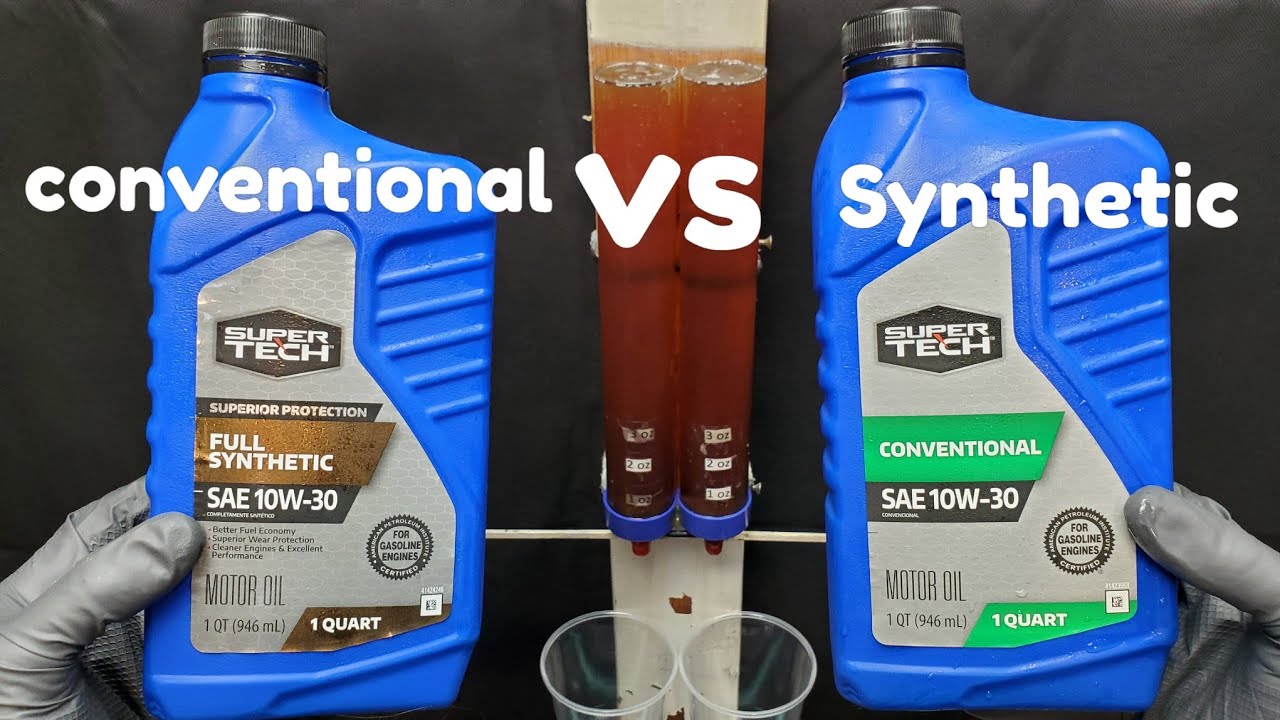
🛢️ The Argument That Never Dies
Walk into any garage, forum thread, or Reddit comment section where someone asks "synthetic or conventional?" and watch what happens. Forty replies in ten minutes. Half of them confident. Half of them wrong. All of them absolutely certain they're right.
It's one of the oldest arguments in car culture, right up there with import versus domestic and turbo versus naturally aspirated. Except this one isn't really a matter of taste. There's an actual chemistry answer here, and it's been available for years. That hasn't stopped the argument, because car culture doesn't run on data alone. It runs on garage folklore passed down from uncles, YouTube comments treated as gospel, and the stubborn belief that "if it worked for 200,000 miles on dino oil, it'll work forever."
Let's actually break down what synthetic oil is, why the myths around it persist, and why this debate has outlived every reasonable expiration date.
🧪 What "Synthetic" Actually Means
Here's where most of the argument falls apart before it even starts: a lot of people arguing about synthetic oil don't actually know what makes it synthetic.
Conventional oil is refined crude. It comes out of the ground as a mess of hydrocarbon molecules of wildly different sizes and shapes, gets refined to remove impurities, and gets additives blended in. The base molecules themselves are still irregular, which matters more than people think.
Synthetic oil starts from a similar place (usually crude oil, sometimes natural gas via the Fischer-Tropsch process) but gets chemically engineered from there. The molecules are broken down and rebuilt into uniform, consistent structures instead of being left as a random assortment. That uniformity is the entire point.
What uniform molecules actually buy you:
- More stable viscosity across temperature swings: conventional oil thins out faster in extreme heat and thickens more in extreme cold
- Slower oxidation: the process that turns oil into sludge over time happens more slowly with synthetic
- Better resistance to shearing: high-RPM engines and turbos put oil under mechanical stress that breaks conventional oil down faster
- Cleaner combustion byproducts: fewer deposits building up on internals over time
"Full synthetic" means the base oil is entirely synthetic. "Synthetic blend" means it's a mix of synthetic and conventional base oils, essentially a compromise product for people who want some of the benefit without the full price tag. Read the bottle. Manufacturers count on people not reading the bottle.
👴 The Myth That Refuses to Die: "Synthetic Ruins Old Engines"
This is the one that gets repeated at every cars and coffee like it's an established fact. The claim: switching an older, high-mileage engine to synthetic oil will cause it to start leaking, because synthetic oil is "too thin" or "too slippery" and will find every worn seal in the engine.
Here's the problem. This myth is built on a real observation from decades ago that's been misapplied to modern products for thirty years.
Where the myth actually came from: Early synthetic oils in the 1970s and 80s used ester-based formulations that could, in some cases, cause certain rubber seal compounds to swell or shrink slightly differently than they were used to. In an already-worn engine with marginal seals, that change was sometimes enough to reveal a leak that was already borderline. The oil didn't cause the wear. It just stopped masking it.
Why it doesn't apply anymore: Modern synthetic oils, going back well over two decades now, use different base stocks (Group III, IV, and V) and seal-conditioning additives specifically engineered to be compatible with the same seal materials used across both conventional and synthetic formulations. The API and ILSAC have standardized seal compatibility testing as part of oil certification. If an oil has the current API service rating, it's been tested against seal compatibility, full stop.
What's actually happening when someone switches an old car to synthetic and it "starts leaking":
- The seals were already worn and marginal, and any oil change, synthetic or not, can dislodge built-up sludge that was partially plugging a leak
- Synthetic oil's better flow characteristics mean it finds existing gaps faster than thick, sludgy conventional oil would
- The car was going to leak soon regardless. The oil change was a symptom, not a cause
If your 200,000-mile engine is held together by sludge, that's not an argument for conventional oil. That's an argument for a reseal.
💰 The Real Reason People Still Fight About This
Strip away the chemistry and there's a much simpler reason this debate refuses to end: money and identity.
Synthetic oil costs more, sometimes two to three times more per change. For a certain kind of car guy, especially one running an older, simpler, high-mileage daily, sticking with conventional oil isn't really about the chemistry. It's about not wanting to spend more on something that's "worked fine for 30 years." That's a legitimate financial position. It's just not a chemistry position, and people dress it up as one.
On the other flip side, there's a segment of the enthusiast world where running full synthetic (and knowing the exact viscosity spec, and having strong opinions on oil brands) has become its own status marker, not unlike ceramic coating or catch cans. Talking oil specs fluently is a way of signaling you're a "real" car guy who takes maintenance seriously, separate from whether it actually changes the ownership experience for a given engine.
Both camps are partially right for the wrong reasons. That's usually how the longest-running car culture arguments work.
🏁 A Short History Lesson Nobody Asked For
Part of why this argument has such deep roots is that synthetic oil actually earned its reputation the hard way, in places where failure wasn't an option.
Mobil developed the first commercially viable synthetic motor oil, Mobil 1, in 1974, using research that traced back to aviation lubricants developed for jet engines that had to function reliably at extreme altitude and temperature. NASA and military applications pushed synthetic lubricant chemistry further through the 70s and 80s, because conventional oil simply couldn't survive the operating conditions those programs demanded.
By the time synthetic oil hit mainstream car culture in the 80s and 90s, it carried a reputation as the "race car" or "exotic car" oil, expensive, slightly mysterious, and marketed at owners of Porsches and Corvettes rather than Civics and pickup trucks. That positioning stuck. For a generation of car guys, synthetic oil wasn't something you put in a daily driver. It was something you put in something special, or you didn't bother.
That history is exactly why the "regular guy doesn't need synthetic" attitude still has cultural weight decades after the actual chemistry, and the actual pricing, made synthetic accessible to literally anyone with a Civic and an extra fifteen dollars.
🔢 The Viscosity Number Confuses the Whole Argument
Half the "synthetic vs conventional" arguments online are actually arguments about viscosity that got mislabeled, and almost nobody stops to untangle it.
That code on the bottle, something like 5W-30 or 0W-20, has nothing to do with whether the oil is synthetic. It's a viscosity rating defined by SAE, and it tells you how the oil flows at cold temperatures (the number before the W, which stands for winter) versus how it flows at full operating temperature (the number after it). Both synthetic and conventional oils come in a full range of viscosity grades.
Why this trips people up constantly:
- Someone switches from 5W-30 conventional to 0W-20 synthetic at the same time, notices a difference in how the engine feels or sounds, and attributes it entirely to "synthetic" when the viscosity change did most of the work
- Manufacturers have been trending toward thinner viscosities (0W-16, even 0W-8 on some newer engines) for fuel economy reasons, and those ultra-thin grades are only available in synthetic formulations, which further muddies the comparison
- Running the wrong viscosity for your climate or engine design causes measurable wear regardless of base stock, so a "synthetic oil failure" is sometimes actually a viscosity mismatch wearing the disguise of a base-stock problem
Before arguing synthetic versus conventional, most people would be better served checking whether they're even running the viscosity their manufacturer actually specifies. That's the boring, unglamorous fix that solves more real problems than switching base stocks ever does.
🏆 The Brand Wars Are Their Own Sub-Argument
Even car guys who agree on synthetic still find something to fight about: which brand.
Mobil 1, Royal Purple, Amsoil, Red Line, and Liqui Moly all have devoted followings that treat brand loyalty with the same intensity some people reserve for oil type itself. Royal Purple built a cult following on claims of reduced friction and horsepower gains, claims that independent testing has generally found to be marginal at best for street applications, though not nonexistent for high-load racing use. Amsoil's direct-sales, dealer-network model has made it simultaneously beloved by die-hards and viewed with suspicion by people who find the sales pitch a little much. Red Line has genuine motorsport credibility built over decades of racing use.
The honest truth: for the overwhelming majority of daily-driven cars, any major brand's oil meeting the correct API rating and viscosity spec for your engine will perform within a margin that's essentially invisible in real-world use. The brand wars are mostly identity and marketing layered on top of a commodity product that's more standardized than the arguments suggest.
🔧 When It Actually Matters (And When It Doesn't)
The honest answer, the one that doesn't generate forty forum replies, is that the stakes of this decision depend heavily on what you're actually driving and how you're driving it.
Synthetic makes a real, measurable difference for:
- Turbocharged and supercharged engines (heat and shear stress are dramatically higher)
- High-performance and high-RPM engines
- Extreme climates, either brutal cold starts or sustained high heat
- Extended oil change intervals (most synthetic-rated engines can safely go 7,500 to 10,000+ miles between changes)
- Direct-injection engines, which already have documented carbon buildup problems that benefit from oil that breaks down slower
Conventional oil is a perfectly rational choice for:
- Older, naturally aspirated, low-stress engines with short commutes and moderate climates
- Budget-conscious owners doing frequent, disciplined oil changes (3,000 to 5,000 miles)
- Engines the owner plans to sell or retire soon, where long-term protection matters less
The uncomfortable middle ground nobody wants to hear: for a huge percentage of daily-driven, naturally aspirated commuter engines changed on a reasonable interval, the real-world difference between synthetic and conventional over the life of the car is smaller than either camp wants to admit. The places synthetic clearly wins are the high-stress ones: turbos, superchargers, track cars, extreme climates. That's not a controversial claim in the industry. It's just a boring one, and boring doesn't win arguments at a meet.
📋 What Actually Matters More Than the Oil Type
If the goal is genuinely protecting an engine, several things matter more than which base stock is in the bottle:
- Change interval discipline. A conventional oil changed religiously on schedule beats a synthetic that gets ignored for 15,000 miles.
- Correct viscosity for your climate and engine. Running the wrong weight oil, synthetic or not, causes more real damage than the synthetic-vs-conventional choice ever will.
- API/ILSAC certification. Any oil, synthetic or conventional, carrying the current service rating has been tested to a real standard. Bargain-bin oil with no certification is the actual risk, not the base stock.
- Filter quality. A cheap filter bypassing under load defeats the purpose of expensive oil.
- Consistency, not perfection. Switching back and forth between synthetic and conventional across changes isn't harmful, despite what some old-school mechanics claim, but it also isn't optimizing anything either.
🚗 The Bottom Line
Synthetic oil is objectively better engineered. That part isn't up for debate; it's chemistry, and it's been settled for a long time. Whether that engineering advantage translates into a meaningful real-world difference for your specific engine, climate, and driving pattern is a much more nuanced question than either side of the forum argument wants to admit.
The myth about synthetic destroying old engines is dead and has been for two decades. If it's still coming up at your local meet, that's tradition talking, not science.
Spota tip: pop your build's maintenance history in your Garage timeline. Tracking exactly what went in and when turns "I think I did the oil around 40k" into an actual record, and it's the kind of detail that makes a build's story land when someone finally gets a good Photo Op shot of it.
Run what your engine actually needs, change it on schedule, and let the forum argue without you. Your engine doesn't care who wins.