
🕶️ The Mod Everyone Has Broken the Law For
Ask any car guy if they've ever run tint darker than their state allows and watch the hesitation. It's not a hard question. Almost everyone has done it, is doing it right now, or is planning to the second they get their car back from the shop.
Window tint might be the single most universally-broken car law in the country. Not because enthusiasts don't know the rule. Because the rule feels arbitrary, the enforcement is inconsistent, and the payoff (privacy, heat rejection, a car that finally looks finished) is worth the risk of a fix-it ticket to almost everyone who's ever sat in a black-on-black build baking in a parking lot.
This isn't a story about breaking the law for the sake of it. It's about why the law itself is such a mess, why 35% tint reads completely different depending on which side of a state line you're parked on, and why "illegal tint" became one of car culture's quiet rites of passage instead of something anyone actually feels bad about.
📏 How Tint Percentage Actually Works
VLT Is the Only Number That Matters
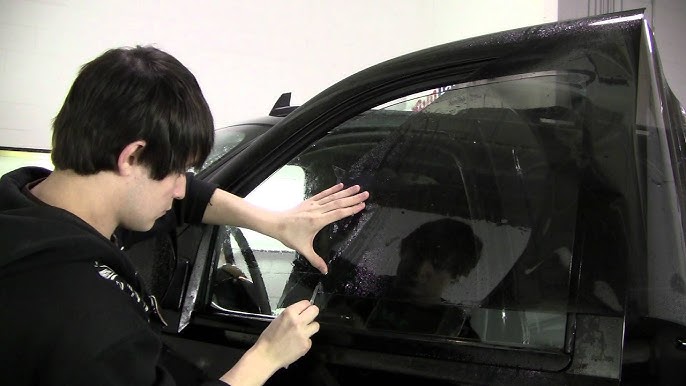
Every tint law in the country is built around one measurement: VLT, or Visible Light Transmission. It's the percentage of light that passes through the glass and tint film combined.
Here's the part that trips people up constantly:
- Lower VLT % = darker tint. A 5% VLT film (commonly called "limo tint") lets almost no light through.
- Higher VLT % = lighter tint. A 70% VLT film is barely noticeable.
- The percentage on the box at the shop is usually the film's VLT alone, not the combined VLT once it's layered over your factory glass, which already blocks some light on its own.
That last point is where a lot of enthusiasts get burned. You ask for "20% tint," the installer puts on a film rated 20% VLT, and because your factory windshield glass already has some tint baked in from the manufacturer, your actual combined VLT reads lower than 20% when a cop's meter hits it. You didn't think you were doing anything illegal. The math just didn't work the way you assumed.
Front, Back, and Windshield Are Different Rules
Almost every state splits its tint law into at least three zones:
- Windshield: usually only a narrow strip above the AS-1 line (roughly the top 4-6 inches) is allowed to be tinted at all, and it's rarely subject to a VLT limit the way side windows are.
- Front driver/passenger windows: this is the strictest zone in most states, because it's the window officers use to identify a driver during a stop.
- Rear windows and back glass: many states allow darker tint here, or no limit at all, especially on trucks and SUVs.
That last exception is a huge part of why tint culture skews so hard toward pickups and SUVs in states with unlimited rear tint. If your back windows can legally go to 5%, why wouldn't you match the front as close as the law allows?
🗺️ Why Every State Has a Different Number
This is the part that makes tint uniquely frustrating compared to almost any other car law. Speed limits vary by a few miles per hour state to state. Tint laws vary by entire categories of what's legal.
A few real examples of front-side-window limits:
- Pennsylvania: 70% VLT minimum, one of the strictest in the country
- California: 70% VLT on front windows, no limit on rear or windshield strip
- Texas: 25% VLT on front windows
- New Mexico: 20% VLT
- Michigan: only a 4-inch strip at the top of the windshield, and front side windows must let in more than the factory glass alone, with no additional tint allowed at all
That's a swing from "barely any tint permitted" to "basically anything goes" over a few hundred miles of driving. There's no federal standard forcing consistency, so each state legislature set its own number decades ago, usually with zero input from anyone who's ever actually needed to see out a tinted window during a night rainstorm, and states rarely revisit it.
The result: a driver who bought a perfectly legal car in Georgia can get pulled over and cited the moment they cross into a state with a stricter limit, tint they never touched suddenly a violation. Enthusiasts who move states, or who drive to a meet across a border, run into this constantly.
Spota tip: if you're planning a road trip to a meet in another state, it's worth a 30-second search on that state's tint law before you go. A Spota Club member who's local to that area can usually tell you in one message whether local enforcement actually cares.
🚔 Why Enforcement Is So Inconsistent
Even within a single state, tint enforcement is wildly uneven, and that inconsistency is a big reason people keep pushing past the legal number.
- Most tint tickets are "fix-it" citations, not moving violations. You get a set number of days to remove or lighten the tint and show proof, and the ticket disappears. There's rarely a point system hit.
- Enforcement is overwhelmingly visual and reactive. Very few departments carry tint meters and pull cars over specifically to test VLT. Most tint stops happen because the car was already being stopped for something else (a taillight, a rolling stop, expired plates) and the officer noticed the windows on top of it.
- Some jurisdictions genuinely don't prioritize it. In a lot of cities, tint enforcement sits somewhere between "not worth the paperwork" and "only matters if it's combined with reflective or mirrored film," which carries its own separate ban in many states because of glare risk to other drivers.
That inconsistency creates a feedback loop. A guy runs 15% tint for two years with zero issues, tells his friends it's a non-issue, and the perception spreads that the law is basically decorative. Then someone gets unlucky, catches a cop having a slow night, and gets hit with a citation for the exact same tint that's been fine on ten other cars in the same city for years.
🌡️ The Real Reasons People Push Past the Limit
It's easy to write this off as pure aesthetics, but the reasons run deeper than "it looks better."
Heat and UV Rejection
Modern tint film isn't just about darkness. Ceramic and carbon films block a significant percentage of infrared heat and UV radiation regardless of how dark the visible tint reads. Someone in Phoenix or Houston running 20% ceramic isn't just chasing a look, they're trying to keep their interior from turning into an oven and protecting leather and dash plastics from sun damage over years of ownership.
Privacy and Theft Deterrence
A car with visible mods, expensive wheels, or aftermarket electronics sitting in a driveway is a target. Darker tint means a passerby can't see what's inside or confirm the car is empty, which matters more to enthusiasts than it might to someone driving a stock daily.
It Finishes the Build
Ask around any meet and you'll hear some version of the same sentence: "the car didn't look done until the tint went on." Dark tint changes the entire visual proportion of a car, hiding factory-spec interior colors that clash with an exterior wrap, making a widebody kit read more cohesive, and giving a build the finished, aggressive stance enthusiasts are chasing. It's one of the cheapest mods that changes a car's entire character.
⚖️ Where the Line Actually Gets Dangerous
None of this is an argument that tint law doesn't matter at all. There are real reasons the limits exist, and ignoring them entirely creates genuine risk:
- Night visibility drops fast below a certain VLT. Below roughly 20% combined VLT, seeing pedestrians, cyclists, and hazards in low light or heavy rain gets measurably harder, and that's the exact scenario where a split-second matters.
- Officer safety concerns are a real reason front windows stay stricter than rear. An officer approaching a vehicle with no visibility into the front seat is a legitimate safety issue, which is why almost no state allows front windows to go as dark as rear ones.
- Reflective and mirrored tint bans exist because of glare to oncoming traffic, not personal preference, and this is one tint violation that tends to get enforced more consistently because the danger is obvious to everyone, including other drivers who complain about it.
The realistic middle ground most enthusiasts land on: push toward the darkest legal option in a state with a reasonable limit, or accept a small amount of legal risk on the front windows while keeping the darkest film to the rear glass where most states already allow it. Full 5% front windows in a 70% VLT state isn't an aesthetic choice car people quietly accept the risk on, it's usually a build made in a different state or one that's rolling the dice every time it passes a cop.
🔧 What to Actually Check Before You Tint
- Look up your specific state's front, rear, and windshield limits before you book an install. A shop will often tint to whatever number you ask for; they're not going to talk you out of a citation.
- Ask if the film's rated VLT is standalone or combined with your factory glass. A reputable installer should be able to tell you the expected combined reading, not just the box number.
- Avoid reflective or mirrored finishes even in states with generous VLT limits, since that's a separate violation in most places regardless of darkness.
- Keep the receipt and warranty paperwork. If you ever do get a fix-it citation, proof of a reputable install (and sometimes a certified VLT reading from the shop) can make the resolution faster.
- Know your state's grace period for factory-tinted rear windows on SUVs and trucks. Manufacturers sometimes ship these vehicles with tint darker than the general public law, and it's usually grandfathered in legally, which is worth knowing before you assume every dark rear window on the road is aftermarket.
If you want to see how other enthusiasts in your city are actually handling it, a local Spota Club is one of the fastest ways to get a straight answer. Someone's already had the conversation with a cop in that exact jurisdiction, and that kind of ground-truth knowledge beats a forum thread from three states away every time.
🧪 Ceramic, Carbon, and Dyed Tint: Why the Film Matters as Much as the Number
Two cars can both run "20% tint" and perform completely differently, because the VLT percentage only tells you how much light gets through. It says nothing about the film technology behind it, and that gap is where a lot of enthusiasts end up spending real money.
Dyed film is the entry-level option. It's affordable, it darkens the windows, and it does almost nothing for heat rejection. It's also the film most likely to bubble, purple, or fade within a few years, which is why you occasionally see an older car with windows that have gone a weird brownish-purple. That's dyed film breaking down under UV exposure.
Carbon film sits a step up. It blocks a meaningful amount of infrared heat, doesn't fade the way dyed film does, and doesn't interfere with radio or phone signal the way older metallic films sometimes did.
Ceramic film is where most serious enthusiasts land now. It uses non-conductive ceramic particles instead of dye or metal, which means it blocks the highest percentage of infrared heat and UV of any common option while staying completely radio and GPS-transparent. It's also the most expensive by a wide margin, sometimes two to three times the cost of dyed film for the same VLT percentage.
Here's the part that connects back to the legal question: a car running 35% ceramic can feel darker, cooler, and more private than a car running 20% dyed film, because so much of what people associate with "dark tint" is actually heat and glare rejection, not just visible darkness. That means some enthusiasts who think they need to push past the legal limit to get the effect they want could get most of what they're after by upgrading film quality instead of chasing a lower number. It's a genuinely underrated way to stay legal without giving up the experience that made people want dark tint in the first place.
🏁 The Bottom Line
Window tint is one of the rare mods where the law, the culture, and the actual risk all point in slightly different directions, and that gap is exactly why so many enthusiasts have run illegal tint at some point without thinking twice about it. The percentage on the box isn't the whole story, the state line changes everything, and the enforcement is random enough that entire regions build their own unwritten local rules about what's actually fine.
Know your state's number, know what you're actually accepting when you go darker than it, and make the call with your eyes open. That's the difference between a build decision and a bet.
Related reading: check out why stance culture divides the car scene for another mod where legality and aesthetics collide, or browse more under-the-hood breakdowns of the mods and debates that define car culture.