
⚙️ The Engine Nobody Can Stop Calling "Perfect"
Ask a room full of car people to name the best engine layout ever built and you'll get a fight. V8 guys will bring up the sound. Rotary guys will bring up the redline. Somebody's cousin will insist a flat-six is the only real answer because Porsche said so. But drop the phrase "inline-six" into that argument and something strange happens: almost everyone nods. Even the V8 loyalists will admit it, usually right after they finish defending their own engine. The inline-six has a reputation that no other layout quite matches. It's not the loudest, not the most powerful, and definitely not the cheapest to build. Car people call it "perfect" anyway.
That word gets thrown around a lot in car culture, and most of the time it's marketing talk dressed up as an opinion. This one's different. The inline-six earned the label from actual mechanical engineering, not vibes, and the reason it keeps surviving corporate cost-cutting, emissions regulations, and the industry's obsession with downsizing is that the physics behind it are genuinely, boringly, undeniably correct.
This is the story of why a hundred-year-old engine layout still makes enthusiasts act like it was invented yesterday, and why brands from BMW to Toyota to Mercedes keep coming back to it even when every spreadsheet says they shouldn't.
🔬 The Math That Makes It "Perfect"
Every internal combustion engine has to deal with two enemies: vibration and imbalance. Pistons slam up and down thousands of times a minute, and every one of those movements creates a force that wants to shake the engine apart. Engineers spend entire careers fighting this with counterweights, balance shafts, and clever cylinder arrangements. Most layouts need help. The inline-six doesn't.
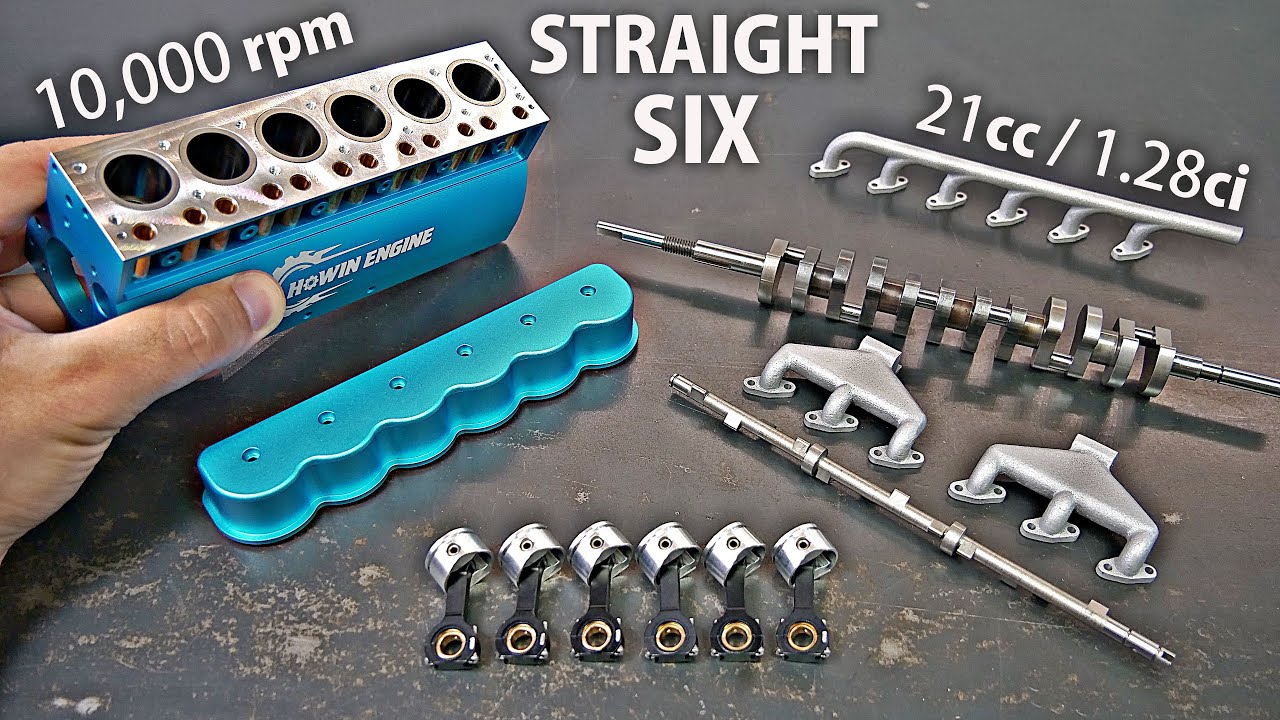
Here's the actual mechanism. In an inline-six, the six cylinders sit in a single straight row, and the crankshaft fires them in a specific order that mirrors itself perfectly around the center of the engine. Because of that symmetry, the primary and secondary forces from each piston's movement cancel out completely on their own. No balance shafts needed. No counterweight trickery. The engine is inherently, mathematically smooth, which is a claim almost no other common configuration can make without added hardware.
Compare that to a V8, which needs cross-plane crankshaft geometry and counterweights to feel smooth, or an inline-four, which vibrates enough at certain RPMs that most manufacturers bolt in balance shafts just to keep it from feeling like a paint mixer. A V6 has its own inherent imbalance issues depending on the bank angle, which is why some V6s need balance shafts and others (built at exactly 60 degrees) mostly don't. The inline-six skips all of that. It's balanced by geometry, not by patching the problem after the fact.
There's a second piece of the puzzle car people love bringing up: even firing order. A straight-six fires every 120 degrees of crank rotation with total evenness, which means power delivery feels like one continuous pull instead of a series of distinct pulses. That's part of why an inline-six sounds and feels different from other engines at the same displacement. It's not smoother because of some marketing decision. It's smoother because the layout physically cannot be anything else.
Spota tip: if you're building out a Garage profile for a straight-six car, the engine's balance characteristics are exactly the kind of "why this car feels the way it does" detail that makes a build page worth reading instead of just another mod list.
🏁 The Legends That Built the Reputation
Reputation doesn't come from an engineering paper. It comes from cars people actually drove, and the inline-six has an unfair number of legends attached to it.
Start with Toyota's 2JZ-GTE, the engine under the hood of the Mk4 Supra and arguably the single most famous engine block in tuner culture. The 2JZ became a meme before memes were a car culture format, mostly because of how absurdly overbuilt its cast-iron block turned out to be. Stock internals holding four-digit horsepower numbers on a big enough turbo isn't an urban legend, it's a documented, repeated reality that drag strips have proven for two decades. No other production engine has that specific mythology attached to it in quite the same way, and it happens to be an inline-six.
Then there's BMW's straight-six lineage, running from the early M30 through the S54 in the E46 M3 up through the modern B58 found in everything from the Z4 to the Toyota Supra's current generation (yes, Toyota went back to BMW for a straight-six when they revived the Supra nameplate, which tells you something on its own). BMW built an entire brand identity around "the ultimate driving machine" partly because the inline-six's inherent smoothness let their cars feel more refined at high RPM than competitors running rougher layouts. Enthusiasts don't talk about BMW straight-sixes because of nostalgia marketing. They talk about them because generations of M3s, 3-series, and Z-cars proved the layout out on real roads.
Mercedes has its own chapter with the M256 inline-six hybrid, Nissan built the RB26DETT that powers the Skyline GT-R (a car whose entire mythology rests partly on that engine), and Jaguar, Toyota's Land Cruiser, and dozens of trucks and diesels have leaned on straight-sixes for decades because of the exact same durability logic that made the 2JZ a legend. Cummins built its reputation in the diesel truck world on inline-six architecture too, and if you've ever heard a truck guy defend the 5.9 or 6.7 Cummins to the death, you're hearing the same underlying argument in a different accent.
🚚 Why It's Not Just a Sports Car Thing
This is where the inline-six's story gets more interesting than most car culture debates. It's not just a performance darling, it's an industrial workhorse. Heavy-duty trucks, generators, marine engines, and industrial equipment have leaned on inline-six diesels for the same reason sports cars have: the layout is inherently balanced, which means less stress on internals, less vibration-related wear, and a longer service life under sustained load.
That crossover matters because it proves the "perfect engine" claim isn't just enthusiast hype talking about how a car feels on a canyon road. Fleet operators who care about nothing except uptime and maintenance cost have independently arrived at the same conclusion truck culture and JDM culture arrived at from a completely different direction. When the accountants and the drag racers agree on something, that's usually a sign the underlying engineering is real.
📉 So Why Did It Almost Disappear?
If the inline-six is this good, the obvious question is why manufacturers spent the 2000s and 2010s quietly killing it off. The answer isn't mechanical, it's packaging and economics, and it's worth understanding because it explains why the layout came roaring back instead of staying dead.
An inline-six is long. Six cylinders in a row takes up more front-to-back space than a V6 with the same displacement, which makes it harder to fit transversely in front-wheel-drive platforms that dominate the mass market. As automakers chased better fuel economy, smaller engine bays, and platforms shared across FWD and AWD variants, the compact V6 and turbocharged inline-four won on packaging even when they lost on smoothness. Downsizing culture across the 2010s pushed manufacturers toward smaller displacement with turbocharging to hit emissions targets, and a long inline-six with six cylinders to feed fuel and spark to just doesn't downsize as gracefully as a four-cylinder does.
BMW itself flirted with dropping the straight-six more than once, and plenty of manufacturers that used to run inline-six lineups (Ford's old Falcon inline-six in Australia, various Mercedes lines) shifted to V6 or four-cylinder-plus-turbo setups purely because it was cheaper to engineer around existing FWD-biased platforms.
And yet it came back. BMW never actually let the straight-six die in its core RWD platforms. Mercedes brought back an inline-six after years of V6-only lineups specifically because hybrid integration made the packaging math work again (a straight-six with a integrated starter-generator bolted to the back turned out to be an elegant solution mercedes engineers landed on). Toyota didn't revive the Supra with a turbo four, they went and got a BMW straight-six because anything less wouldn't have satisfied the nameplate's legacy. Mazda even built a diesel straight-six for the CX-90 in an era when nobody expected anyone to launch a new inline-six platform from scratch. When manufacturers had a genuine choice and weren't boxed in by FWD platform sharing, they kept choosing the straight-six.
🗣️ The Sound Argument, and Why It's Not Just Vibe-Based
Car people will tell you a straight-six "just sounds right" and treat that as a closed argument, but there's substance underneath the vibe. That even firing interval mentioned earlier doesn't just smooth out vibration, it changes the acoustic signature of the exhaust note. A V8's uneven firing pulses (in a cross-plane configuration) create the burbly, syncopated sound people associate with American muscle. An inline-six's even pulses create a more continuous, higher-pitched wail that builds linearly as RPM climbs, which is part of why a revving M3 or a 2JZ-swapped car pulling toward redline has that specific "building scream" quality that four-cylinders and V8s don't replicate the same way.
This is also why inline-six exhaust notes tend to age well in enthusiast memory in a way that a lot of turbo-four notes don't. A muted, artificially enhanced four-cylinder under a hood full of sound-deadening doesn't leave the same acoustic fingerprint that a naturally even-firing straight-six does at 7,000 RPM with the windows down.
🔧 Why Tuners Keep Choosing It for Swaps
Engine swap culture is one of the clearest signals of what car people actually believe is "the good stuff," because it's put-your-money-where-your-mouth-is behavior rather than internet opinion. The 2JZ swap has become almost as much of a meme as the LS swap, showing up in everything from old Toyota trucks to Nissan chassis to project cars that have no business hosting a Supra engine. The RB26 out of the Skyline GT-R gets swapped into drift builds specifically because the block tolerates the abuse of sustained high-boost sideways driving. BMW's B58 has become a popular swap target in the last several years specifically because it combines the balance advantages of the layout with modern turbocharging and a genuinely strong factory internals.
None of these swaps happen because the engines are cheap or convenient. Inline-sixes are longer, heavier in some cases, and harder to package than a V8 swap in a lot of chassis. People do it anyway because the driving characteristics, the sound, and the reputation for handling forced induction without grenading are worth the extra fabrication headache. That's the kind of decision that only makes sense if the underlying engineering claim is actually true.
🛠️ The Trade-offs Nobody Skips Mentioning
None of this means the inline-six is flawless, and it's worth being honest about the actual downsides, because ignoring them is how car culture arguments turn into fanboy noise instead of real analysis.
Length is the big one. A longer engine means a longer engine bay, which pushes weight further from the car's center of gravity and can hurt front-to-rear weight distribution in ways a compact V engine doesn't. It's part of why some manufacturers prefer a V6 or V8 for front-engine sports cars where weight distribution is the priority over inherent smoothness.
Cost is another. Building a longer engine block with six cylinders in a row typically costs more than an equivalent-displacement V6 sharing more components across a platform, which matters enormously to a manufacturer trying to hit a price point across a whole model lineup, not just a flagship.
And packaging in modern platforms remains genuinely difficult. Transverse FWD-based platforms, which dominate compact and midsize segments, essentially can't fit an inline-six without a total redesign, which is exactly why the layout survives almost exclusively in RWD or longitudinal-mount platforms today.
🏆 What the Obsession Actually Says About Car Culture
The inline-six story is a good window into how car enthusiasts actually evaluate engineering, because it's one of the rare debates where the emotional argument and the technical argument point the same direction instead of fighting each other. Car people love a lot of things that don't hold up under scrutiny (dyno numbers get exaggerated, 0-60 claims get massaged, cold air intakes get oversold), but the straight-six reputation isn't hype riding on nostalgia. It's a layout that is mathematically smoother by design, that built its legend on engines that genuinely held up to abuse (2JZ, RB26, B58), and that manufacturers keep bringing back the moment platform constraints allow it.
That's rare in a hobby built on strong opinions and louder exhaust notes. Most car culture debates (naturally aspirated versus turbo, import versus domestic, manual versus automatic) come down to preference dressed up as fact. The inline-six argument is one of the few where the enthusiasts happen to be standing on solid engineering ground the whole time.
If you're documenting a straight-six build in your Garage or hunting down a 2JZ swap for a Playlist stop worth bragging about, you're chasing something that earned its reputation the hard way. That's worth remembering the next time somebody tries to tell you an engine layout is "just vibes."
Related reading: check out Why Rotary Engines Are So Beloved Despite Being So Unreliable and Naturally Aspirated vs Turbo for more of the engineering debates car culture refuses to settle, or browse the full under-the-hood archive.
The V8 gets the merchandise. The inline-six gets the respect.