
💳 The Heat Was Already In the Seat
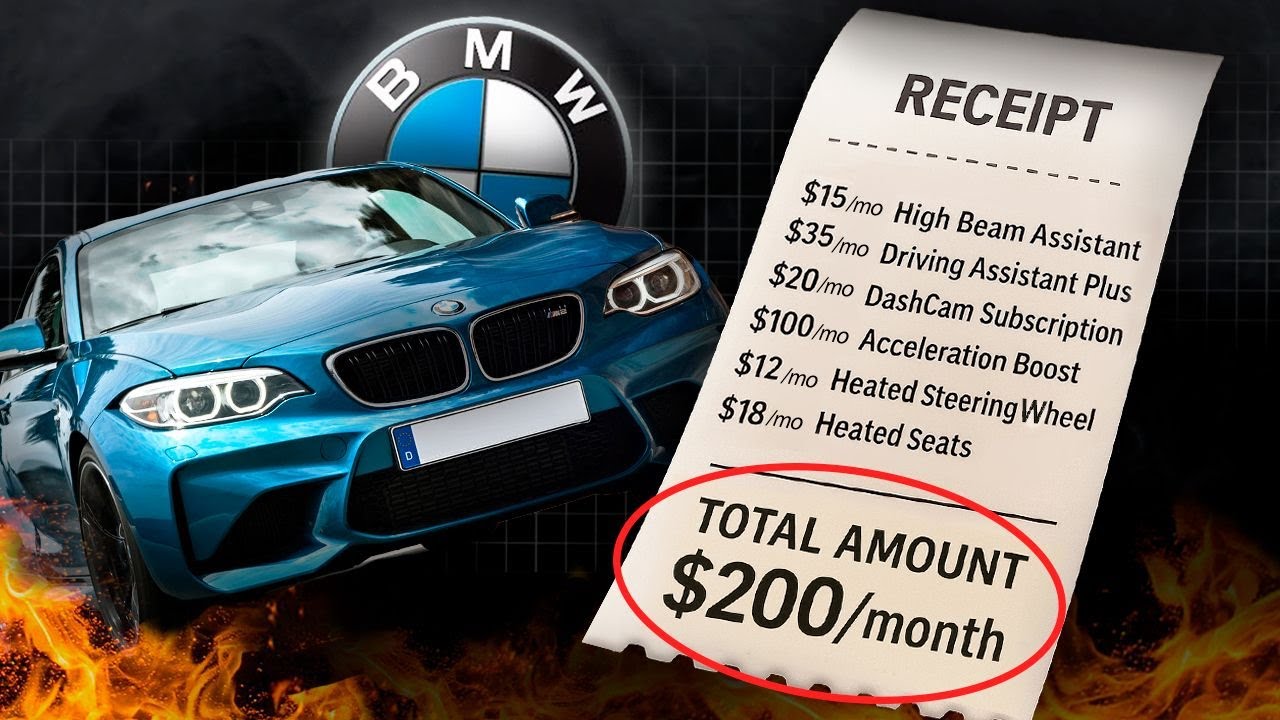
Here's the sentence that broke car culture's brain a few years back: pay a monthly fee to turn on the heated seats in a car you already own.
Not a car you're leasing. Not a feature you're borrowing. A physical heating element, already wired, already installed, already paid for the moment you signed the finance paperwork. Sitting there under the leather, doing nothing, until you hand over a subscription fee to let it do the one thing it was built to do.
That was BMW, and it wasn't a rumor or a forum myth. It was a real menu in a real infotainment system, and it set off a fire that's still burning. Car people don't get mad about much in unison. They'll argue for hours about turbo lag versus supercharger whine, about whether stance is form or function, about whether the Miata is always the answer. But ask a room full of enthusiasts what they think about being billed monthly for hardware sitting under their own butt, and you get the rare moment where everyone agrees.
The heated seats saga became the meme. But the actual practice never went away, and it's bigger, weirder, and more entrenched than one BMW screenshot from a few years ago. This is the story of how "you bought the hardware, now rent the feature" became the auto industry's favorite new business model, and why it's turning car ownership into something that feels less like ownership every year.
🔥 How the Heated Seats Story Actually Ended
Quick myth-busting, because this one gets repeated wrong constantly: BMW did kill the heated seat subscription. After years of getting dragged online, the company quietly walked it back and folded seat heating back into the standard equipment or a one-time purchase, depending on market. Executives more or less admitted it was a self-inflicted PR wound. "Low acceptance rate" is the polite corporate phrase for "nobody wanted this and everybody was furious about it."
So if your only reference point is the original heated-seats outrage, you'd think the industry learned its lesson and backed off. It didn't. It just got smarter about which features it locks and how loudly it talks about doing it.
BMW still charges subscription fees for things like adaptive cruise control tiers, high-beam assist, and synthetic engine sound packages depending on region and model. Mercedes-Benz, meanwhile, took a shot at BMW publicly over the whole mess. The company's chief software officer accused BMW of "nickeling and diming" customers, framing Mercedes as the brand that wouldn't stoop that low.
Except Mercedes runs its own version of the exact same playbook. On the EQS and EQE electric sedans, Mercedes sells an "Acceleration Increase" package, a software unlock that shaves roughly half a second to a full second off your 0-60 time, for a subscription that's run in the range of $1,200 a year (or a lump sum for the life of the car). The motor, the battery, the inverter, all of it capable of the faster number the day you drove off the lot. Mercedes just throttles it in software until you pay to let the car be what it already is. The company also sells rear-wheel steering angle as a paid unlock: your EQS physically has the hardware to steer the rear wheels up to 10 degrees, but the base car is software-limited to a smaller angle unless you pay for the full range.
Nobody gets to feel superior here. This is an industry-wide bet, not a BMW problem.
⚙️ The Rest of the Industry's Pay-to-Unlock Menu
Once you start looking, the list gets long fast:
- Tesla sells Full Self-Driving as a monthly subscription (the price has moved around a lot, dropping to roughly $99 a month at points as Tesla tries to drive adoption), on top of hardware that's been sitting in every Tesla built for years.
- GM charges around $25 a month for Super Cruise, its hands-free highway driving system, on vehicles that already have the cameras, radar, and LiDAR-mapped roads baked in. Reporting on GM's own numbers suggests a majority of eligible owners still opt out of paying for it.
- Ford charges roughly $50 a month for BlueCruise, its version of the same idea, again running on hardware that's already in the car whether you subscribe or not.
- Toyota has sold remote start and remote-connect features as ongoing subscriptions on vehicles where the physical remote-start hardware ships standard, which is the move that's drawn the most direct comparison to "the feature already works, you're paying to have it turned on."
- Automakers up and down the industry sell subscription map updates, subscription satellite radio, subscription Wi-Fi hotspots, and increasingly, subscription tiers for driver-assist features that used to just be "the car has adaptive cruise or it doesn't."
None of this is a side hustle for these companies anymore. Stellantis has publicly projected roughly €20 billion a year in software and subscription revenue by the end of the decade. That's not a rounding error. That's a second business built entirely on top of hardware you already bought once.
And here's the part that actually explains why it's happening: a 2023 S&P Global Mobility survey found that a surprisingly high share of respondents, north of 80 percent, said they'd be willing to pay for at least some kind of vehicle subscription. Automakers aren't wrong that plenty of buyers will pay. They're betting that annoyed forum posts don't move the needle on quarterly earnings, and so far, that bet has mostly paid off.
🧠 Why This Makes Car Guys Uniquely Furious
Every generation of car culture has had a villain. Smog checks, insurance companies, cops shutting down meets. Subscription features hit a nerve none of those quite touch, because of what a car has always represented to the people who love them: once you own it, it's yours.
That's the whole point of the Garage mentality. You buy the car, and from that second on, every decision about it is yours. You choose the oil. You choose the tune. You choose whether to keep it bone stock or turn it into something unrecognizable. The car doesn't get a vote. That's the deal that's existed since the first person swapped a carburetor in their driveway.
Subscription features break that deal at a level nothing else has. A blown head gasket is bad news, but it's your bad news, the physical consequence of a physical object aging the way physical objects do. A locked feature is different. It's a company reaching into a car sitting in your own driveway, a car with your name on the title, and deciding what it's allowed to do this month based on whether you kept paying. The hardware doesn't wear out. The steering rack doesn't forget how to turn 10 degrees. Nothing failed. A company just decided the "off" switch is more profitable than the "on" switch, and you're the one who pays either way.
There's also a status wound buried in this, and car culture runs almost entirely on status. Car people build reputations around what they know, what they can fix, what they can unlock with their own two hands and a service manual. A locked-behind-a-paywall feature doesn't care how good a mechanic you are. You can't tune your way past a software flag. You can't out-wrench a subscription server. For a culture built on self-reliance and shade-tree ingenuity, that's not just annoying. It's an insult to the whole premise.
🔧 Right to Repair: The Fight That's Actually Bigger Than Subscriptions
The subscription-feature backlash gets the headlines because it's easy to screenshot and mock. The right-to-repair fight underneath it is the part that actually determines how much control owners keep over their own cars, and it's moving slower and quieter.
Massachusetts is still the only state with a fully enforceable automotive right-to-repair law on the books, dating back to 2012 and strengthened by a 2020 ballot measure that requires automakers to give independent shops and owners standardized access to a car's telematics data starting with 2022 model-year vehicles. Maine passed a nearly identical law by a huge margin in 2023, and it's been working through implementation since.
Here's the catch almost nobody outside the fight realizes: most of the newer state right-to-repair laws, the ones covering phones and laptops and appliances in states like Colorado, California, New York, and Oregon, specifically carve cars out. That's not an accident. It's the result of heavy, deliberate automaker lobbying to keep vehicles out of the same rules that apply to your phone screen.
Underneath all of it sits a newer, uglier problem called parts pairing: software handshakes between a component and the car's onboard computer that refuse to recognize a replacement part unless it comes through an authorized channel, even when the part is physically identical. It's the difference between "we won't sell you the part" and "we'll sell you the part, but your car will refuse to accept it." Independent shops call it the next front in this war, because it doesn't need a subscription screen to lock you out. It just needs code.
Subscription features and locked-down repair are the same idea wearing different clothes: the car increasingly does what the manufacturer's servers say it can do, not what the hardware in front of you is physically capable of. Ownership used to mean the car answers to you. Increasingly, it answers to a login.
🖨️ The Printer Ink Problem, But It's Your Car Now
Anyone who's ever owned an inkjet printer already understands the business model here, they just didn't expect it to show up under the hood.
Printer companies figured out decades ago that the money isn't in the printer. It's in the recurring purchase you're locked into after you already own the hardware. Sell the machine cheap (or in a car's case, sell the hardware expensive, but with capability baked in and gated), then make the real profit on the thing customers have to keep paying for to get full use out of what they already bought.
Software-defined vehicles just moved that model from your desk to your driveway, with a lot more at stake. Nobody's daily commute depended on their printer. Plenty of people's daily commute depends on adaptive cruise doing its job in stop-and-go traffic, or a performance mode being available on the one weekend a year they get to a track. The stakes are higher, the price points are higher, and unlike ink, you can't just switch to a generic cartridge from a different brand. You're stuck with whatever your specific manufacturer decided to gate, for as long as you own the car.
The uncomfortable truth is that this isn't a car-industry problem. It's a tech-industry playbook that the car industry adopted once cars became rolling computers with a cellular connection. Every car built in the last several years already phones home constantly, already gets over-the-air updates, already has a company server somewhere that can flip a feature on or off remotely. The hardware for the subscription model has been quietly installed in almost everything on the road. The billing is just catching up to the capability.
💰 What Happens to a Locked Feature When You Sell the Car
Here's the part that should worry car people more than the monthly fee itself: subscriptions generally don't transfer.
Buy a used EQS with the Acceleration Increase package still active from the previous owner, and there's a real chance you're not getting that performance for free. You're inheriting a car that's capable of it, sitting one paywall away from the feature working again, exactly like the original owner found it before they paid. Same story with Super Cruise, BlueCruise, and most manufacturer-run driver-assist subscriptions: the hardware carries over with the VIN, but the active subscription usually doesn't, and re-activating it means opening your own wallet.
That's a genuinely new wrinkle in how car people have to think about buying used. The old checklist was mechanical: timing belt history, rust, accident record, numbers-matching, how hard the last owner drove it. Now there's a software checklist stacked on top of it. What's actually unlocked on this specific car right now, what's locked and waiting behind a paywall, and what happens to any of it the day the manufacturer decides to sunset support for an older platform entirely. A car with dead servers behind its subscription features isn't hypothetical. It's the long-term fate of any subscription-gated hardware once a manufacturer stops finding it profitable to keep the lights on.
For a culture that already treats a clean build sheet and a well-documented history as gospel, that's one more thing to research before handing over a deposit, and one more reason plenty of enthusiasts are quietly deciding the safest car to buy is one old enough that none of this applies.
🚗 Where This Goes From Here
Don't expect this to reverse. The revenue numbers are too good and the willing-to-pay surveys are too favorable for any automaker to walk away from the model entirely, even the ones publicly shading each other for doing it. What's more likely is a slow sorting: brands figure out which locks customers tolerate (driver-assist tiers, connected services, nice-to-have convenience features) and which ones trigger the kind of backlash that makes the news and drags the brand's name through a week of bad headlines, the way BMW's heated seats did.
The smart money says the next flashpoints are performance-adjacent: acceleration unlocks, torque-vectoring tiers, launch-control packages sold as software add-ons on cars that already have the hardware sitting there waiting. Car people care about horsepower and 0-60 numbers more than almost anything else on this list, which means that's exactly where the next round of outrage is going to come from.
Spota tip: if you're logging mods and milestones in your Garage timeline, a software unlock is worth noting the same way you'd log a hardware install. The car's actual capability changed, even if nothing under the hood did, and that's exactly the kind of ownership detail that gets lost the second you sell the car and someone else inherits a subscription screen instead of a story.
For more on how the ownership relationship between car people and the industry keeps getting weirder, why every car guy distrusts the dealership service department covers the other side of that same trust gap. And if you're weighing whether a car with locked features is worth the risk long-term, why car depreciation is secretly every enthusiast's best friend makes the case for why buying used and skipping the subscription treadmill entirely might be the smarter move.
❓ FAQs
Is BMW still charging for heated seats?
No. BMW backed off the heated-seat subscription after major backlash and folded it back into standard equipment or a one-time purchase depending on the market. The company has kept other features, like certain driver-assist tiers and sound packages, on a subscription model.
What car features are commonly sold as subscriptions?
Driver-assist systems (Super Cruise, BlueCruise, Full Self-Driving), performance unlocks (Mercedes' acceleration increase, rear-wheel steering angle), remote start and remote-connect apps, satellite radio, Wi-Fi hotspots, and map updates are the most common.
Why do automakers lock features that are already built into the car?
Because it's cheaper to build one hardware platform and software-gate the tiers than to manufacture multiple hardware variants. It also opens a recurring revenue stream long after the car is sold, which is why Stellantis alone has projected billions a year in software and subscription income.
Does right-to-repair law cover car subscriptions?
Not directly. Right-to-repair laws focus on diagnostic access and repair data, and most state right-to-repair laws don't even cover vehicles at all. Feature subscriptions are a separate fight, though both come from the same shift toward cars being controlled by software rather than hardware.
Can you unlock subscription features for free?
Sometimes owners find workarounds through coding tools or aftermarket modules, but doing so can violate the manufacturer's terms of service, void warranty coverage, and in some cases run into legal gray areas depending on the feature and the method. It's not something to treat casually.
Will subscription features go away?
Unlikely across the board. Surveys show a majority of buyers are willing to pay for at least some subscriptions, and the revenue is too significant for automakers to abandon. Expect the industry to keep testing which locks customers tolerate and which ones trigger backlash.
The engine doesn't care about your credit card. The steering rack doesn't check your subscription status. Somewhere along the way, cars started asking anyway, and car people aren't going to stop being furious about it.