
🔥 The Sound That Splits a Parking Lot in Half
Somebody lets off the throttle rolling into a car meet and the exhaust answers back: pop, pop, crackle-crackle-pop. Half the lot turns to look, phones already up. The other half groans and mutters something about "fake" and "just a tune."
Nowhere else in car culture does one sound cause that much of a split. Nobody argues this hard about a nice exhaust note under load. Nobody's picking sides over a good downshift blip. But overrun pops? That's a religious debate, and it's been raging since the first time somebody heard an M3 crackle its way down a parking garage ramp and immediately needed one for themselves.
This one's worth actually unpacking, because the mechanics behind exhaust pops are genuinely interesting, the culture war around them is more nuanced than "real vs fake," and understanding both sides makes you sound a lot smarter at your next meet than just picking a lane and yelling about it.
⚙️ What's Actually Happening Inside the Exhaust
It's Unburned Fuel, Not Magic
A pop on overrun isn't some special exhaust hardware trick. It's combustion happening in the wrong place. Here's the sequence:
- You're on throttle, the engine's burning fuel normally inside the cylinders like it's supposed to.
- You lift off the gas. On a stock ECU map, the car cuts fuel almost entirely during deceleration, because burning fuel you're not using is wasteful and dirty.
- On a tuned car, the ECU is told to keep injecting a little fuel even after you've lifted, and sometimes to retard ignition timing at the same time.
- That extra fuel doesn't fully combust inside the cylinder. It gets pushed out into the hot exhaust system still unburned.
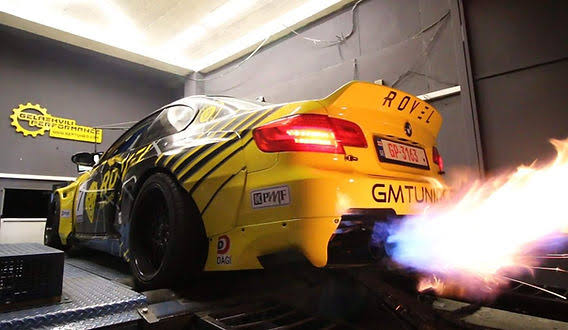
- Once it hits the heat and oxygen waiting downstream (the catalytic converter, the resonator, sometimes literally the tip), it ignites late. Outside the engine. That delayed ignition is the pop, and if enough fuel piles up before it catches, you get the bigger crackle or the visible flame.
In short: you're intentionally mistiming combustion so it finishes in the pipe instead of the cylinder. It's a controlled malfunction, dialed in on purpose.
Why Some Cars Do It From the Factory
This isn't purely an aftermarket trick. Plenty of manufacturers bake a version of this into performance trims straight from the factory: BMW's M cars, AMG Mercedes, some Porsches, certain Hyundai N models. Factory pop tunes are usually tamer, more controlled, and calibrated to avoid cooking the catalytic converter, because the manufacturer has emissions testing and a warranty department to answer to.
Aftermarket tunes go further because the tuner doesn't have to answer to any of that. More overrun fuel, more aggressive timing retard, bigger pops, and a real risk they're not accounting for the downstream consequences.
🎯 The Two Ways to Get There: Tuning vs Anti-Lag
The ECU Route (Most Common)
For the vast majority of cars doing this on the street, it's a piggyback tuner or a full ECU flash telling the car to run rich and retard timing on deceleration. This is relatively cheap, reversible, and doesn't require any hardware changes beyond maybe a louder exhaust to make the pops audible instead of muffled into nothing.
Anti-Lag Systems (The Real Deal, Rarely Street Legal in Spirit)
Anti-lag is the motorsport-grade version of the same idea, built for a completely different reason: keeping a turbo spooled between gearshifts so there's zero lag when you get back on throttle. Rally cars and dedicated track builds use dedicated anti-lag systems that inject fuel and air directly into the exhaust manifold, sometimes with a second ignition source, to keep the turbo spinning at full song even when the driver's foot is off the gas.
Anti-lag is loud, violent, and genuinely functional. It's also brutal on hardware. Exhaust manifolds glow orange. Turbos see thermal stress they were never designed for long-term. Most anti-lag systems are built for cars that get a fresh manifold and turbo on a maintenance schedule, not a daily driver doing grocery runs. When you hear people online sneer "that's not real anti-lag, that's just a pop tune," this is the distinction they're drawing, and they're usually right.
💥 Why Purists Hate It
"You're Just Wasting Fuel and Killing Your Cat"
The most common technical objection, and it's not wrong. Dumping unburned fuel into a catalytic converter is one of the fastest ways to cook one. Cats work by catalyzing a chemical reaction at operating temperature, and they're not designed to have raw fuel igniting inside them repeatedly. Aggressive pop tunes are a well-documented cause of melted cat substrates, and once that happens you're looking at exhaust flow restriction, a check engine light, and a repair bill that dwarfs whatever you spent getting the crackle in the first place.
"It's Fake Because It's Not Making the Car Faster"
This is the deeper cultural objection, and it's about authenticity, not physics. A lot of car culture is built around the idea that sound should be a byproduct of performance, not a performance on its own. A big turbo car spooling under load, a high-strung NA engine screaming to redline, straight pipes barking under acceleration: those sounds are happening because the car is doing something. Overrun pops happen specifically when you're not accelerating. You lifted. The car's slowing down. And it's still putting on a show.
To purists, that's the tell. It's a sound engineered for bystanders, not for the driver, and definitely not in service of lap times or quarter-mile numbers. It's automotive vocal fry: technically real, technically happening, but performed for an audience rather than a byproduct of substance.
"It Ruins the Exhaust Note the Rest of the Time"
There's also a straightforward tone complaint. Getting pops loud and consistent enough to turn heads usually means running a louder, more aggressive exhaust setup than the car would otherwise need, and tuning the fuel map in a way that can make the car sound flat or lumpy under normal acceleration. Some owners will tell you flat out that their car sounds worse on throttle now, purely so it sounds better off throttle. Purists consider that a bad trade every time.
🙌 Why Everyone Else Loves It Anyway
It's Instant, Reliable Content
Here's the practical truth nobody likes saying out loud: pops and crackles are one of the most reliable ways to get attention at a meet, on a reel, or rolling through a parking garage. You don't need a rare car, a huge power number, or a perfect launch. You need a downshift, a lift, and a decent exhaust. That accessibility is exactly why it spread as fast as it did. It democratized "sounding fast."
It Turns a Boring Moment Into a Moment
Coasting to a stop sign is nothing. There's no drama in it. A pop tune takes the single most uneventful part of driving, decelerating, and makes it the loudest, most attention-grabbing part of the whole clip. That's a genuinely clever repurposing of dead time, whatever you think of the ethics.
Some Cars Just Sound Incredible Doing It
There's also a purely sonic argument that doesn't need any culture-war framing at all. A well-tuned flat-six on overrun, a big-turbo inline-six chattering and popping through a resonated exhaust, an old V8 muscle car barking on a downshift: some of these genuinely sound fantastic, and plenty of people who'd never call themselves "pop tune guys" will still admit a great-sounding overrun note when they hear one. The hate is real, but so is the appeal, and a lot of people who complain about it publicly will still turn their head when a clean one goes by.
🛑 The Actual Risks Nobody Mentions in the Reel
If you're considering it, or you already have it and haven't thought hard about the downside, here's what's actually on the table:
- Catalytic converter damage is the number one real cost. Aggressive tunes cook cats faster than almost anything else you can do to a car short of running it without oil.
- Backfire and fire risk goes up with more aggressive tunes, especially with aftermarket exhaust tips or resonator deletes that let flame travel further before it fully burns off.
- Emissions testing failures are a real problem in states that inspect. A pop-tuned car running rich on deceleration is going to struggle to pass a sniffer test, and reflashing back to stock every time isn't realistic for most owners.
- Warranty exposure. Dealerships and manufacturers can and do flag ECU tunes during warranty claims, and an aggressive pop tune leaves a very obvious signature in the ECU's logged data.
- Neighbor and noise-ordinance heat. Loud, sporadic popping is one of the fastest ways to get a car meet or a specific street shut down by noise complaints, which is a big part of why some cities and some venues have started explicitly banning it, not just loud exhausts in general.
None of this means don't do it. It means know exactly what you're trading, and tune conservatively if you go this route at all.
🚗 Spota Tip: Bring the Sound to a Real Meet, Not Just a Feed
If your car's got a good pop tune, a Spota Photo Op at golden hour or under a parking garage's fluorescent lights is going to make that flame or that crackle look and read a hundred times better than another straight-line clip in a random lot. Pull it into a real Club and let people hear it in person, that's still the moment a good exhaust note was built for in the first place.
❓ FAQs
Does a pop tune actually hurt my car?
It can, mainly through catalytic converter damage from repeated unburned fuel combustion. A mild, well-calibrated tune is lower risk than an aggressive one, but there's no version of this that's entirely free of wear.
Is anti-lag the same thing as a pop tune?
No. A street pop tune is an ECU calibration trick for sound. Real anti-lag is a motorsport system built to keep a turbo spooled between shifts, and it puts far more thermal stress on the exhaust and turbo than a typical street tune ever does.
Why do some factory cars pop and crackle without any tuning?
Certain performance trims from BMW, Mercedes-AMG, and others include a mild factory-calibrated overrun tune, engineered conservatively enough to avoid cooking the catalytic converter under normal use.
Will a pop tune fail an emissions test?
Very likely, in states or countries that test tailpipe emissions directly. Running rich on deceleration works against everything an emissions test is checking for.
Why do some car people hate pop tunes so much?
Mostly because the sound happens specifically when the car isn't accelerating, which reads to a lot of enthusiasts as performing for an audience rather than reflecting actual performance. It's a culture and authenticity argument as much as a technical one.
Love it or hate it, the pop tune isn't going anywhere. It's cheap, it's loud, and it turns a stop sign into a moment. Just know what you're burning to get there.