
🌫️ Pull Into Any Dealership Lot Right Now
Go look. You don't even have to drive there, just picture it. Rows and rows of cars sitting under the lights, and somehow the whole lot reads like it was shot in black and white. White. Black. Gray. Silver. Maybe one dark blue if you're lucky. That's it. That's the palette.
It wasn't always like this. Pop open a photo of a mall parking lot from 1995 and you'll see reds, teals, forest greens, that one guy's purple Neon, gold Camrys, maroon minivans. Actual color. Now you'd be hard pressed to find a single car in a modern lot that isn't some flavor of "no color at all."
This isn't your imagination and it isn't a coincidence. It's an industry-wide retreat from color that happened slowly, then all at once, and there's a real, traceable, kind of depressing set of reasons behind it. Let's get into why the cars around you got so boring to look at, and why the people who still care about color are basically the last line of defense.
📉 The Numbers Are Genuinely Wild
This isn't a vibe or an internet meme exaggerating things for engagement. Industry color-popularity studies, the kind paint suppliers like Axalta and BASF put out every year, have shown for over a decade that white, black, gray, and silver consistently account for somewhere around 75-80% of all new vehicles sold globally. In some markets that number pushes even higher.
White alone has been the single most popular car color on Earth for over a decade running. Not because it's exciting. Because it's safe, in every sense of the word.
Break it down and the "achromatic" colors, meaning colors with no actual hue, essentially own the market:
- White – consistently the #1 or #2 global color, often 25-35% of new sales depending on the year and market
- Black – usually a strong #2 or #3, especially dominant in luxury segments
- Gray – the fastest-growing of the group over the last 10-15 years, eating into silver's old territory
- Silver – used to be the king in the 2000s, now in steady decline as gray took its lunch
Add those four up and you're looking at a market where actual color, red, blue, green, yellow, orange, anything with personality, gets scraps. Red usually limps in around 8-10%. Blue does a little better, maybe 10-12% in a good year. Everything else, every green, every yellow, every orange, every genuinely interesting shade, is fighting over what's left.
💸 Reason One: Resale Value Is a Self-Fulfilling Prophecy
Ask any car salesman, any fleet manager, any leasing company why they push neutral colors and you'll get the same answer instantly: resale value.
Here's the loop, and it's a nasty one once you see it:
- Buyers are told neutral colors hold value better, so they buy neutral
- Because more people buy neutral, neutral colors become easier to resell
- Because neutral is easier to resell, dealers stock more of it and offer better deals on it
- Because dealers push it harder, more buyers end up in neutral cars
- Repeat, forever
It's not that white and black and gray are inherently more valuable as colors. It's that the market decided they were, everyone acted accordingly, and now the belief creates its own reality. A bright orange Civic isn't actually going to depreciate faster because orange is a bad color. It depreciates faster because the pool of buyers willing to consider it is smaller, full stop.
Fleet and rental companies made this worse on a massive scale. Rental fleets, corporate fleets, and lease-return programs buy in bulk, and bulk buyers hate risk. A fleet manager ordering 500 sedans isn't thinking about self-expression, they're thinking about which color moves fastest when those cars hit the used market in three years. So they order white. Manufacturers see the fleet orders, see the volume, and build production schedules around what fleets want, which trickles down into what retail color options even exist on the configurator you're looking at.
Spota tip: your garage is one of the only places left where a car's color is judged purely on how it looks, not how it'll resell. Upload your build and let people actually see it.
🏭 Reason Two: Manufacturing Got Global, and Global Hates Complexity
Cars used to be built and painted regionally, sometimes even by dealer request, with a huge menu of factory colors and the occasional special order. That world is basically gone.
Modern automakers build the same platform for dozens of countries out of a handful of mega-plants, and every color option adds real cost:
- Paint shop changeovers cost time and money every time the line switches shades
- Global platforms need colors that test well and sell acceptably across wildly different markets and cultures at once, not just one region's taste
- Inventory complexity explodes when you're stocking parts, matching touch-up paint, and forecasting demand across 8-10 colors instead of 3-4
- Environmental regulations on paint solvents and VOC emissions have made certain vibrant pigments, especially some reds and specific metallics, more expensive and harder to formulate at scale
A manufacturer building 400,000 units of one model a year doesn't want a color option that only 2% of buyers pick. That color gets cut in the next refresh, and the survivors are whatever plays it safest across the most markets: white, black, gray, silver. It's not artistic cowardice exactly, it's a spreadsheet decision made a thousand times over by a thousand different product planners who all landed on the same conclusion independently.
🎨 Reason Three: Color Became a Paid Option, and Paid Options Get Skipped
Here's a quieter part of the story. On most modern configurators, white or a "standard" neutral is free. Anything with actual pigment, a real red, a deep blue, a genuine green, often costs an extra $300 to $800 or more, sometimes with an extended production wait attached to it.
Most buyers, especially ones financing a car they'll keep for five or six years, are already stressed about the total number on the sticker. When the free option is right there and the interesting option costs extra money and extra wait time, the free option wins by default for a huge chunk of the market. It's not that people don't like color, plenty of surveys show buyers say they want more color choices when asked directly. It's that when the actual purchase decision happens, with real money on the line, inertia and the path of least resistance take over.
Manufacturers know this. Pricing a bold color as an upcharge isn't neutral, it's a nudge, and it works exactly as intended.
🚗 Reason Four: SUVs and Crossovers Killed the Fun Palette
Here's a link people don't talk about enough. As the market shifted hard toward SUVs and crossovers, the whole category of vehicle most buyers choose skews conservative on color by default.
Think about who's cross-shopping a three-row crossover. It's a family vehicle, a practical purchase, something meant to look "professional" in a school pickup line and hold value when it's traded in for the next one in five years. Buyers shopping that category aren't thinking about self-expression, they're thinking about cargo space and safety ratings. Compare that to who was buying a colorful compact or coupe back when those still dominated showroom floors, a younger, more style-motivated buyer who wanted the car to say something about them.
As the market composition shifted toward practical family vehicles, the average color preference of "the market" shifted with it, even before you factor in any of the manufacturing or resale pressure above.
🔥 Reason Five: Gray Specifically Became a Status Symbol
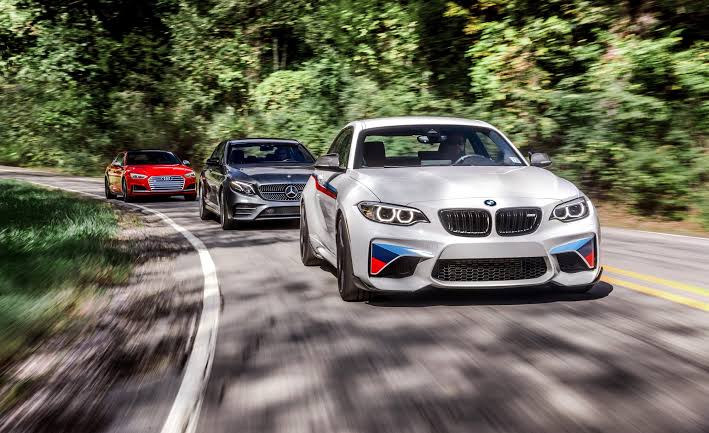
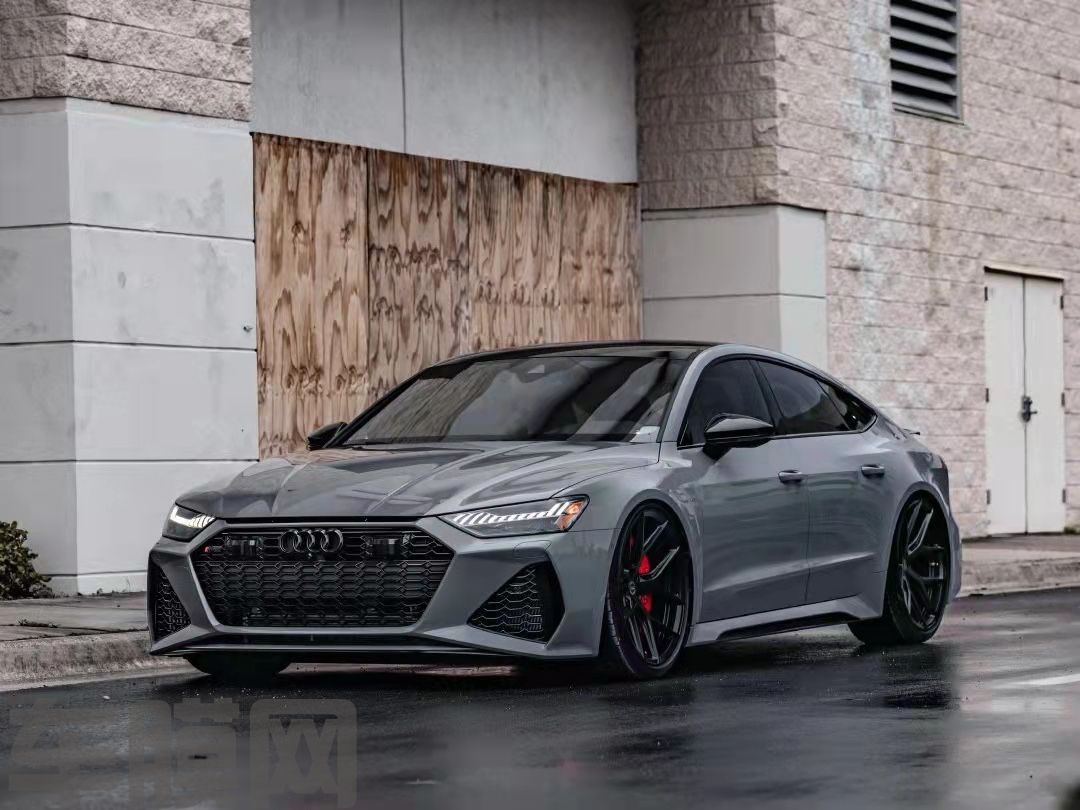
Gray deserves its own callout because its rise isn't purely about safety, it's about taste-making. Somewhere in the 2010s, certain performance and luxury nameplates, Porsche's various "Chalk" and "Agate Gray" shades, BMW's "Frozen" and matte grays, Mercedes' "Selenite Gray," started marketing muted grays as the premium, sophisticated choice instead of the boring default. Matte and satin gray finishes especially got tied to high-performance trims and limited editions.
That reframing worked. Gray stopped reading as "I didn't want to think about it" and started reading, in certain circles, as "I know exactly what I'm doing and I chose restraint on purpose." Once gray had that cachet at the top of the market, it trickled down fast, and now you'll see the same muted gunmetal shade on a base trim economy hatchback that you'll see on a six-figure sports sedan.
It's a genuinely interesting case of a "safe" color getting rebranded as a "cool" color, and the rebrand stuck.
🕰️ It Wasn't Always Like This: A Quick History Lesson
Go back to the muscle car era and the palette was genuinely unhinged in the best way. Plymouth had "Panther Pink" and "Vitamin C Orange." Dodge had "Sublime" and "Go Mango." AMC put out cars in "Big Bad Blue" and "Big Bad Green," names that are basically impossible to imagine on a modern configurator. Even into the 80s and 90s you had a legitimate spread: teals, maroons, deep greens, actual yellows that weren't a $10,000 track-special upcharge.
Part of that was cultural, manufacturers were competing for attention in a much less globalized, much more regionally distinct market, and bold color was a cheap way to stand out on a lot. Part of it was also just less risk-aversion generally. Marketing departments hadn't yet built the resale-value feedback loop described above, because the used car market and CarMax-style instant appraisal tools that quantify "color penalty" in real dollars simply didn't exist yet the way they do now. Nobody could tell you with a straight face that your teal Cutlass would be worth $600 less at trade-in because of its paint code. Today, that exact kind of data exists and gets fed directly into how manufacturers plan their color offerings years in advance.
The 2000s were the last real gasp of mainstream color variety, before the silver wave of that decade rolled in and softened everything, which then set up gray to take over completely in the 2010s. Each decade got a little more cautious than the last.
🔋 EVs Made It Even Worse
You'd think a genuinely new kind of vehicle, one without a century of convention behind it, might have been a chance to break the pattern. It didn't work out that way. If anything, EVs accelerated the gray-scale takeover.
A few reasons why:
- Range anxiety marketing. Early EV buyers were already nervous about a genuinely new technology. Manufacturers leaned hard into "clean," "minimal," "future-forward" branding, and that aesthetic language translated directly into white, gray, and black being pushed as the visual identity of the whole category, almost like a uniform.
- Aerodynamics and efficiency messaging. Matte and satin grays photograph as "engineered" in a way that reinforces the efficiency-focused pitch EVs are sold on. It's not a coincidence that so many EV press photos and configurator hero shots default to a specific shade of gunmetal.
- Tesla set the template. As the highest-volume and most culturally dominant EV brand for years, Tesla's own color lineup skewed heavily neutral (white was free for a long time, other colors carried real upcharges), and because so much of the market watched Tesla as the reference point for what an EV should look like, competitors followed the same visual playbook almost by default.
The end result is that the newest, most futuristic vehicles on the road today are, paradoxically, some of the least colorful in automotive history. A segment that had zero legacy baggage to break from still landed on the exact same palette as everything else.
🙄 Why Car People Hate All of This
If you actually care about cars, this whole trend feels like a slow-motion loss. A build isn't just specs and horsepower, the color is half the identity of the thing. Ask anyone at a meet what color their dream spec would be and they light up immediately. Nobody's dream car, in their head, is Nardo Gray by default because it depreciates slower. They picture a specific shade because it means something to them.
This is exactly why the enthusiast market has become the last real holdout for actual color. Look at Porsche's Paint to Sample program, look at how fast a genuinely well-specced colorful build gets attention at any show or meet, look at how much a rare factory color adds to collector value on certain JDM and European classics decades later, the exact opposite of the "neutral resells better" logic everyone assumes applies universally. On a Skyline, a Supra, an old 911, a factory color that was rare when new is now a premium, not a discount. The market eventually rewards the cars that dared to be different, it just takes a while to catch up.
That's the tension at the center of all this. The mainstream market optimized itself into a corner where everything looks the same, while the people who actually love cars kept pushing the other direction the whole time, and are usually the ones proven right eventually.
🧩 What You Can Actually Do About It
If you're staring at a boring factory-neutral car and it's bothering you, you've got real options that don't require buying a whole new vehicle:
- Wrap it. A full vinyl wrap in a real color is reversible, protects the factory paint underneath, and costs a fraction of a repaint. This is the single most common way enthusiasts fix a neutral factory color today.
- Go two-tone or accent. Colored mirror caps, a contrast roof, colored calipers or emblems, small doses of color that don't require touching the whole body.
- Chase discontinued factory colors used. If you're shopping used instead of new, you have access to years of colorful factory options that current lineups don't offer anymore. This is a legitimate reason a lot of enthusiasts buy older instead of newer.
- Custom paint if you're keeping it long-term. Expensive, permanent, but nothing beats a real paint job in a shade you actually chose for yourself.
None of it makes the industry-wide trend go away. But it's a reminder that the "everyone wants neutral" story the industry tells itself isn't actually true down at the enthusiast level, it's a market average, and averages hide a lot of people who'd pick differently if the default wasn't so heavily nudged toward beige.
Next time you're at a meet, look around and notice how much more color there is on the modified builds versus the stock lot outside. That gap is the whole story. Car people never stopped wanting color. The industry just made it harder to get.
Want to see what real car people are actually building and painting their rides, not the neutral fleet-spec version? Check out builds tagged around color and paint over in /blog/categories/build-of-the-week, or dig into more culture breakdowns like this one at /blog/categories/under-the-hood.