

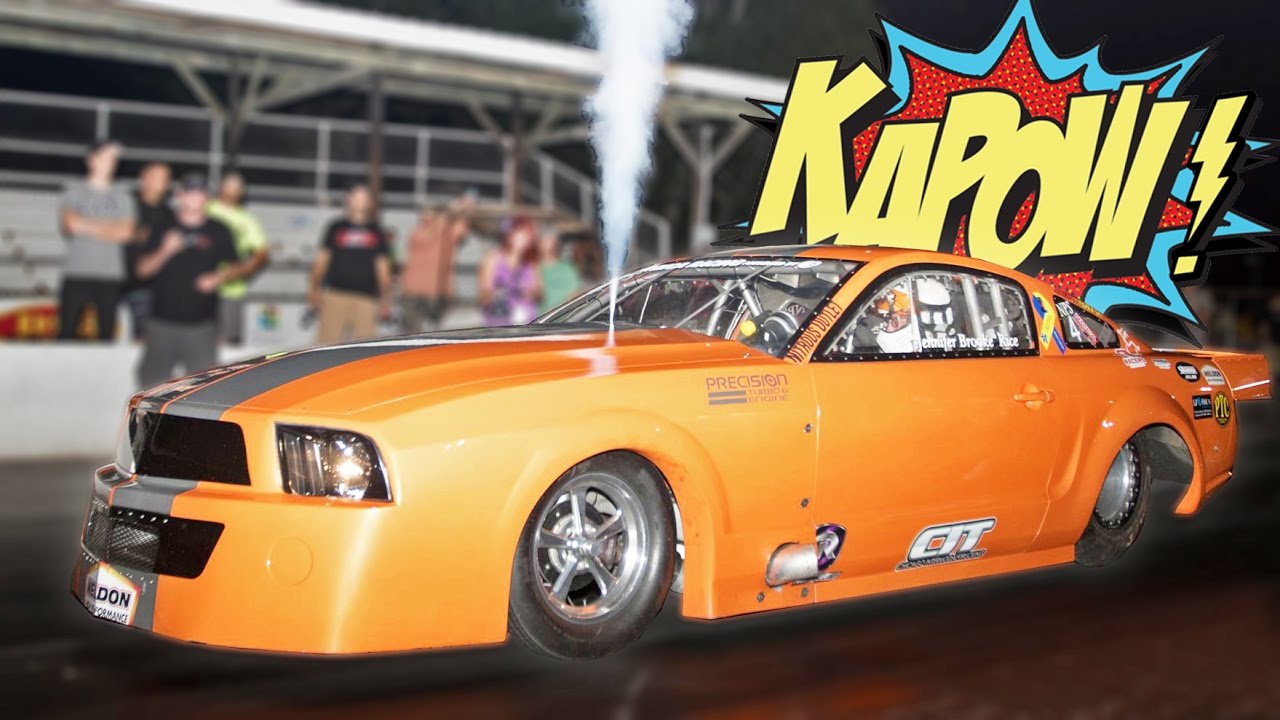
💨 The Button Every Car Guy Fears and Wants
Say the word "nitrous" in any car meet parking lot and watch what happens. Someone laughs. Someone tells a story about a buddy's motor that grenaded on a highway on-ramp. Someone else pulls up a video of an engine bay on fire. It's the one mod that's simultaneously the coolest thing you can bolt to a car and the fastest way to turn it into a very expensive paperweight.
Nitrous oxide has the worst reputation of any performance part in the entire hobby. Worse than turbos. Worse than superchargers. Worse than a bad tune on a stock bottom end. Say you're "running nitrous" and people don't ask how much power you're making. They ask how long until it kills your engine.
Here's the thing: that reputation is mostly earned, but not for the reason most people think. Nitrous oxide itself doesn't destroy engines. Nitrous oxide installed wrong, tuned wrong, or run by someone who doesn't respect it destroys engines, and it does that fast and violently enough to become legend. Let's actually break down the chemistry, the failure modes, and why this one mod became car culture's boogeyman.
🧪 What Nitrous Actually Does (It's Not What Movies Show You)
The Chemistry, Simplified
Nitrous oxide (N₂O) isn't a fuel. It doesn't explode on its own, it isn't flammable by itself, and pressing "the button" doesn't inject some magic rocket propellant into your engine the way 2 Fast 2 Furious trained an entire generation to believe.
What nitrous actually does is simpler and more clever than that: at the temperatures inside a running engine, N₂O breaks apart into nitrogen and oxygen. That extra oxygen is the whole point. More oxygen in the cylinder means you can burn more fuel, and burning more fuel means a bigger explosion pushing the piston down. Nitrous is an oxidizer, not a fuel source. It's a chemical way of cramming more atmosphere into your engine than a naturally aspirated intake stroke ever could, which is the exact same goal a turbo or supercharger is chasing, just via a bottle instead of spinning hardware.
There's a bonus effect too: liquid nitrous flash-boils as it's injected, and that phase change pulls a huge amount of heat out of the intake charge. Colder air is denser air, so nitrous gives you a double win: more oxygen and a colder, denser charge to put it in. That's why a nitrous kit can add 50, 100, even 300+ horsepower on some setups without needing to touch the engine's internals, at least in theory.
Wet Kits vs. Dry Kits vs. Direct Port
Not all nitrous is installed the same way, and this matters a lot for the failure conversation:
- Dry kits: Nitrous is injected into the intake tract, and the factory fuel system (through the ECU widening injector pulse or raising fuel pressure) is responsible for adding the matching extra fuel. Simpler to install, more forgiving on some platforms, but leans heavily on the tune being right.
- Wet kits: Nitrous and extra fuel are injected together, usually right before the throttle body, through a single nozzle or plate. The fuel and oxidizer show up as a pre-mixed package. Popular because they're simpler to jet correctly.
- Direct port: Nitrous and fuel are injected individually into each cylinder's intake runner, right at the head. This is the setup serious drag cars run because it distributes the charge evenly across every cylinder instead of hoping the intake manifold splits it fairly. Also the most expensive and complex to tune correctly.
Every single one of these systems works exactly the same way chemically. What separates "safe 75-shot on a Friday night" from "engine on a trailer" is entirely about the next section.
💥 How Nitrous Actually Kills an Engine
This is the part that gets skipped in every hype video and every "we bolted nitrous on and sent it" clip. Nitrous doesn't fail engines through some mysterious force. It fails them through the same handful of mechanisms every time, and every single one of them is preventable.
1. Lean Spikes Are the Real Killer
This is the number one cause of nitrous-related engine death, by a wide margin. Remember: nitrous adds oxygen, and that oxygen needs a matching amount of fuel to burn correctly. If the fuel side doesn't keep up (a clogged jet, a weak fuel pump, bad tuning, a dying fuel pressure regulator), the air-to-fuel ratio goes lean. A lean cylinder burns hotter and faster than it should.
A lean spike under nitrous can push combustion temperatures well past what aluminum pistons are designed to survive. The result is a melted piston crown, sometimes in seconds, sometimes on a single pull down the strip. This is the "engine caught fire" scenario people love to post: it's almost always a fuel delivery problem, not a "nitrous is dangerous" problem.
2. Detonation and Timing
Nitrous drops intake charge temperature and raises cylinder pressure, both of which change how the engine wants to be tuned. An ignition timing map built for naturally aspirated or boosted-only operation is often too aggressive once nitrous enters the mix. That combination, more pressure plus timing that's igniting the mixture too early, causes detonation: uncontrolled, secondary combustion that hammers the piston and rod like a mechanical jackhammer instead of a smooth power stroke.
A few pulls of detonation and you're looking at cracked ring lands, bent rods, or a hole punched clean through a piston. This is why every credible nitrous tuning guide says the same thing: retard timing before you add the shot, not after you hear it ping.
3. Backfires Through the Intake
Anyone who's watched enough car culture content has seen the clip: a car stages, the driver hits the button too early or the nitrous solenoid opens before the throttle is fully committed, and a fireball erupts out of the intake. That's a backfire, nitrous igniting in the intake tract instead of the cylinder, usually because the throttle wasn't wide open when the system activated (an unburned, oxygen-rich charge sitting in the intake manifold is an open invitation for a spark to find it the wrong way). Best case, it's a scary fireball and a blown intake hose. Worst case, it takes out the throttle body, intake manifold, or the supercharger/turbo sitting upstream of it.
This is almost entirely a wiring and activation-window problem: a proper install uses a wide-open-throttle switch and a delay so the system can't fire below full throttle.
4. Nitrous on a Weak Bottom End
Even a perfectly tuned, perfectly installed nitrous system is still adding real cylinder pressure the factory engine wasn't designed around. Stock rods, stock head gaskets, and stock ring packs have a ceiling. A 50-75 horsepower shot on a stout factory bottom end is usually fine long-term. A 150+ shot on the same motor, especially stacked on top of boost, is asking factory-spec parts to live a life they were never engineered for. This is why serious nitrous setups on built motors come with forged internals, stronger head studs, and a fuel system sized for the total power, not just the base engine.
🎬 Why the Reputation Outgrew the Reality
Nitrous became car culture's engine-killer myth for a few compounding reasons, and none of them are really about the chemistry:
- It's visually dramatic when it goes wrong. A blown turbo just stops making boost. A blown nitrous system can produce a literal fireball out of the hood. One of these makes a much better video.
- It got attached to Hollywood nonsense. The Fast and Furious franchise turned NOS into a cartoon rocket booster you mash for instant teleportation, and it planted the idea in an entire generation's head that nitrous is inherently unstable and violent, rather than a controllable chemical tool.
- It's genuinely unforgiving of shortcuts. A bad tune on a turbo car often just makes less power or feels sluggish. A bad tune on nitrous can destroy an engine on the very next pull. There's very little margin for "close enough," and that intolerance for sloppy work is exactly what separates it from bolt-on mods people treat casually.
- The failures that make it online are disproportionate. Nobody posts a video of their nitrous kit working perfectly for the 200th time. Every viral nitrous clip is a failure by definition, which quietly rewrites the mental math on how often it actually happens.
The honest version: professionally installed, correctly jetted, properly tuned nitrous systems run reliably on drag cars, street cars, and even daily drivers for years. The failure stories are real, they're just disproportionately loud compared to how often things go right.
🔧 Doing It Right: What Actually Prevents a Nitrous Failure
If you're considering it, the safety checklist looks like this:
- Get it tuned, not guessed. A proper tune accounts for fuel enrichment, timing retard, and the specific shot size on a dyno or with a wideband, not a jet chart eyeballed in a driveway.
- Size the fuel system for the total power, not the base engine. Nitrous demands fuel volume on top of what the engine already needs. Undersized injectors or a weak pump is the single most common root cause of a lean spike.
- Use a bottle heater and pressure gauge. Nitrous bottle pressure swings with temperature, and pressure directly affects how much nitrous (and therefore how rich or lean the mixture runs) actually makes it through the system.
- Install a wide-open-throttle switch, purge kit, and window switch. These exist specifically to prevent activation outside the engine's happy window, which kills most backfire scenarios before they can happen.
- Match the shot to the internals. A stock bottom end has a real ceiling. Respect it, or build the motor to match the power you actually want.
- Start small. A 50-shot properly tuned teaches you more about how your car responds than jumping straight to a 150-shot ever will, and it gives you way less room to hurt something while you learn.
Spota tip: if you're documenting a nitrous install or your first pass on the bottle, the Garage is built for exactly that kind of milestone. Log the install, the tune sheet, the first pull, and the mod timeline tells the real story instead of just the highlight reel.
🆚 Nitrous vs. Forced Induction: Why Some Car Guys Pick One Over the Other
The nitrous-versus-turbo debate is almost as old as the mods themselves, and it's worth understanding why some builds go one way and some go the other, because it explains a lot about where nitrous's reputation comes from.
A turbo or supercharger is always on. It's part of the car's daily character, spooling with every drive, making power everywhere in the rev range once it's tuned in. That constant presence means a turbo tune gets driven, tested, and refined over thousands of miles before anyone's really leaning on it at the strip. Nitrous is the opposite: for most street setups, it sits dormant 99% of the time and only gets asked to do its job in short, violent bursts, often on a hot day at the end of a long drive when the engine's already at its thermal limit. That "off, then suddenly maximum stress" pattern is part of why tuning mistakes surface so dramatically. A boost leak reveals itself gradually over a few pulls. A lean nitrous shot reveals itself immediately, on the pass that matters.
That's also exactly why nitrous stayed so popular in drag racing specifically. It's cheap horsepower on demand, it doesn't add substantial weight or turbo lag, and a well-sorted system can be dialed to a specific track, a specific density altitude, and a specific class limit in a way that's harder to do with a fixed forced-induction setup. The people who really understand nitrous treat it less like a mod and more like a tuning variable: something to be measured, adjusted, and respected every single time it's used, not something you install once and forget about. That mindset, more than the chemistry, is the actual difference between the car guys who run nitrous for a decade without an issue and the ones who become the cautionary story in someone else's forum post.
❓ Nitrous FAQs
Does nitrous always blow up engines? No. Correctly tuned, properly installed nitrous systems run reliably for years on drag cars and street cars alike. The failures that dominate car culture's reputation for it are almost always tied to lean conditions, bad timing, or a shot size that outmatches the internals, not the nitrous itself.
Is nitrous more dangerous than a turbo or supercharger? It's less forgiving of mistakes, not inherently more dangerous. A bad boost tune tends to fail gradually (overboost, knock, gradual damage). A bad nitrous tune can go from fine to catastrophic in a single pull because the shot arrives all at once rather than building progressively.
How much horsepower can nitrous add safely? It depends entirely on the engine's internals and fuel system, but a 50-75 horsepower shot is broadly considered safe on a healthy stock bottom end with a proper tune. Anything beyond that starts leaning on how strong the rest of the engine actually is.
Why does nitrous cause fires in the intake? That's a backfire, caused by nitrous igniting inside the intake tract instead of the combustion chamber, almost always because the system activated when the throttle wasn't fully open. A wide-open-throttle switch and activation delay are the standard fix.
Do you need forged internals to run nitrous? Not for a small, well-tuned shot on a healthy stock engine. For bigger shots, especially stacked with boost, forged pistons and rods become the difference between a reliable setup and a ticking clock.
Is nitrous legal to run at the track? Most drag strips and sanctioning bodies allow nitrous with proper safety equipment (purge routed away from spectators, bottle securely mounted, in some cases a fire suppression requirement at higher power levels). Street use varies heavily by state, so check local law before you wire anything up.
Nitrous isn't the villain of the car world. It's just the mod with zero patience for shortcuts. Respect the fuel curve, respect the timing, and it'll make your car faster instead of making your engine somebody's cautionary story.
For more on how forced induction stacks up against a bottle in the horsepower-per-dollar debate, read Naturally Aspirated vs Turbo: Why Car Culture Can't Let This Debate Die, or browse more myth-busting breakdowns over in Under the Hood.