
🎨 The Color That Isn't Really There
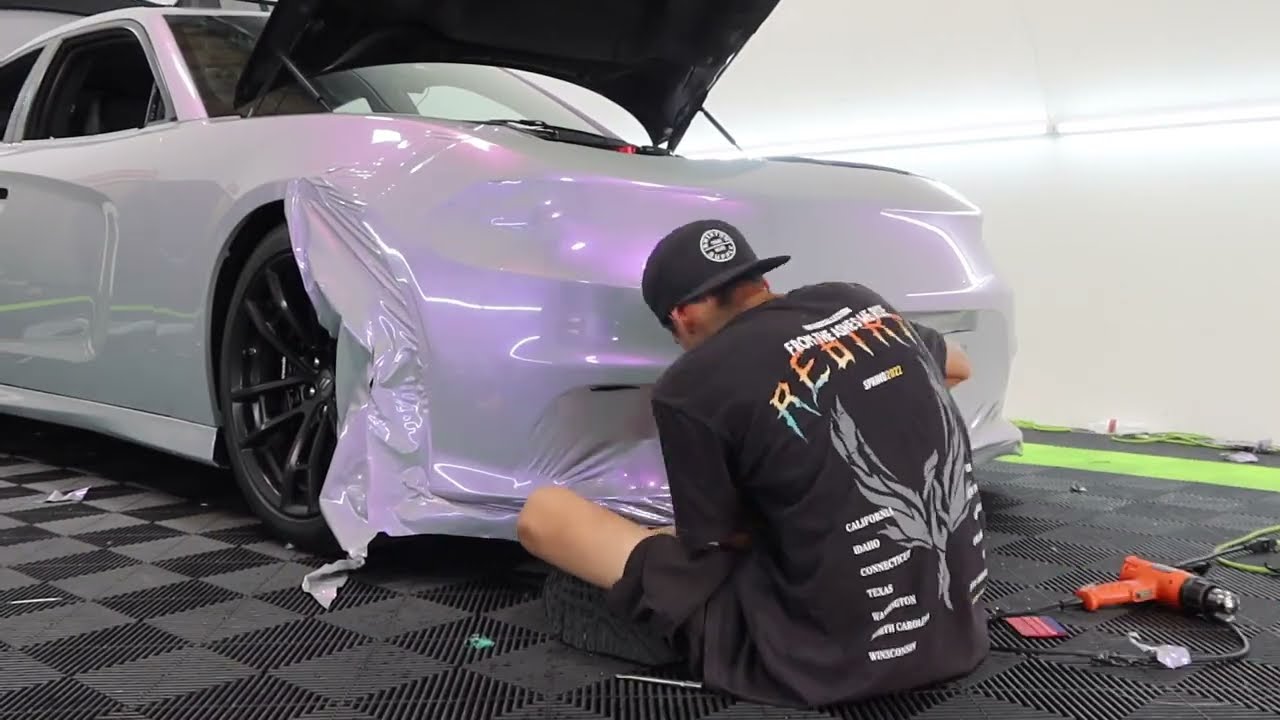
Walk any Cars and Coffee lot in 2026 and count how many cars are actually wearing factory paint versus a full vinyl wrap. It's closer than it used to be, and that gap keeps shrinking. Satin black hoods on cars that came stock in silver. Chrome delete kits turning shiny trim matte overnight. Full color-change wraps in shades no factory would ever greenlight: gloss lime, matte lavender, chameleon flip paint that shifts from purple to green depending on the angle of the sun.
Ten years ago this stuff was a novelty, something you saw on a rapper's Wraith or a viral tuner build. Now it's default enthusiast behavior. A huge chunk of the cars getting attention on car Instagram, at meets, at shows, aren't wearing paint at all. They're wearing vinyl.
That's not a small shift. Paint used to be permanent, expensive, and something you thought hard about before touching. Wrap flipped all three of those assumptions at once, and once it did, it didn't just change how cars look. It changed how car people think about customizing a car in the first place.
💰 The Cost Math Nobody Can Argue With
Start with the number that actually drives the decision: price. A quality full paint job, done right, with proper prep, color matching, and clear coat, routinely runs anywhere from $5,000 to $15,000+ depending on the car and the shop. That's before you even get into custom colors, which push the number higher because of mixing and matching costs.
A full vinyl wrap, by comparison, typically lands somewhere in the $2,500 to $6,000 range for a quality install on a mid-size car, and that's for a full color-change wrap with premium film. Partial wraps (hood, roof, mirrors, a stripe package) can run a fraction of that.
You're not just paying less. You're getting a completely different risk profile for that money:
- Paint mistakes are permanent. Pick the wrong color, botch the prep, get orange peel texture, and you're stripping it down and starting over at full cost.
- Wrap mistakes are removable. Don't like it? Peel it off (professionally, ideally) and try again. The factory paint underneath is still sitting there, protected.
- Paint chips and you're matching a color years later, hoping the shop nails the exact shade against sun-faded factory paint. Wrap panels get swapped or re-wrapped without touching the rest of the car.
For a car guy who's already sunk five figures into suspension, wheels, and an exhaust, the idea of gambling another five figures on a color he's not 100% sure he'll still love in three years just doesn't pencil out anymore. Wrap became the financially rational move, and car people, despite the ego-driven reputation, are actually pretty rational about where the money goes.
🔄 Reversibility Changed the Psychology of Customizing
Here's the part that goes deeper than money: wrap didn't just make color changes cheaper, it made them temporary by design, and that changed how people relate to their own builds.
Paint is a commitment. You live with that color until you sell the car or pay to redo it. That permanence used to force a kind of caution into car culture. People stuck with safe colors because a mistake was expensive and semi-permanent.
Wrap removed the commitment. Suddenly a car's color is a decision you can revisit, not a decision you're stuck with. That opened the door to colors people would never have risked in paint: chrome deletes, gloss-to-matte finishes, two-tone splits, full chameleon flip films that cost more but turn a car into a moving optical illusion.
It also created a new behavior that didn't really exist before: seasonal or trend-based re-wraps. Guys wrapping a car satin black for winter, then peeling it for a bright color in summer. Wrapping for a specific show or event, then going back to stock afterward. The car became a canvas you could redo instead of a decision you were locked into, and that's a fundamentally different relationship with your own build.
Spota tip: if you're documenting a wrap change (before, during, after), your Garage timeline is built exactly for that kind of transformation. A color swap that used to be a permanent, one-time event in a car's life is now a repeatable story worth tracking.
🛡️ It's Not Just Color, It's Protection
The other half of the wrap boom doesn't get talked about as much because it's less visually dramatic, but it might actually be the bigger driver: paint protection film (PPF).
PPF is a clear, self-healing urethane film applied to high-impact areas (front bumper, hood, mirrors, rocker panels) or the entire car, and it does exactly what the name says: protects the factory paint from rock chips, road debris, minor scratches, and UV fade. It's not about changing the look, it's about preserving the look that's already there.
This matters because it flips the entire "wrap is for show cars" stereotype on its head. A huge percentage of wrap and film work being done right now isn't about color at all, it's daily-driver owners protecting a car they plan to keep stock and keep clean for years. Full-front PPF has become close to standard practice on anything from a base Civic to a six-figure exotic, because:
- Rock chips are inevitable on any car driven regularly, and touch-up paint pens never truly blend in.
- Resale buyers notice chipped front ends immediately, and it tanks perceived condition even when the mechanical car is flawless.
- Self-healing film means minor swirl marks and light scratches disappear with a little heat, something paint simply can't do on its own.
- It's invisible when done well, so you get all the protection with none of the visual risk paint mods carry.
Combine PPF with a partial color wrap (satin hood, gloss black roof, chrome delete trim) and you get the modern default enthusiast car: mostly stock color, fully protected, with a few wrapped accents that read as intentional rather than loud. That combination barely existed as a mainstream option fifteen years ago. Now it's closer to the norm than the exception.
📉 Resale Value Rewired the Whole Conversation
Car people love to talk about builds like resale value doesn't matter, right up until it's time to sell, and then suddenly it matters a lot. Wrap solved a problem that used to genuinely hurt enthusiasts financially: customization used to actively damage resale value, and now it often doesn't.
A wild custom paint color used to be a permanent mark against a car's future sale price. Buyers pay a premium for factory colors, especially rare or desirable ones, and a bespoke repaint (even a beautiful one) narrows your buyer pool dramatically. You basically had to find someone who loved your exact color choice as much as you did.
Wrap sidesteps that entirely. Peel it off before selling, and the car is back to its original factory color and finish, assuming the wrap was installed and removed properly. The customization existed for years, got fully enjoyed, and then disappeared without a trace when it was time to cash out. That's a genuinely new capability in car customization: temporary, fully reversible aesthetics that don't touch resale math.
It's also why insurance and financing got friendlier to wrap versus paint modifications over the last several years. A wrapped car reads to an insurer as "factory paint underneath, cosmetic film on top," which is a much easier risk to price than a full custom repaint that permanently altered the vehicle. If you want the deeper breakdown on how mods interact with your policy, that's covered in why modified car insurance got so brutal.
🏁 Vinyl Wrap Culture Has Its Own Hierarchy Now
Like every corner of car culture, wrap didn't stay simple for long. It developed its own internal status system, its own materials debates, its own version of "that one guy who did it wrong."
Film quality tiers matter, a lot. Premium cast vinyl (the kind top shops use) conforms to complex curves without cracking, lasts 5-7 years with proper care, and can be removed cleanly even after years on the car. Cheaper calendared vinyl is stiffer, doesn't wrap tight curves as well, fades faster in direct sun, and can leave adhesive residue or even damage clear coat on removal if it's been baked on too long. Car people who've been burned by a cheap wrap talk about it the same way people talk about a bad tattoo: everyone's got a story, and everyone learned the hard way.
Installer skill is its own flex. A wrap with visible seams, bubbling around curves, or lifting edges at door jambs gets clocked instantly by anyone who knows what to look for. A clean install, especially around mirrors, door handles, and complex body lines, is genuinely hard, and the best installers in a given city build reputations the same way tuners and detailers do.
Color trends move fast and everyone notices who was early. Satin black was everywhere for years, then everyone moved to deep chrome deletes and subtle two-tones, and now chameleon and color-flip films are having their moment. Getting a trend six months before it blows up is its own kind of clout in wrap-focused car communities, and showing up with last year's color choice gets noticed too, for better or worse.
🔧 Wrap vs Paint: When Paint Still Wins
None of this means paint is dead, and it's worth being straight about where a real repaint still makes more sense than wrap:
- Permanent, factory-quality restoration on a car with damaged or heavily faded original paint, especially anything headed toward a serious restoration or concours-level build.
- True custom bodywork where panels have been reshaped, widened, or fabricated. Wrap can't hide poor panel fit or bodywork the way a proper paint and blend job can.
- Long-term daily drivers going 10+ years where a quality repaint might actually outlast multiple wrap cycles and end up cheaper over the car's full lifespan.
- Collector and investment-grade cars, where matching numbers and original paint codes carry real value, and a wrap (even a great one) is seen as a temporary cosmetic choice rather than a preservation choice.
The honest answer most experienced car people land on: paint for permanence and restoration, wrap for expression and protection. They're not really competing for the same job anymore, they're solving different problems, which is a big part of why wrap didn't kill paint, it just took over the part of the job paint was never really built for: fast, reversible, low-risk style changes.
🚗 Why This Fits Where Car Culture Is Headed
Step back and the wrap takeover fits a bigger pattern in how this generation of enthusiasts treats their cars. Builds aren't static trophies anymore, they're ongoing projects that evolve, get documented, get shown off in stages, and change direction based on what the owner's into that year. Wrap fits that mentality perfectly: it's a mod you can commit to fully without the permanence that used to make big changes scary.
That's the same instinct behind why project cars never actually get finished: the build is the point, not some final locked-in state. Wrap just gave that instinct a color palette to work with.
If you're deep in a wrap project right now, tracking the before and after in your Garage turns a color change into part of the car's actual story instead of just a transaction that happened one weekend. Whether you keep it stock underneath or go full color-change chameleon, the build's still yours either way.
Paint isn't going anywhere. But for the first time in car culture's history, it's not the only serious option on the table, and that changed more about how people build cars than most enthusiasts even realize.