
🚨 The Inevitable Scene
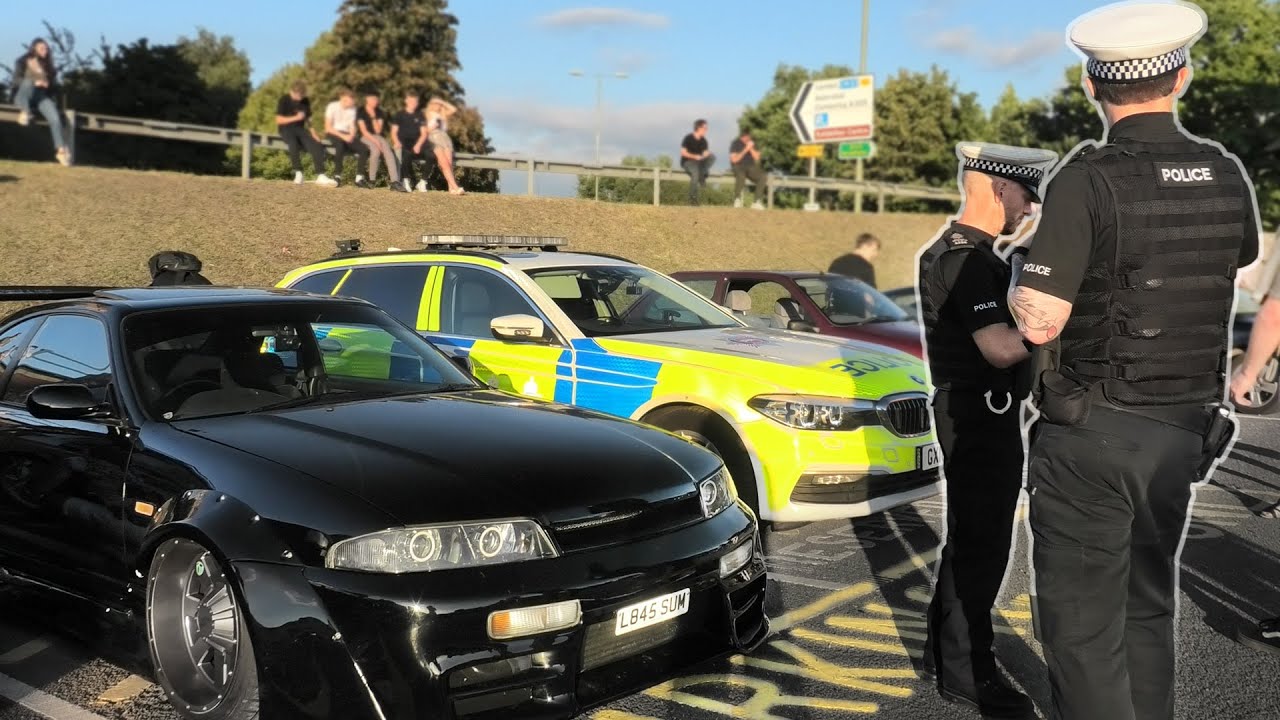
You know the drill. The meet is going perfectly: cars rolling in, people connecting, vibes are high. Then, in the distance, you see them: blue and red lights.
Within minutes, cops arrive. The parking lot gets cleared. The meet is over.
It happens everywhere: from small-town gatherings to massive events. But why? What turns a peaceful car meet into a police shutdown?
The answer isn't simple. It's a complex mix of legal realities, safety concerns, community complaints, and sometimes, a few bad apples ruining it for everyone.
Let's break down the real reasons cops shut down car meets, and what the car community can do about it.
📋 The Legal Foundation: Why Cops Have Authority
Trespassing and Property Rights
Most car meets happen on private property: parking lots, shopping centers, industrial areas. Here's the legal reality:
Property owners have the right to:
- Control who uses their property
- Set rules for usage
- Request removal of unauthorized persons
- Call police to enforce trespassing laws
When a meet grows too large, gets too rowdy, or simply isn't authorized, property owners can (and do) call the cops. Police are legally obligated to respond and remove trespassers.
Zoning and Permitting Issues
Many car meets violate local zoning laws:
- Commercial parking lots aren't zoned for large gatherings
- Public spaces often require permits for events
- Private property may have restrictions on commercial use
- Industrial areas have specific usage rules
Even if a meet starts peacefully, lack of proper permits can trigger a shutdown.
Noise Ordinances
Almost every city has noise ordinances: laws that limit sound levels, especially after certain hours (usually 10 PM or 11 PM).
Car meets, by nature, are loud:
- Engines revving
- Music blasting
- Exhausts popping
- People socializing
When noise levels exceed legal limits, police have grounds to shut down the meet.
⚠️ Safety Concerns: The Real Danger Zones
Reckless Driving and Racing
This is the #1 reason meets get shut down.
When meets turn into impromptu races:
- Street racing in parking lots
- Burnouts in public spaces
- Drifting through crowds
- Highway pulls near meets
This isn't just illegal. It's dangerous. People get hurt. Cars get damaged. Communities get terrified.
Police don't just shut down the meet. They arrest people for:
- Reckless driving
- Street racing
- Exhibition of speed
- Endangering others
Crowd Control Issues
Large meets can become crowd control nightmares:
- Parking lot overcrowding: Fire lanes blocked, exits inaccessible
- Pedestrian safety: People walking between moving cars
- Emergency access: Ambulances, fire trucks can't get through
- Private property damage: Curbs hit, landscaping destroyed
When a crowd becomes unmanageable, police shut it down for everyone's safety.
Underage Drinking and Drug Use
Many meets attract minors, and unfortunately, some bring alcohol or drugs.
When police discover:
- Underage drinking
- Drug use
- Public intoxication
- Providing alcohol to minors
The entire meet gets shut down. One person's mistake becomes everyone's problem.
Weapons and Gang Activity
Some meets attract criminal elements:
- Gang presence
- Weapons in vehicles
- Drug dealing
- Violence
When police identify criminal activity, they don't just shut down the meet. They arrest suspects and clear the entire area.
🏘️ Community Complaints: The Voice of the Neighbors
Noise Complaints
Residents near meet locations complain about:
- Loud exhausts at all hours
- Music blasting from car stereos
- Engines revving late into the night
- People shouting and socializing
One complaint might be ignored. Multiple complaints trigger police response.
Traffic Congestion
Large meets create traffic problems:
- Streets blocked by parked cars
- Slow-moving vehicles circling
- People parked illegally
- Emergency vehicle access blocked
When neighbors can't navigate their own streets, they call the cops.
Property Damage
Meet participants sometimes cause property damage:
- Burnouts leaving tire marks
- Trash left behind
- Landscaping destroyed
- Graffiti or vandalism
- Damage to parking lot surfaces
Property owners see the damage, calculate the cost, and call police for trespassing enforcement.
Fear and Perception
Some communities fear car meets because they associate them with:
- Racing and danger
- Criminal activity
- Disruptive behavior
- Property damage
Even if a meet is peaceful, perception matters. When residents complain out of fear, police respond.
🚓 Police Protocols: How Cops Handle Meets
Initial Response
When police arrive at a meet, they typically:
- Assess the situation: Size, behavior, legal issues
- Identify violations: Noise, trespassing, racing, etc.
- Give warnings: "Wrap it up" or "Keep it down"
- Monitor behavior: Watch for escalation
- Make decisions: Shut down if necessary
Graduated Response
Police usually follow a graduated approach:
- First visit: Warning, "This is private property, you need to leave"
- Second visit: More forceful, "Everyone needs to disperse now"
- Third visit: Citations issued, arrests made, cars towed
But if they see immediate danger (racing, fighting, weapons), they skip warnings and shut it down instantly.
Selective Enforcement
Not all meets get shut down. Police often prioritize:
- Size: Bigger meets = higher priority
- Complaints: More complaints = faster response
- Violations: Obvious illegal activity = immediate action
- History: Previous incidents = quicker shutdown
A small, respectful meet in a remote area might go all night. A large, rowdy meet near homes gets shut down fast.
🎯 Common Violations That Trigger Shutdowns
Traffic Violations
- Speeding in parking lots or nearby streets
- Reckless driving (burnouts, donuts, drifting)
- Illegal parking (fire lanes, handicap spots, blocking traffic)
- Exhibition of speed (revving, launching, racing)
- Vehicular manslaughter (extreme cases)
Each violation gives police grounds for citations and shutdowns.
Criminal Violations
- Trespassing on private property
- Disorderly conduct (fighting, shouting, rowdy behavior)
- Public intoxication or underage drinking
- Drug possession or sales
- Weapons violations
- Vandalism or property damage
Criminal activity almost guarantees a shutdown.
Administrative Violations
- No permits for large gatherings
- Noise ordinance violations
- Zoning violations
- Insurance requirements not met
- Safety plans not submitted
These might seem minor, but they're legal grounds for shutdowns.
🌍 Regional Differences: How Location Affects Shutdowns
Urban Areas
City meets face the most pressure:
- Higher population density = more complaints
- Stricter noise ordinances = earlier curfews
- More police presence = faster response times
- Private property = stricter enforcement
Urban meets get shut down faster and more frequently.
Suburban Areas
Suburban meets have different challenges:
- Residential complaints = noise sensitivity
- Lower tolerance = quicker shutdowns
- Fewer public spaces = more trespassing issues
- Community pressure = strict enforcement
Suburban areas often have zero tolerance policies.
Rural Areas
Rural meets have more freedom:
- Less population = fewer complaints
- More space = less crowding
- Isolated locations = less police presence
- Industrial areas = more tolerance
But rural meets can still get shut down if they attract attention or cause problems.
📱 Social Media Impact: How Content Changes Everything
The Attention Problem
Social media creates visibility:
- Meets get advertised on Instagram, TikTok, Facebook
- Videos go viral and attract massive crowds
- Location sharing brings people from far away
- Hype builds expectations
What starts as a small meet becomes a massive event, and that's when problems start.
The Documentation Problem
Social media also creates evidence:
- Videos of illegal activity (racing, burnouts)
- Photos of reckless behavior
- Live streams showing violations
- Location tags revealing unauthorized use
Police and property owners use this content to identify violations and build cases.
The Viral Problem
Viral content attracts attention:
- Viral burnout videos bring more people next time
- Popular meets get too big too fast
- Media coverage attracts police attention
- Property owners see the content and take action
Sometimes, the best meets are the ones that stay quiet.
🏁 Different Types of Meets: Risk Levels
Cars and Coffee (Low Risk)
Cars and Coffee meets are typically safest:
- Morning hours (6-9 AM)
- Short duration (2-3 hours)
- Business-approved locations
- Respectful behavior expected
- Coffee shop benefits from traffic
These rarely get shut down because they're legitimate business events.
Weekly Parking Lot Meets (Medium Risk)
Weekly meets vary by management:
- Some are well-organized with permits
- Others are informal and unauthorized
- Success depends on behavior
- Size matters: too big = problems
- History matters: repeat violations = shutdowns
These can go either way depending on organization and behavior.
Cruise Nights (Medium-High Risk)
Cruise nights involve driving:
- Multiple locations visited
- Highway pulls between spots
- Racing on public roads
- Large convoys blocking traffic
These get shut down when driving becomes illegal.
Street Racing Events (High Risk)
Racing events are almost always illegal:
- Explicitly illegal activity
- Dangerous for participants and public
- Property damage common
- Criminal charges typical
These don't just get shut down. They result in arrests.
Spontaneous Gatherings (High Risk)
Spontaneous meets are the riskiest:
- No planning or permits
- Unknown participants
- Unpredictable behavior
- No safety measures
- Immediate police response likely
These often end in shutdowns within hours.
💡 How to Avoid Shutdowns: The Smart Approach
Get Proper Permits
For large meets, get permits:
- Contact property owners for permission
- Apply for event permits with the city
- Obtain insurance if required
- Submit safety plans
- Coordinate with police
It's work, but it prevents shutdowns.
Choose the Right Location
Location matters:
- Remote areas = less complaints
- Industrial zones = more tolerance
- Private tracks = legal protection
- Business partnerships = authorization
- Designated event spaces = permits available
Avoid residential areas, commercial parking lots without permission, and high-traffic zones.
Set Clear Rules
Establish and enforce rules:
- No racing or burnouts
- No loud music after curfew
- No alcohol or drugs
- Respect property
- Clean up after yourselves
- Follow traffic laws
Enforce these rules: one person's mistake ruins it for everyone.
Communicate with Police
Proactive communication helps:
- Notify police of planned meets (some departments appreciate this)
- Invite police for meet-and-greet (builds relationships)
- Show respect when officers arrive
- Follow instructions immediately
- Build positive relationships
Some police departments support legitimate car culture if approached respectfully.
Manage the Crowd
Control size and behavior:
- Limit attendance if needed
- Have security or volunteers
- Monitor for problems
- Address issues immediately
- End meets before problems start
Small, well-managed meets rarely get shut down.
Use Spota for Organization
Spota can help organize safer meets:
- Coordinate locations in real-time
- See who's attending
- Manage crowd size
- Share rules and guidelines
- Communicate with participants
- Avoid overcrowded areas
Modern technology can help prevent shutdowns.
🚫 What Happens When a Meet Gets Shut Down
Immediate Actions
When police shut down a meet:
- Announcement: "This meet is over, everyone needs to leave"
- Dispersal order: Legal requirement to leave
- Traffic direction: Police manage exit routes
- Monitoring: Officers watch for compliance
- Citations: Violators get tickets
- Arrests: Serious violations result in arrests
- Towing: Abandoned or illegal vehicles get towed
Legal Consequences
Participants can face:
- Citations for traffic violations
- Arrests for criminal activity
- Towing fees for abandoned vehicles
- Court appearances for serious charges
- Fines for noise or trespassing
Repeat offenders face escalating penalties.
Future Implications
Shutdowns create problems:
- Location gets flagged: Police monitor more closely
- Organizers get known: Future meets watched
- Community resentment: Neighbors complain faster
- Permit denials: Future events harder to approve
- Reputation damage: Car community gets stigmatized
One bad meet can ruin a location permanently.
🌟 Success Stories: Meets That Work
Cars and Coffee Events
Successful because:
- Morning hours respect neighbors
- Short duration prevents problems
- Business partnerships create legitimacy
- Clear rules enforced
- Positive community relationships
These prove car culture and community can coexist.
Track Day Meets
Successful because:
- Legal venues (actual racetracks)
- Controlled environment
- Safety measures in place
- Insurance coverage
- Professional organization
These are the safest option for enthusiastic driving.
Charity Car Shows
Successful because:
- Legitimate purpose (raising money)
- Community support
- Proper permits
- Professional organization
- Positive public relations
These create positive associations with car culture.
🔄 The Evolution: From Underground to Organized
The Old Way (Underground)
Traditional meets were:
- Spontaneous and unplanned
- Hidden locations
- Word-of-mouth only
- No rules or structure
- High shutdown risk
These still exist, but they're increasingly risky.
The New Way (Organized)
Modern meets are:
- Planned and permitted
- Legitimate locations
- Social media advertised
- Rules and structure
- Lower shutdown risk
The car community is learning to adapt.
The Spota Way (Hybrid)
Technology-enabled meets:
- Real-time coordination
- Crowd management
- Location discovery
- Community building
- Legitimate organization
Spota helps bridge underground culture and legal events.
🎯 The Root Cause: Why This Keeps Happening
The Bad Apple Problem
One person can ruin it for everyone:
- One burnout triggers noise complaints
- One race creates safety concerns
- One fight brings police response
- One mistake shuts down the meet
Group accountability is essential.
The Size Problem
Growth kills meets:
- Small meet = manageable
- Medium meet = risky
- Large meet = almost guaranteed shutdown
Uncontrolled growth creates problems.
The Location Problem
Wrong location = problems:
- Residential area = noise complaints
- Commercial parking = trespassing
- Public space = permits required
- Remote area = less enforcement but harder access
Location choice determines success.
The Perception Problem
Public perception matters:
- Car meets = racing in public mind
- Car culture = dangerous in media
- Enthusiasts = troublemakers to some
Changing perception requires legitimate events.
💬 The Community Perspective
Why Car People Get Frustrated
Enthusiasts feel unfairly targeted:
- "We're just hanging out"
- "We're not bothering anyone"
- "Why can't we have our space?"
- "Other events don't get shut down"
There's truth to these feelings, but also complexity.
The Legitimate Concerns
Some concerns are valid:
- Police sometimes overreact
- Communities sometimes prejudge
- Legitimate meets get lumped with illegal ones
- Property owners sometimes use police for minor issues
But some concerns are also justified:
- Racing is dangerous
- Noise complaints are valid
- Property damage is real
- Safety concerns are legitimate
Balance is key.
🚀 Solutions: Building Better Meets
Community Organization
Organize properly:
- Form car clubs with structure
- Create event committees
- Establish rules and bylaws
- Build relationships with police
- Engage with communities
Organization prevents problems.
Education and Awareness
Educate participants:
- Legal responsibilities
- Safety protocols
- Community respect
- Consequences of violations
- Proper meet etiquette
Knowledge prevents mistakes.
Alternative Venues
Use legal spaces:
- Racetracks for driving
- Event venues for gatherings
- Private property with permission
- Designated car show areas
- Business partnerships
Legitimate venues prevent shutdowns.
Technology Integration
Use tools like Spota:
- Coordinate meets safely
- Manage attendance
- Share locations
- Build community
- Organize legally
Technology enables better organization.
🏁 The Bottom Line
Car meets get shut down for real reasons:
- Legal violations: Trespassing, noise, racing
- Safety concerns: Reckless driving, crowd control
- Community complaints: Noise, traffic, damage
- Criminal activity: Drugs, weapons, violence
- Poor organization: No permits, no rules, no structure
But the solution isn't to blame police or communities. It's to build better meets:
- Get proper permits
- Choose appropriate locations
- Set and enforce rules
- Respect communities
- Build relationships
- Use technology
- Organize properly
The car community is evolving. Underground meets will always exist, but organized, legitimate events are the future.
Because the best car meets aren't the ones that avoid shutdowns. They're the ones that never need to.
❓ FAQs
Why do police shut down car meets?
Police shut down meets for legal violations (trespassing, noise ordinances), safety concerns (racing, reckless driving), and community complaints. Large unauthorized gatherings on private property are often shut down for trespassing.
Is it legal to have a car meet in a parking lot?
It depends on permission. Public parking lots may require permits. Private lots require owner permission. Unauthorized meets can result in trespassing charges.
How can I organize a car meet that won't get shut down?
Get proper permits, choose appropriate locations, set clear rules, coordinate with police, manage crowd size, and ensure participants respect the community. Cars and Coffee events are good models.
What's the difference between a car meet and street racing?
Car meets are social gatherings. Street racing is illegal racing on public roads. Meets that turn into races get shut down for legal violations.
Can police shut down a meet if it's on private property?
Yes, if the property owner requests it (trespassing enforcement) or if there are public safety violations (racing, fighting, weapons) or noise ordinance violations.
How do I find legitimate car meet locations?
Use Spota to discover authorized events, check with local car clubs, research permitted venues, or coordinate with businesses that host Cars and Coffee events.
What happens if I'm at a meet that gets shut down?
Follow police instructions immediately. Leave peacefully. Don't argue or resist. Violators can face citations, arrests, or vehicle towing.
Why do some meets last all night while others get shut down immediately?
Shutdowns depend on size, location, behavior, complaints, and violations. Small, respectful meets in remote areas may last. Large, rowdy meets near homes get shut down quickly.
The difference between a meet that lasts and one that gets shut down? It's not luck. It's planning, respect, and responsibility. Because car culture isn't about breaking rules. It's about building community.