
🚦 The Button That Started a Thousand Arguments
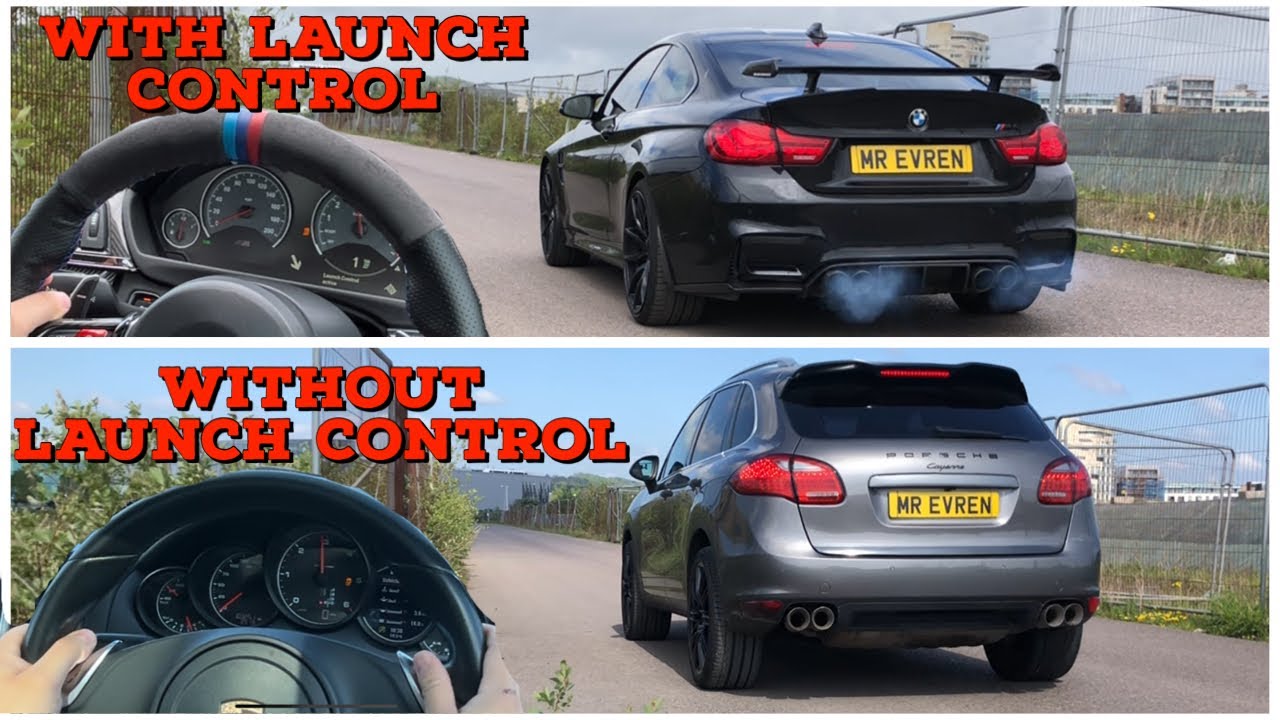
Somewhere in every performance car's menu system, there's a setting that turns a nervous, sweaty-palmed launch into a push-button formality. Hold the brake, mash the throttle, watch the tach settle at some computer-chosen RPM like it's waiting for permission, then let go of the brake and hang on. The car does the rest. No clutch feel required, no left foot needed, no chance to bog it or blow the tires off the line through sheer nerves.
Car people have never agreed on what to call this. Some call it launch control. Others call it the reason "real" 0-60 times don't mean anything anymore. A smaller, louder group calls it a fast way to turn a $6,000 clutch job into a $6,000 clutch job you paid for twice.
The disagreement isn't really about the feature. It's about what driving is supposed to be. Is a perfect launch a skill you earn through a thousand bad ones, or is it just physics you can hand off to a computer once the computer is good enough to do it right? Car culture has never fully made peace with that question, and launch control is where it keeps coming back up.
Here's what launch control actually does inside your drivetrain, why the "it kills your transmission" claim is both true and wildly overstated, and why the argument over whether using it makes you less of a driver isn't going anywhere.
⚙️ What's Actually Happening Under the Hood
It's Not Magic, It's Just Faster Math
Launch control is a computer doing three things simultaneously that a human can only ever do one at a time, and doing them with millisecond precision instead of gut feel. First, it holds engine RPM at a specific, pre-calibrated point, usually somewhere in the meat of the torque curve, well below redline but high enough to avoid bogging. Second, it manages wheel slip in real time through the traction control and stability systems, cutting power or modulating brake pressure at each wheel individually if it detects the tires starting to spin faster than the car is accelerating. Third, on cars with a clutch or torque converter, it controls the engagement itself, releasing it at a rate calibrated to put down maximum power without instantly overwhelming the tires or slamming the drivetrain with a shock load.
A human doing a "manual" launch is trying to approximate all three of those with a right foot, a left foot, a clutch pedal's rough biting point, and however many launches it took to build that feel. Launch control isn't cheating in the sense of breaking a rule. It's a real, factory-engineered feature that exists specifically because manufacturers know most drivers can't replicate what the computer does, and they want the car's quoted numbers to reflect what the car can do, not what the average driver can extract from it.
Why It Feels Different From Every Other Start
The reason a launch control start feels so strange the first time you do it is that nothing about it matches how a normal launch develops. There's no gradual buildup, no moment where you're modulating anything. You mash two pedals, the car holds itself at a fixed RPM against the brake for a beat, and then it's just gone, wheelspin managed so tightly it barely registers as a distinct sensation before the car is already at 20 mph. It's the closest thing a street car gets to a dragstrip Christmas tree perfect reaction time, minus the years of practice.
🕰️ How a Motorsport Trick Ended Up in Your Menu System
Launch control didn't start as a comfort feature. It came out of Formula 1 in the late 1980s and early 1990s, where teams like Williams and McLaren built electronic systems to manage traction off the line better than a human left foot ever could at those power levels. It worked so well, and made such a visible difference in race starts, that governing bodies eventually banned it from F1 entirely for giving cars an unfair, driver-skill-erasing advantage. That ban is worth sitting with for a second: the same technology car culture argues about on Reddit was once considered enough of a threat to competitive fairness that motorsport's own regulators outlawed it.
Consumer cars picked it up more slowly, filtering down through rally and touring car programs before showing up on road-going performance cars in the 2000s. Early adopters were exotic and halo cars where the manufacturer needed a defensible acceleration number for the spec sheet and couldn't rely on customers to extract it manually. By the 2010s it had trickled down into mainstream performance trims: Golf Rs, WRX STIs, Mustangs, Camaros. What used to be an F1 team's competitive edge is now a menu toggle in cars regular people finance over 72 months, which is a big part of why the "is this cheating" argument never fully settled. The feature's origin story is literally "too good, needed to be banned," and that reputation followed it into the driveway.
🏎️ Why the Same Button Behaves So Differently by Car
Not all launch control is created equal, and a lot of the drivetrain-wear debate is actually different people arguing about completely different systems without realizing it.
- Nissan GT-R (R35, early years): This is the case study everyone brings up. Early R35 GT-Rs developed a reputation for transmission damage when owners repeatedly used launch control at its most aggressive settings, hard enough that Nissan reportedly used launch-count data logged by the car's computer to deny warranty claims on transmissions that had seen excessive full-aggression launches. Nissan later revised the software to be more conservative. It's the single biggest reason the "launch control kills transmissions" myth has staying power, but it was really a specific car with a specific early-calibration problem, not a universal law.
- Dodge Hellcat and Demon: Dodge went the opposite direction, building launch control (and, on the Demon, an entire "TransBrake" system) specifically for repeated drag strip abuse, complete with a line-lock function and a driveshaft designed to handle it. These cars were engineered around the assumption that owners would launch them hard and often at the strip.
- Porsche PDK cars: As mentioned above, Porsche's dual-clutch launch control is widely regarded as one of the most durable implementations, partly because PDK was designed from the outset with repeated aggressive use in mind, including by the brand's own track-day culture.
- EVs like Tesla's "Ludicrous" mode: Electric performance cars don't have a clutch to fry, but they're not immune to wear either. Repeated max-launch use generates significant heat in the inverter, battery pack, and motor windings, and some owners have reported temporary power reduction ("limp mode") after repeated hard launches in quick succession as the car protects its electronics. Different mechanism, same underlying lesson: the drivetrain, electric or otherwise, has a duty cycle it was engineered around, and ignoring it has consequences.
The takeaway from comparing these: judging "launch control" as one universal thing is exactly the mistake that keeps the argument going. A GT-R owner who bricked a transmission in 2009 and a Demon owner who's launched two hundred times without issue are both telling the truth about their own car.
🔧 The Drivetrain Wear Question, Honestly Answered
This is where the real argument lives, and the honest answer is: it depends entirely on what you're launching from and how often.
On a Modern Dual-Clutch or Torque Converter Automatic
Launch control on a proper dual-clutch transmission (Porsche's PDK, most DCT setups from German and Japanese performance brands) or a well-calibrated torque converter automatic is engineered for repeated use. These systems were designed around the assumption that owners would launch them, sometimes a lot, and the calibration accounts for clutch pack wear and heat management. Porsche, for example, has publicly stated its PDK launch control is durable enough for regular use within reasonable limits. The wear that does happen is real but gradual, closer to the wear of aggressive daily driving than to a single catastrophic event.
On a Manual Transmission With a Clutch-Based Launch Control
This is where the horror stories come from, and they're not entirely myths. Cars with manual-adjacent launch control (think older Nissan GT-Rs before the DCT era, or aftermarket standalone ECU launch control on a manual car) are putting an enormous, repeated shock load through a mechanical clutch, flywheel, and the entire drivetrain, including axles, differential, and mounts. Clutch manufacturers and drivetrain shops have documented real cases of premature clutch disc wear, cracked flywheels, and even snapped axles from repeated hard launches, especially on cars where the launch control wasn't factory-calibrated for the specific drivetrain, like an aftermarket tune pushed onto a car with stock half-shafts.
The Honest Middle Ground
The truth that gets lost in forum arguments: launch control itself isn't inherently more damaging to a well-matched drivetrain than a human doing an aggressive manual launch. The damage comes from frequency and mismatch. Launching a car once for a magazine test is nothing. Launching it every red light for a year on a drivetrain that wasn't built for repeated shock loading is how you end up explaining a snapped CV joint to your mechanic. The button doesn't wear out your car. Using the button like it's a free pass to redline-launch a stock clutch every day does.
🥊 Why "Real Drivers" Get So Defensive About It
The Skill-Gatekeeping Instinct
Car culture has always used difficulty as a status marker. Heel-toe downshifting, rev-matching, double-clutching, all of these exist partly as functional techniques and partly as proof you put in the reps. Launch control short-circuits that entire value system by making the hardest, most nerve-wracking moment in performance driving, the launch, completely repeatable by anyone who can find the button in a menu. For drivers who spent years learning to feel a clutch's bite point through their left foot, watching a computer nail it perfectly on the first try understandably stings a little.
It Also Exposes an Uncomfortable Truth About Quoted Numbers
A big part of the resentment traces back to how manufacturers use launch control to generate the 0-60 and quarter-mile numbers that end up on spec sheets and in arguments. When two cars are being compared and one driver used launch control while the other tried to feather a clutch manually, the comparison was never fair to begin with. That's less an argument against launch control itself and more a reason to be skeptical of any quoted acceleration number, launch control or not, the same way seasoned car people already treat manufacturer 0-60 claims as a best-case scenario rather than gospel.
The Drag Strip Sees It Differently
Ironically, the community most invested in raw acceleration, drag racers, mostly doesn't share the "it's cheating" take at all. At the strip, consistency wins races. A driver who can nail the same 60-foot time run after run because the car manages it electronically is doing exactly what drag racing has always rewarded: repeatability. The stigma around launch control is much stronger among street and canyon-road car culture, where the driving itself is the point, than among people who are timing themselves against a tree of lights.
🧠 When Launch Control Is Actually Worth Using
- On a track or at a sanctioned drag strip, where consistency matters and you're not putting the drivetrain through it dozens of times a week
- On a factory-calibrated system the manufacturer built specifically for repeated use, not an aftermarket tune bolted onto a drivetrain that was never engineered for it
- When you actually understand your car's limits, meaning you know whether your clutch, axles, and mounts were built with launches in mind or whether you're one hard pull from a very expensive lesson
- As a learning tool, not a permanent crutch. Feeling what a perfect, computer-managed launch is supposed to feel like can genuinely help a driver understand what they're trying to replicate manually
Where it's a bad idea: daily-driving a stock manual clutch that wasn't designed for repeated hard launches, using it on a cold engine or cold tires where grip and lubrication haven't stabilized yet, or leaning on it as a substitute for actually learning your car's clutch feel if you ever plan to drive it hard without the electronic net.
Spota tip: if you're chasing a personal-best launch, log it. A Garage profile tracks your car's mod history and progression over time, which makes it a lot easier to notice if a drivetrain component is wearing faster than it should after a season of hard launches, instead of finding out the expensive way.
❓ Quick Answers to What People Actually Search
Does launch control void your warranty? Usually not by itself, but several manufacturers (Nissan's early GT-R being the famous example) do log launch events and aggression levels, and can use that data to deny a claim if a component fails and the logs show a pattern of excessive hard launches. Read your specific warranty terms rather than assuming either way.
Is launch control faster than a manual launch? For the vast majority of drivers, yes, by a meaningful margin, because it eliminates hesitation, inconsistent clutch feel, and wheel slip mismanagement. A handful of pro drivers with dedicated seat time on a specific car can match or occasionally beat it, but that's the exception, not the rule.
Can you damage a car using launch control once or twice? On a factory system used within its intended parameters, a single launch is very unlikely to cause damage. The wear stories almost always involve either repeated aggressive use, a non-factory tune, or a known problem generation of a specific car (see the R35 GT-R above).
Does it work the same on a manual transmission? Not usually. True electronically-managed launch control on a manual car has to control clutch engagement itself, which is mechanically harder to do smoothly than on a dual-clutch or automatic, and is a big part of why manual launch control systems have historically been rarer and more failure-prone than automatic ones.
🏁 The Debate That Won't Resolve, and Doesn't Need To
Launch control isn't going anywhere, and neither is the argument about it. As long as car culture keeps one foot in "driving is a skill you earn" and the other in "the car should do what it's engineered to do," a feature that makes the hardest part of driving effortless is always going to sit right on that fault line.
The honest takeaway is less dramatic than either side wants it to be. Launch control won't destroy a drivetrain that was built to handle it, and it won't turn a mediocre driver into a good one either. It just does one specific thing, a perfect launch, better than almost any human ever will, and leaves everything else about being a car person, the mods, the miles, the mistakes, the credit, exactly where it always was: on you.
For more on the specs car culture loves to argue about, see why 0-60 times became car culture's favorite flex, or browse the rest of the under-the-hood archive for more myths worth busting.