
🔧 "Just LS Swap It" Isn't a Joke Anymore
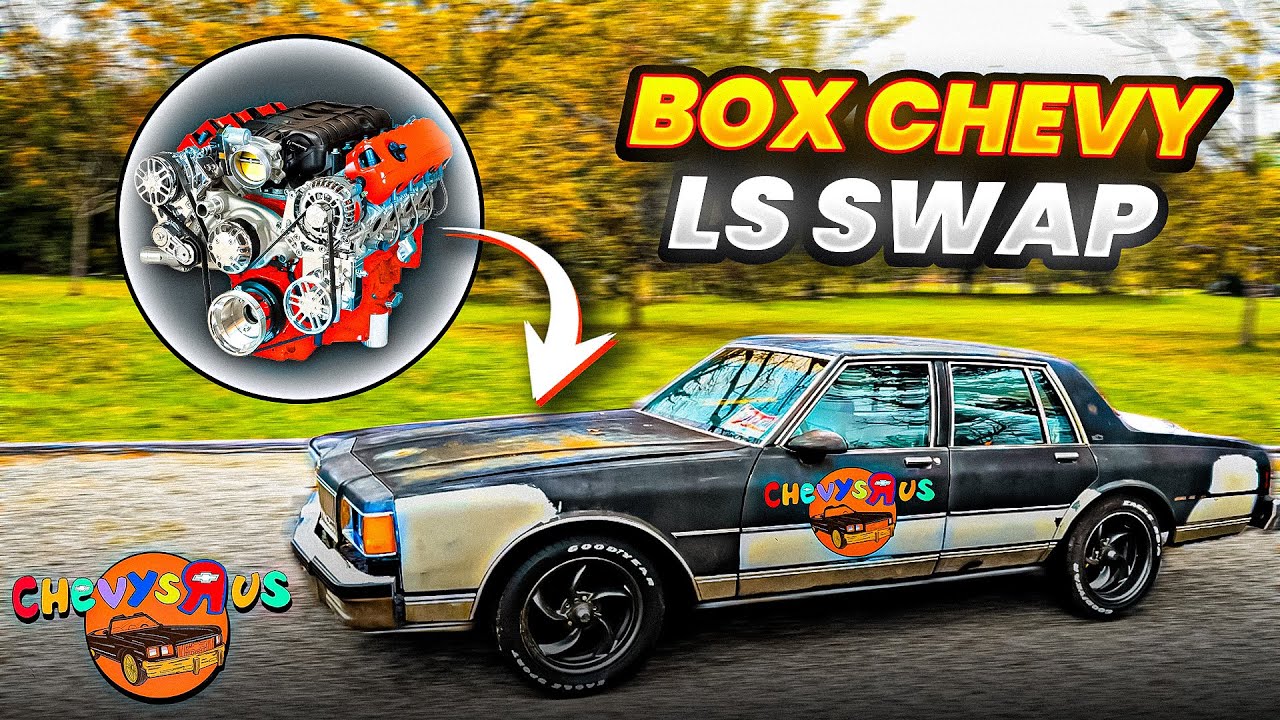
Somewhere along the way, "LS swap it" stopped being a punchline and became actual advice. Broken Miata? LS swap it. Old Jeep with a tired inline-six? LS swap it. Drift-spec Nissan with a blown RB26? Believe it or not, plenty of guys still LS swap it. Rat rod, boat, golf cart, forklift, none of it is safe.
The meme is so old at this point that car people forget it started as a joke about how often it happened, not a suggestion that it should happen. Except it turns out the joke was right. The LS really does go in almost anything, and there's a very real reason why.
This isn't really about Chevy loyalty. Plenty of the people doing these swaps daily drive imports and wouldn't be caught dead in a stock Camaro. It's about a specific engine family that happened to check every box an engine swap needs checked at once, at a price nothing else gets close to.
🏭 GM Accidentally Built the Perfect Swap Engine
It Was Never Designed to Be a Swap Icon
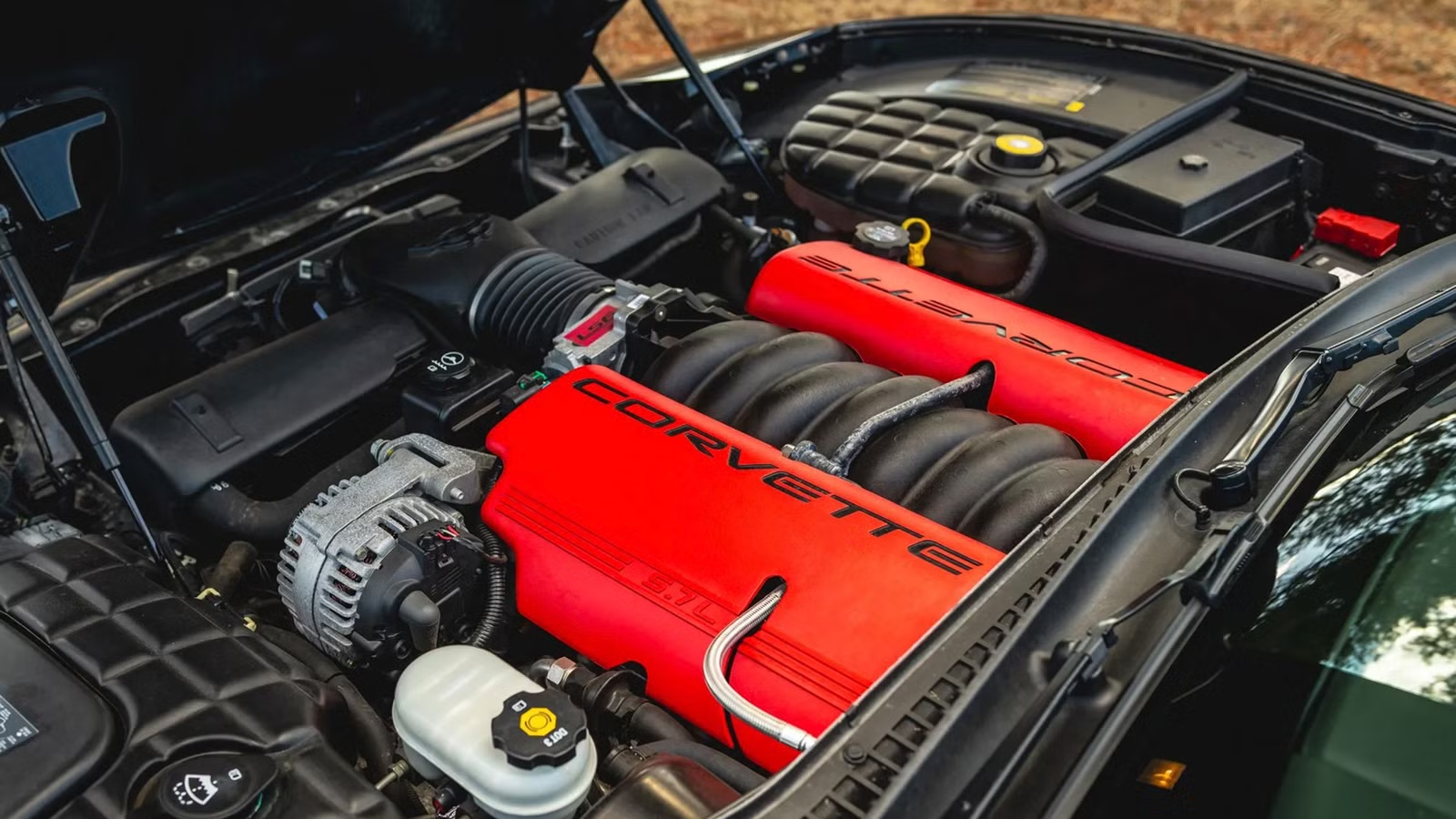
The LS platform (Gen III/IV small block V8, produced from 1997 through the mid-2010s in various forms) was built to be GM's mainstream truck and performance engine. Corvettes, Camaros, Silverados, Suburbans, Escalades. It was never engineered with the swap community in mind. That's actually part of why it works so well: GM built millions of them, for decades, across dozens of platforms, which means:
- Massive supply. Junkyards and salvage auctions are flooded with them. A running LS out of a wrecked truck is often cheaper than a rebuild kit for whatever engine you're replacing.
- Shared architecture across variants. An LS1 out of a '99 Camaro shares the same bellhousing pattern, similar dimensions, and largely interchangeable electronics with an LQ4 out of a 2005 Suburban. Learn one, and you basically know them all.
- Truck-engine durability. These motors were built to sit in work trucks and tow trailers for 200,000+ miles without drama. That's a very different design brief than a boutique performance engine, and it shows in how well they take abuse.
The Power-to-Weight Math Nobody Can Argue With
An LS block is aluminum in most of its common variants (the iron-block truck motors are the exception, and even those get used). That means you're getting genuine V8 displacement, typically 4.8L to 6.2L depending on which one you source, at a weight that's competitive with a lot of factory inline-sixes. Compare that to a similar-output turbocharged four-cylinder build, where you're paying for a built bottom end, upgraded turbo, bigger injectors, a standalone tune, and intercooler piping to get anywhere close to what a used LS makes bone stock.
Rough ballpark, and prices move around by region and year:
- A solid used LS engine (long block, sourced from a running vehicle): $1,000-$2,500
- Making 400+ naturally aspirated horsepower reliably: bolt-ons, a cam, headers, a tune, well under $5,000 total in a lot of cases
- Getting a built high-strung four-cylinder to the same output reliably, with the same daily-drivability: often more, and with more fragility at the finish line
That math is the whole story. Car people aren't loyal to a brand logo. They're loyal to whatever gets them the most reliable horsepower per dollar, and for two decades running, that's been the LS.
🚗 Why It Ended Up in Everything, Not Just Other Chevys
The Miata Is the Poster Child
The Mazda Miata LS swap is basically its own subculture at this point (usually called an "LSx Miata" or, depending on displacement, an "LS-swapped NA/NB"). The Miata is famously underpowered from the factory and famously light, so dropping in an engine with two or three times the stock output turns it into an entirely different animal: still tossable, suddenly terrifying. It's become such a common build that there are dedicated mount kits, wiring harnesses, and full how-to guides just for that one swap combination.
The JDM Crowd Uses It Too
This is the part that surprises people outside car culture: plenty of Nissan, Toyota, and even some Honda platforms get LS swaps too, especially drift builds. An RB26 is a phenomenal engine, but it's also expensive to build past a certain power level and increasingly hard to source parts for. An LS making similar or better power, with a bigger aftermarket and a fraction of the cost, is a real alternative for someone who wants to drift, not restore a museum piece. It's not universal (plenty of purists will never touch it), but it's common enough that "LS-swapped S13" isn't a rare sight at a drift day anymore.
It's Not Just Cars
Boats, side-by-sides, old trucks, even the occasional golf cart. Once an engine platform gets cheap, reliable, and well-documented enough, it stops being "a Chevy thing" and starts being "the default thing," the same way a specific wrench size or fastener becomes the standard everyone stocks. The LS crossed that line a long time ago.
📊 LS vs. the Other "Universal" Swap Engines
The LS isn't the only engine with a cult following in the swap world. The 2JZ (Toyota Supra) and the K-series (Honda) both have serious reputations too, and it's worth understanding why the LS still wins on raw popularity even though those two are legendary in their own right.
- 2JZ-GTE: Bulletproof at high boost, but it's a heavy iron-block inline-six, it's increasingly expensive as Supra prices climb, and good units are getting harder to source at a reasonable price. It shines when the goal is huge turbocharged power, less so when the goal is cheap and simple.
- K-series (K20/K24): Fantastic naturally aspirated character, revs like nothing else, and it's a favorite for Honda-platform builds specifically. But it tops out lower on the "how much power can I make without getting exotic" scale compared to an LS, and swapping it outside the Honda family is far less documented.
- LS: Doesn't necessarily win on any single axis (there are engines that rev higher, engines that are lighter, engines with a cooler exhaust note stock). It wins on the combination: cheap acquisition cost, huge aftermarket, forgiving tolerances, and a well-worn path into almost any chassis.
That's the actual nuance that gets lost when people argue about it online. Nobody credible is claiming the LS is the best engine ever built. The claim is narrower and more accurate: it's the best engine to swap into something else, for the money, more often than not.
🕰️ A Quick History, Because It Explains the Variety
The LS family isn't one engine, it's a whole generation of GM small blocks spanning roughly two decades, and that spread is part of why the swap scene has so many options:
- LS1 (1997-2004): The original, debuted in the C5 Corvette. All-aluminum, relatively light, the one that kicked off the whole swap movement.
- LS2/LS3/LS7 (mid-2000s onward): Bigger displacement, more factory horsepower, found in later Corvettes and Camaros. The LS3 in particular became a favorite crate-engine option for builders who want a fresh engine rather than a junkyard pull.
- LQ4/LQ9/iron-block truck variants: Heavier because of the iron block, but famously overbuilt and dirt cheap out of trucks and SUVs. Popular for builds where weight matters less than budget and the ability to handle serious boost.
- LSA/LS9 (supercharged factory variants): Factory-blown versions out of the CTS-V and ZR1. Rarer and pricier to source, but they exist for builders who want factory forced induction without doing it themselves.
Knowing which variant is under discussion matters, because "just LS swap it" hides a genuinely wide range of weight, displacement, and cost depending on which one someone actually sources.
❌ The Misconceptions Worth Clearing Up
"LS swaps are cheating." This comes up constantly in build threads, especially from people defending a harder, more expensive route with their original engine platform. It's not cheating, it's a tradeoff. Nobody accuses a builder of cheating for buying a crate engine instead of machining their own block. An LS swap is a resource decision, not a skill shortcut. If anything, doing the fabrication, wiring, and tuning work to make a swap clean is its own kind of hard.
"It ruins the character of the car." Sometimes true, sometimes not. A Miata with an LS is objectively a different car than a stock Miata, and that's the point for the person doing it. Nobody's forcing purists to build one. The build exists because there's demand for that specific outcome: a chassis people love, with an output problem people wanted solved.
"It's only for drag cars." Plenty of LS swaps exist purely for daily-drivability, easy parts access, and long-term reliability, not straight-line numbers. A tired old truck or SUV getting a fresh, cheap LS instead of a $6,000 factory-engine rebuild is a completely different motivation than a quarter-mile build, and it's just as common.
🛠️ What the Swap Actually Involves (The Part the Memes Skip)
An LS swap sounds simple because the meme makes it sound like you just drop the thing in and go. In practice, a clean swap involves:
- Mounts and crossmember work: every chassis is different, and aftermarket mount kits exist for the popular combos, but anything unusual means custom fabrication
- Wiring harness: modern LS engines run on drive-by-wire electronics with a dedicated ECU, so you're either running a full harness/ECU setup or converting to a standalone management system
- Transmission pairing: matching the LS to whatever gearbox is going behind it, whether that's an adapted factory unit or a swap-specific bellhousing
- Cooling and fitment: radiator, fan, and accessory clearance in a chassis the engine was never designed for
- Exhaust routing: headers that clear steering components and the chassis rails, which varies wildly car to car
None of that is beginner-friendly. The reason the swap feels approachable anyway is documentation: two decades of forum threads, YouTube build series, and shops that specialize specifically in LS swaps for popular platforms. The parts and the knowledge both exist at a scale no other swap engine can match.
🔥 Spota Tip
If you're mid-build on an LS swap (or defending your build choice for the hundredth time this month), your Garage on Spota is the place to document the whole process, from teardown to first startup, so the receipts exist when someone inevitably asks "wait, that's not the factory engine?"
🧭 The Real Takeaway
The LS swap meme survives because it's grounded in something true: an engine platform that's abundant, durable, light for its displacement, and cheap to make real power with, dropped into a culture that will put a good engine in anything with four wheels (or none). It's not really about Chevy. It's about what happens when supply, simplicity, and performance all line up at once.
Car people don't do it because it's funny. They do it because it works, and the joke is just what's left over after enough people found that out the hard way.
For more culture deep-dives like this, check out why every Hellcat owner is on borrowed time or browse the full under-the-hood category.