
🔢 Two Words That Can Double a Car's Value Overnight
Say "numbers matching" in any group of car people and watch the room change. Somebody leans in. Somebody else pulls up their phone to check a VIN decoder. It's one of the only phrases in the hobby that works like a magic word: say it correctly, backed by paperwork, and a car's value can jump by tens of thousands of dollars. Say it and get caught bluffing, and that same car becomes a cautionary tale on every forum from here to r/ClassicCars.
Here's the thing most people outside the hobby don't get: a numbers matching car isn't just old and original. It's a car where the story the seller is telling you can actually be verified, piece by piece, against a physical record stamped into the metal decades ago. It's provenance you can put your hands on.
This piece is for the people who've heard the term thrown around at meets and auctions and want to actually understand what it means, why it became such a big deal, and why some of the smartest car people in the world will pay a massive premium for a slightly less powerful engine as long as it's the right one.
🏭 What "Numbers Matching" Actually Means
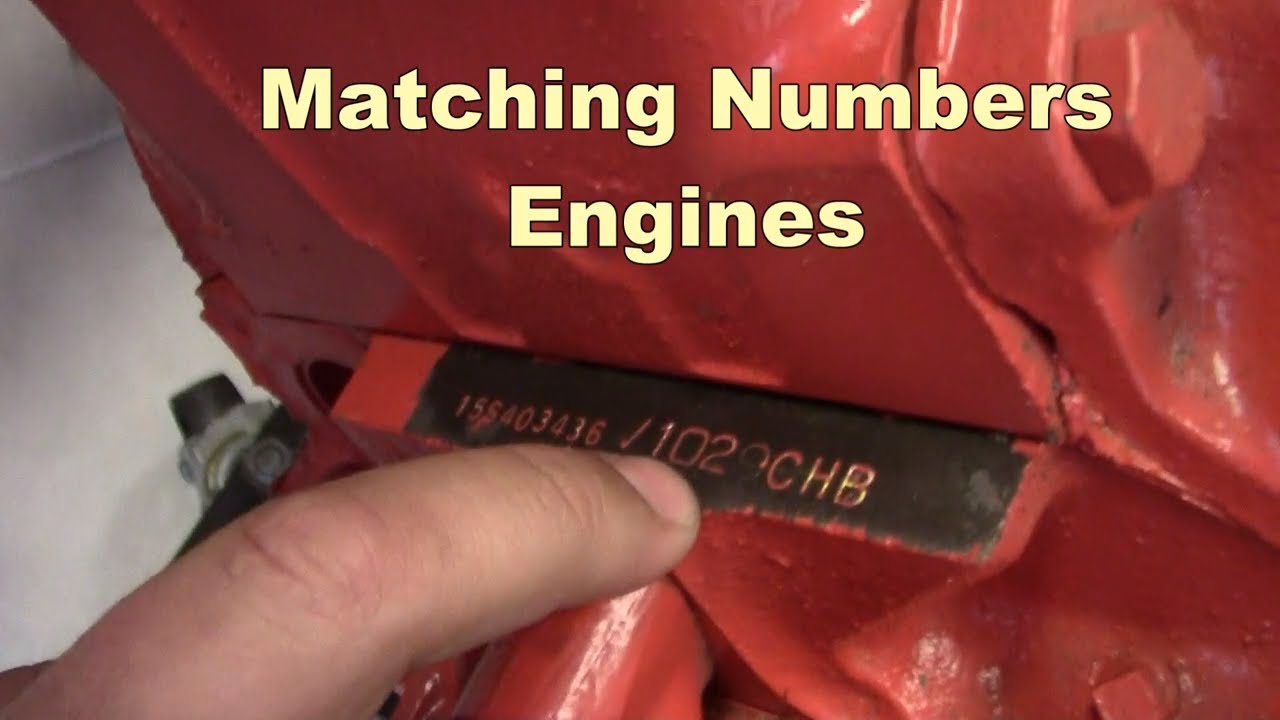
At its simplest, numbers matching means the major components of a car (usually the engine, and sometimes the transmission, rear differential, and even the body itself) carry casting numbers, stamped codes, or date codes that correlate back to the car's original VIN or build sheet. In other words: this is the engine the factory bolted into this exact car, on this exact day, not a similar one swapped in later.
Most muscle car and classic car manufacturers had their own version of this system:
- GM stamped a partial VIN derivative onto the engine block near the front, readable once you know where to look.
- Ford used casting numbers and date codes that, combined with a build sheet or Marti Report, can confirm an engine's factory origin.
- Mopar buyers lean on fender tags and broadcast sheets that list the exact engine, trans, and options that left the factory with that specific car.
None of these systems were built with collectors in mind. They existed for quality control and warranty tracking. Nobody in 1969 stamping a big block Chevelle's block thought "one day someone will pay six figures because this exact stamp survived." But that's exactly what happened, because those stamps turned out to be the only reliable way to answer a question car people care about more than almost anything else: is this real, or is this a story?
💰 Why the Premium Is So Massive
Ask why a numbers matching car can be worth double (sometimes triple) a nearly identical car with a replacement engine, and the honest answer is part economics, part psychology, part scarcity.
The economics are simple. Original engines get destroyed. They get blown up at the drag strip, swapped for something bigger, junked after a rod knock nobody wanted to fix in 1987, or simply worn out and replaced with whatever crate motor was cheapest at the time. Every one of those events permanently removes one more numbers matching example from existence. Fewer survivors, same (or growing) demand, prices go up. It's the same scarcity math that drives every collectible market, just with more torque.
The psychology is where it gets interesting. A numbers matching car isn't just original, it's honest. It hasn't had a story rewritten. Car people, maybe more than most collectors, care deeply about authenticity because the hobby is built on a foundation of trust between strangers. You're buying a 50 year old machine from someone you've never met, based on claims about what's under the hood that you often can't fully verify by looking. A stamped, decodable, cross-referenceable engine number is one of the few pieces of hard evidence in a hobby otherwise built on handshakes and forum reputation.
And then there's status. Owning the real, original, factory-correct example of something isn't the same flex as owning a great-driving clone. Anyone with enough money can build a numbers-close tribute car. Owning the genuine article says something different: you found it, you verified it, and you didn't have to fake anything.
🕵️ How Collectors Actually Verify It
This is where the hobby gets genuinely detective-like. Verifying numbers matching status isn't a single lookup, it's cross-referencing multiple independent sources that all have to agree:
- The VIN plate, usually on the dash or door jamb, giving the factory record of what the car was built as.
- The engine stamp or casting number, physically located on the block itself, which should correlate to the VIN or a factory code for that production run.
- Build sheets or broadcast sheets, paper documents (sometimes literally found stuffed inside seat springs or under carpet during restorations) listing every option the car left the factory with.
- Third-party verification reports, like a Marti Report for Fords, which cross-reference factory production data against a specific VIN.
- Casting date codes, which need to predate or closely align with the car's actual build date. An engine cast three months after the car was built obviously can't be original to it, no matter what the stamp says.
Serious buyers will check all of these before writing a check, and serious sellers know it. This is exactly why a folder of original paperwork can add real money to a sale: it's not sentimental clutter, it's the chain of custody.
For a deeper look at how car people build and preserve the story of a specific vehicle over time, check out how the Garage system works for tracking a car's full history and documentation, not just its current spec sheet.
🧨 The Fakes, the Frankensteins, and the Forum Wars
Where there's a premium, there's an incentive to fake it, and numbers matching claims have absolutely been abused. A few of the classic ways it goes wrong:
- Restamped blocks. Someone takes a correct-era, correct-type engine and re-stamps the numbers to match a specific desirable car. Done well, this can fool casual buyers. Done poorly, it's obvious to anyone who knows what factory stamping dies actually look like versus an aftermarket restamp.
- Date code mismatches. The engine's casting date is later than the car's build date, an easy thing to miss if you're not checking, and an instant red flag if you are.
- "Numbers matching" applied loosely. Some sellers stretch the term to mean "period correct" or "the right type of engine" rather than "verifiably this car's original unit." Always ask what specifically was checked and how.
- Parts car donors. A rough, non-running numbers matching car gets its engine transplanted into a nicer-driving shell of the same model, and the nicer car suddenly gets marketed with numbers matching status it never actually had.
This is exactly why forums like the model-specific Mopar, GM, and Ford communities have entire threads dedicated to nothing but verifying stamps, date codes, and casting numbers from photos. It's part car culture, part forensic accounting, and everybody takes it dead seriously because real money and real reputations are on the line.
🛠️ Does It Matter If You're Not Buying a $100k Muscle Car?
Here's the part that surprises people who assume this is only a blue-chip collector conversation: numbers matching culture has quietly shaped how a huge number of enthusiasts think about their own daily-driven, modified, project cars, even ones worth a fraction of that money.
Plenty of builders keep the original engine even after swapping to something bigger and faster, storing it in a garage corner "just in case," because the idea of permanently severing a car from its original heart feels wrong even on a $6,000 project. Others chase numbers matching status on genuinely modest cars, a base model coupe nobody would have looked at twice in period, purely because verified originality has become its own kind of achievement independent of horsepower or rarity.
It's connected to a broader instinct in the hobby: the sense that a car's history is part of what you actually own, not just its current performance numbers. That's the same instinct behind car people obsessing over why every Hellcat owner is on borrowed time as much as they obsess over 0-60 times: the story of a car, including how it holds up and what's original versus replaced, matters as much as the spec sheet.
Spota tip: this is exactly the kind of detail worth logging in a car's Garage profile. Original engine, replaced engine, date of any swap, it's the same instinct as a numbers matching folder, just digital and built for a build that's actually evolving instead of frozen in a museum.
📉 The Flip Side: When Originality Isn't Actually Better
Not everyone in the hobby worships numbers matching status, and there's a legitimate counter-argument worth taking seriously. A numbers matching car is, definitionally, running whatever engine the factory happened to bolt in that day, with all its factory-era limitations. Plenty of drivers would rather have a resto-mod with a modern LS swap, better cooling, fuel injection, and actual reliability than a numbers matching original that's fragile, underpowered by modern standards, and terrified of being driven hard because every mile puts irreplaceable factory parts at risk.
There's a whole segment of the hobby built around exactly this tradeoff: cars that look period-correct outside but run modern drivetrains underneath, explicitly because their owners would rather drive a great car than baby a numbers matching museum piece. Neither approach is wrong. They're just optimizing for different things: verified history and maximum resale value versus a car you can actually beat on without flinching.
🏁 The Bottom Line
Numbers matching status isn't really about horsepower or top speed. It's about truth. In a hobby where a huge amount of value rides on trusting a stranger's story about a machine you're buying sight-mostly-unseen, a stamped block that can be cross-checked against a VIN and a decades-old build sheet is one of the few things that can't be talked around. That's exactly why car people treat it like scripture, argue about it endlessly on forums, and will pay real money for the difference between "correct-type engine" and "the actual, original, factory-installed engine."
Whether you're chasing a six-figure numbers matching legend or just keeping your own project's original block in the corner of the garage out of principle, the instinct is the same one that drives this whole hobby: the story of the car matters as much as the car itself.