
🚩 The Listing That's 40% Cheaper Than Everything Else
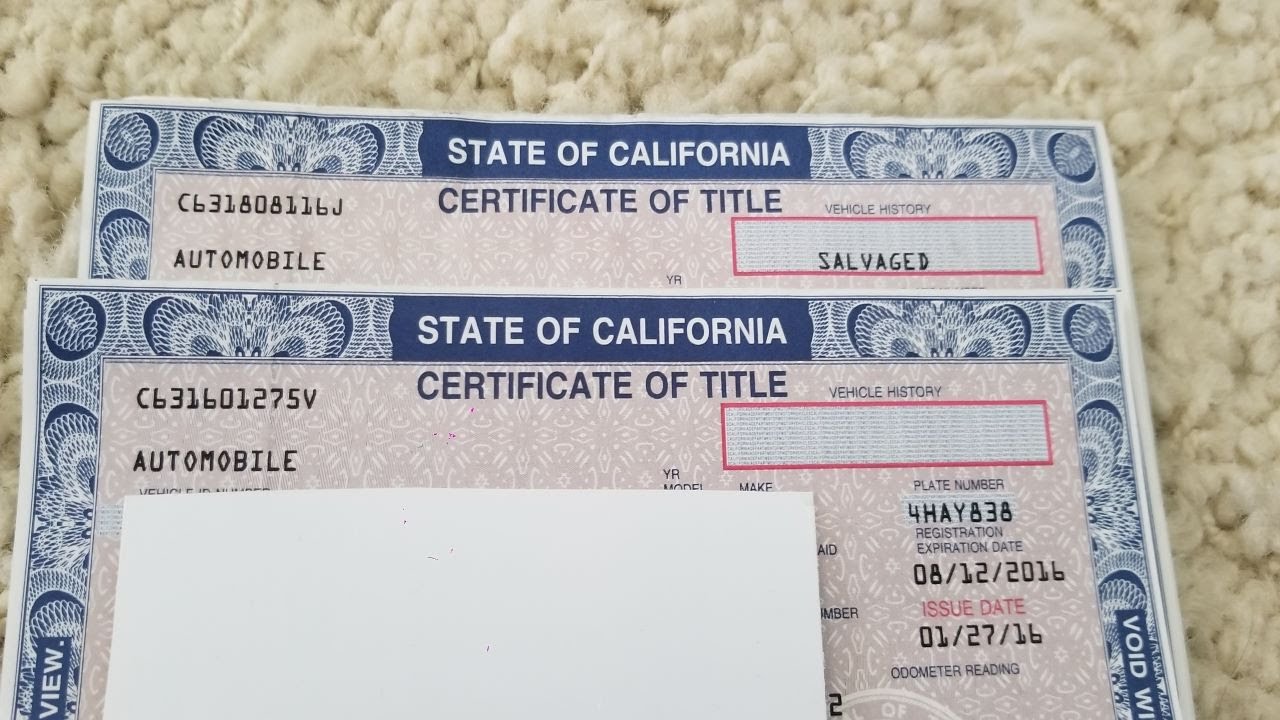
You've seen it. The exact car you want, same year, same trim, same mileage as every other listing on the page, except this one is thousands cheaper. You scroll down. There it is in small print: salvage title or rebuilt title.
Every car guy has stared at that listing and felt the same pull. That's a real discount on a real car. Why is everyone else paying more for the same thing?
Here's why: that title brand isn't a paperwork technicality. It's the permanent record of the day an insurance company looked at that car and decided it wasn't worth fixing. Somebody, somewhere, made a business decision that the car was worth more dead than alive, and the title follows it forever, through every owner, every state, every sale, no matter how good the repair looks.
Some salvage cars really are smart buys. A lot of them are also disasters wearing a fresh coat of paint. The hard part is telling the two apart before you hand over cash, not after.
📋 What a Branded Title Actually Means
The Insurance Total Loss Formula
A car gets a salvage title when an insurance company declares it a total loss, and that decision comes down to one number: the total loss threshold (TLT), which most states set somewhere between 70-100% of the car's actual cash value (ACV).
The math is simple and brutal. If your car is worth $20,000 and the repair estimate comes in above your state's threshold percentage of that number, the insurer totals it instead of paying for repairs. States with a lower threshold total cars faster. States with a 100% threshold (a "true total loss" state) will keep paying for repairs right up until the estimate matches the car's full value.
This is why the same accident can total a car in one state and get repaired under insurance in another. It's also why a lot of salvage cars aren't nearly as destroyed as the word "salvage" implies. A car with $14,000 of cosmetic front-end damage on a $15,000 ACV base gets totaled in a low-threshold state even if the frame, engine, and safety systems are completely untouched.
Not All Salvage Damage Is Equal
Salvage titles get issued for wildly different reasons, and the reason matters more than the brand itself:
- Collision damage - the most common, ranges from minor front-end damage to structural frame damage
- Flood damage - by far the scariest category, covered in detail below
- Theft recovery - stolen, stripped for parts, then recovered and totaled by the insurer even if the body is intact
- Hail damage - purely cosmetic in the vast majority of cases, mechanically the car is often fine
- Fire damage - can range from a contained engine bay fire to a total loss of the interior and wiring harness
A hail-damaged car with a salvage title can be a genuinely great deal: the panels are dented, the mechanicals are untouched, and a paintless dent repair shop can make it look close to new for a few thousand dollars. A flood car with a salvage title is a different animal entirely, and no amount of detailing fixes what's wrong with it.
Salvage vs. Rebuilt: Two Different Documents
These terms get used interchangeably, but they're not the same thing:
- Salvage title - the car cannot legally be driven or registered. It exists only to be repaired, parted out, or scrapped.
- Rebuilt (or "reconstructed") title - the car has been repaired, passed a state-mandated inspection, and is now legal to drive and insure again.
A rebuilt title is what you'll actually be buying, because a true salvage title means the car isn't road-legal yet. The catch: state inspection standards for issuing a rebuilt title vary enormously, and most of them check whether the car is safe to drive, not whether the repair was done well. A rebuilt title tells you the state signed off. It says nothing about whether the shop that did the work knew what it was doing.
💧 Flood Cars: The One Salvage Category Every Car Guy Should Actually Fear
Why Water Damage Is the Worst-Case Scenario
Collision damage is visible and repairable. Water damage is neither. Water gets into places you'll never inspect: behind the dash, inside the wiring harness, under the carpet padding, into the ECU and every other module in the car. It causes corrosion that takes months or years to fully show up, long after the seller has cashed out and moved on.
What flood damage actually does to a car:
- Corrodes electrical connectors and grounds, causing intermittent electrical gremlins that mechanics chase for months
- Ruins wiring harness insulation from the inside, invisible until it fails
- Warps and rusts brake and fuel lines from the inside out
- Contaminates transmission fluid, differential fluid, and engine oil if water gets past seals
- Leaves mold and a permanent musty smell in carpet, headliner, and seat padding that no amount of ozone treatment fully kills
- Corrodes airbag control modules, which can mean airbags that either don't deploy or deploy when they shouldn't
Flood Cars Get Laundered
Here's the part that should actually worry you: after a major hurricane or flood event, thousands of flood-totaled cars get bought at salvage auction, driven or trailered to a state with looser title-transfer rules, retitled as clean, and sold across the country to buyers who have no idea. This is called title washing, and it's a well-documented problem after every major flood event.
A basic VIN history check (Carfax, AutoCheck, or the free NMVTIS lookup at vehiclehistory.gov) catches most of it, but not all of it. Washed titles specifically exist to slip past that check. The only real defenses: physically inspect for water lines inside the trunk and under the carpet, check for mismatched interior fasteners (a sign the interior was pulled and dried), smell the car with the windows up on a hot day, and check the manufacture date stamped inside the doorjamb and glovebox against the model year. Mismatched sourcing dates on major components are a red flag no VIN report will show you.
🔧 Rebuilt Doesn't Mean Rebuilt Right
The Inspection Isn't What You Think It Is
Most state salvage-to-rebuilt inspections check that the VIN matches, that major safety systems function, and that the car isn't stolen. They generally do not check weld quality on a repaired frame, verify that airbags were replaced instead of just having the warning light disabled, confirm the alignment is actually correct after a frame pull, or inspect whether OEM crumple zones were restored to spec.
That gap is where bad rebuilds live. A shop chasing volume can replace a bent frame rail with a salvage-yard part that's close enough to pass the inspection's VIN and function checks, without the structural integrity ever being verified. You'd never know from a test drive. You might never know until the day that repair matters, in a second collision the car was never actually built to survive again.
What a Bad Rebuild Looks Like Under the Hood
Things a rushed or corner-cutting rebuild commonly gets wrong:
- Frame or unibody repairs done with incorrect metal gauge or weld technique instead of proper structural replacement
- Airbags reset or disabled at the module level instead of genuinely replaced after deployment
- Aftermarket or junkyard airbags that don't match the OEM part number for that specific trim
- Suspension geometry that's close but not correct after a frame straightening, leading to uneven tire wear that shows up months later
- Mismatched paint codes and panel gaps that a trained eye (or a paint depth gauge) catches immediately
- Seat belt pretensioners that were fired in the accident and never replaced
None of this shows up on a casual test drive. All of it shows up eventually, and usually at the worst possible time.
💰 The Real Cost Math: Insurance, Financing, and Resale
Insurance Gets Complicated Fast
Some insurers flat-out won't write comprehensive or collision coverage on a rebuilt title car. Others will, but only after their own inspection, and often at a lower agreed value than a clean-title equivalent, meaning you're paying premiums on a car the insurer has already decided is worth less than market comps. Liability-only coverage is usually available everywhere, but that leaves you exposed if the car itself gets damaged again.
Always call your insurer with the specific VIN before you buy, not after. A salvage or rebuilt title that can't get comprehensive coverage changes the entire math on whether the discount is actually worth it.
Financing a Branded Title Is Harder Than You Think
Most traditional banks and credit unions won't finance a salvage or rebuilt title car at all, or they will, but at a meaningfully higher interest rate to offset the risk. That pushes a lot of salvage-title buyers toward cash purchases or specialty lenders, which shrinks the discount once you account for financing costs.
The Resale Discount Never Goes Away
A rebuilt title permanently reduces a car's resale value by roughly 20-40% compared to an identical clean-title car, for the entire time you own it, no matter how well the repair was actually done or how long you've driven it since. That discount is baked into the vehicle's history report forever. You're not just buying a cheaper car today. You're buying a car that will always sell for less than it "should," which matters a lot if resale value factors into your car-guy math at all.
🔍 How to Actually Inspect One (If You're Still Interested)
If the discount is worth the risk to you, and for the right car with the right damage history, it genuinely can be, do this before you buy, not after:
- Pull the full VIN history from Carfax or AutoCheck AND the free NMVTIS report, since they don't always agree, and cross-reference both
- Ask for the original insurance total-loss estimate, which details exactly what was damaged and repaired, if the seller has it
- Get an independent pre-purchase inspection from a mechanic who has zero relationship with the seller, and tell them explicitly to check frame alignment, not just run through a basic checklist
- Check panel gaps and paint depth with a cheap paint thickness gauge; factory panels read consistent, repainted panels read thicker and inconsistent
- Inspect the doorjamb and glovebox build date stamps against each other and against the title's damage date
- Smell test and carpet check for water damage even on a car listed as collision-only; sellers don't always know the full history themselves
- Verify airbag part numbers against the VIN if the car was in a crash severe enough to deploy them
- Confirm insurability with your own agent using the actual VIN before you commit to anything
A rebuilt title with clean documentation, an honest seller, a quality shop, and a passed independent inspection can be one of the smartest buys in the entire used market. A rebuilt title with a vague story, a reluctant seller, and panel gaps that don't quite line up is a five-figure mistake wearing fresh paint. The title brand tells you a car was totaled. Everything else on this list is what tells you whether it was actually fixed.
Spota tip: if you do end up buying a rebuilt-title project, the Garage is the right place to document the repair history and every mod that follows, since a build with a transparent, photographed timeline is worth more to the next buyer than one with a title brand and nothing else to back it up.
For more on spotting a bad deal before it costs you, check out Red Flags for Car People.
The discount on a salvage or rebuilt title car is real. So is the risk. Do the homework the seller is hoping you skip, and you'll know within an afternoon which one you're actually looking at.