
🚔 The Car That Was Never the Problem
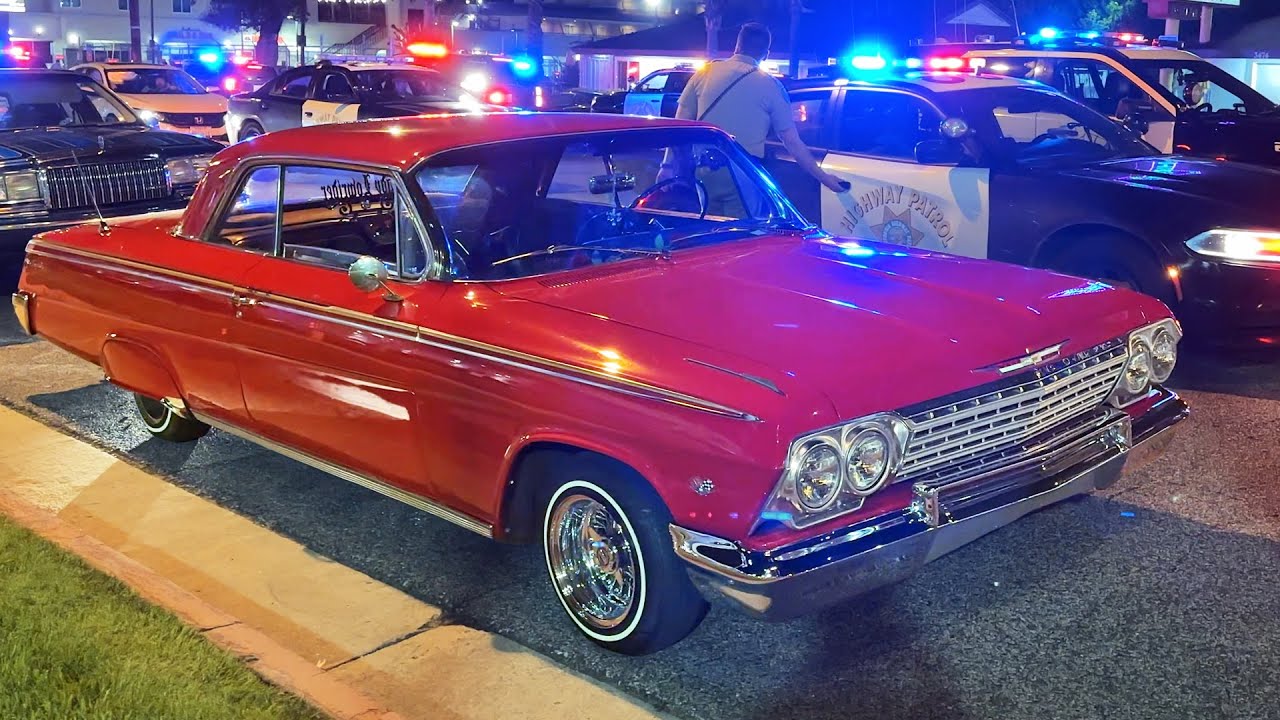
Picture a stock, clean, perfectly legal car. Now picture that same car getting pulled over four times in one night, not for speeding, not for a broken taillight, but for driving the same three blocks back and forth at 15 miles an hour with the windows down and the music up.
That was Tuesday night for a lot of lowrider owners for the better part of 50 years. Not because they broke a real traffic law. Because cities across the country wrote laws specifically to stop cars like theirs from existing on the street at all.
Lowrider culture didn't survive five decades of that by accident. It survived because it was never really about the car being slow, or low, or bouncing. It was about a community that refused to disappear just because it made other people uncomfortable. And in 2024, that community finally won the legal fight it had been fighting since before most of today's builders were born.
This is the actual history behind hydraulics, "low and slow," and why a car doing something as simple as cruising down a street became one of the most policed acts in American car culture.
🔧 Low and Slow Was the Whole Point
Lowrider culture started in East Los Angeles in the 1940s and 50s, built almost entirely by young Mexican-American men who wanted something the mainstream hot rod scene of the era wasn't offering them. Hot rodding, the dominant car culture of postwar America, was obsessed with speed: stripped-down bodies, big engines, straight-line acceleration, going fast for the sake of going fast.
Lowriders flipped that on its head on purpose. The philosophy was "low and slow", and it was a direct cultural statement. Instead of stripping weight and gunning it, lowrider builders dropped their cars as close to the pavement as they could get them and cruised at a crawl, the opposite of a hot rod in almost every measurable way. Where a hot rod wanted to be seen for a second as it blew past you, a lowrider wanted to be seen for as long as possible, moving slow enough for every detail (the paint, the interior, the chrome, the person driving it) to actually register.
That's the part people miss when they reduce lowriders to "the bouncy cars." The bounce came later, and it came out of necessity as much as showmanship.
Here's the mechanical problem lowrider builders ran into almost immediately: California passed a law in the late 1950s setting a minimum ride height, making it illegal for any part of a car's frame to sit lower than the bottom of its wheel rims. Builders who wanted their cars slammed to the ground had a legal target on their back the second they parked, before they'd even turned the key.
The fix was hydraulics. Builders started running hydraulic pumps (originally repurposed aircraft parts) that could raise a car's suspension in seconds, drop it back down once they were out of sight of a cop, and eventually do a lot more than that. Hitting switches to make a car hop, dance, or lean became its own competitive sport within the culture almost immediately, and hydraulic hop competitions are still a core part of lowrider car shows today. What started as a workaround for a minimum-height law turned into one of the most technically impressive and visually iconic mods in all of car culture.
🔋 The Sport Inside the Sport
Once hydraulics existed, it took almost no time for the culture to turn "raise and lower" into a full competitive discipline, and the mechanics behind it are genuinely worth understanding if you only know the word "hop" as a caption under a viral clip.
A hopping setup is built around pumps and batteries, and both numbers matter a lot in competition:
- Pump count: Builds are classified as single pump, double pump, or radical/unlimited setups, referring to how many hydraulic pumps are wired into the system. More pumps generally mean more available power and faster cycling, which is why serious hop competitors run multiple pumps stacked in the trunk.
- Battery banks: Hopping needs way more electrical punch than daily cruising, so competition cars run banks of batteries wired together, sometimes a dozen or more, to deliver the voltage and amperage needed to slam a pump hard enough to launch a two-ton car's front end off the ground.
- Cylinders and coils: Heavy-duty hydraulic cylinders and reinforced coil springs handle the actual mechanical force, and serious hop cars reinforce their frames specifically so the chassis can survive doing this over and over without cracking.
Competition categories are measured in something as simple as inches: how high the front end gets off the ground on a hop, judged and recorded like a track-and-field event. The most advanced builds don't just hop straight up, they "dance," shifting weight corner to corner in rhythm, or ride up on three wheels entirely with one side of the car lifted clean off the pavement, a move that takes serious skill from whoever's on the switches (appropriately called the switchman) to pull off without rolling the car.
That's the detail that gets lost when people write lowriders off as a styling exercise. A serious hop car is a purpose-built machine with a heavily modified electrical system, reinforced suspension components, and a driver who has to control all of it in real time in front of a judged crowd. It's closer to drag racing than it is to a car show trophy for best paint.
🏙️ Whittier Boulevard and the Birth of Cruising Culture
If lowrider culture had a hometown street, it was Whittier Boulevard in East LA. Starting in the 1950s and exploding through the 60s and 70s, Whittier Boulevard became the place lowriders gathered on weekend nights, cruising bumper to bumper, showing off paint jobs and hydraulics, playing music, and turning a stretch of city street into a rolling car show that doubled as a community gathering.
Cruising wasn't a side activity to the culture. It was the culture. A finished lowrider that never left the garage wasn't really finished. The whole build existed to be seen moving through the neighborhood, at low speed, in front of people who understood exactly what they were looking at.
The music mattered here too. War's 1975 song "Low Rider" became the culture's unofficial anthem practically overnight, and it's still the song most non-enthusiasts associate with the entire scene 50 years later. Lowrider Magazine launched in 1977, giving the culture its first dedicated national platform and turning regional car clubs into a connected, visible movement instead of a series of disconnected local scenes.
By the late 1970s, lowrider culture had its own magazine, its own anthem, its own car shows, and its own hop competitions. It also, increasingly, had its own dedicated law enforcement problem.
🚨 How "Cruising" Became Illegal
Here's where the story turns from car culture into civil rights history, because the laws that eventually targeted lowriders were never really about traffic safety.
Starting in the early 1980s, cities across California and the Southwest began passing anti-cruising ordinances. Los Angeles passed one in 1982. The laws were often written broadly enough to ban "cruising" itself, meaning driving past the same point multiple times in a set window, which is a completely normal thing to do in heavy weekend traffic but became, on paper, an arrestable offense specifically enforced against lowriders. Whittier Boulevard cruising was functionally shut down by police pressure through the decade.
The pattern repeated in city after city for the next 40 years. Sacramento, National City, San Jose, and dozens of other municipalities passed their own versions. Some laws banned cruising outright. Others didn't ban lowriders by name, they didn't need to, they just enforced the state's minimum-ride-height law selectively, which functionally meant "lowrider owners get pulled over, everyone else doesn't." Community members and historians who lived through it have been consistent for decades about what actually drove the enforcement: it was rarely about congestion or noise complaints. It was young Mexican-American men in modified cars, and cities wanted them gone from certain streets at certain hours.
Boulevard Nights, a 1979 film about lowrider culture and cruising in East LA, captured the tension between the scene and law enforcement while it was still actively unfolding in real time. That tension didn't cool off for another 40-plus years.
⚖️ AB 436: The Law That Finally Changed It
For decades, lowrider owners fought this city by city, sometimes winning a local repeal, sometimes not. What actually broke the pattern nationally was a single piece of California legislation.
Assembly Bill 436, authored by Assemblymember David Alvarez, was signed into law by Governor Gavin Newsom in October 2023 and took effect January 1, 2024. It did two things at once, and both mattered:
- It eliminated cities' ability to enforce blanket local cruising bans.
- It repealed the state's minimum-ride-height restriction that had been used for decades to selectively ticket lowered cars, the exact law hydraulics were invented to get around in the first place.
That second part is the one people underestimate. AB 436 didn't just legalize an activity (cruising). It removed the mechanical justification police had used for 65 years to pull lowriders over regardless of whether they were "cruising" or just parked. NPR, KQED, and multiple other outlets covered the repeal as a genuine turning point, not a symbolic gesture, because it changed what was actually enforceable on the ground.
Cities across California have spent the two years since actively reversing course, not just tolerating cruising but celebrating it. San Jose now holds an annual Lowrider Day at City Hall marking the anniversary of its local ban being lifted, turning what used to be a police standoff into an officially sanctioned civic event. That reversal, cops going from writing tickets to handing out permits, is as clear a sign as any that the culture won the argument it had been having with local government since the Reagan administration.
Spota tip: if your city has a lowrider scene, a cars-and-coffee that leans classic, or a cruising night that's finally legal again after years of getting shut down, that's exactly the kind of real, local car culture Clubs and Playlists are built to surface. It's a scene worth documenting in your Garage, not just watching from the sidewalk.
🎨 More Than a Suspension Setup
It's worth being direct about something the "it's just a bouncy old car" take always misses: lowrider culture has always been inseparable from Chicano identity and Mexican-American history in the Southwest. The Smithsonian's own coverage of the movement frames it explicitly as a form of cultural expression and reclamation, not a niche automotive hobby that happens to be popular with one demographic.
That's part of why the decades of enforcement landed the way they did, and why the recent legal wins have been treated as more than a traffic-code update by the communities who fought for them. A repealed cruising ban isn't just "now I can drive around more." For a lot of families who've been building and cruising these cars across generations, sometimes the same physical car passed down father to son, it's the state formally admitting the law was never really about traffic in the first place.
That generational thread matters mechanically too. Lowrider building has always leaned toward classic American iron: Chevy Impalas, Monte Carlos, Buick Regals, and other full-frame body-on-frame cars from the 60s through the 80s, because those chassis are what hydraulic setups were originally engineered around and what decades of accumulated builder knowledge still centers on. A lot of the cars cruising Whittier Boulevard in 2026 are the same generation of cars that were cruising it in 1976, just with 50 more years of paint, chrome, and hydraulic upgrades layered on top.
🚫 The Myth That Wouldn't Die
Ask someone who's never been to a lowrider show what the culture is about and there's a decent chance you'll hear some version of "isn't that a gang thing." That association didn't come from nowhere, and it didn't come from the culture itself either. It came from decades of the same media coverage and policing that produced the cruising bans in the first place: a scene made up mostly of young Mexican-American men, in a modified car, treated by default as a public safety problem instead of a hobby.
The reality on the ground looks nothing like the stereotype. Lowrider car clubs are, structurally, closer to a classic car club or a church group than anything else: dues, meeting nights, community fundraisers, charity car shows, and a strict code around respect, family involvement, and keeping the cars, and the clubs, clean. It's extremely common for a lowrider build to be a multi-generational family project, a specific car handed down from a father to a son or daughter along with the knowledge of how to maintain it, added to and refined over 20 or 30 years rather than flipped for profit. Car shows built around the culture regularly double as charity fundraisers and community events, the exact opposite of the "public nuisance" framing that anti-cruising ordinances were built on.
None of that nuance made it into the local news coverage that shaped decades of city council votes on cruising ordinances. The stereotype was doing a lot of legislative work for a long time, and separating the actual culture from the myth built around it has been as much a part of the recent legal wins as the legislation itself.
🌏 It Went Global
Here's the part that surprises people who assume lowriding is strictly a Southern California thing: it isn't, and hasn't been for a long time.
Japan has one of the largest and most dedicated lowrider scenes outside the United States, and it's been active since the late 1980s and early 90s, largely inspired by hip-hop culture, West Coast rap videos, and films that made their way to Japanese audiences. Japanese builders didn't just copy the aesthetic, they went deep on it: importing genuine American muscle like 1960s Chevy Impalas (the same body style that became the culture's signature car in East LA), installing hydraulics, and building show-quality cars that regularly get covered by outlets like CNN, Top Gear, and Jalopnik as a legitimate, self-sustaining scene rather than a novelty. Tokyo's underground lowrider meets today look, mechanically and culturally, remarkably close to what you'd find at a car show in East LA, right down to the club structure and the hop competitions.
Brazil, parts of Europe, and other pockets of Latin America have their own active scenes too, each one adapting the same core formula (American iron, hydraulics, low and slow, club culture) to local car availability and local car culture. That's a genuinely rare thing in the automotive world: a subculture that started as a specific, local response to a specific American city's postwar car culture and then got adopted, respectfully and enthusiastically, by builders on the other side of the planet who never lived through Whittier Boulevard but understood exactly what they were building toward.
🔮 Where the Culture Sits Now
Lowrider culture in 2026 is in a strange, good position: it's simultaneously more mainstream than it's ever been and more legally protected than it's ever been, at the same time.
The mainstream part is hard to miss. Lowriders have shown up in major museum exhibitions, high-profile music videos, and national ad campaigns over the last several years, treated as an aesthetic to be referenced rather than a subculture to be ignored or policed. Automakers have taken notice too, occasionally leaning into lowrider-adjacent styling cues for retro-flavored releases, a tell that the broader car industry now sees genuine commercial and cultural value in a scene it spent decades treating as a problem to be managed.
None of that mainstream attention changes what the culture actually is at the ground level: local car clubs, family builds passed down over decades, hop competitions judged by people who've been doing this since the 1980s, and a community that still gathers on specific boulevards on specific nights because that's always been the point. The legal fight just means that gathering isn't automatically treated as a crime anymore.
If you want to understand car culture as more than horsepower and lap times, lowriders are a required chapter. It's a scene that got told for 50 years that it wasn't welcome on public streets, kept building anyway, and outlasted every law written to stop it. Check out our breakdown of why stance culture still divides the scene and why bagged suspension splits builders down the middle for how that same low-and-slow DNA shows up in modern builds, or browse more of the culture explainers in Under the Hood.
Low and slow was never really about the speed limit. It was about refusing to be rushed off the road, and after 50 years, the law finally agrees.