
🐉 The Engine With Its Own Mythology
Every car scene has a few names that get said like they mean something bigger than a part number. LS. RB26. 2JZ.
But the 2JZ hits different. Say it at a meet and someone's phone is already out, pulling up a dyno video of a Supra putting down four-digit horsepower on a stock bottom end. Say it on a forum and you'll get a thread that's part technical breakdown, part religious testimony.
Here's the thing about myths: they usually start from something real. The 2JZ-GTE really was engineered like nothing else in its price class in 1993. It really did end up under more record-setting builds than almost any other production engine. But thirty years of internet retelling has also piled on some legend that doesn't quite match the spec sheet.
Let's separate the two, because both halves of the story explain why this one Toyota inline-six became bigger than the car it came in.
⚙️ What Toyota Actually Built
An Engine Designed to Outlive the Car
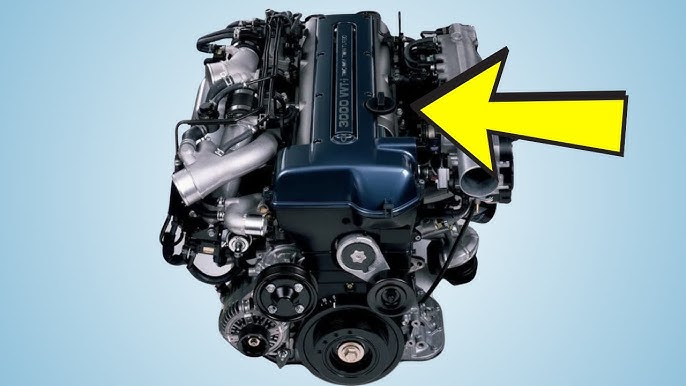
The 2JZ-GTE landed in 1993 in the Mk4 Supra (and the Japan-only Aristo/Soarer), a 3.0-liter, twin-turbo, DOHC inline-six that Toyota way over-engineered for what the factory rating asked of it.
The specs that started it all:
- Cast-iron block (thick-walled, not the thin aluminum sleeves everyone expected by the 90s)
- Forged steel crankshaft
- Sequential twin turbos (small turbo spools first, big turbo takes over)
- Closed-deck block design (the cylinder walls are fully supported, not open like most performance engines of the era)
- Factory rating: 320 horsepower (Japan) / 276 horsepower (US, underrated for insurance reasons)
That closed-deck design is the detail enthusiasts always come back to. Most manufacturers use an open-deck block to save weight and cost. Toyota didn't, and that single engineering choice is a huge part of why this block can survive abuse that would crack almost anything else.
Why Toyota Over-Built It in the First Place
Toyota wasn't trying to build a tuner icon. They were building a flagship halo car for a market obsessed with reliability, and Japanese manufacturers in the early 90s were racing to hit an unofficial 276-horsepower gentleman's agreement cap. So Toyota built an engine that could hit that number without breaking a sweat, with enormous headroom left on the table.
Spota tip: if you're chasing 2JZ swaps, first-gen Supra sightings, or JDM builds in your city, that's exactly the kind of car a Photo Op or a Playlist stop gets built around. It's the difference between scrolling pictures of one and standing next to it.
That unused headroom is the entire reason this engine became a legend. Nobody planned for it. It's an accident of a rivalry between Japanese automakers that happened decades before anyone plugged a laptop into one.
🚀 The Horsepower Numbers That Built the Legend
Where the "1,000 HP on Stock Internals" Story Comes From
This is the single most repeated claim about the 2JZ, and it's rooted in something real: with the stock cast-iron block, forged crank, and factory rods and pistons left completely alone, tuners have genuinely pushed 2JZ-GTEs well past 800 horsepower, and some documented builds have cleared 1,000 on stock bottom ends with the right turbo, fuel system, and tune.
What actually needs to change to get there:
- Turbo upgrade (the factory sequential twins run out of breath fast)
- Fuel system overhaul (injectors, pump, lines)
- Standalone or piggyback ECU tuning
- Upgraded head studs (the factory ones are a known weak point at big boost)
- A built transmission, because the stock gearbox won't survive what the engine can make
What usually stays stock even at four-digit power:
- The block
- The crankshaft
- Often the rods and pistons, at least up to the 800-900 range
Where the Myth Outruns the Reality
Where the story gets exaggerated: people talk about "any 2JZ" doing 1,000 horsepower like it's a guarantee, not an outlier. It's not. Those builds represent the ceiling, achieved by people who know exactly what they're doing, with fresh engines, careful tunes, and often a fair amount of luck on parts tolerances. Plenty of 2JZs let go well before four digits when they're pushed carelessly or run on tired, high-mileage internals.
The other exaggeration: "it never breaks." It absolutely can. Head gaskets, valve springs, and factory injectors are common failure points long before the block itself gives up. The block's reputation for surviving is real. The idea that the whole engine is indestructible is the myth layered on top.
🏁 Why It Became THE Swap Engine
The Perfect Storm of Timing
The 2JZ's swap-culture explosion didn't happen by accident. A few things lined up:
- JDM import laws: The 25-year import rule started making Japan-market Supras and Aristos legally importable to the US right as tuning culture and social media were both exploding
- Fast and Furious: The Mk4 Supra's starring role put the engine in front of an entire generation that had never seen a JDM inline-six before
- Drift culture: The 2JZ's inline-six layout, natural balance, and boost headroom made it a favorite for drift builds where reliability under sustained abuse matters more than outright peak numbers
- Forum-era documentation: Every dyno run, every build thread, every failure post-mortem got logged and searchable right as the engine was hitting peak cultural relevance
What It Gets Swapped Into
The 2JZ shows up in builds that have nothing to do with its original chassis:
- Nissan 240SX (arguably the single most common 2JZ swap platform)
- Mazda RX-7 (controversial in rotary circles, common anyway)
- BMW E30/E36 chassis
- Even trucks and off-road builds, where the reliability reputation matters more than the drift pedigree
That range is unusual. Most legendary engines stay associated with one or two platforms. The 2JZ became a general-purpose answer to "what do I put in this chassis if I want power and I don't want to worry about the bottom end," which is a different kind of legendary status than the LS swap's "it's cheap and it fits" reputation.
🔬 The Technical Reasons It Actually Holds Up
The Closed-Deck Advantage, Explained
An open-deck block has water jackets that are open at the top of the cylinder walls, saving weight and casting cost, but leaving the cylinder walls less rigidly supported. Push the cylinder pressure high enough (which is exactly what boost does) and open-deck blocks can flex, crack, or let the walls distort under load.
A closed-deck block, like the 2JZ's, has material connecting the cylinder walls to the deck surface all the way around. That support is why the block tolerates the kind of boost pressure that would destroy most other production engines from the same era.
The Sequential Turbo System
The factory setup uses a small turbo for low-RPM response and a larger turbo that kicks in higher in the rev range, with a valve system managing the handoff. It's genuinely clever engineering for 1993, and it's also the first thing almost every serious build replaces, because the factory turbos simply run out of flow well before the block runs out of strength. The block's ceiling and the factory turbo's ceiling are nowhere near the same number, which is exactly why the aftermarket single-turbo conversion became its own whole subculture within 2JZ builds.
The Inline-Six Layout Itself
Beyond the block and the turbos, the fundamental architecture matters. An inline-six has perfect primary and secondary balance without needing balance shafts, which means less inherent vibration and a smoother power delivery than a V6 making comparable power. That smoothness is part of why the 2JZ has such a devoted following independent of the boost numbers. It's a genuinely nice engine to run even before you touch the turbos.
💬 What the Community Actually Argues About
2JZ vs RB26: The Rivalry That Never Dies
Nissan's RB26DETT (out of the R32/R33/R34 GT-R) is the other engine that gets mentioned in the same breath, and the debate between the two camps is basically a religious war at this point.
The 2JZ camp's argument:
- Cheaper to find and swap
- Simpler single-turbo conversions are more straightforward
- Arguably higher stock-internals ceiling on raw boost tolerance
The RB26 camp's argument:
- Comes with the GT-R's legendary AWD system attached
- Individual throttle bodies from the factory
- Arguably a more sophisticated factory tune and electronics package
Neither side is fully right or fully wrong. It's closer to Ford vs Chevy than an actual engineering debate at this point, and most people who've owned both will tell you that.
The "Buy a Swap Kit, Not a Legend" Advice
The most common piece of advice you'll see from people who've actually done a 2JZ swap: budget realistically. The engine itself is one line item. Wiring, mounts, a proper fuel system, a transmission that can handle the power, and tuning add up to often more than the engine cost. New swap candidates regularly underestimate this and end up with a half-finished car and an engine sitting on a stand.
🏁 The Bottom Line
The 2JZ-GTE earned its legend status honestly, mostly. Toyota built a genuinely over-engineered block during a narrow window when competitive pressure between Japanese manufacturers accidentally produced one of the most abuse-tolerant production engines ever made. Import timing, movie fame, and drift culture then turned that engineering accident into a full-blown mythology.
Where the myth outruns the metal: not every 2JZ survives 1,000 horsepower, head gaskets and factory turbos are real weak points, and "bulletproof" is doing a lot of marketing work for what's actually "unusually strong for its era, if you take care of it."
Where the myth is dead on: this is still one of the best foundations in tuning history to build from, and thirty years later, people are still finding one, dropping it into something else, and adding one more chapter to the legend.
If you spot a clean 2JZ swap or an untouched Mk4 Supra at your next meet, that's worth more than a photo for the feed. That's a piece of the myth, parked right in front of you.
❓ FAQs
How much horsepower can a stock 2JZ handle?
Most tuners consider 500-600 horsepower safely achievable on a stock bottom end with just turbo, fuel, and tuning upgrades. Builds pushing 800-1,000+ horsepower on stock internals exist and are documented, but they represent the upper end of what's possible with careful builds and fresh engines, not a guaranteed outcome for every 2JZ.
What cars came with a 2JZ-GTE from the factory?
The Toyota Supra (Mk4/JZA80) got the twin-turbo 2JZ-GTE globally. The Toyota Aristo and Soarer, both Japan-market models, also came with 2JZ-GTE variants. The naturally aspirated 2JZ-GE showed up in the Supra, Aristo, Soarer, and several Lexus models.
Why do people swap 2JZs into other cars instead of buying a Supra?
Clean Mk4 Supras have become extremely expensive collector cars. Swapping a 2JZ into a cheaper chassis like a 240SX gets builders the engine's power potential and reliability reputation at a fraction of the cost of buying and maintaining an original Supra.
Is the 2JZ better than the RB26?
Neither is objectively better. The 2JZ is generally considered easier and cheaper to build for raw horsepower, while the RB26 comes attached to the GT-R's AWD system and factory individual throttle bodies. Most of the "better" debate comes down to what platform and driving style someone prefers.
What actually breaks on a 2JZ under boost?
Head gaskets, factory injectors, and the factory sequential turbos are the most common failure points well before the block or crankshaft give out. Head studs are a common preventative upgrade before pushing serious boost.
Why is the 2JZ block so much stronger than other engines from the same era?
Its closed-deck design fully supports the cylinder walls with material connecting them to the deck surface, unlike the open-deck design most manufacturers used to save weight. That extra support lets the block tolerate cylinder pressure from high boost that would flex or crack an open-deck block.
Some engines get a fan club. The 2JZ got a mythology, and three decades later, it's still adding chapters one swap at a time.