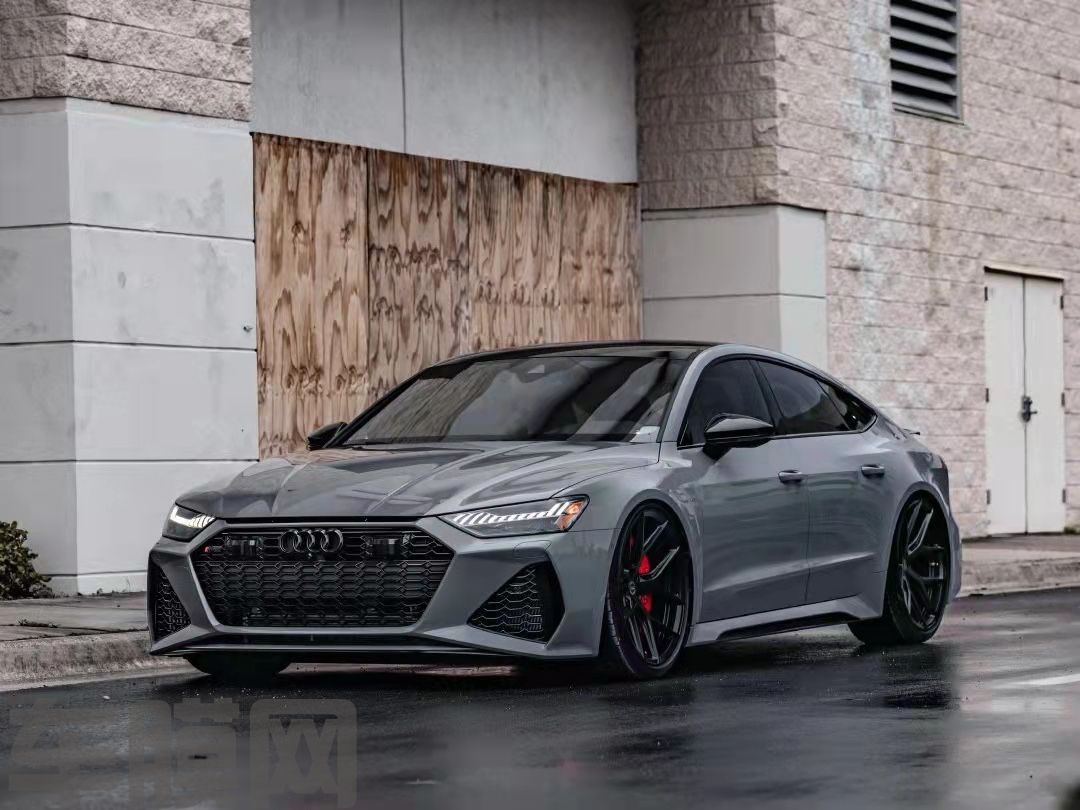


🚙 Park Five New Cars Next to Each Other and Try to Tell Them Apart
Go stand in a parking lot at a big-box store. Not a dealership, a Target. Look at ten random cars from the last five years and try to name the brand before you see the badge.
You can't. Not really. They're all the same soft, swollen, jellybean-shaped crossover with a slightly different grille slapped on the front like a name tag at a networking event. A Honda, a Hyundai, a Nissan, a Toyota, a Kia: strip the logos off and you're guessing.
This isn't nostalgia talking. It's not "cars used to have soul" boomer posting. Go look at a parking lot from 1998 versus a parking lot from 2026. The old one has silhouettes you can identify from three hundred feet away. The new one is a sea of gray and silver blobs that all round off in the same places for the same reasons.
Car people have been arguing about this for a decade, and most of the arguments blame the wrong villain. It's not that designers got lazy or ran out of ideas. It's that four separate forces, physics, law, money, and marketing data, all point the same direction at once. Here's what's actually going on under the sameness.
🌬️ Force One: Aerodynamics Became Non-Negotiable
The Fuel Economy Math Nobody Can Argue With
Every automaker selling cars in the US has to hit a fleet-average fuel economy number set by CAFE (Corporate Average Fuel Economy) standards. Miss it, and the fines start stacking up per vehicle sold. The EU has its own version with CO2 targets that are, if anything, stricter.
At highway speed, aerodynamic drag is the single biggest thing fighting your engine. Rolling resistance and drivetrain friction matter, but drag scales with the square of your speed, so at 70 mph it dominates everything else. Shave drag, and you buy real fuel economy without touching the powertrain at all.
That single fact rewired an entire industry's design language.
Why That Means Every Car Ends Up the Same Shape
Here's the part that explains the sameness specifically: there just aren't that many low-drag shapes. Computational fluid dynamics and decades of wind tunnel testing have converged on a small handful of body forms that actually cheat the air well: a sloped, rounded nose to manage the stagnation point, a fastback-style roofline that lets air separate cleanly instead of tumbling into turbulence off a hard edge, smoothed-over wheel arches, flush door handles, and a tapered rear end (the "Kammback" principle, borrowed from a German aerodynamicist's research in the 1930s) that cuts the low-pressure wake dragging behind the car.
Every automaker's engineers ran the same simulations and landed in the same neighborhood, because there's genuinely one best answer to "how do I make air flow around this box with the least resistance," and it looks like a rounded wedge. A Tesla and a Toyota and a Hyundai all end up looking related for the same reason three different engineers solving the same physics problem end up with similar bridges. The math doesn't care about brand identity.
Spota tip: open the Garage on a genuinely boxy old build, an FJ Cruiser, an original Xterra, an old Land Cruiser, and you'll see exactly the silhouette this generation of engineering rules made extinct. Worth documenting while people still have them.
🚸 Force Two: Pedestrian Safety Regulations Reshaped the Front End
The Hood-Height Rule You've Never Heard Of, But Have Definitely Noticed
This is the one almost nobody outside the industry knows about, and it's arguably the bigger driver of "why does every new car have a tall, blunt, rounded front end."
Starting in the EU and spreading globally (Global Technical Regulation No. 9, if you want to look it up), pedestrian protection standards dictate how a car's front structure has to behave in a collision with a person. The rules require crush space and controlled deformation zones under the hood, softer bumper structures, and a specific geometry that reduces head and leg injury in a pedestrian strike.
Meeting those crash-test numbers basically forces a taller hood line (to create clearance and crush space over the engine), a more rounded, less angular front fascia (sharp edges concentrate impact force in a bad way), and softer, more bulbous bumper covers instead of the flat, low, aggressive noses cars used to have.
Old sports cars and sedans could get away with a low, sharp, shark-nose front end because nobody was regulating pedestrian head-impact deceleration curves in 1985. Try to design that same low shark-nose today and it fails the test. So every single automaker's front-end design gets pulled toward the same tall, rounded solution, for the exact same regulatory reason.
Bumper Cladding Is a Legal Requirement Wearing a Style Choice's Clothes
That thick plastic cladding around modern bumpers isn't a design trend car guys have to just accept. It's largely there because it's the cheapest way to hit both low-speed impact damage regulations (protecting the car in a 5 mph parking lot bump) and pedestrian-safety energy absorption at the same time. It looks the way it looks because that shape and material combination is what passes the test cheaply and repeatably across a whole model lineup.
📈 Force Three: The Money Only Works One Way Now
Sedans Are Dying Because the Margins Died First
Car people love to blame "SUV-ification" on customer taste, and customer taste is part of it, but the deeper story is margin. A three-row crossover or midsize SUV built on the same platform as a sedan typically carries a meaningfully higher profit margin per unit, because buyers will pay a real premium for the extra ride height, cargo space, and perceived capability, while the manufacturing cost difference is smaller than that premium.
Ford didn't kill the Fusion and Taurus in the US market because nobody designed a good sedan. They killed them because the SUV and crossover versions of the same platforms made dramatically more money per unit sold, and a public company answers to shareholders who want the margin, not the enthusiast who wants the shape.
Once every mainstream automaker follows that same margin logic (and they all did, within a few years of each other), you get an entire market segment collapsing toward the same body style: not sedan versus SUV versus wagon versus hatchback anymore, just crossover, crossover, slightly bigger crossover, and crossover with a fake ruggedized trim package.
Platform Sharing Is the Silent Sameness Machine
Modern cars are built on shared platforms, sometimes across the entire industry, and it's rarely one automaker's platform anymore either. Small teams design fewer distinct platforms and stretch them across as many models as possible to spread tooling costs, so you end up with a Mazda CX-5, a Toyota RAV4, a Honda CR-V, and a Nissan Rogue sharing not identical parts, but nearly identical hard points: wheelbase, cowl height, windshield rake, and roofline. Design a body around the same fixed hard points enough times, using the same aero rules and the same pedestrian-safety geometry, and you will keep arriving at siblings, not strangers.
🎯 Force Four: Focus Groups Optimize the Weird Out of Everything
Clinics Reward "Inoffensive," Not "Iconic"
Automakers run design clinics: they show clay models and renderings to hundreds of potential buyers and score reactions. The problem is structural, not a conspiracy. A polarizing design, something with a genuinely bold grille, an unusual proportion, a controversial rear end, will score both higher highs and lower lows in that data. A blander, more universally acceptable design scores consistently fine across the board with nobody hating it.
When a committee is deciding a multi-billion-dollar tooling investment, "nobody hates it" beats "half the room loves it, half the room is confused" almost every time, because the finance department cares about total addressable market, not enthusiast passion. Run that same optimization process at every major automaker for fifteen straight years and the entire industry's design language regresses toward the same safe, rounded, inoffensive mean. It's the automotive equivalent of every streaming show's poster looking the same after enough A/B testing.
The Grille Is Basically the Last Legal Place Left to Differentiate
Watch what automakers actually fight over now: the grille shape, the headlight signature (those LED daytime running light shapes you can identify a brand by at night), and interior tech. That's not a coincidence, that's what's left. Aero rules constrain the profile. Pedestrian safety constrains the front-end height and roundness. Platform sharing constrains the hard points. Clinic data constrains anything polarizing. The grille and the lighting signature are basically the only canvas that survived every other filter, which is why every brand has gotten aggressively, sometimes hilariously, loud about grille design in the last decade. BMW's kidney grilles didn't get huge because someone thought it looked better. They got huge because it was one of the only remaining ways to be recognizable at all.
🏁 The Exceptions Prove the Rule
Look at what still manages to look distinct on the road, and you'll notice they're all things that opt out of one or more of these forces. Trucks (different regulatory category, buyers who want boxy toughness as the actual selling point, not a liability). Genuine sports cars and low-volume performance models (low enough sales volume that the margin math and clinic-testing logic don't apply the same way). Retro-styled niche models like the Bronco or the Defender, which lean into a boxy silhouette as the actual brand identity, because "looks like a real off-roader" is worth more to that specific buyer than the last percentage point of drag coefficient.
That's also exactly why those vehicles get disproportionate attention at car meets and on build pages now. They're not just good-looking by accident, they're some of the last body styles genuinely allowed to look like something instead of everything.
If you want to see the last era before this fully took hold, go find a parking lot full of 2000s cars in the Garage feed and actually study the silhouettes. It's a different design language, and once you know why it disappeared, you can't unsee it.
The blob shape isn't the industry running out of imagination. It's four different sets of rules and incentives all quietly agreeing on the same answer. Car guys aren't imagining the sameness. They're reading the physics and the balance sheet correctly, they just didn't know that's what they were looking at.