
🌾 The Car That Time Forgot
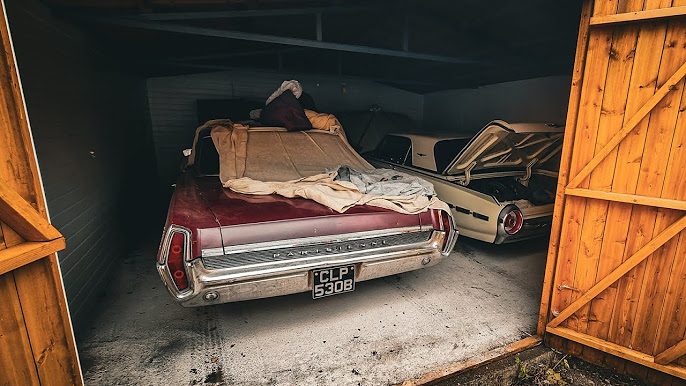
A door creaks open on a barn that hasn't been touched in thirty years. Dust hangs in the light like fog. Under a tarp, a shape nobody's seen in decades. Four flat tires. A layer of grime thick enough to write your name in. And underneath all of it: a car.
Car guys don't scroll past that video. They stop everything.
There's something about a barn find that hits differently than anything else in the hobby. Not a restored classic gleaming under garage lights. Not a six-figure auction car with a fresh detail job. A wreck of dust, rust, mouse nests, and time, sitting exactly where someone parked it and walked away.
It shouldn't make sense. By every rational measure, a barn find is a worse car than the same model sitting clean in a dealer lot. The paint's shot. The fluids are sludge. Something's probably nesting in the seats. And yet the internet will watch a 40-minute YouTube video of a guy pulling a rusted Chevelle out of a collapsing shed with more attention than it gives most new car reveals.
This is the story of why that dusty shape in the dark pulls car people in harder than almost anything else in the hobby, and why the whole thing is a lot riskier, and a lot more complicated, than the highlight reels make it look.
🕰️ What a "Barn Find" Actually Is
The term gets thrown around loosely now, but the real definition is narrower than people think. A true barn find is a vehicle that's been taken off the road and stored, often for decades, usually not because anyone planned to preserve it. Someone died. A divorce happened. A project got started and abandoned. A car got parked "just for the winter" in 1987 and never came back out.
The defining traits of a real barn find:
- Long-term dormancy. Not "sat for a year," but years, often decades, off the road entirely.
- Unintentional preservation. Nobody was actively maintaining it as a collectible. It just... stopped moving.
- Original condition, frozen in time. Original paint, original interior, sometimes original tires still holding air (badly).
- Discovery, not purchase. The romance is in the finding: an estate sale, a Craigslist ad with one blurry photo, a tip from a friend of a friend who "knows a guy with an old Camaro in his barn."
That last point matters more than people give it credit for. A barn find isn't just an old car. It's an old car with a story that starts with someone stumbling onto it. Strip out the discovery and you just have a project car that needs a lot of work. The frenzy is about the hunt as much as the machine.
🧠 The Psychology: Why This Specific Thing Wrecks People
It's Archaeology, Not Shopping
Buying a restored classic off a dealer's lot is a transaction. Finding a barn find is closer to an excavation. You're not choosing from inventory, you're uncovering something that already existed, frozen, waiting. That taps into something much older than car culture: the universal thrill of discovery. Treasure hunting, metal detecting, opening a time capsule. The car is almost secondary to the act of finding it.
Spota tip: that same instinct, the thrill of finding something real in the physical world instead of scrolling past it on a feed, is exactly what Spota's Collectibles and Photo Ops are built around. You're not going to dig a real Hemi 'Cuda out of a collapsing garage on your lunch break, but the "something's actually out there waiting to be found" itch is the same one.
Originality Is the New Rarity
For decades, the restoration ideal was "better than new": fresh paint, rebuilt everything, chrome you could shave in. That's still valued, but the collector world has quietly shifted. Unrestored, original, "survivor" cars now often command a premium over cars that were fully restored, because a restoration can be done to any car, at any time, by anyone with a budget. Originality can't be manufactured after the fact. Once original paint is stripped or original upholstery is replaced, it's gone forever. A barn find, by definition, still has that.
This is why you'll see auction listings proudly advertise "matching numbers, original paint, one family ownership since new" on a car that looks rough, and buyers will pay more for it than a flawless repaint of the same model.
The Time Capsule Effect
A barn find isn't just a car. It's frequently a snapshot of a life. Old registration stickers. A cassette tape still in the deck. A parking ticket from a city the car hasn't been in for 40 years. Newspaper clippings stuffed in the glovebox. Car guys don't just want the vehicle, they want the whole frozen moment that comes with it. It's nostalgia with a VIN number.
The "What If It's Something Big" Lottery Ticket
Every car guy has heard the stories: the Ferrari 250 GTO found under a tarp, the Duesenberg discovered in a barn where it had been hidden from Nazi requisition during WWII and sold decades later for millions, the low-mile muscle car some grandpa bought new and just... stopped driving. Those stories are rare, but they're real, and they're burned into the collective car-guy imagination. Every unopened barn door carries a tiny, irrational hope that this could be the one. That's a powerful hook, even when the actual odds are closer to "here's another rusted Malibu" than "here's a seven-figure unicorn."
💰 The Economics: Why the Market Actually Rewards This
Barn finds aren't just an emotional phenomenon, they're a real, quantifiable market segment, and understanding the economics explains a lot of the frenzy.
Why unrestored originals can outvalue restorations:
- Provenance is verifiable. An original car with documented history (original title, build sheet, dealer invoice, one-owner records) proves exactly what it is. A restored car requires trusting the restorer's honesty about what's original underneath.
- Restoration cost is sunk, not always recovered. A full frame-off restoration on a desirable muscle car can run well past what the finished car is worth on paper, especially once you count labor at real shop rates. Buyers know this, which depresses resale relative to restoration cost.
- "Survivor" is its own collector category now. Major auction houses and shows (Barrett-Jackson, Mecum, various regional "survivor" car shows) have entire classes dedicated to unrestored, original-condition vehicles, separate from restored classes. That institutional recognition didn't exist 30 years ago.
- Scarcity compounds over time. Every year, fewer unrestored originals exist, because most either get restored (destroying their originality) or scrapped. The pool only shrinks.
None of this means every barn find is valuable. The vast majority are not investment-grade cars, they're rough, tired, ordinary vehicles that happened to sit for a long time. But the small percentage that are desirable models in decent original condition can command real premiums specifically because of the dust, not despite it.
🔧 The Reality Nobody Puts in the Thumbnail
Here's where the YouTube highlight reel and the actual experience diverge hard.
Getting It Running Is the Easy Part
Most barn find videos end with the triumphant moment the engine turns over after a fuel system flush and a fresh battery. That's the part that makes good content. It's also frequently the smallest fraction of the actual problem.
What decades of dormancy actually does to a car:
- Fuel system varnish. Old gasoline breaks down into a gummy varnish that clogs carburetors, fuel lines, and injectors. Full disassembly and cleaning is often mandatory, not optional.
- Seized brakes. Brake cylinders and calipers seize from moisture and rust. Cars that "roll fine" in the barn often can't be safely stopped without a full brake system rebuild.
- Dry-rotted everything rubber. Tires, hoses, belts, seals, gaskets. Rubber degrades with age regardless of mileage. A tire that looks fine can be structurally unsafe from UV and ozone exposure alone.
- Rodent damage. Mice and rats love wiring harness insulation and upholstery stuffing. It's extremely common to find chewed wiring that causes electrical gremlins for months after a car is "finished."
- Hidden rust. Moisture that sat under floor mats, in rocker panels, or in a leaky trunk seal for 20+ years causes structural rust that isn't visible until you start pulling panels.
- Engine internals. An engine that sat without being turned over can have stuck rings, varnished cylinder walls, and lifters that need a full rebuild before it's safe to run hard, even if it technically starts.
A realistic barn find revival is measured in months and real money, not a weekend and a bottle of fuel stabilizer. The satisfying 12-minute video represents dozens of hours and often thousands of dollars compressed into a highlight reel.
The Purchase Itself Is a Minefield
Buying a barn find is not like buying a used car with a Carfax and a test drive.
- You often can't test drive it. Many barn finds haven't run in years. You're buying based on visual inspection and hope.
- Titles get complicated. Decades-old paperwork gets lost. Some states make reconstructing a clean title on an old, untitled, or improperly transferred vehicle a genuine bureaucratic ordeal.
- "Numbers matching" claims need verification. Sellers, sometimes unknowingly, sometimes not, overstate originality. Serious buyers cross-reference VIN, engine stamp numbers, and build sheets before paying a premium for "matching numbers."
- Emotional sellers complicate negotiation. A lot of barn finds are sold by families after someone passes away, and the car often carries sentimental weight that doesn't match its actual market value. Pricing conversations can get awkward fast.
- Extraction can be its own project. Cars that have sat for decades sometimes have trees grown around them, collapsed structures on top of them, or are buried under decades of stored junk. Getting the car physically out is sometimes a bigger logistical challenge than anything mechanical.
🏚️ Where People Actually Find Them (And Why That's Changing)
The classic barn find story involves a random tip, a rural property, and a handshake deal. That still happens, but the hunting ground has shifted:
- Estate sales and probate auctions, where families are liquidating a deceased relative's property and often don't know or care what they're sitting on.
- Online forums and marketplace groups dedicated specifically to barn find leads, where members post tips on cars they've spotted but don't want themselves.
- Rural auction houses that handle farm and estate liquidations and occasionally have a forgotten vehicle mixed into the lot.
- Word of mouth through local mechanics, tow truck operators, and junkyard owners, who often know exactly what's sitting on which property in a given county.
- Direct cold outreach. Some serious hunters literally drive rural roads looking for a shape under a tarp behind a barn, then knock on the door.
The supply is also shrinking. Every year, more of the truly old, truly dormant cars either get found, get scrapped, or get discovered too rotted to save. The "golden age" of barn finding, when a huge population of 1960s-70s cars had simply been forgotten in large numbers, is thinning out. That scarcity is part of why the ones that do surface now generate so much attention.
🎬 Why This Content Format Took Over the Internet
Barn find content didn't just stay a niche car-forum topic, it became one of the biggest genres in automotive YouTube and social media, and that's worth understanding on its own.
- Built-in narrative structure. Discovery, uncertainty, reveal, first-start attempt. It's a three-act story that writes itself, unlike most car content which is just "here's a car."
- Suspense car reviews don't have. You don't know what's under the tarp. That uncertainty is genuinely compelling in a way a walkaround of a known car can't replicate.
- Universal appeal beyond car guys. You don't need to know anything about cars to feel the pull of "abandoned thing gets rediscovered." It's the same appeal as urban exploration and abandoned-places content, just with an engine in it.
- Low-budget, high-payoff production. A creator with a phone camera and a rural contact can produce genuinely gripping content without a studio budget, which is part of why the genre exploded across so many small and mid-size channels, not just the big automotive media outlets.
🛠️ Should You Actually Go Looking for One?
If the romance has you wanting to go knock on random farmhouse doors, a little realism first:
- Budget for double whatever you think the revival will cost. Every barn find project runs over. Every single one.
- Get a pre-purchase inspection whenever possible, even an informal one from someone who knows the platform. A rusted frame or a cracked block can turn a "great find" into a parts car.
- Verify the title situation before you fall in love with the car. A car you can't legally title is a very expensive lawn ornament.
- Go in for the right reasons. If you're chasing the seven-figure lottery ticket, you'll almost certainly be disappointed. Go in because you want the story, the process, and probably a fun, original, unusual car at the end of it, and the financial upside is a bonus, not the plan.
- Document everything you find inside it. The old registration, the receipts, the newspaper clipping in the glovebox. That's provenance, and provenance is worth real money to the next owner even if it's worth nothing to you personally.
Barn find culture isn't really about the dust, or the mice, or the flat tires. It's about the idea that somewhere out there, behind a door nobody's opened in thirty years, something's just sitting there waiting. That idea is older than cars themselves, and car guys just happened to find the perfect object to hang it on.
If you've got a Garage on Spota, a real barn find revival is one of the best build timelines you'll ever document, start to finish, dust and all. For more on the mechanical side of getting a long-dormant car back on the road, check out our guide on maintenance mistakes that kill cars slowly, and if you're building your own from scratch, how to build your garage and add mods is a good next stop.
The next legendary barn find is out there right now, under a tarp, in a barn, waiting for someone to open the door.